• KGS/USD = 0.01143 -0%
  • KZT/USD = 0.00198 -0%
  • TJS/USD = 0.10899 0.93%
  • UZS/USD = 0.00008 0%
  • TMT/USD = 0.28490 -0.28%
  • KGS/USD = 0.01143 -0%
  • KZT/USD = 0.00198 -0%
  • TJS/USD = 0.10899 0.93%
  • UZS/USD = 0.00008 0%
  • TMT/USD = 0.28490 -0.28%
  • KGS/USD = 0.01143 -0%
  • KZT/USD = 0.00198 -0%
  • TJS/USD = 0.10899 0.93%
  • UZS/USD = 0.00008 0%
  • TMT/USD = 0.28490 -0.28%
  • KGS/USD = 0.01143 -0%
  • KZT/USD = 0.00198 -0%
  • TJS/USD = 0.10899 0.93%
  • UZS/USD = 0.00008 0%
  • TMT/USD = 0.28490 -0.28%
  • KGS/USD = 0.01143 -0%
  • KZT/USD = 0.00198 -0%
  • TJS/USD = 0.10899 0.93%
  • UZS/USD = 0.00008 0%
  • TMT/USD = 0.28490 -0.28%
  • KGS/USD = 0.01143 -0%
  • KZT/USD = 0.00198 -0%
  • TJS/USD = 0.10899 0.93%
  • UZS/USD = 0.00008 0%
  • TMT/USD = 0.28490 -0.28%
  • KGS/USD = 0.01143 -0%
  • KZT/USD = 0.00198 -0%
  • TJS/USD = 0.10899 0.93%
  • UZS/USD = 0.00008 0%
  • TMT/USD = 0.28490 -0.28%
  • KGS/USD = 0.01143 -0%
  • KZT/USD = 0.00198 -0%
  • TJS/USD = 0.10899 0.93%
  • UZS/USD = 0.00008 0%
  • TMT/USD = 0.28490 -0.28%
06 December 2025

Viewing results 1 - 6 of 16

Taliban Arrests Suspects After Deadly Attacks on Chinese Citizens Near Tajik-Afghan Border

The Taliban has announced the arrest of two suspects following two deadly attacks on Chinese workers in Tajikistan’s border regions, which left five dead and several others injured. Afghan media, citing Taliban officials, reported that two individuals were detained in connection with the killings of Chinese nationals in Tajikistan. According to Ehsanullah Kamgar, a spokesperson for the Taliban’s security department in Afghanistan’s Badakhshan province, the arrests took place in the Maymay district. The identities of the suspects have not been disclosed. Tajikistan’s security services believe that the militants crossed the border from this area before launching an assault in the Darvaz district on November 30. The attack targeted Chinese workers from a road construction company in the village of Shodak, killing two and injuring two more. Authorities said the assault occurred around 6:45 p.m. local time. The border situation has deteriorated rapidly. Within one week, two armed attacks were carried out from Afghan territory targeting Chinese nationals in Tajikistan. The first incident occurred on November 26 in the Shamsiddin Shokhin district, where three employees of the Shokhin-SM company were killed and one other was injured in a drone strike. The second attack took place on November 30, when a terrorist group crossed from Ruzvayak, a village in Badakhshan, Afghanistan, and targeted workers from the China Road and Bridge Corporation. The outcome was again tragic: two Chinese workers were killed and two were wounded. Tajik border guards emphasized that these attacks have occurred despite heightened security in the border regions. “Criminal groups continue to destabilize the situation,” the border agency said in a statement. Following the violence, the Chinese embassy in Dushanbe issued a strong demand for the Tajik authorities to “take all necessary measures” to protect Chinese citizens and employees of companies operating near the Afghan border. On December 1, Tajikistan’s President Emomali Rahmon convened an emergency meeting with the heads of the country’s law enforcement agencies. He “strongly condemned the illegal and provocative actions of Afghan citizens” and ordered tighter security controls to prevent further cross-border attacks.
Tajikistan Reports New Militant Attack from Afghanistan; Chinese Citizens Killed

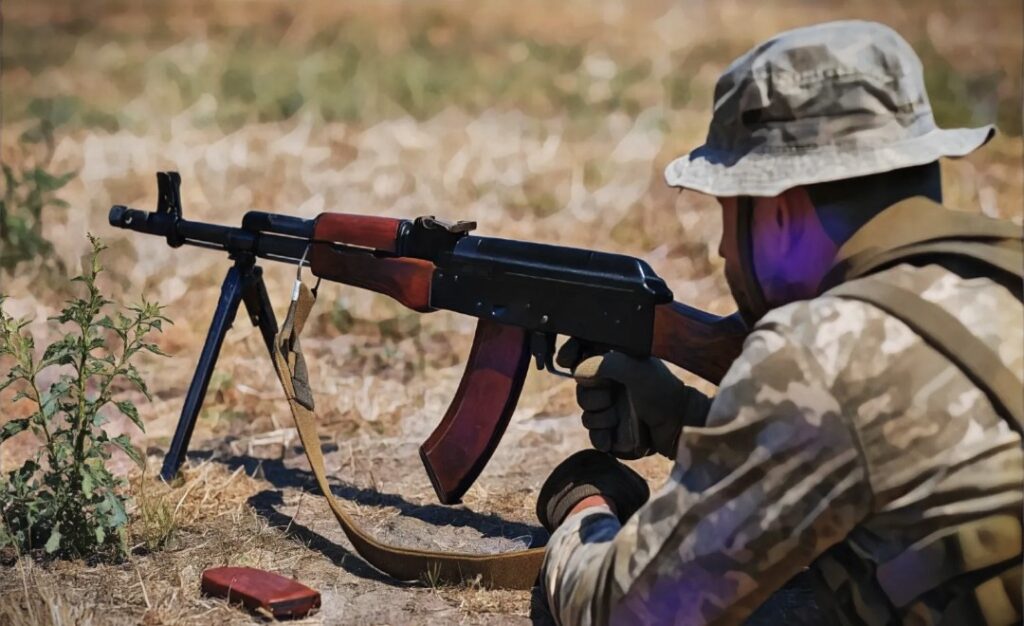
A deadly cross-border attack has once again drawn attention to the volatile security situation along the Tajik-Afghan border. Armed militants opened fire on foreign workers in Tajikistan, prompting sharp condemnation from Dushanbe and renewed calls for Kabul to enhance control over its border regions. According to the press center of Tajikistan’s State Committee for National Security (GKNB), the latest incident occurred on November 30 at approximately 6:45 p.m. near the village of Shodak, located in the rural village of Vishkharv, Darvaz district. The gunfire reportedly came from the Afghan village of Ruzvayak, in the Mohi Mai district of Badakhshan province. Militants targeted employees of the China Road and Bridge Corporation, a Chinese state-owned construction company. Two Chinese nationals were killed in the attack, and two others were wounded. This was not an isolated incident. On November 26, militants launched a similar cross-border assault in the Shamshiddin Shohin district, resulting in the deaths of three Chinese employees of the Shokhin-SM company and injuring another. Both attacks originated from Afghanistan’s Badakhshan province, raising serious concerns among Tajik authorities about what appears to be a growing pattern of cross-border violence. Despite ongoing efforts to enhance security, Dushanbe acknowledged continued attempts by armed criminal groups to destabilize the situation. “The Tajik side, expressing deep concern, strongly condemns these alarming actions by criminal groups and calls on the current authorities of Afghanistan to take timely and effective measures,” read a statement from the Border Troops press center. The GKNB stated that additional measures are being implemented to strengthen border protection and ensure the safety of both Tajik citizens and foreign workers. Authorities also reported that the situation remains “stable and under control,” and that investigations are underway. In a separate statement, the Ministry of Foreign Affairs of Tajikistan condemned the attacks as “brutal actions by terrorist groups” and urged the Afghan authorities to guarantee the security of border areas. Official reactions followed from Kabul, Islamabad, and Tehran. Representatives of the Taliban (designated as a terrorist organization and banned in several countries) extended condolences to both Tajikistan and China. They asserted that the attacks were carried out by factions seeking to “create tension and mistrust between countries in the region,” and expressed willingness to cooperate in the investigation and information exchange. On December 1, President Emomali Rahmon convened an emergency meeting with the heads of Tajikistan’s law enforcement and security agencies. According to the presidential press service, Rahmon “strongly condemned the illegal and provocative actions of Afghan citizens,” called for tougher preventive measures, and instructed security forces to reinforce surveillance and control along the entire border zone.

Tajikistan and the Taliban – Talking and Fighting

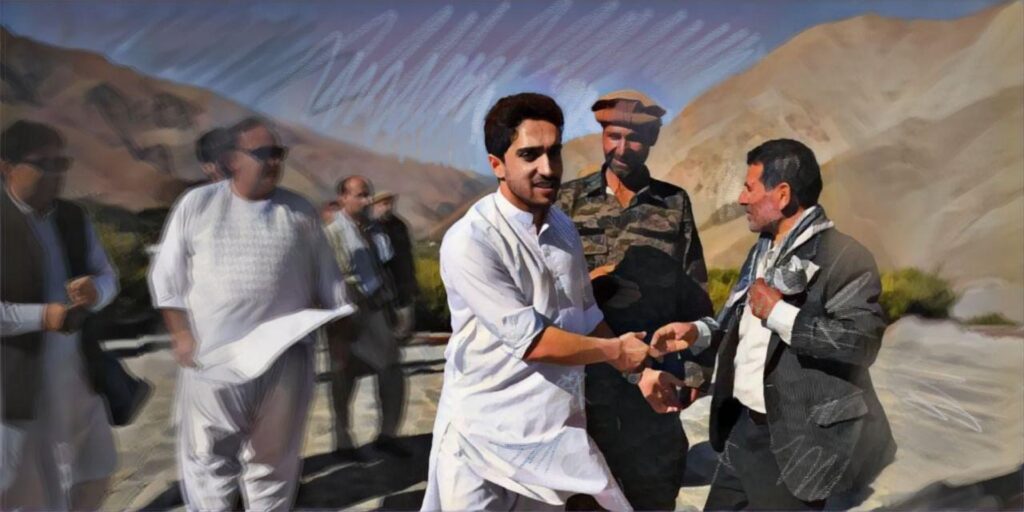
Peaceful coexistence is turning out to be complicated for Tajikistan and the Taliban government in Afghanistan. The Tajik government has viewed the Taliban as a threat since the militant group appeared in Afghanistan in the mid-1990s. But now that modest efforts are underway to establish some sort of amicable ties, there has been an uptick of violence directly involving the two sides along the Tajik-Afghan border. Let’s Keep This Between Us Tajikistan is the lone government in Central Asia that remained hostile to the Taliban after the latter returned to power in Afghanistan in August 2021. In the weeks that followed, the Taliban again exerted control over Afghanistan, and the Tajik government and the Taliban sent reinforcements to their common border. Russia and Pakistan had to intervene to ease tensions. The other Central Asian states, Kazakhstan, Kyrgyzstan, Turkmenistan, and Uzbekistan, have all established a business relationship with the Taliban government since the Taliban again seized control, but Tajikistan has remained aloof. Which is why the visit of Muhammad Yusuf Vafo, the governor of Afghanistan’s northern province of Balkh, to the Tajik capital Dushanbe on October 23 came as such a surprise. The Tajik government did not say anything about Vafo’s trip. The independent Tajik news agency Asia-Plus cited Afghan media as reporting on the visit, during which Vafo met with the head of Tajikistan’s National Security Committee (GKNB), Saimumin Yatimov. Vafo and Yatimov reportedly discussed ways to improve ties in a variety of spheres and pledged not to let any “hostile elements” use their territory to plot or carry out attacks on the country. An estimated several hundred Jamaat Ansarullah militants of Tajik origin continue to operate in Afghanistan. The group allied with the Taliban during the last years foreign forces were in Afghanistan, propping up the government of Ashraf Ghani, and stayed in Afghanistan after the Ghani government fell. Jamaat Ansarullah fighters were among the reinforcements the Taliban sent to the Tajik border during the weeks of tension in late 2021. There were reports soon after the Taliban returned to power that Tajikistan was aiding the National Resistance Front (NRF), a mainly ethnic Tajik group of former government soldiers who continue to wage a guerrilla campaign against the Taliban. NRF leader Ahmad Masoud, the son of the legendary Afghan field commander and ethnic Tajik, Ahmad Shah Masoud, has been in Dushanbe several times since August 2021, and there was a report that the NRF opened an office in Dushanbe in October that year. Shortly after Vafo’s visit to Dushanbe, Taliban sources in Balkh Province told the Pakistani-based Khorasan Diary website that Tajik authorities had banned the NRF, but the Tajik authorities stated that no such decision was made. Yatimov’s meeting with Vafo was not the first time the Tajik GKNB chief had met with Taliban representatives. In September 2024, Yatimov went to Kabul to hold security talks with Taliban officials, though the Tajik authorities never confirmed that meeting. Both parties are concerned about militants from the Islamic State of...

Gold and Gunfire: Tajik-Taliban Tensions Flare on the Border

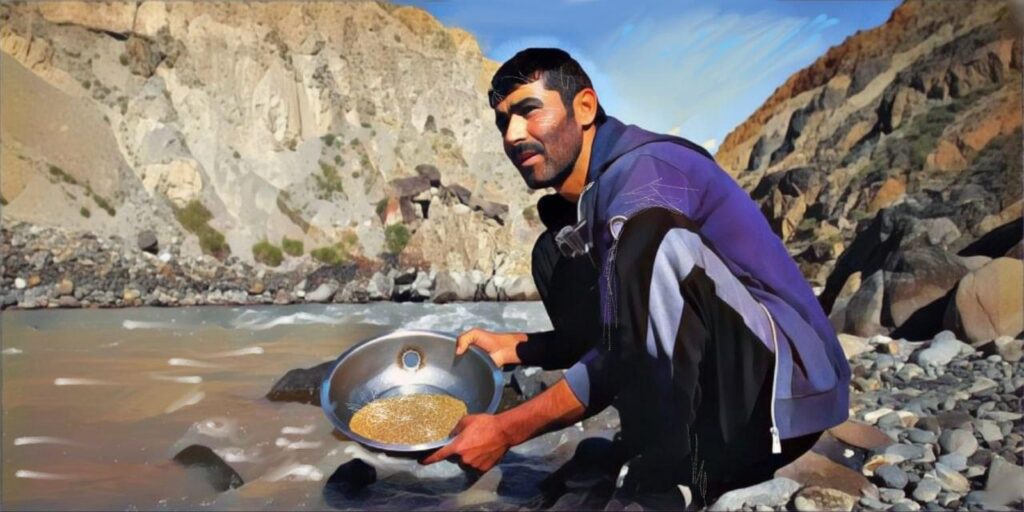
Tajik border guards and Taliban fighters have exchanged fire in an area along the Tajik-Afghan border. The incident happened on August 24 and is connected to a Chinese gold mining operation on the Afghan side of the border. The hostilities ended after a rare meeting between local Tajik and Taliban officials, though each side accused the other of harboring enemies. Gold Mining The Tajik authorities have been watching Afghanistan’s Dovang district in Afghanistan’s Badakhshan Province since the start of a gold mining operation there three years ago. Residents of Tajikistan’s Shamsiddin Shohin district, across the Pyanj River from Dovang, reported rising water levels in their area. Sodikjon Rahmonzoda, the head of the district branch of Tajikistan’s Ministry for Emergency Situations, stated that “On the opposite bank of the river, in Afghanistan, industrial gold mining started…. They built infrastructure (including) dams that direct water to our bank.” The Tajik authorities have been reinforcing the bank on the Tajik side of the river to prevent nearby villages from flooding. It is unclear if the two sides were previously in contact about the problems the diversion of water in the river was causing in Tajikistan. The other four Central Asian governments have all established a dialogue with the Taliban since they returned to power in August 2021. Kazakh, Kyrgyz, Turkmen, and Uzbek officials have visited Afghanistan, and Taliban representatives have visited Kazakhstan, Turkmenistan, and Uzbekistan (but so far, not Kyrgyzstan). The Tajik government has kept its contact with the Afghan militant group to a minimum, though several border crossing points are working again, and some bazaars on the Tajik side of the frontier have reopened to Afghan customers. Rising Tensions In May, Tajik authorities detained a group of Chinese and Afghans who drove across the river on excavators from the mining site in Dovang into Tajikistan. According to the Tajik authorities, the Chinese and Afghans were seeking to launder money in Tajikistan. On August 24, a group of Taliban arrived at the border area in Dovang. It is not clear what sparked the shooting, but Tajik border guards and Taliban fighters exchanged fire using heavy weapons. One Taliban fighter was reportedly killed, and four others were wounded. There were no reports of casualties among the Tajik border guards. Neither the Tajik government nor Taliban officials have commented on the clash. A Rare Meeting Following the shooting, the commander of the Tajik border guard unit in the Shamsiddin Shohin district led a group of soldiers across the border to Dovang to meet with the head of mining operations and other officials in Badakhshan Province. The two sides discussed the gold mining operation on the Afghan side of the border, but the conversation degenerated into accusations, with each side complaining that the other was sheltering and training their enemies. Both sides are correct. The Tajik government allows members of the National Resistance Front (NRF), including its leader Ahmad Masoud, to travel to and often stay in Tajikistan. The NRF is a group of mainly ethnic...

Tajikistan Escalates Deportations of Afghan Refugees Amid Growing Concerns

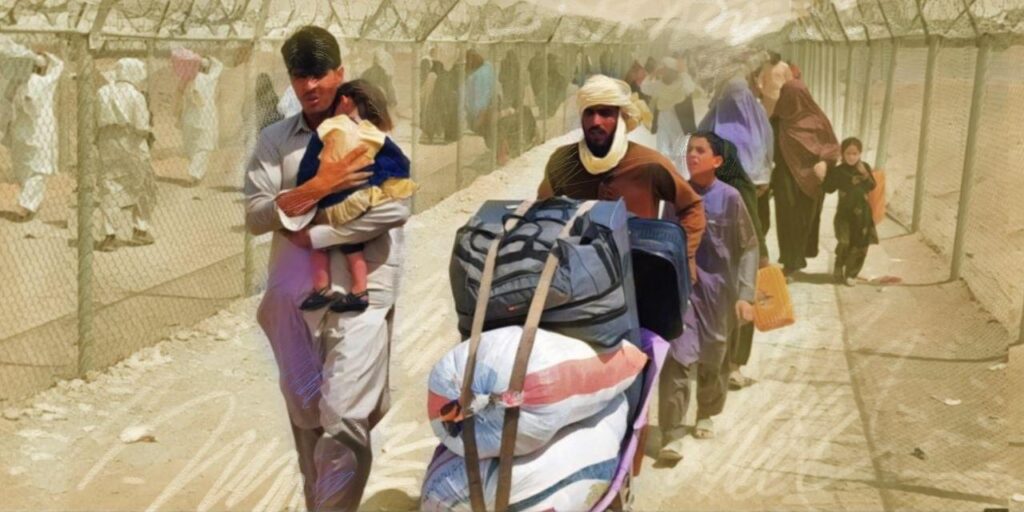
Afghans who fled to Tajikistan are keeping a low profile lately. Tajik authorities have started the latest wave of deportations, and this one looks to be bigger than the previous sweeps. “You Have 15 Days” At the beginning of July, Afghan refugees and asylum-seekers in Tajikistan received an SMS warning them to leave the country within 15 days or else they would be forcibly deported. Tajikistan’s government has not commented on these messages, but the detention of Afghans started not long after the messages were sent. So far, the only two places mentioned where Afghans were being apprehended were the Rudaki district outside of Dushanbe and the town of Vahdat, 26 kilometers from Dushanbe. Hundreds of Afghan refugees are known to be living in these two areas. Radio Free Europe/Radio Liberty’s Tajik Service, known locally as Ozodi, reported that journalists who went to the houses of Afghan refugees in Vahdat were stopped and turned away by men in military uniforms outside the homes. Some Afghan refugees in Vahdat spoke with Ozodi under the condition of anonymity and said that on July 15, several vans arrived and took away “dozens” of Afghan men, women, and children. One said Afghan refugees are staying inside their homes, fearing that if they go out, they will be detained and deported. Police “take the documents from Afghans and set a date for them to leave the country,” the refugee said, “For more than 20 days we have practically not stepped outside at all.” Local Tajiks confirmed that Afghans were being taken away and that many of those who remained were searching for new places to live to avoid being apprehended. The Tajik authorities did not say anything about the deportations until July 19, when the state news agency Khovar posted a text from the Press Center of the Border Troops of the State Committee for National Security. The statement said some “foreign citizens” had entered Tajikistan illegally, and a “certain number” of them engaged in illegal activities such as “narcotics trafficking, [spreading] the ideas of extremist movements,” or providing false information or documents to acquire refugee status. The office of the UN High Commissioner for Refugees (UNHCR) said that as of the end of 2024, there were 9,902 Afghan refugees registered in Tajikistan. However, Afghans have been fleeing their homeland and coming to Tajikistan for many years, and some estimates for the number of Afghans in Tajikistan run as high as 13,000. Something else which remains unclear about the Afghan refugees in Tajikistan is how many are ethnic Tajiks. Ostensibly, most of them could be since the ethnic Tajik population of Afghanistan is mainly found in areas adjacent to Tajikistan. Many who came to Tajikistan 10 or 15 years ago have assimilated and are likely not refugees or asylum seekers, but may not have obtained Tajik citizenship. It is unclear how many Afghan citizens have been detained and deported since the start of July, but they are just the latest to be sent back to...

Tajik Security Forces Thwart Major Cross-Border Drug Smuggling Attempt from Afghanistan

Tajik authorities have disrupted an attempt by an Afghan drug trafficking group to smuggle a significant quantity of narcotics into the country, according to the State Committee for National Security (SCNS) of Tajikistan. The operation unfolded in the Shamsiddin Shohin district of Khatlon region, where four Afghan nationals illegally crossed the border near the village of Kishty. The group, led by 50-year-old Azarkhon waladi Saidumar from Badakhshan province, aimed to transport narcotics into Tajik territory. The SCNS reported that regional security officers, working with border guards from outpost No. 5 of the Hirmandjo unit, tracked the smugglers’ movements and launched a targeted operation. When authorities attempted to apprehend the group, the traffickers opened fire. In the ensuing clash, Azarkhon and another group member, 30-year-old Rozmuhammad Azizi, were killed. The remaining two suspects escaped back across the border into Afghanistan. Security forces recovered two Kalashnikov rifles with 17 rounds of ammunition, a night vision device, a rubber boat, and three sacks containing 59 packages of narcotics. Forensic analysis confirmed the substances included over 57.5 kilograms of opium and 960 grams of methamphetamine, totaling 58.475 kilograms. Criminal proceedings have been initiated under several articles of Tajikistan’s Criminal Code, and authorities are pursuing efforts to identify and apprehend the remaining suspects. In a statement, the SCNS highlighted the critical importance of safeguarding the country's borders and urged residents in border regions to assist law enforcement. “Every citizen has a sacred duty to protect the homeland,” the SCNS said, warning that drug trafficking poses a direct threat to national health and security. The government reaffirmed its commitment to combating drug trafficking, cross-border crime, terrorism, extremism, and the illegal arms trade. As previously reported by The Times of Central Asia, beginning in 2026, the Collective Security Treaty Organization (CSTO) will begin delivering weapons and military equipment to its member states to strengthen the alliance’s southern frontier, with a particular focus on the Tajik-Afghan border.