• KGS/USD = 0.01144 0%
  • KZT/USD = 0.00198 -0%
  • TJS/USD = 0.10903 0.18%
  • UZS/USD = 0.00008 -0%
  • TMT/USD = 0.28490 -0.28%
  • KGS/USD = 0.01144 0%
  • KZT/USD = 0.00198 -0%
  • TJS/USD = 0.10903 0.18%
  • UZS/USD = 0.00008 -0%
  • TMT/USD = 0.28490 -0.28%
  • KGS/USD = 0.01144 0%
  • KZT/USD = 0.00198 -0%
  • TJS/USD = 0.10903 0.18%
  • UZS/USD = 0.00008 -0%
  • TMT/USD = 0.28490 -0.28%
  • KGS/USD = 0.01144 0%
  • KZT/USD = 0.00198 -0%
  • TJS/USD = 0.10903 0.18%
  • UZS/USD = 0.00008 -0%
  • TMT/USD = 0.28490 -0.28%
  • KGS/USD = 0.01144 0%
  • KZT/USD = 0.00198 -0%
  • TJS/USD = 0.10903 0.18%
  • UZS/USD = 0.00008 -0%
  • TMT/USD = 0.28490 -0.28%
  • KGS/USD = 0.01144 0%
  • KZT/USD = 0.00198 -0%
  • TJS/USD = 0.10903 0.18%
  • UZS/USD = 0.00008 -0%
  • TMT/USD = 0.28490 -0.28%
  • KGS/USD = 0.01144 0%
  • KZT/USD = 0.00198 -0%
  • TJS/USD = 0.10903 0.18%
  • UZS/USD = 0.00008 -0%
  • TMT/USD = 0.28490 -0.28%
  • KGS/USD = 0.01144 0%
  • KZT/USD = 0.00198 -0%
  • TJS/USD = 0.10903 0.18%
  • UZS/USD = 0.00008 -0%
  • TMT/USD = 0.28490 -0.28%
05 December 2025

Viewing results 1 - 6 of 43

Is TAPI Just ‘TA’ for Now?

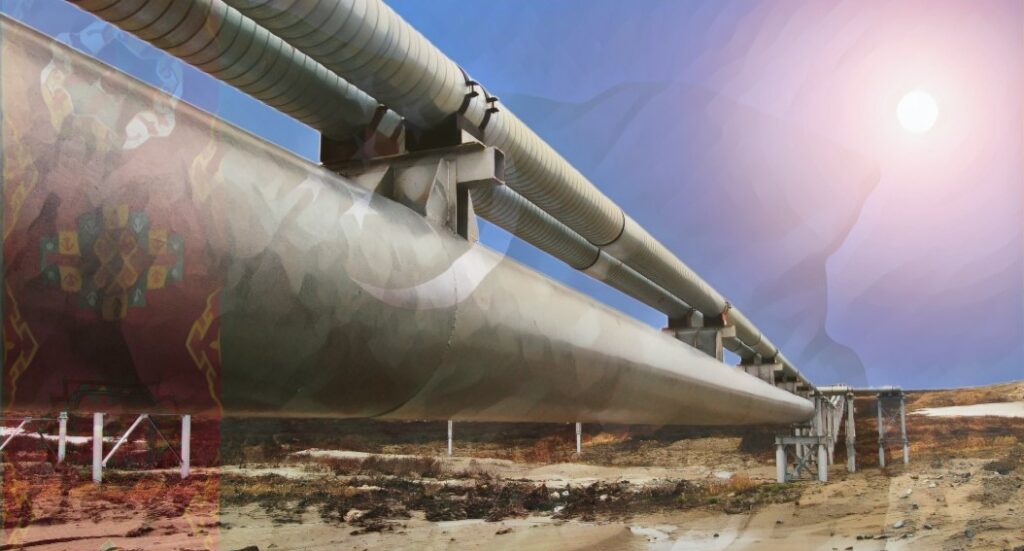
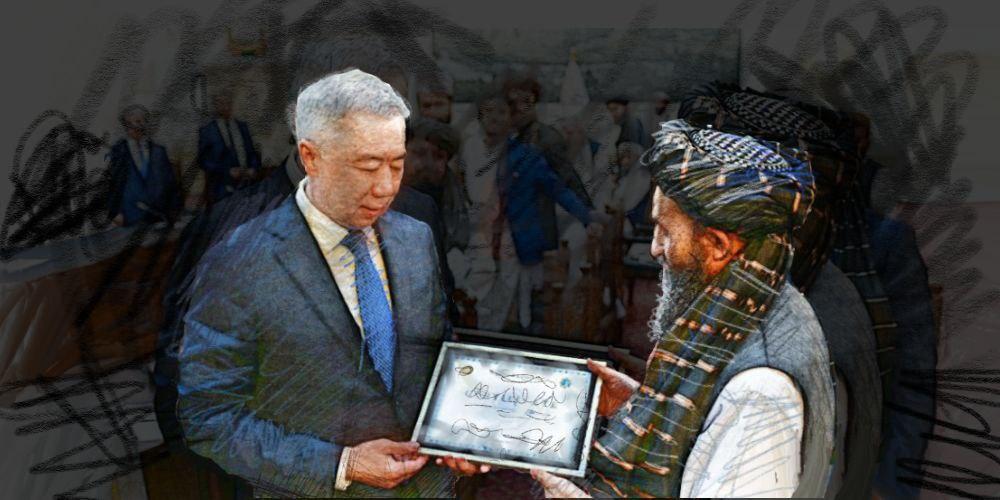
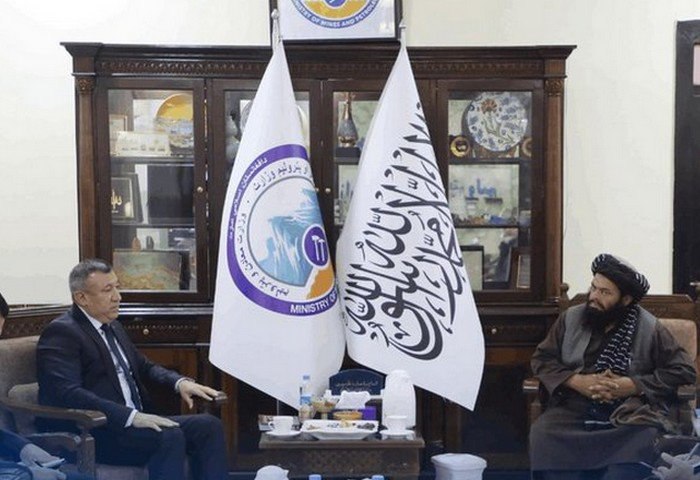
The idea for the 1,800-kilometer Turkmenistan-Afghanistan-Pakistan-India (TAPI) natural gas pipeline project has been around for 30 years. There has not been much progress in building the pipeline during those decades. The chances of seeing TAPI realized seem far away at the moment, considering Pakistan and India were involved in fighting in May of this year, and in October, there were battles along the Pakistan-Afghanistan border. However, Turkmenistan and Afghanistan are still interested in TAPI, and top officials from those two countries just met along the border to inaugurate a new section of the pipeline, and it looks like, for now, these two countries are enough. Another Ceremony Gurbanguly Berdimuhamedov, the chairman of Turkmenistan’s Halk Maslahaty (People’s Council), went to the Turkmen-Afghan border on October 20 to meet with Afghanistan’s Deputy Prime Minister for Economic Affairs, Mullah Abdul Ghani Baradar, for an event inaugurating a new section of TAPI. The ceremony for the Serhetabat-Herat section of TAPI took place just inside Afghanistan, not far from where top officials from the four countries involved, including Berdimuhamedov, gathered in February 2018 to launch construction of the Afghan section of TAPI. Berdimuhamedov made his only previous visit to Afghanistan during that ceremony, when he, the Afghan president, Pakistani prime minister, and Indian minister for state and external affairs, briefly flew to Herat to continue celebrations marking the launch. The location of the October 20 inauguration was also not far from the Islim Chesme border crossing, where Berdimuhamedov met with Afghan officials in September 2024 to again launch construction of the Afghan section of TAPI. Baradar and Berdimuhamedov spoke about the project’s importance in fostering greater regional cooperation, the economic benefits of which include creating jobs and providing energy to areas that greatly need it. Similar remarks were made by Berdimuhamedov and others at previous TAPI launches. Work did finally start after the 2024 launch. Afghanistan’s Tolo News reported that according to the country’s Ministry of Mines and Petroleum, 14 kilometers of the pipe have been laid, and 70 more kilometers of the route are set for pipeline installation. Turkmen state media always refers to Berdimuhamedov as “Arkadag,” which means “protector” in the Turkmen language. According to Turkmen state media, the Serhetabat-Herat section of the pipeline is called “Arkadagyn Ak Yoly,” or “Arkadag’s White Road.” Tolo News also reported that, “Recently, a large quantity of gas transmission pipes was imported from Turkmenistan into Afghanistan.“ It appears the Serhetabat-Herat section of TAPI is making progress, but it could be years before the pipeline goes any farther. A More Modest Goal For nearly the entire history of the TAPI project, the major obstacle to actually building the pipeline was the security problem inside Afghanistan. That problem is not over, but it is significantly reduced now that the Taliban are again imposing brutal control over the country. Military conflicts in recent months between Pakistan and both the other partners in the TAPI project shine a spotlight on another problem that has always raised questions about the viability of...

Opinion: Gas, Geopolitics, and Realism: U.S.–Turkmenistan Talks Signal Shift

U.S. Secretary of State Marco Rubio and his Turkmen counterpart Rashid Meredov wrapped up bilateral consultations last week in Washington, DC. The encounter suggested a new awareness on Washington’s part of Turkmenistan’s pivotal geostrategic location in the heart of Central Asia and its status as a major hub of natural resources. Since becoming head of state in March 2022, Turkmenistan’s President Serdar Berdimuhamedov has shifted his country’s foreign policy from one of strategic isolation to what might be called practical realism, whereby priority is given to fair trade and investments that are in line with national interests and long-term development. Like the other Central Asian heads of state, Berdimuhamedov also champions a pragmatic, interest-based foreign policy. Consequently, they find the current, pragmatic U.S. administration with its concern to work out deals (presumably mutually beneficial ones) more congenial than its predecessor, with its penchant for geostrategic maneuvering and ideology. Secretary Rubio recently observed: “A mature foreign policy requires a balancing of interests - that’s a fact.” This way of thinking goes over well in smaller independent states such as Turkmenistan and other Central Asian countries, whose key national priorities include establishing their statehood on a firm basis and safeguarding their sovereignty amid the turbulent great power politics being played out in their vicinity. Oil and Gas Over the years, Berdimuhamedov has insisted that foreign entities seeking access to the country’s vast natural gas reserves must play by Ashgabat’s rules. Home to the world’s fourth-largest gas reserves, Turkmenistan invites foreign participation in its energy sector, provided that agreements are structured as win-win arrangements and don’t give suitors the geostrategic upper hand. In this context, it would make sense for Washington to get the word out about two upcoming conferences in Ashgabat: The Turkmenistan Investment Forum, September 18– 19, 2025, which will serve to attract long-term investment into the country's economy, and the 30th Oil & Gas of Turkmenistan – 2025 International Conference & EXPO (OGT 2025) on 22–24 October. Turkmenistan had a strong 2024 in terms of energy, producing 77.6 billion cubic meters of natural gas and 8.3 million tons of oil. The OGT 2025  will showcase the country’s resource potential and new investment opportunities, focusing on upstream projects such as the Galkynysh gas field and the Caspian blocks, as well as on initiatives in the areas of renewable energy, methane mitigation, and infrastructure modernization. Moreover, Ashgabat wants to expand its Trans-Caspian and north-south economic corridors and complete the Turkmenistan-Afghanistan-Pakistan-India (TAPI) gas pipeline, among other initiatives in transport and logistics. U.S. companies may want to explore these new opportunities. Travel Limitations to the U.S. Ashgabat is working with the U.S. Department of State to lift recently imposed restrictions on Turkmen citizens wishing to travel to the U.S. Both sides are aiming to ensure that applicants are properly screened before a visa is granted and that recipients comply with its terms. To further deepen ties, Washington should view Turkmenistan’s neutrality towards others on the global stage in security and foreign-policy matters not as an obstacle, but as an advantage that facilitates dialogue. While maintaining its advocacy for democratic principles,...

U.S.–Turkmenistan Rapprochement: Energy, Neutrality, and Digital Geopolitics

For more than three decades, Turkmenistan has stood apart from its neighbors. Since declaring independence in 1991, it has built its foreign policy around “permanent neutrality,” a status formally recognized by the United Nations in 1995. Neutrality has meant avoiding military alliances, steering clear of regional blocs, and limiting international engagement to carefully managed bilateral relationships. Ashgabat has been especially cautious in its dealings with Washington, keeping contacts minimal while relying overwhelmingly on China to buy its natural gas. That posture is beginning to shift. In 2025, the outlines of a quiet rapprochement between Turkmenistan and the United States are visible. The latest round of Annual Bilateral Consultations (ABCs) in Washington, coupled with Ashgabat’s more active role in the C5+1 regional dialogue, suggests a gradual warming. On September 19, 2023, Turkmen President Serdar Berdimuhamedov participated in the first C5+1 multilateral summit alongside the U.S. and regional counterparts, highlighting Ashgabat’s more active role in the platform. At the heart of this cautious opening are three themes: energy dependence, security on Turkmenistan’s southern border, and the geopolitics of digital connectivity. Annual Bilateral Consultations: A Structured Dialogue The ABCs were launched in 2010 as part of a U.S. initiative to formalize engagement with all five Central Asian states. They are yearly, structured meetings between senior officials that review the state of bilateral relations across political, economic, and security issues. In August 2025, Foreign Minister Rashid Meredov met Secretary of State Marco Rubio in Washington for the 11th ABC. According to the U.S. State Department release, the two sides “underscored their commitment to advancing U.S.-Turkmenistan relations, including through security cooperation, increased economic and investment opportunities, the advancement of religious freedom, and deepening engagement through the C5+1 diplomatic platform.” The statement was deliberately brief and omitted sensitive matters such as the partial visa restrictions Washington imposed on Turkmen citizens earlier that year. But the very fact of the meeting, following years of minimal contact, marked a notable warming. From Episodic Contacts to Broader Cooperation The rapprochement has begun to take shape in concrete ways. Trade between the two countries, though still small, nearly doubled in 2024 to reach $218.5 million. Turkmenistan exported textiles, chemicals, and gas-related equipment, while U.S. exports included aviation technology, electronics, and agricultural machinery. Overall, the trade volume remained the second-lowest among Central Asian states, but the sharp increase pointed to a deliberate effort to expand ties. Reflecting this momentum, on June 8, 2025, Turkmenistan’s Foreign Minister Rashid Meredov met with the Executive Director of the Turkmenistan–U.S. Business Council, Eric Stewart, to discuss cooperation across sectors, including energy, cybersecurity, green technology, and education. Security cooperation has grown more visible. Turkmenistan’s long border with Afghanistan has long been a vulnerability, and while Ashgabat avoided involvement in the U.S.-led war, it quietly welcomed assistance to reinforce border defenses and counter trafficking. The U.S. has provided equipment, training, and support for Turkmen border services, a low-profile effort documented in a Congressional Research Service report. Turkmenistan has invested over a billion dollars in Afghan infrastructure projects...

Turkmenistan’s Strategic Reentry into Gas Diplomacy

Turkmenistan holds the world’s fourth-largest proven gas reserves. And yet, its energy diplomacy has until quite recently remained inert. The paradox is systemic: it possesses more gas than infrastructural escape routes; yet as demand for non-Russian energy rises across Eurasia’s westward axis, Ashgabat’s relevance grows, not so much because it radically evolves but because the system around it does. Historically, 80–90% of Turkmen gas has flowed east through the Central Asia–China pipeline, sometimes called the Turkmenistan–China corridor. The dependency is acute, and the pricing asymmetrical. Previous efforts to increase flows in other directions — across Iran, via Azerbaijan, southward to South Asia, or across the Caspian Sea — have been dashed on the rocks of logistics and geopolitics. The early 2000s were especially pivotal, when Turkmenistan's delay in engaging with the EU’s Southern Gas Corridor initiative shaped a decade of missed leverage. What we are seeing now is not a late start but a late modulation of the country's energy vectors across weakly emerging paths. Geoeconomic Constraints as Strategic Catalysts Dependency on China as a monopsonist (sole purchaser) implies not just limited diversification but two deeper vulnerabilities. First, price-setting mechanisms remain inscrutably opaque. Second, the lack of alternative outlets structurally reinforces the asymmetry. Attempts to broaden options through Iran or Azerbaijan, though nominally ongoing, rely more on swaps than corridors, and even these are uneven. The Dauletabad–Sarakhs–Khangiran pipeline, completed in 2010, should have represented a minor second axis. However, it operates at a trickle, if at all, due to Iran's past failure to pay contracted sums in a timely fashion, requiring international arbitration. Another example is the Turkmenistan–Afghanistan–Pakistan–India (TAPI) pipeline, discussed since the 1990s, and in which India lost interest two decades ago. TAPI remains on hold, hampered by Afghanistan’s security volatility and a practical lack of commercial prospects that produce financing shortfalls. The Trans-Caspian Gas Pipeline (TCGP) was long stalled by legal uncertainties over Caspian Sea seabed rights and opposition from Russia and Iran. Even since the sea’s status under international law was settled by the Caspian Convention, signed in 2018, planning for this pipeline remains somnolent, despite its removal of many legal barriers to TCGP construction. Swap agreements are usually regarded as workaround tools, but for Turkmenistan, they have become more permanent structural mechanisms, allowing Ashgabat to insert itself into third‑party supply chains without transit risk. Iran’s infrastructure is unreliable but offers compression and metering; Azerbaijan’s network enables reverse flows and flexibility. A modest but symbolically important addition is the Dostluk field, a previously disputed offshore deposit between Azerbaijan and Turkmenistan in the Caspian Sea. A 2021 Memorandum of Understanding resolved maritime delimitation and designated the field for joint development. Even when summed all together, these vectors remain mainly null. Once seen as “backup” export routes, they have failed structurally. Turkmenistan, infrastructurally entangled yet geopolitically uncommitted, still lacks true backup and instead manages redundancy, maintaining multiple provisional export channels simultaneously. It must still respond adaptively to shifting constraints while balancing fragile options. Turkmenistan's Attempts to Rewire Its Client...

Afghanistan and Central Asia: Pragmatism Instead of Illusions

“When the winds of change blow, some build walls, others build windmills.” — Chinese proverb Afghanistan remains one of the most complex and controversial spots on the map of Eurasia. After the Taliban came to power in 2021, it seemed the countries of Central Asia were faced with a choice: to distance themselves from the new regime or cautiously engage with it. However, it appears they have chosen a third path - pragmatic cooperation free from political intentions. Today, a window of opportunity is opening for the Central Asian states to reconsider their relationship with Afghanistan, not as a buffer zone or a source of instability, but as a potential element of a new regional architecture. At the same time, these countries are in no hurry to establish close political ties with Kabul. They avoid making declarations about "integrating" Afghanistan into Central Asia as a geopolitical region. Instead, the focus is on practical, rather than political or ideological, cooperation in areas such as transportation, trade, energy, food security, and humanitarian engagement. This pragmatic approach is shaping a new style of regional diplomacy, which is restrained yet determined. Against this backdrop, two key questions emerge: What role can Afghanistan play in regional development scenarios, and what steps are needed to minimize risks and maximize mutual benefit? Afghanistan After 2021: Between Stability and Dependency Since the end of the war and the Taliban’s return to power, Afghanistan has experienced a degree of relative order. However, the country remains economically and institutionally dependent on external assistance. Historically, Afghanistan has survived through subsidies and involvement in external conflicts, from the “Great Game” to the fight against international terrorism. Today, new actors, such as China, Russia, India, Turkey, and the Arab states, are stepping onto the stage alongside Russia, the United States, and the broader West. In the context of current geopolitical realities after the fall of its “democratic” regime, Afghanistan has found itself in a gap between the experiences of the past and a yet undetermined future. It has a unique opportunity to transcend its reputation as the “graveyard of empires” and determine its fate while simultaneously integrating into the international community. How the de facto authorities in Afghanistan handle this opportunity will not only shape the Afghan people's and the region's future but also influence the development of the entire global security paradigm. In parallel, the countries of Central Asian are building bilateral relations with Kabul on strictly pragmatic terms: participation in infrastructure and energy projects, food supply, and humanitarian aid. All of these steps have been taken without political commitments and without recognizing the regime. [caption id="attachment_30841" align="aligncenter" width="1062"] The border between Afghanistan and Tajikistan near Khorog, GBAO; image: TCA, Stephen M. Bland[/caption] Geo-Economics and Logistics: Afghanistan as a Strategic Hub The regional reality in Central Asia is increasingly taking on a geo-economic dimension. The region is not only an arena for the interests of external powers but also a zone for developing transport, logistics, and energy networks in which Afghanistan is playing an...

Afghanistan Advances TAPI Gas Pipeline Construction as Kazakhstan Explores Participation

Afghanistan has made significant progress in constructing the Turkmenistan-Afghanistan-Pakistan-India (TAPI) gas pipeline. According to Ariana News, citing the Herat provincial governor’s office, approximately six kilometers of pipeline have already been laid since work began last month. Herat Governor Maulana Islam Jar assured project representatives of his full support, stating that TAPI will play a crucial role in strengthening the economy and promoting regional stability. Afghanistan's section of the pipeline is expected to take approximately two years to complete and represents a significant milestone for the broader project. TAPI is designed to connect Central Asia’s vast gas reserves with the rapidly growing energy markets of South Asia. During a recent meeting, TAPI’s general director in Afghanistan, Abdullah Yoof, updated Governor Jar on construction progress and outlined further plans for the project, including job creation and infrastructure development in Herat province. Meanwhile, Kazakhstan is actively exploring the possibility of joining the TAPI pipeline. The country’s Ministry of Energy has confirmed ongoing negotiations between the national gas company, QazaqGaz, and Turkmengaz, which owns an 85% stake in TAPI Pipeline Company Limited. However, officials have refrained from disclosing details, citing the confidentiality of the discussions. Kazakhstan’s interest in the project was first officially announced by Deputy Energy Minister Yerlan Akkenzhanov. Speaking at the Kazakhstan-Afghanistan Business Forum in October 2024, he highlighted that participation in TAPI could provide Kazakhstan with access to new markets, including Pakistan and India while attracting additional investment to the country’s gas sector. The TAPI pipeline, spanning over 1,800 kilometers, will traverse: Turkmenistan – 214 kilometers Afghanistan – 774 kilometers Pakistan – 826 kilometers The pipeline will terminate in India, providing a crucial energy link between Central and South Asia.