• KGS/USD = 0.01144 0%
  • KZT/USD = 0.00201 0%
  • TJS/USD = 0.10475 0%
  • UZS/USD = 0.00008 0%
  • TMT/USD = 0.28571 0%
  • KGS/USD = 0.01144 0%
  • KZT/USD = 0.00201 0%
  • TJS/USD = 0.10475 0%
  • UZS/USD = 0.00008 0%
  • TMT/USD = 0.28571 0%
  • KGS/USD = 0.01144 0%
  • KZT/USD = 0.00201 0%
  • TJS/USD = 0.10475 0%
  • UZS/USD = 0.00008 0%
  • TMT/USD = 0.28571 0%
  • KGS/USD = 0.01144 0%
  • KZT/USD = 0.00201 0%
  • TJS/USD = 0.10475 0%
  • UZS/USD = 0.00008 0%
  • TMT/USD = 0.28571 0%
  • KGS/USD = 0.01144 0%
  • KZT/USD = 0.00201 0%
  • TJS/USD = 0.10475 0%
  • UZS/USD = 0.00008 0%
  • TMT/USD = 0.28571 0%
  • KGS/USD = 0.01144 0%
  • KZT/USD = 0.00201 0%
  • TJS/USD = 0.10475 0%
  • UZS/USD = 0.00008 0%
  • TMT/USD = 0.28571 0%
  • KGS/USD = 0.01144 0%
  • KZT/USD = 0.00201 0%
  • TJS/USD = 0.10475 0%
  • UZS/USD = 0.00008 0%
  • TMT/USD = 0.28571 0%
  • KGS/USD = 0.01144 0%
  • KZT/USD = 0.00201 0%
  • TJS/USD = 0.10475 0%
  • UZS/USD = 0.00008 0%
  • TMT/USD = 0.28571 0%

Viewing results 1 - 6 of 12

Kyrgyz President Dismisses Right-Hand Man to “Prevent a Split in Society”

A political earthquake hit Kyrgyzstan on February 10. The tandem of President Sadyr Japarov and security chief Kamchybek Tashiyev was seemingly broken when Japarov dismissed Tashiyev from his post. The reason given for relieving Tashiyev of his position was that it was “in the interests of our state, in order to prevent a split in society, including between government structures,” which hinted that something serious had caused the rift. Old Friends After the brief tumultuous events of October 5-6, 2020, that saw the government of President Sooronbai Jeenbekov ousted in the wake of parliamentary elections plagued by violations, Japarov came to power and appointed Tashiyev to be head of the State Committee for National Security (GKNB). The two have remained in those positions and were often referred to as a tandem. Some believe Tashiyev has actually been the one making many of the important state decisions. Their relationship goes back much further, to the days when Kurmanbek Bakiyev was Kyrgyzstan’s president from 2005-2010. In August 2006, Japarov, Tashiyev, and some other politicians from Kyrgyzstan’s southern Osh area cofounded the Idealistic Democratic Political Party of Kyrgyzstan, which later became the foundation for the Ata-Jurt party. Both Japarov and Tashiyev were supporters of President Bakiyev. When Bakiyev was forced to flee the country after the 2010 revolution in Kyrgyzstan, the Ata-Jurt party became the strongest opposition party to the government that emerged after the revolution. Ata-Jurt won the most seats, 28, in the snap October 2010 parliamentary elections, and among the party’s deputies were Japarov, Tashiyev, and another politician named Talant Mamytov. The three Ata-Jurt deputies helped organize anti-government protests, and during one outside the government building in Bishkek in October 2012, Japarov, Tashiyev, and Mamytov jumped the fence and led an armed crowd to the building. All three were convicted in 2013 of trying to overthrow the government. They were sentenced to a mere 18 months in prison, but did not even serve that, with all three being released in July 2013. Japarov helped lead a protest in Kyrgyzstan’s northeastern Issyk-Kul Province in October that year. A local official was captured and briefly held by protesters, and after order was restored, Japarov was charged with hostage-taking. He fled the country and only returned in March 2017. Japarov was immediately arrested and sentenced to 11 ½ years in prison. A crowd released Japarov from prison when unrest started on October 5, 2020. Tashiyev was among those who quickly put forth Japarov to be Kyrgyzstan’s next leader, and by October 15, Japarov was both acting prime minister and acting president. He appointed Tashiyev to be GKNB chief on October 16. Mamytov was elected speaker of parliament on November 4, 2020. The Dismissal Tashiyev was in Germany receiving medical treatment when Japarov dismissed him. On February 11, Tashiyev commented from Germany on his dismissal, calling it unexpected, but said he would heed the president’s decision. “I served our state, people, and president honorably, and I'm proud of it,” Tashiyev said, and expressed his “gratitude...
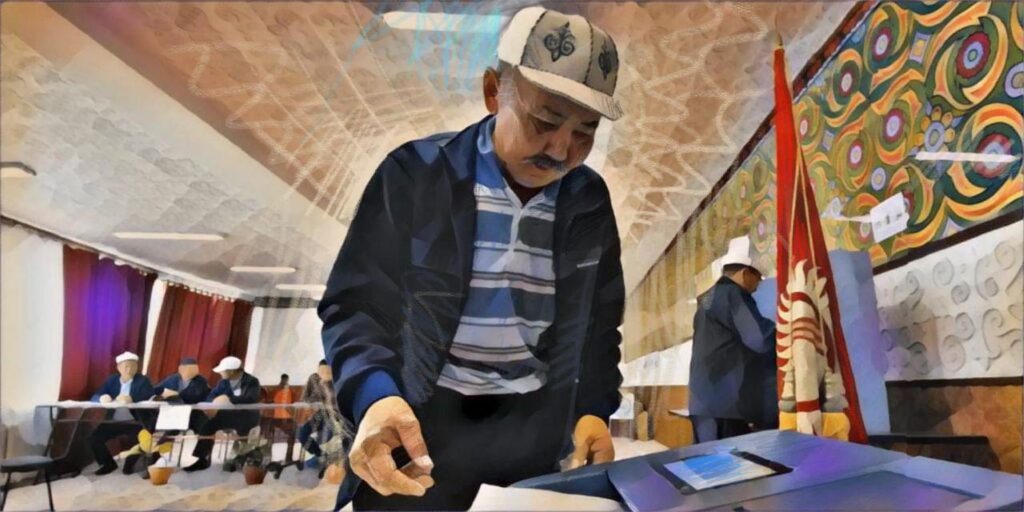
Kyrgyzstan Elections 2025: Short Campaign, High Stakes

Campaigning for seats in Kyrgyzstan’s upcoming parliamentary elections is underway, and it is already shaping up to be a race unlike anything seen before in Kyrgyzstan. The 467 candidates competing for the 90 seats in parliament have only 20 days to make their cases to voters in their districts. Kyrgyz President Sadyr Japarov’s government has vowed to keep these elections clean and fair, and threatened severe punishment for those who attempt to cheat in any way. Uneven Electoral Landscape The country is divided into 30 voting districts, and in each district, the three candidates who receive the most votes will win seats. The level of competition varies, depending on the district. Electoral district 11, which is Manas city (formerly Jalal-Abad), has 155,023 eligible voters. Only five candidates are running in the district, three of whom are women. According to new election rules, a woman (or a man) must win at least one of the three seats available in each district. Name recognition is always important, and especially so in elections with many newcomers seeking seats in parliament. One of the candidates in District 11 is Shairbek Tashiyev, the brother of the current head of the State Committee for National Security (GKNB), Kamchybek Tashiyev. He is almost certain to win one of the seats. In electoral district 19 in Kyrgyzstan’s northern Chuy Province, with 138,373 eligible voters, there are 25 candidates competing. The two districts with the largest number of voters, district 15 in the Aksy area of western Kyrgyzstan with 160,218 voters, and district 28 in the Zhety-Oguz area of eastern Kyrgyzstan with 160,181 voters, have, respectively, 15 candidates and 17 candidates. In the districts where there are 15 or more candidates, the three winners might only receive around 10,000 votes, or even less. The candidates are out meeting with voters, but many are relying on social networks to promote their image and spread their message. Domestic television stations, ElTR and UTRK, are airing candidate debates that “will be distributed regionally, depending on the candidates' electoral districts.” Not Running Eleven of the current 90 deputies in parliament have opted not to run for reelection. Among them are Iskhak Masaliyev - currently in the Butun (United) Kyrgyzstan Party but previously the long-time head of Kyrgyzstan’s Communist Party - the son of Absamat Masaliyev, who was first secretary of the Communist Party of the “Kirghizia” Soviet Socialist Republic from 1985 until independence in August 1991. Another current member of parliament who is not running is Jalolidin Nurbayev, whose attempt to register was rejected due to two criminal cases having previously been opened against him, one in 2006, the other in 2021.” A new election rule prohibits people whose cases were “terminated on non-rehabilitating grounds” from being eligible to hold public office. Effectively, this means that any case against them has been closed without declaring the person innocent, but without restoring their reputation, even though they are no longer being prosecuted. Members of organized criminal groups and their family members have won seats...

Kyrgyzstan Snap Election: Democracy on Edge or Politics as Usual?

On September 25, Kyrgyzstan’s parliament voted to dissolve itself, clearing the way for snap elections. As previously reported by The Times of Central Asia, deputies approved the dissolution by an 84–0 vote, with five abstentions and one absence. The election will now take place on November 30, under revised electoral rules. The new system divides the country into 30 constituencies, each of which elects three deputies, at least one of whom must be a woman. Lawmakers justified the move by pointing to the costs and logistical burdens of overlapping parliamentary and presidential campaigns, arguing that holding parliamentary elections a year early would streamline preparations and reduce the administrative strain. Critics, however, have suggested the real motivation is political, noting that pro-government blocs stand to benefit from locking in deputies under the new majoritarian system by mobilizing local administrative resources, especially after years of pressure on opposition groups and independent media. “Regarding the early elections, I fully support this decision,” Eldar Turatbek, founder of the Legalize political party, told The Times of Central Asia. “There is no point in waiting another year until the end of the 7th convocation’s term, especially when you consider that after the 2020 revolution, most deputies spent a year in temporary status anyway. In essence, they have already ‘worked off’ their five-year term.” Japarov’s Centralization of Power The dissolution also fits into a broader cycle of political reshuffles across the region. Both Kyrgyzstan and Kazakhstan have undergone rapid personnel and institutional changes in recent months, with Bishkek’s early vote reflecting President Sadyr Japarov’s emphasis on electoral timing, and, analysts argue, designs to cement his grip on power. The step arrives in a political environment that has grown markedly more centralized since Japarov’s rise during the turmoil of 2020. New restrictions on online media and internet traffic have narrowed the space for civil society, measures the government frames as necessary to restore order and promote national values. Rights advocates, however, warn of democratic backsliding in a country once seen as the most pluralistic in Central Asia. Opposition journalist Bolot Temirov offered a blunt assessment as to the reasons why the authorities are holding early parliamentary elections. “In recent years, the president’s entourage and the head of the State Committee for National Security have acquired money, and now want to show off their deputy badges,” he told TCA. “Kamchybek Tashiyev will try to get as many of his people into parliament as possible to strengthen his position in the confrontation with Sadyr Japarov and his team. Mandates have long since become a commodity, and parliamentary seats are for sale.” International IDEA has recorded a decline in civil liberties and checks on executive authority under the current administration, and Kyrgyzstan’s trajectory makes this moment especially significant. The country has experienced three revolutions since independence - in 2005, 2010, and 2020 - each triggered by discontent over corruption, contested elections, and concentrated presidential power. These upheavals reshaped institutions but also entrenched a cycle of volatility that continues to cast a...

“Be a Man”: Bishkek Vice Mayor Detained in Public Showdown

The Vice Mayor of Bishkek, Zhamalbek Yrsaliev, has been detained during a public meeting in the Tunguch neighborhood, presided over by Kamchybek Tashiyev, the controversial Chairman of Kyrgyzstan’s State Committee for National Security (GKNB). Residents at the July 16 meeting accused Yrsaliev of illegally occupying a 1,500 m² municipal land plot where unauthorized commercial kiosks and children's attractions had been operating for six years without any lease payments. According to Economist.kg, this misuse cost the city budget over 2.9 million Kyrgyz som ($33,160), and stalled the planned development of a public square and playground. During the meeting, Tashiyev confronted Yrsaliev directly. In a moment caught on video, he told the vice mayor to take responsibility for his actions and “Be a man,” ordering the security services to detain him immediately. Officers escorted Yrsaliev from the event to the GKNB headquarters. According to Sputnik Kyrgyzstan, Yrsaliev admitted responsibility and apologized, but Tashiyev continued to reprimand him, telling Yrsaliev, “You will not deceive the people.” The investigation is ongoing. The charges against Yrsaliev include abuse of office and corruption. Alongside him, officials from the Lenin and Oktyabr district administrations were also detained during the same operation, according to preliminary reports. Appointed as vice mayor in May 2024, Yrsaliev previously served as vice-mayor of Bishkek for housing and communal services, and akim of the Pervomaisky district. The arrest marks another chapter in Kyrgyzstan’s sweeping anti-corruption campaign under President Sadyr Japarov. In January 2023, former Deputy Prime Minister Zhenish Razakov was detained on suspicion of a $1 million fraud and abuse of office, and in December 2024, the authorities arrested the head of the state tax service and his deputy. While Yrsaliev’s detention has been officially framed as part of an anti-corruption effort, it unfolds within a broader political climate in Kyrgyzstan marked by increasing executive consolidation and the expanded role of the GKNB in domestic affairs. Independent watchdogs, including Freedom House, have noted a rise in politically motivated prosecutions and diminished judicial independence in recent years, raising concerns that cases such as this may serve not only legal but also political purposes. Further updates are expected as the investigation continues.

Kyrgyzstan’s Rebrand: New Country, or New Distractions?

On January 29, in what became a viral social media post, Seide Ibraimova and her mother drove to the site of VDNKh, the exhibition center built in the Kirghiz SSR to demonstrate the achievements of socialist science and culture. Her mother, wrapped in a white headscarf, reminisced happily about the times she’d spent there, surrounded by poplar trees in the shadow of the mountains. Seide’s father was one of the architectural team who built the main pavilion in 1974. But as they arrived at the site, they found nothing but rubble. The government had bulldozed the pavilion to make way for a new congress hall. “How could they?” said the old lady in a choked whisper. “Your father gave his heart and soul to this, for the people of the republic. The number of delegations who came here… how could they?” In the post’s comments section, an intense debate began. Some lamented the loss of the exhibition center: “Without this historic architecture, Bishkek will be nothing more than a concrete jungle,” said one. Another invoked Chingiz Aitmatov’s famous mankurt metaphor, describing those who had destroyed the site as having “no sense of memory or feelings, without attachment, who do not know who they are or where they come from.” Others were less sentimental, pointing out that VDNKh had been left to rot for two decades, and that those venerating the Soviet relics were the real mankurts, “forgetting your language, preaching the history and ideology of the fascists who invaded and occupied our country.” “You can forget the USSR,” said another. “We live in a sovereign state, the Kyrgyz Republic!” These online spats come at a time when Kyrgyzstan is going through a form of national branding under the government of Sadyr Japarov. But is the country really shedding its Soviet skin, or are the changes mere window dressing? [caption id="attachment_29217" align="aligncenter" width="1600"] The ruins of the VDNKh pavilion, February 2025; image: Joe Luc Barnes[/caption] Around two hundred meters from the wreckage of the pavilion is Yntymak-Ordo, or the “new White House”. This is the newly-constructed official administrative building of Kyrgyzstan’s president – a squat structure with thick columns, topped by a glass dome and surrounded by iron bars and armed guards. Reminiscent of many of the other presidential palaces that have sprung up across Central Asia over the past thirty years, it is an assertion of power. Further along Chinghiz Aitmatov Avenue (which was called Prospekt Mira until 2015) are scores of new high-rise residential buildings. Each month, new approvals are granted for more of these in the city center, contributing to a construction boom. Some see this as a deliberate attempt to erase the Soviet past from the city and replace it with their own idea of a modern Kyrgyz capital. The aesthetic shift is not just architectural. The government recently launched a competition for a new Kyrgyz national anthem. Aspiring composers have been invited to submit their proposals, the commission recently confirming that 23 have been accepted so...

Did Kyrgyzstan’s Security Chief Order an Assassination?

The head of Kyrgyzstan’s State Committee for National Security (GKNB), Kamchybek Tashiyev, has been waging a campaign against organized criminal groups in his country for the last few years and it seems he believes in fighting fire with fire. Speaking to representatives of Kyrgyzstan’s education sector on January 16, Tashiyev referred to the fight against organized crime, specifically mentioning the slain reputed crime boss Kamchybek Kolbayev. “I had to take the decision to liquidate the thief in law,” Tashiyev said, “for the sake of the state. And I made this decision, and we eliminated him.” He quickly regretted such candor after his comments received wide coverage and has revised his version of events leading up to Kolbayev’s killing. The Gangster Kamchybek Kolbayev, aka Kolya Kyrgyz, was allegedly the kingpin of Kyrgyzstan’s criminal world. The term “thief in law” originated in Soviet prisons among inmates who were high-ranking figures in organized criminal groups. This tradition continued after the fall of the USSR and the “Brothers’ Circle” of top thieves in law connects criminal organizations in former Soviet republics. Kolbayev seemed indeed to be a thief in law and according to the U.S. State Department, he was part of the Brothers’ Circle, and back in 2007 it was said that Kolbayev was the “leader of the most influential criminal group” in Kyrgyzstan. Kolbayev had been imprisoned more than once, though his prison conditions were not harsh. While in prison in late 2020, a video was posted of Kolbayev and other prisoners enjoying a small feast and singing. He seemed untouchable. The Raid On October 4, 2023, the GKNB’s special Alfa unit raided the Blonder Pub in Bishkek, looking for Kolbayev. Reports from that day said the GKNB intended to detain Kolbayev as a suspect in murder of another criminal figure in July 2022. According to the GKNB, Kolbayev offered armed resistance and was shot dead when the GKNB commandos returned fire. Given the lenient treatment Kolbayev had so often received from Kyrgyz authorities, it seemed strange he chose to open fire on law enforcement officers rather than submit to being gently detained, as he had been before, and possibly incarcerated in luxury prison conditions. However, Kolbayev was an odious figure in Kyrgyzstan, greatly feared by many and the circumstances of his death did not seem to matter to most people, so long as he was gone. A ‘Hit’? On January 16, Tashiyev explained to deputy education and science ministers, university rectors, and other directors of institutions of higher learning that the organized crime structure in Kyrgyzstan had grown strong and had extended across the country. Tashiyev said the criminal network was preying upon businesses and individuals. “We were forced to take necessary measures,” Tashiyev declared, and then stated he had given the order for Kolbayev to be eliminated. He added that the GKNB’s campaign against organized crime was a success. Kyrgyzstan had become “the only country in Central Asia… and probably in the post-Soviet countries, that does not have organized crime.” It...