
• KGS/USD = 0.01143 0%
  • KZT/USD = 0.00202 0%
  • TJS/USD = 0.10661 0%
  • UZS/USD = 0.00008 0%
  • TMT/USD = 0.28575 0%
  • KGS/USD = 0.01143 0%
  • KZT/USD = 0.00202 0%
  • TJS/USD = 0.10661 0%
  • UZS/USD = 0.00008 0%
  • TMT/USD = 0.28575 0%
  • KGS/USD = 0.01143 0%
  • KZT/USD = 0.00202 0%
  • TJS/USD = 0.10661 0%
  • UZS/USD = 0.00008 0%
  • TMT/USD = 0.28575 0%
  • KGS/USD = 0.01143 0%
  • KZT/USD = 0.00202 0%
  • TJS/USD = 0.10661 0%
  • UZS/USD = 0.00008 0%
  • TMT/USD = 0.28575 0%
  • KGS/USD = 0.01143 0%
  • KZT/USD = 0.00202 0%
  • TJS/USD = 0.10661 0%
  • UZS/USD = 0.00008 0%
  • TMT/USD = 0.28575 0%
  • KGS/USD = 0.01143 0%
  • KZT/USD = 0.00202 0%
  • TJS/USD = 0.10661 0%
  • UZS/USD = 0.00008 0%
  • TMT/USD = 0.28575 0%
  • KGS/USD = 0.01143 0%
  • KZT/USD = 0.00202 0%
  • TJS/USD = 0.10661 0%
  • UZS/USD = 0.00008 0%
  • TMT/USD = 0.28575 0%
  • KGS/USD = 0.01143 0%
  • KZT/USD = 0.00202 0%
  • TJS/USD = 0.10661 0%
  • UZS/USD = 0.00008 0%
  • TMT/USD = 0.28575 0%
07 February 2026

Viewing results 1 - 6 of 7

Kazakhstan’s Tazy: The Ancient Hunting Dog of the Steppe

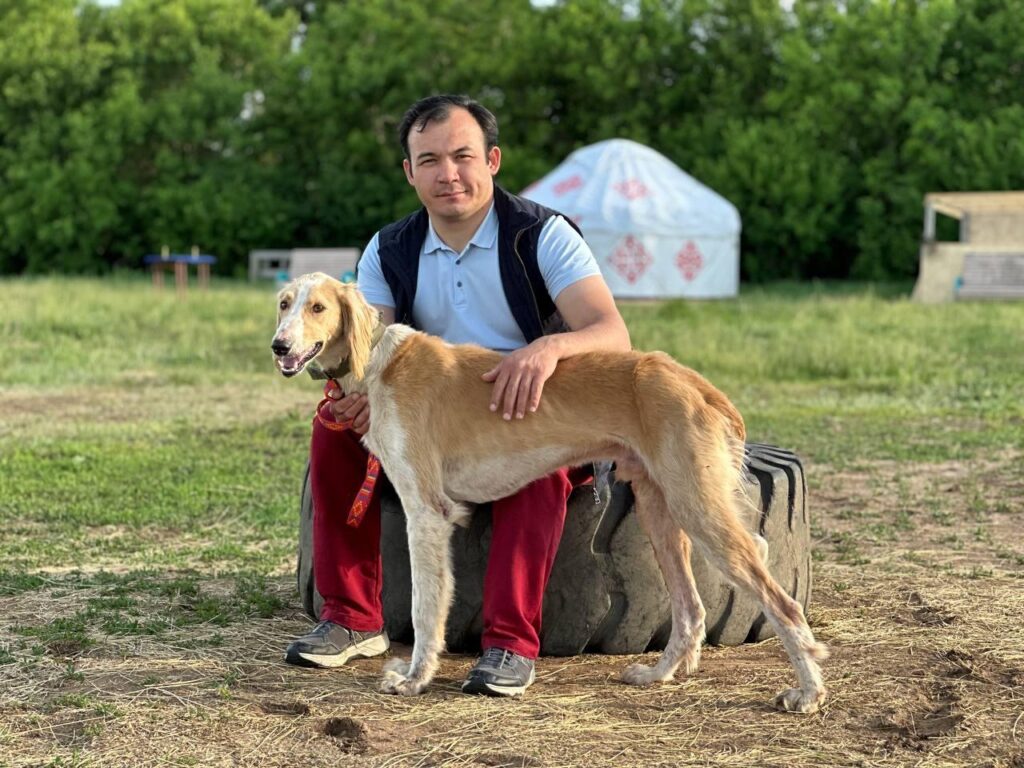
For centuries, nomadic tribes across the steppe that now forms modern Kazakhstan absorbed outside influences and adapted them to local conditions, creating something uniquely Kazakh. This adaptability is evident in many aspects of steppe life, including the development of the Tazy, the Kazakh greyhound. Bred over generations to protect what nomads valued most, their livestock, the Tazy is now considered one of the seven national treasures of Kazakhstan. “If we look at history, we can say that the progenitor of the Kazakh breed, the Tazy, was the Arabian greyhound saluki,” said breeder Abzal Dosyman in an interview with The Times of Central Asia. “Arab missionaries brought it to our lands. The Tazy and the saluki are similar, but over time, given the needs of the nomads and the harsh climate of the steppe, the breed adapted and transformed. Here, their descendants were trained to guard livestock and protect people from wolves.” Dosyman described the unique methods traditionally used to raise Tazys for such a role. As soon as puppies were born, wolf skin was placed nearby so they would learn the predator’s scent. At four or five months, the young dogs were taken on hunts, but only after a brief starvation period. They were then fed wolf meat, which, after the fast, was considered a delicacy. “Some may see this as cruel,” he acknowledged. “But this is how hunters were raised who dared to face wolves on the steppe. For centuries, Tazys helped Kazakhs protect their herds, which were their livelihood.” Though known for their gentle nature, Tazys transform during a hunt, becoming fast, fearless, and relentless. “They are friendly toward people and non-aggressive with other animals, but they are implacable toward the grey predator,” Dosyman said. He noted that many countries have their own hunting greyhounds. Russia has the Borzoi, Kyrgyzstan the Taigan, meaning “graceful,” and Spain the Galgo. All descend, like the Tazy, from the ancient Arabian saluki. But it was in Kazakhstan that the Tazy acquired its distinct characteristics, shaped by the local way of life. In 2024, the General Committee of the Fédération Cynologique Internationale granted provisional recognition to the Kazakh Tazy as an official breed, confirming Kazakhstan as the holder of its breed standard. The FCI currently recognizes 350 breeds worldwide. Tazy Diplomacy Following independence, Kazakh enthusiasts began reviving the Tazy and promoting national traditions. In 2019, Dosyman presented a Tazy puppy to President Kassym-Jomart Tokayev, who named it Ronnie. He later received Nancy, and another dog named Nauryz was gifted by breeder Anna Zakharova. These steps helped draw state-level support for efforts to preserve and expand the Tazy population. A photograph of the grown Tazys at a reception hosted by the French president for the King of Denmark even appeared in international media, symbolizing what Dosyman calls “Tazy diplomacy.” “This is the moment the Kazakh greyhound becomes a national brand,” he said. “The French have the rooster, the Chinese the panda. Remember when China gifted a panda to another country and it later died...
U.S. Envoys Experience Kazakhstan’s Living Nomadic Traditions

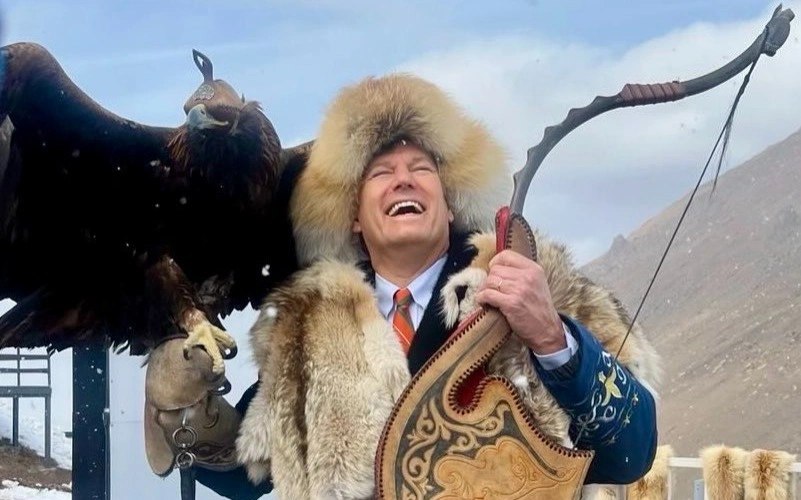
U.S. Special Representative for South and Central Asia Sergio Gor and Deputy Secretary of State Christopher Landau recently visited Kazakhstan as part of preparations for the upcoming C5+1 summit. While official releases highlighted meetings on regional cooperation and stability, local media also noted cultural engagements showcasing Kazakhstan’s living nomadic traditions. While in Almaty, the U.S. delegation also toured the Shymbulak ski resort and the Medeu high-altitude skating rink. Amidst the picturesque alpine scenery, they participated in traditional archery, an enduring symbol of the nomadic peoples’ skill and heritage. Archery: A Living Legacy Traditional archery, known as sadak atu, is experiencing a revival in Kazakhstan. As in the past, both boys and girls train in the discipline, a tradition rooted in the realities of steppe life, where women were equally taught to hunt and defend their communities. Far more than a sport, archery reflects a nomadic philosophy. In ancient times, the bow served both as a hunting tool and a weapon of war, requiring intricate craftsmanship using wood, bone, and animal tendons. Archers learned to shoot from horseback, relying on instinct and experience rather than sights. Today, this heritage is inspiring a resurgence of interest among young Kazakhs. Archery clubs are opening across the country, competitions are being held, and the traditional art is gaining popularity. The 5th World Nomad Games, held in Astana in 2024, prominently featured sadak atu among other ethnic sports. Petropavl also hosted the Kazakhstan Youth Traditional Archery Championship, drawing 400 participants aged 10 to 17, many in national attire. Meanwhile, Uralsk hosted the 4th Republican Traditional Archery Championship, with 270 athletes from 18 regions competing. Coaches expect the popularity of sadak atu and zhamba atu, mounted archery, to grow, offering Kazakhs a tangible link to their ancestral culture and a spectacle that continues to impress international visitors. [caption id="attachment_22863" align="aligncenter" width="909"] Horseback archery at the World Nomad Games 2024; image: TCA, Ilyas Otan[/caption] The Tazy: A National Symbol The Tazy dog, sometimes referred to as the Kazakh or Central Asian greyhound, holds a special place in Turkic heritage. Once indispensable to nomadic hunters, the breed’s cultural and historical value is now protected by state policy. In 2023, Kazakh President Kassym-Jomart Tokayev was gifted a Tazy puppy called Nauryz, which is named after the spring festival celebrating renewal. The president emphasized the importance of promoting the Tazy and Tobet breeds internationally and called on the Ministry of Foreign Affairs to participate in preservation efforts. A special law was adopted to support this cause. By 2024, President Tokayev had three Tazy dogs under his care. He is known to walk them personally in his free time. That same year, he gifted two Tazy puppies to French President Emmanuel Macron. Delivered to Paris, the puppies were named Jules and Jeanne. [caption id="attachment_38363" align="aligncenter" width="1200"] The Tazy; image: TCA, Stephen M. Bland[/caption] Hunting with Birds of Prey: The Wings of Victory The tradition of hunting with birds of prey, kusbegilik, has deep roots in Turkic culture, dating back millennia. Archaeological...

Kazakh Tazy Makes Sensational Debut at World Dog Show in Helsinki

The World Dog Show 2025 concluded on August 10 in Helsinki, marking the debut of the Kazakh Tazy on the international stage. For the first time, Kazakhstan’s national breed competed at this level and immediately gained recognition, winning seven major championship awards. Steppe Spirit Captivates Judges and Breeders The Kazakh national team drew the attention of leading judges, breeders, and experts, representing a major step toward global recognition of this unique hunting dog of the Great Steppe. The Union of Dog Breeders of Kazakhstan presented eight top Tazy at a national stand designed as a semi-yurt adorned with traditional ornaments. The display served as both a celebration of the breed and a cultural highlight, attracting visitors who posed for photos, picked up informational booklets, and asked questions about the dogs. Foreign breeders and heads of national clubs expressed interest in the breed’s history, results of genetic studies, working qualities, and health. Many requested training materials and details on how to purchase puppies. “The reaction of international experts confirms that our Tazy dogs occupy a worthy place in the world dog-breeding arena... The whole world has now learned about and become interested in the Kazakh Tazy breed. We are proud to have presented not only a unique hunting dog, but also a cultural symbol of Kazakhstan,” said Bauyrzhan Serikkali, chairman of the Kazakh Kennel Union. He added that the Union is ready to cooperate with foreign clubs and kennels, providing comprehensive information about the breed. Ahead of the exhibition, members of the Kazakh diaspora and compatriots in Finland attended a special presentation of the Tazy. Recognized as one of the treasures of the Zhet Kazyna (Seven Treasures), it was a memorable cultural highlight for them during the World Dog Show. President Kassym-Jomart Tokayev congratulated the Kazakh dog breeders on their success in Helsinki, sending a telegram to the Union. From National Law to FCI Recognition Efforts to preserve and promote the Kazakh Tazy and Tobet breeds began in 2023, when a relevant law was signed on the president’s instructions. That spring, the Ministry of Foreign Affairs was tasked with promoting the breeds internationally. In August 2023, the Union of Dog Breeders of Kazakhstan became a full member of the Fédération Cynologique Internationale (FCI) and gained the right to represent national breeds. In May 2024, a single-breed exhibition in Astana saw FCI experts examine 100 Tazy dogs. On September 3, 2024, in Amsterdam, the FCI provisionally recognized the breed and granted Kazakhstan the status of standard holder. Full recognition is expected no earlier than 2034, provided that breeding and participation in world competitions continue actively. President Tokayev has instructed officials to further strengthen the status of national breeds, making them a hallmark of Kazakhstan on the international stage.
