• KGS/USD = 0.01144 0%
  • KZT/USD = 0.00200 0%
  • TJS/USD = 0.10553 -0.19%
  • UZS/USD = 0.00008 0%
  • TMT/USD = 0.28571 0.28%
  • KGS/USD = 0.01144 0%
  • KZT/USD = 0.00200 0%
  • TJS/USD = 0.10553 -0.19%
  • UZS/USD = 0.00008 0%
  • TMT/USD = 0.28571 0.28%
  • KGS/USD = 0.01144 0%
  • KZT/USD = 0.00200 0%
  • TJS/USD = 0.10553 -0.19%
  • UZS/USD = 0.00008 0%
  • TMT/USD = 0.28571 0.28%
  • KGS/USD = 0.01144 0%
  • KZT/USD = 0.00200 0%
  • TJS/USD = 0.10553 -0.19%
  • UZS/USD = 0.00008 0%
  • TMT/USD = 0.28571 0.28%
  • KGS/USD = 0.01144 0%
  • KZT/USD = 0.00200 0%
  • TJS/USD = 0.10553 -0.19%
  • UZS/USD = 0.00008 0%
  • TMT/USD = 0.28571 0.28%
  • KGS/USD = 0.01144 0%
  • KZT/USD = 0.00200 0%
  • TJS/USD = 0.10553 -0.19%
  • UZS/USD = 0.00008 0%
  • TMT/USD = 0.28571 0.28%
  • KGS/USD = 0.01144 0%
  • KZT/USD = 0.00200 0%
  • TJS/USD = 0.10553 -0.19%
  • UZS/USD = 0.00008 0%
  • TMT/USD = 0.28571 0.28%
  • KGS/USD = 0.01144 0%
  • KZT/USD = 0.00200 0%
  • TJS/USD = 0.10553 -0.19%
  • UZS/USD = 0.00008 0%
  • TMT/USD = 0.28571 0.28%
21 February 2026

Viewing results 1 - 6 of 107

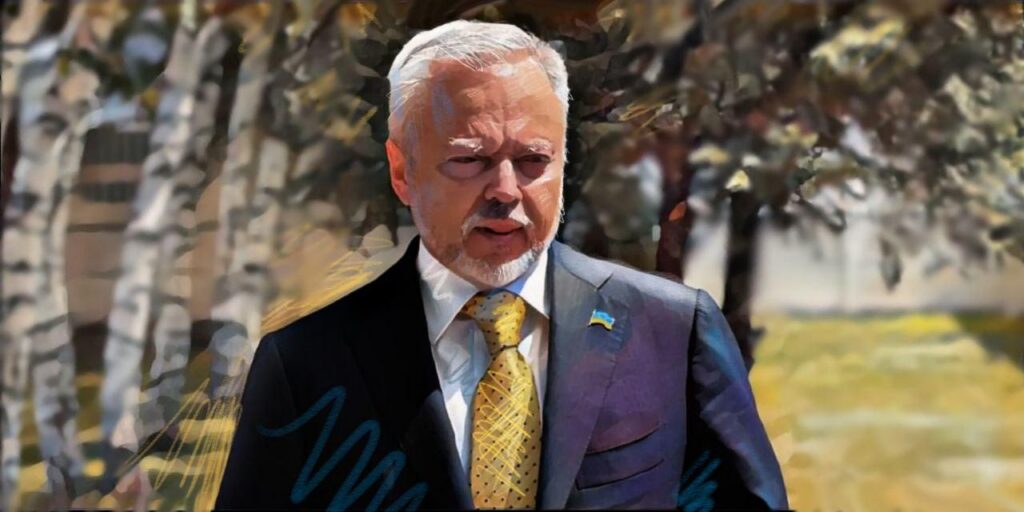
Kyrgyzstan Between the Russian World and Global Chaos: An Interview With Deputy Prime Minister Edil Baisalov

Edil Baisalov is a politician who began his career as a civil-rights activist, became a prominent member of Kyrgyzstan’s non-governmental organization (NGO) sector, and is now serving as the country’s Deputy Prime Minister. In an exclusive interview with The Times of Central Asia, he explained not only how his views have changed over the years, but also how Kyrgyzstan is seeking to find its place in what he described as a rapidly changing global landscape. In Baisalov’s assessment, the global system is facing a crisis of democracy. “The world order, as we know it, is collapsing – or at least is under attack from both within and without,” Baisalov told TCA. “The era of global hypocrisy is over, and the people of Kyrgyzstan have woken up. “What various international institutions have taught us over the years – their lectures on how to develop an economy, how to pursue nation-building, and so forth – has been proven wrong. Throughout the 1990s, Kyrgyzstan was one of the most diligent students of the liberal policies promoted by the “Chicago Boys.” We followed their instructions to the letter. Kyrgyzstan was the first post-Soviet country to join the World Trade Organization in 1998, and we were the first to receive normalized trade relations with the U.S. with the permanent repeal of the Jackson-Vanik amendment. All of our previous governments followed IMF conditionality dictates to the letter, especially in deregulation, mass privatization, and all the austerity programs and budget sequestrations. We were promised prosperity; that the free markets and the invisible hand would take care of everything. But it did not work. “I remember it well: at the time, U.S. President Bill Clinton laughed at China, saying that Beijing needed to adopt certain policies, to liberalize, or that science could not prosper in a closed society. He claimed the Chinese model was doomed to fail, arguing that scientific and technological breakthroughs could only occur in a Western-style society with minimal state intervention. Yet today, we witness the triumphant rise of the People’s Republic of China. This is not only an emergence but also a return to the rightful place of a great civilization that has, for millennia, contributed enormously to humankind.” TCA: Does this mean you now see China, rather than the West, as a model for Kyrgyzstan to follow? Baisalov: It’s not about the Chinese model or any particular foreign template. What we understood is that as a nation, we are in competition with other nations. Just like corporations compete with each other, nations must look out for themselves. If our state does not actively develop industries and sciences, there is no formula for success. All those ideologies promoting the “invisible hand” – the idea that everything will naturally flourish on its own – are simply false. TCA: When did Kyrgyzstan stop taking orders from outside forces and begin making independent national decisions? Baisalov: We used to be naive about wanting to be liked by others. But not anymore. In the last five years of...

Ukrainian Ambassador to Kazakhstan: “The War Will End This Year. I Truly Believe In That.”

As the war between Russia and Ukraine approaches its fifth year, diplomatic efforts to reshape trade routes, energy flows, and regional partnerships are intensifying far beyond the battlefield. For Ukraine, Central Asia has emerged as an increasingly important economic and logistical partner, particularly as Kyiv seeks alternatives to disrupted transport corridors and supply chains. The Times of Central Asia spoke with Viсtor Mayko, Ukraine’s Ambassador to Kazakhstan, about the prospects for deeper economic cooperation with Central Asia, the role of the Middle Corridor, energy transit challenges in the Caspian region, Kyiv’s expectations for international support, and a possible path toward ending the war. Trade and Economic Prospects in Central Asia TCA: Mr. Ambassador, what are the prospects for deepening trade and economic partnerships between Ukraine, Kazakhstan, and wider Central Asia? Which sectors offer the greatest potential for cooperation? Ambassador Mayko: Deepening trade and economic ties between Ukraine, Kazakhstan, and other Central Asian countries is not merely a prospect; it is a necessity dictated by global economic trends. Kazakhstan leads the region economically, with a GDP exceeding $300 billion. It is on a trajectory to join the G20 within 5 to 10 years. The United States, recognizing this potential, has invited Kazakhstan to the upcoming G20 meeting in the U.S., demonstrating Kazakhstan’s rising global significance. Ukraine and Kazakhstan’s economies are complementary. Ukraine brings experience in agricultural technology, mechanical engineering, IT, and processing, while Kazakhstan contributes resource strength, industrial capacity, and logistics. Promising areas for cooperation include agro-industrial development, from crop production to digitalized processing; industrial cooperation through equipment supply and joint production; logistics and infrastructure aimed at strengthening transport corridors; and energy and IT projects focused on efficiency and network modernization. We are already transitioning from theory to action. A major business delegation from Ukraine will visit Kazakhstan this year. We also anticipate another meeting of the Joint Ukrainian-Kazakh Intergovernmental Commission on Economic Cooperation, which is crucial for removing barriers and initiating new projects. Ukraine’s presence in Kazakhstan’s economy has historically been significant. If not for the war and resulting transport disruptions, I believe our mutual trade could have reached $10 billion. Ukrainian machinery still accounts for a substantial portion of Kazakhstan’s industrial base, especially in regions such as Karaganda, Aktau, and Pavlodar, though much of this equipment now requires modernization. Another promising area is mineral resource development. Ukraine has the scientific and practical base to contribute meaningfully to this sector. Turkmenistan’s earlier collaboration with Ukrainian firms in revitalizing depleted wells illustrates our potential. Wells deemed exhausted by older technologies yielded hundreds of thousands of tons of oil under Ukrainian management. This successful model can be applied in Kazakhstan, one of the EU’s top three oil suppliers. Transport Infrastructure and the Middle Corridor TCA: How is cooperation in the transport sector developing, especially regarding the Middle Corridor? Are there any potential plans for joint infrastructure projects? Ambassador Mayko: Russia’s full-scale aggression disrupted Ukraine’s previous logistics routes. Today, we prioritize alternatives like the Trans-Caspian International Transport Route, the “Middle Corridor”, as a...

Life After Relocation: Kazakhstani Inna Baitukenova on the U.S., Blogging, and Building a Business

Kazakh producer and screenwriter Inna Baitukenova, known for projects such as Satash, the documentary Oleg: The Story of Oleg Vidov, and the television series Ana Zhuregi and Taitalas, has opened a new chapter in her professional life since relocating to the U.S. A lawyer by education, she now works as a blogger and is developing her own beauty business in the American market. She spoke with The Times of Central Asia about adapting to life abroad, navigating the U.S. blogging scene, and the challenges and rewards of launching a business as a Kazakhstani immigrant. TCA: Inna, how long have you been living in the U.S.? Inna: My husband and I first came here as tourists in 2018. During that trip, my husband, journalist and film director Tolegen Baitukenov, met an American producer interested in making a documentary exploring potential familial ties between Native Americans and Kazakhs. He signed a contract, and we returned to Kazakhstan. In 2019, he presented the project at the Kazakh pavilion at the Cannes Film Festival. Interest was high, so we decided to change our status from tourists to working residents. We officially moved to the U.S. in 2019. We've now been living here for seven years. TCA: Did you and your husband come on talent visas? Inna: Yes. Initially, we came without our children, just to see how it felt. We liked it, returned home, and began applying for work visas. It wasn’t easy; we even had to obtain approval from the Directors Guild of America. TCA: How long did it take you to adapt? When did you begin to feel at home? Inna: I think we’re still adapting. But the first time I really felt at home was in 2022, after moving from Los Angeles to Orange County. It's a suburb about 90 minutes from LA. I was driving around, and suddenly everything felt familiar: the streets, the houses. That’s when I realized I felt a sense of home. The early days were very tough, but day by day, it got easier. We got used to the environment, improved our English, and started understanding how daily life works here, from utility payments to taxes. At first, we were converting all prices into tenge. When Tolegen started his company in 2019, everything was a challenge; there wasn’t even ChatGPT back then to ask questions. We were googling everything: how to get a license, register a business, and secure a trade name. When I started my own beauty studio in May 2025, I already knew how to rent an office and obtain all the necessary permits. TCA: You seem to have found your footing once you landed a good blogging contract. You now work with major brands, right? Inna: Yes, but blogging wasn't my goal. It happened by accident. I used to keep an Instagram account as a hobby back in Kazakhstan and never thought of it as a platform for making money. But I’ve always loved cosmetology and beauty. One day, I began posting about...

What the U.S. Really Wants in Central Asia: Behind the B5+1 Forums

The B5+1 business forum continued in Kyrgyzstan’s capital on February 5, as government officials, regional business leaders, and a sizable U.S. delegation met to discuss trade, investment, and regulatory barriers shaping economic ties between Central Asia and the United States. As Washington signals a more pragmatic, commercially driven approach to the region, questions persist over why U.S. investment has lagged behind political engagement and which markets are truly seen as priorities. The Times of Central Asia spoke with Dmitry Orlov, director of the Strategy: East–West analytical center, about the structural obstacles deterring American capital, the shift in U.S. policy thinking, and how Central Asian states are positioned within Washington’s evolving economic calculus. TCA: What serious U.S. capital investments in Central Asia can we talk about today? ORLOV: It is important to understand the main point. Talk of large investments, the arrival of American business, and long-term economic cooperation only makes sense in one case: if the U.S. repeals the Jackson-Vanik amendment, which was adopted back in the 1970s and extended to all former Soviet republics after the collapse of the USSR. Today, it remains a formal and, in many ways, psychological obstacle to a fully-fledged business partnership. At the same time, it is necessary to establish contacts at a business level right now. This is because if the amendment is repealed - and such statements are regularly heard in Washington - it is difficult to predict which countries in the region will receive investment flows and in what volumes. Recent international forums, including Davos, have shown that Kazakhstan and Uzbekistan are of the greatest interest to the U.S. in Central Asia. Their economies are developing more dynamically, and they can offer large-scale projects and a clear export base. The other countries in the region, Kyrgyzstan, Tajikistan, and Turkmenistan, are still perceived by investors as lower priorities. TCA: Previously, the U.S. actively promoted a political agenda in the region, including human rights and freedom of speech. Now these are rarely mentioned. Why do you think this is the case? ORLOV: The approach has become more pragmatic. The history of U.S. foreign policy shows that strategic and economic interests have always taken precedence. If a territory is attractive in terms of resources or transit routes, a format for cooperation will be found. In Europe, relatively speaking, the rule of law prevails. In Asia, the situation is different, and the Americans understand this perfectly well. Issues of ideology and human rights can move to the background if economic expediency comes first. This is especially true in Central Asia, where many issues are resolved through personal agreements and informal connections. Washington understands this. TCA: What exactly can Central Asia offer the U.S.? ORLOV: In terms of individual countries, Kazakhstan and Uzbekistan are again in the lead. They offer oil, gas, and, no less importantly, control over transit routes. There is currently a lot of discussion about rare earths and critical minerals, but their development is always long and expensive. As a result, interest in...

Kazakhstan-Based Actor Nyshanbek Zhubanaev on His Journey, Faith, and the Future of Cinema

Nyshanbek Zhubanaev is a professional actor, a graduate of the T.K. Zhurgenov Kazakh National Academy of Arts, and a rising star of series such as Sheker, 1286, and Munai. His path into acting, however, did not begin with red carpets or casting calls, but at a phosphorus plant. Taking a leap of faith to escape a life he describes as scripted by others, Zhubanaev pursued his childhood dream with persistence and conviction. In an interview with The Times of Central Asia, he reflects on his first steps in cinema, the role of faith, inner conflict, and why, for him, humanity matters more than talent. TCA: Your popularity came with the web series Sheker 2, 1286, and Munai. Two of them are set in the 1990s. Why do you think this decade continues to fascinate directors? Zhubanaev: It was a time of contrasts and complexity. When people say Munai romanticizes crime, I feel they’ve missed the point. It’s not about crime, it’s about the clash of personalities and how the oil business emerged in our country. The 90s serve as a backdrop. And in cinema, atmosphere is half the battle. As an actor, I want to be part of projects where that atmosphere is palpable. Whether it’s the 90s or another era doesn't matter. What matters is telling strong, vivid stories. TCA: What themes do you feel are missing in Kazakh cinema today? Zhubanaev: Our cinema is still developing, and there’s so much left to explore. People often say we lack films about love and relationships. We do have them, but not the kind you want to talk about seriously. And love is one of the hardest topics to portray, it leaves you no room to hide behind genre, action, or style. It demands talent. I read a lot, and I’m constantly amazed by the richness of Kazakh literature and history, and how little of it we bring to the screen. Take Mukhtar Auezov’s Karash Okigas, it’s a ready-made screenplay. During Soviet times, Kyrgyz director Bolotbek Shamshiyev adapted it, but today it deserves a modern retelling. TCA: You often cite literature as a source of cinematic inspiration. Zhubanaev: Absolutely. Look at Remarque’s All Quiet on the Western Front. Its recent film adaptation won an Oscar, though I found the film debatable. We have our own counterpart, Kazakh Soldier by Gabit Musrepov. Why not adapt that with a modern cinematic language? I also love the works of Beimbet Mailin. He’s an incredibly cinematic writer who remains relevant today. His Shuganyn Belgisi, written nearly a century ago, still speaks to issues like equality and the role of women in traditional society. As far as I know, Akan Satayev is currently preparing a film adaptation of Mailin’s Kulpash, the story of a woman who takes a desperate step to save her family during a famine. It’s powerful, dramatic material. The problem isn’t a lack of themes, it’s about who tells the story and how. You can create a visually perfect film and still fail...

Beyond the Yurt: Rethinking Nomadism in Kazakh Contemporary Art

At a moment when Kazakhstan is building new cultural institutions and asking bigger questions about what contemporary art should do, one curator has been quietly learning how power, taste, and narrative are shaped inside major museums. Akmaral Kulbatyrova, the first representative of Kazakhstan to receive the U.S.-based ArtTable Fellowship, spent 2025 working in the Exhibitions and Curatorial Projects Department at The Bass Museum of Art in Miami Beach, gaining rare inside access to how global exhibitions are conceived and positioned. Her work sits at the intersection of institutional practice and cultural repair, focused on reframing nomadic culture, Central Asian heritage, and Kazakh craft not as static tradition but as a current language. Akmaral’s experience links ambition and execution, showing how local histories can enter international spaces without being flattened. In this interview with The Times of Central Asia, we asked her what comes next. TCA: Nomadic imagery has become central to Kazakhstan’s national identity since independence. How are contemporary artists reshaping these symbols, and why does that matter for how the country sees itself today? AK: Kazakh contemporary artists briefly challenged Kazakh art in early avant-garde experiments in the 1960s. However, it stopped because of the huge presence of Socialist Realism, which was one of the movements where symbols like horses and yurts prevailed. Most of the contemporary artists reshape not the symbols; they reimagine nomadic culture, contextualizing pre-Soviet culture through researching how it changed over time. Many artists look back to pre-Soviet nomadic practices to explore how these traditions were disrupted by colonial and Soviet policies, yet continue to influence Kazakh identity today. By using installation, performance, and video, they move beyond decoration and folklore to show nomadism as a living culture rather than a museum image or symbols. This matters because it helps Kazakhstan see itself not through simplified national symbols, but as a society shaped by change, cultural mixing, and an ongoing negotiation between past and present. [caption id="attachment_42899" align="aligncenter" width="1536"] Qyz Zhibek, designed by Nikolai Vladimirovich Tsivchinsky and Moldakhmet Syzdykovich Kenbaev, 1971; image: TCA[/caption] TCA: Nomadism now circulates widely in pop culture, often detached from its historical meaning. Why does contemporary art provide a more critical way to examine what nomadic identity represents? AK: It’s typical that symbolic images prevail in pop culture, especially for countries that have not experienced a long artistic tradition. It is one of the ways to be acknowledged by the privileged cultures through the symbols that are easy to recognize and quickly signal national identity. In Kazakhstan, these images became important after independence, as they cover the main question of cultural uniqueness after colonial influence. Contemporary art takes slower and more contextual approaches rather than easy recognition. That’s why most modern scholars criticize symbolic language and would like to see art that explores unresolved histories and how nations were challenged or used their experience to construct their identity. [caption id="attachment_42900" align="aligncenter" width="750"] Anvar Musrepov, IKEA KZ; image courtesy of the Aspan Gallery[/caption] TCA: Many artists use nomadic motifs with irony rather...