• KGS/USD = 0.01144 0%
  • KZT/USD = 0.00216 0%
  • TJS/USD = 0.10698 0%
  • UZS/USD = 0.00008 0%
  • TMT/USD = 0.28530 0%
  • KGS/USD = 0.01144 0%
  • KZT/USD = 0.00216 0%
  • TJS/USD = 0.10698 0%
  • UZS/USD = 0.00008 0%
  • TMT/USD = 0.28530 0%
  • KGS/USD = 0.01144 0%
  • KZT/USD = 0.00216 0%
  • TJS/USD = 0.10698 0%
  • UZS/USD = 0.00008 0%
  • TMT/USD = 0.28530 0%
  • KGS/USD = 0.01144 0%
  • KZT/USD = 0.00216 0%
  • TJS/USD = 0.10698 0%
  • UZS/USD = 0.00008 0%
  • TMT/USD = 0.28530 0%
  • KGS/USD = 0.01144 0%
  • KZT/USD = 0.00216 0%
  • TJS/USD = 0.10698 0%
  • UZS/USD = 0.00008 0%
  • TMT/USD = 0.28530 0%
  • KGS/USD = 0.01144 0%
  • KZT/USD = 0.00216 0%
  • TJS/USD = 0.10698 0%
  • UZS/USD = 0.00008 0%
  • TMT/USD = 0.28530 0%
  • KGS/USD = 0.01144 0%
  • KZT/USD = 0.00216 0%
  • TJS/USD = 0.10698 0%
  • UZS/USD = 0.00008 0%
  • TMT/USD = 0.28530 0%
  • KGS/USD = 0.01144 0%
  • KZT/USD = 0.00216 0%
  • TJS/USD = 0.10698 0%
  • UZS/USD = 0.00008 0%
  • TMT/USD = 0.28530 0%

Viewing results 1 - 6 of 188

Kazakhstan’s Ruslan Kurbanov on Reaching the World Fencing Elite

Ruslan Kurbanov is a Kazakhstani épée fencer, a Master of Sport of International Class in Kazakhstan, a World Cup medalist, a two-time World Championships bronze medalist, and a two-time Olympian. He began his journey in a children’s fencing club in Ust-Kamenogorsk and has since risen to fourth in the world rankings. Today, he competes on the biggest stages, where a single touch can decide the outcome of a bout and the pressure from the stands can be overwhelming. In an interview with The Times of Central Asia, he explains how he handles that pressure, maintains focus amid crowd noise, and stays in control when everything is at stake. TCA: Congratulations, you’ve already won two World Cup medals this year, gold and silver. That’s an impressive result. Ruslan: Thank you. I’m pleased with these medals because, in reality, very few athletes can deliver consistent results across two consecutive competitions. TCA: How did you manage it? Ruslan: With experience, you gradually learn more about your body and how to prepare for competitions. You also become more familiar with the fencing world, you get to know many athletes, understand their strengths and weaknesses, study them, and prepare accordingly. Over time, you mature as an athlete and become more consistent. You develop a clear understanding of the level of results you are capable of. [caption id="attachment_47744" align="aligncenter" width="300"] @kazfencing.kz[/caption] TCA: You won silver in Astana. Do home conditions give you an advantage? Ruslan: There are two sides to that. On the one hand, the advantages are obvious: you’re at home, with familiar food, climate, and time zone, all of which help you prepare in a comfortable environment. On the other hand, there is pressure. When you compete at home, people expect you to deliver your best result. TCA: So winning a medal was a must? Ruslan: Of course. But I also had another goal. This was the first World Cup event held in Kazakhstan, and I understood that many local spectators would attend, perhaps seeing fencing for the first time. First impressions are crucial. People either fall in love with the sport or they don’t. For me, it was important to present fencing at its best, dynamic, exciting, and worthy. Maybe “present” is too strong a word, but I wanted people, especially children, to feel inspired, to have that spark. When kids see victories and the emotions athletes experience afterward, they start thinking, “I want that too,” and they come into the sport. TCA: Do you think you managed to inspire them? Ruslan: I hope so. After the final, when I stepped off the piste, many children came up to me, and parents asked for photos and autographs. It’s very rewarding to see that it resonated with someone and may have stayed with them. TCA: You were ranked seventh in the world? Ruslan: Now I’m fourth. After the tournament in Astana, I moved up to fourth place. TCA: In the final, you lost only to Ukraine’s Roman Svichkar. Do they have a particularly strong...

From From Global Streaming to International Productions: Kazakhstan Filmmakers Go International

Makpal Kursabayeva is a sound engineer whose work has increasingly extended beyond Kazakhstan’s local film industry. Over the years, she has contributed to projects with international teams, from working alongside The Matrix cinematographer Bill Pope to taking part in series produced for global streaming platforms. Her career highlights the expanding role of Kazakhstani professionals in international production and shows that local crews can compete with their Western counterparts. Her work includes on-set recording, post-production, and sound capture in environments ranging from military airbases and nighttime steppes to urban locations. In an interview with The Times of Central Asia, she discusses how the industry works and why crews from Kazakhstan are competitive in international productions. TCA: You are a highly experienced sound engineer, but most of your work has been on local projects. Do you think Kazakhstani specialists are competitive in the global market? Makpal: I have no doubt about it, however confident that may sound. Recently, we worked on an international series filmed in Kazakhstan by Turkish filmmakers. Many department heads were Turkish, but I led the sound department. We worked and communicated seamlessly; there were no barriers at all. And that’s always the case. I also worked on a commercial project for Chevron, where the cinematographer was Bill Pope, who shot the legendary film The Matrix, the Ant-Man films, Shang-Chi, and more. TCA: Was the entire crew international as well? Makpal: The second director was American. Playback equipment was brought from Moscow. It was a mix, bringing together the best. The Russian team even said that such sound equipment isn’t available in Moscow. Technically, we are not lagging behind at all. We also have plenty of talented and highly skilled professionals. TCA: Were they at all arrogant? Makpal: Not at all. Bill Pope was great to work with. He’s like a rock star, very open, loves music. We talked about ethnic music; I let him listen to the band Turan. He even asked me to play the dombra. I was a bit nervous because the executive producer was very strict, and I thought she might say I was disrupting the workflow. But he went to her himself and asked, and then she was the one chasing me to make it happen, so the question isn’t whether we can work at a Western level; we already do. TCA: You’ve also worked with German teams on Emir Baigazin’s films, and with French teams on projects by Yermek Shinarbayev and Akan Satayev’s epic Myn Bala: Warriors of the Steppe? Makpal: Yes. There was an interesting experience with one Western specialist, I won’t say from which country. I thought they had a different school and that I could learn from him. But while he was good on set, he wasn’t very strong in post-production. It even got to the point where I was teaching him, explaining how to properly edit sound and the technology behind it. Sometimes I would suggest something, and the next day those ideas would be presented as his own....

How Young Professionals from Central Asia Are Building Global Careers

Beyond opportunity, a new generation of Central Asians is learning how to compete, adapt, and fit into global work environments. “I felt like I would understand what real work is much faster by living in the U.S.,” Ruzana Ileuova says. Many people view building a career abroad as an opportunity. However, for Central Asian professionals, it also entails constantly adapting to new identities and expectations. While logging in to work every day from a location that feels both familiar and unfamiliar, Ruzana learns to trust her abilities and adapt to unspoken expectations. She says that pressure increases when working remotely, as it requires a high level of self-discipline. “I always feel like I have to do more to prove myself,” she says. Despite strong language skills and academic preparation, she describes an ongoing sense of self-doubt, particularly in high-performance environments. “Even the language barrier still gives me imposter syndrome,” she adds. “And I’m the youngest on my team.” Her narrative highlights a crucial aspect of this generation: success overseas requires constant negotiation of confidence, identity, and location, in addition to opportunity. Reinventing the Path For others, the path to an international career begins not with a plan, but with chance. Originally from Bishkek, Kyrgyzstan, Aman Arykbaev did not imagine a global career. His journey began when he was unexpectedly selected for the green card lottery. “I used to think the green card was not a real thing until I saw that I was selected,” he says. His early years were characterized by uncertainty, as he arrived in the United States with little money and no guidance. “I worked almost two years installing heating, ventilation, and air conditioning. At that time, my English was very weak,” Arykbaev recalls. After attending a six-month IT boot camp, he was able to enter a new field and land his first tech job in a matter of weeks. “I had several interview stages, and by the end of the week, I got an offer.” Arykbaev, who is currently a senior quality engineer, exemplifies a characteristic of this generation: the ability to change course. Careers are now rebuilt, sometimes from the ground up, rather than fixed. Breaking Into Global Systems The route was more regimented, but no less difficult, for Aldiyar Bekturganov, an Amazon software engineer. He followed a well-known path of internships, networking, and applications after relocating to the U.S. for college. However, the process was anything but easy. “I failed my first interview completely,” he says. That setback accelerated his learning curve. Even after landing a job, entering the workforce was not without its challenges. The shift from university to professional life, he explains, was immediate. “You suddenly realize the work actually matters,” he says. “If something is delayed, people are waiting on you.” Unlike academic settings, where mistakes are part of the process, professional environments demand results that affect teams and timelines. While Bekturganov represents a more traditional corporate trajectory, Dameli Bozzhanova offers a contrasting perspective shaped by entrepreneurship and flexibility. Working in...

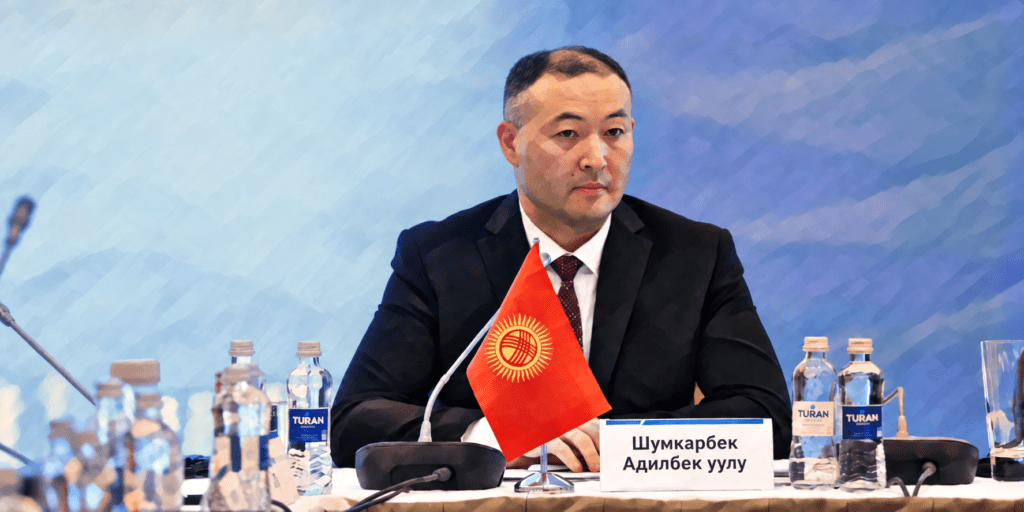
Kyrgyz Minister Sydykov Courts Investment in Washington

On the occasion of the annual IMF/World Bank meetings in Washington this week, the Prime Minister of Kyrgyzstan, Adylbek Kasymaliev, led a delegation to Washington D.C. for World Bank and IMF meetings, the Department of State Annual Bilateral Consultations, a meeting with Secretary of State Rubio, Deputy Secretary Landau and Under Secretary Hooker, as well as a number of other constructive dialogues and engagements with scholars, researchers, and authors. This trip marks the second high-level U.S. visit in a year, signaling Washington’s strategic interest and Kyrgyzstan’s willingness to deepen cooperation. Bakyt Sydykov, Kyrgyzstan’s Minister of Economy and Commerce, accompanied the Prime Minister. The delegation’s visit to Washington reinforces President Sadyr Japarov’s statement to President Donald Trump during the November 2025 C5+1 Summit, “I am confident that this event will provide an excellent opportunity for U.S. businesses to expand cooperation in sectors such as agriculture, e-commerce, information technology, transportation and logistics, tourism, and banking.” Following Japarov’s lead, Sydykov is actively engaging private and multilateral partners; state and Commerce meetings are meant to keep things moving and steady investor confidence. This shift towards deeper diplomatic, investment, and development ties is striking and certainly welcome in Washington. The shift reflects both an evolving Central Asian geopolitical landscape, post-Afghanistan dynamics, economic needs, diversification goals, and troubles in West Asia. Deeper engagement is also driven by ambitions to enhance regional transport and logistics integration. Kyrgyzstan’s approach departs from zero-sum logic, prioritizing win-win pragmatism and mutual gains. Minister Sydykov In an interview with The Times of Central Asia, Minister Sydykov said that this visit builds on the International Monetary Fund’s (IMF) recent official mission to Bishkek (March 18–April 1, 2026) and that “our banking sector is strong and well capitalized, as affirmed by the IMF, and we are well prepared against risk, enhancing oversight in the context of global volatility.” Commenting on the government’s fiscal management following the IMF’s guidance, Sydykov said: “To expand fiscal flexibility, we are mobilizing revenue across a range of standard taxation measures and raising expenditure efficiency with responsible internal wage policies, rationalized energy subsidies, and public investment management. We are pinpointing more prudent debt management measures, enhancing risk oversight, and rolling out tracking metrics to uphold long-term sustainability and credibility.” ⁠Looking forward, Sydykov noted that Kyrgyzstan is monitoring outlook risks related to external volatility, while also insisting that “we are working to hold down domestic inflation – always a challenge with rapid economic growth – and lower fiscal pressures. We assess that these endogenous variables remain manageable, even with increased exposure to cross-border trade and capital flows. While external volatility lies beyond our direct control, Kyrgyzstan is working with the IMF, other multilaterals, and domestic banks to maintain and build resilience. We are therefore strengthening buffers, recalibrating policies, and advancing accounting reforms to support performance and sustainable growth.” Responding to the ADB’s latest forecasts, Sydykov said Kyrgyzstan’s economy is moving toward greater stability and growth. After an 11.1% surge in 2025, growth is expected to slow to 8.9% in 2026 and 8.4%...

Kazakh Violinist Dinara Bazarbayeva-Sakhaman on Sound, Identity, and the Demands of the Stage

Dinara Bazarbayeva-Sakhaman, a soloist at the Zhambyl Kazakh State Philharmonic, spends much of her time moving between countries and concert halls, performing with international orchestras and collaborating with musicians from different traditions. Behind these appearances lies not only a demanding touring schedule, but also rigorous discipline: long hours of rehearsal, complete dedication on stage, and a constant search for the right sound. Speaking to The Times of Central Asia, she reflects on the Kazakh violin school, the nature of talent, and the enduring pull of her instrument. TCA: Dinara, your career has taken you to many countries. What has that experience been like? Dinara: Not the entire world, of course, but I’ve visited many countries thanks to my profession. The only time I traveled without my violin was when I went to Thailand, and throughout the trip, I felt as if something was missing. It was unusual, waking up on the plane and thinking, “Where is my violin?” TCA: Do you usually travel with an orchestra? Dinara: It varies, but more often I travel alone. There are projects where orchestras are assembled from musicians from different countries. For example, the renowned violinist and now conductor Marat Bisengaliev does this in India. For the Symphony Orchestra of India, he invites musicians from around the world. I have been collaborating with this orchestra for quite some time; it is an excellent ensemble. Working in such groups, sharing cultures, performing for diverse audiences, and collaborating with musicians from different parts of the world is one of the most fascinating aspects of our profession. TCA: Are there any distinctive features of the Indian violin school? Dinara: I performed in Mumbai, where there are several schools. One was founded by Marat Bisengaliev at the National Centre for the Performing Arts, and another by Mehli Mehta. In Bisengaliev’s school, classical violin is taught based on our educational system while incorporating elements of Indian tradition. What surprised me most was the number of self-taught violinists. TCA: And how do they play? Dinara: Surprisingly well. Their path is very different, yet the results are impressive. In our system, if you don’t start learning the violin at the age of five or six, seven at the latest, it is believed that you will not catch up and will likely remain an amateur. However, I know someone who began playing at 33 and now performs in a professional orchestra, knowing first violin parts almost by heart. He has a beautiful tone and excellent intonation. For me, this is a unique case. TCA: At what age did you start playing? Dinara: At five. That means I’ve spent 36 years with the violin and cannot remember life without it. I often joke that it is my lifelong implant—an inseparable part of me, with only its size changing as I grew. TCA: How would you describe the Kazakh violin school? Dinara: The foundation of our school lies in the Russian-Soviet tradition. During World War II, many teachers were evacuated to Kazakhstan and remained...

Contemporary Theater in Kazakhstan: Between Tradition and Experiment

Contemporary theater in Kazakhstan is undergoing a period of active development, balancing the preservation of cultural heritage with the search for new forms of expression. The Times of Central Asia spoke with Abai Kazbayev, an actor at the Zhambyl Regional Russian Drama Theater who is currently studying acting and directing, about how the theater scene is evolving, the challenges faced by actors and directors, and why experimentation has become essential. TCA: Tell us about yourself. How did your journey into theater begin, and what influenced your decision to become an actor? Abai: I entered the profession through my love of cinema. At first, I took part in crowd scenes, and then I became fascinated with the filmmaking process itself. To deepen my involvement, I joined a private theater on the recommendation of friends. There, I had the opportunity to work with Saulius Varnas from Lithuania, as well as with professionals such as Marat Amirayev and Altynshash Shayakhmetova. Today, I'm studying acting and directing at university, while also working at the Zhambyl Regional Russian Drama Theater. TCA: How do you assess the current state of contemporary theater in Kazakhstan? Abai: If we distinguish contemporary theater from traditional formats, most such productions are concentrated in Almaty. In other cities, theater tends to follow a more academic style, although there are exceptions. Personally, I'm drawn to how contemporary theaters reinterpret and reimagine classical works. This approach attracts both new and more discerning audiences. TCA: What makes Kazakhstani theater distinctive compared to that of other countries? Abai: Its uniqueness lies in the combination of cultures. We have European forms, ballet and opera, alongside contemporary interpretations, including those inspired by Bulat Ayukhanov. On the one hand, there are traditional productions about khans and batyrs; on the other, there are stories such as that of a boxer in Almaty in the 1980s, a stage adaptation of Martin Scorsese’s Raging Bull. TCA: How can contemporary theater preserve national traditions while remaining engaging for younger audiences? Abai: Through experimentation. For example, last year in Taraz, a sound drama based on Alexander Grin’s novella Scarlet Sails was staged. It offered a new interpretation: some lines were delivered in Kazakh, and Captain Grey’s song was also performed in Kazakh. It was an attempt to reflect Kazakhstan’s multiculturalism. Interestingly, the production was staged by students from GITIS in Russia. I believe such experiments help attract younger audiences while preserving national traditions. TCA: How important are elements of national culture, language, music, and folklore in today’s productions? Abai: There's currently a broader trend across the arts of returning to cultural roots, and theater is no exception. Every culture seeks self-identification. In cinema, folklore characters are widely used, particularly in the horror genre. In the theater, however, folklore tends to remain within traditional productions and is often treated with a sense of reverence. At the same time, it is worth mentioning the ballet Aldar Köse at the Abai Kazakh National Theater of Opera and Ballet in Almaty. TCA: How do you view experimental...