• KGS/USD = 0.01144 0%
  • KZT/USD = 0.00213 0%
  • TJS/USD = 0.10699 0%
  • UZS/USD = 0.00008 0%
  • TMT/USD = 0.28571 0%
  • KGS/USD = 0.01144 0%
  • KZT/USD = 0.00213 0%
  • TJS/USD = 0.10699 0%
  • UZS/USD = 0.00008 0%
  • TMT/USD = 0.28571 0%
  • KGS/USD = 0.01144 0%
  • KZT/USD = 0.00213 0%
  • TJS/USD = 0.10699 0%
  • UZS/USD = 0.00008 0%
  • TMT/USD = 0.28571 0%
  • KGS/USD = 0.01144 0%
  • KZT/USD = 0.00213 0%
  • TJS/USD = 0.10699 0%
  • UZS/USD = 0.00008 0%
  • TMT/USD = 0.28571 0%
  • KGS/USD = 0.01144 0%
  • KZT/USD = 0.00213 0%
  • TJS/USD = 0.10699 0%
  • UZS/USD = 0.00008 0%
  • TMT/USD = 0.28571 0%
  • KGS/USD = 0.01144 0%
  • KZT/USD = 0.00213 0%
  • TJS/USD = 0.10699 0%
  • UZS/USD = 0.00008 0%
  • TMT/USD = 0.28571 0%
  • KGS/USD = 0.01144 0%
  • KZT/USD = 0.00213 0%
  • TJS/USD = 0.10699 0%
  • UZS/USD = 0.00008 0%
  • TMT/USD = 0.28571 0%
  • KGS/USD = 0.01144 0%
  • KZT/USD = 0.00213 0%
  • TJS/USD = 0.10699 0%
  • UZS/USD = 0.00008 0%
  • TMT/USD = 0.28571 0%

Viewing results 1 - 6 of 197

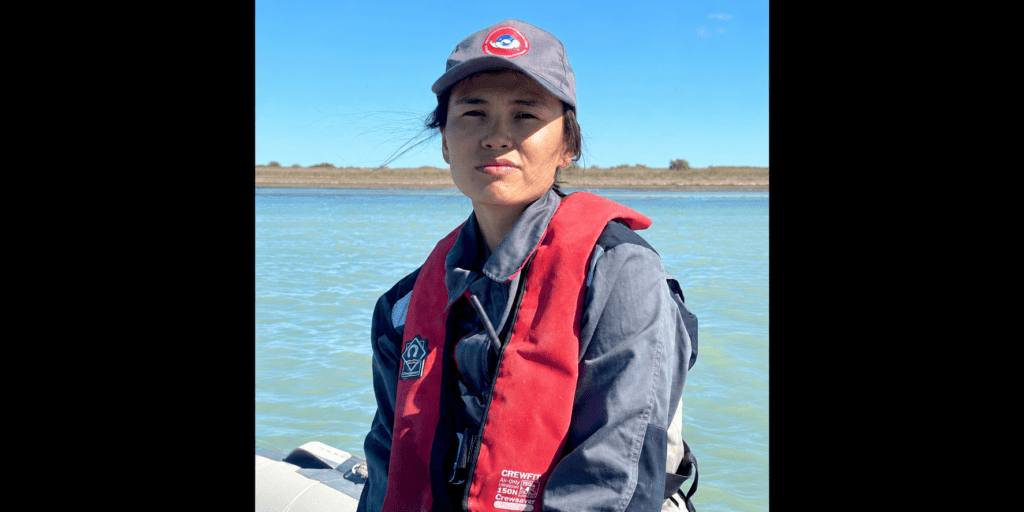
“Ornament Is a Language”: How a Tattoo Artist from Almaty Turns Culture into Art on Skin

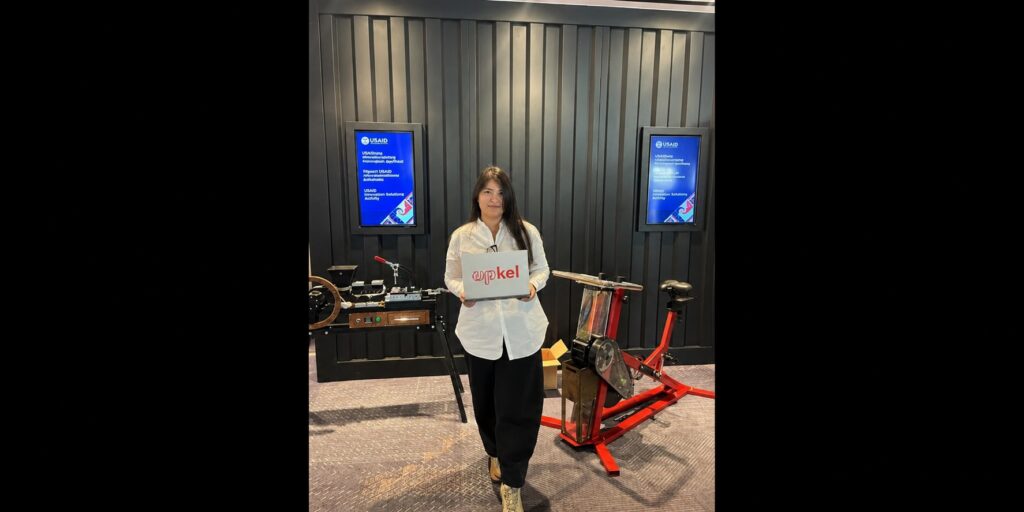
Almaty-based tattoo artist Saltanat Kuanova, known under the pseudonym tana.creator, is among those reinterpreting traditional culture through contemporary art. In her work, Kazakh ornaments become more than decorative elements, they form a complex system of symbols, personal stories, and cultural memory. The Times of Central Asia spoke with her about why Kazakhstanis are increasingly choosing national motifs, how attitudes toward tattoos are changing, and whether tattooing can serve as a means of preserving identity. Path into the Profession TCA: When and why did you start practicing tattoo art? Saltanat: I became interested in tattoos at around 14. Even then, I had a clear sense that it was “mine.” It wasn’t just curiosity, I immediately knew I wanted to become a professional in this field. At 16, I began tattooing. By that time, I had already studied the theory, watched videos, and understood the process, so I was well prepared for formal training and quickly started working. After completing my training, I was offered a position at a studio. That was important because it provided a steady flow of clients, and my work stood out. I worked there for about three years before moving into independent practice. I have now been working independently for more than five years. I’ve gained experience in different studios, and today I have my own private workspace in Almaty and manage bookings through Instagram. TCA: Do you remember your first work? Saltanat: Of course. It was a small tattoo with Roman numerals that I did for a friend during my training. She came as a model to support me, and honestly, I was more nervous than she was. My first paid piece left an even stronger impression it was a wolf with a dreamcatcher. That was the moment I first felt real responsibility toward a client. At the same time, I was surprised that I could actually earn money from this. Even now, years later, I don’t feel like I’m “already a pro.” It’s an ongoing process; there is always room to grow. [caption id="attachment_46606" align="aligncenter" width="225"] @instagram.com/tana.creator[/caption] Working with Kazakh Ornaments TCA: When did you start working with Kazakh ornaments? Saltanat: It happened gradually. At some point, I realized that ornament is not just a pattern, it’s a full-fledged language. It has structure, logic, even “grammar.” Everything matters: the shape, the number of elements, the color. Even a small detail can completely change the meaning of a piece. TCA: Who usually comes for such tattoos locals or foreigners? Saltanat: Primarily Kazakhstanis and, more broadly, representatives of Turkic peoples, Kyrgyz, Uzbeks, Tatars. But there are also many foreigners, and their number is growing. I tend to group them into categories. The first group includes people who come to Kazakhstan for work or travel and want a lasting memory of the country. The second consists of those who have a partner from Kazakhstan. They come together and, through tattoos, connect with each other’s cultures. The third and most touching category is people who were adopted abroad as...

Kazakhstan Pushes to Unlock Private Investment as IFC Backs Reform Drive

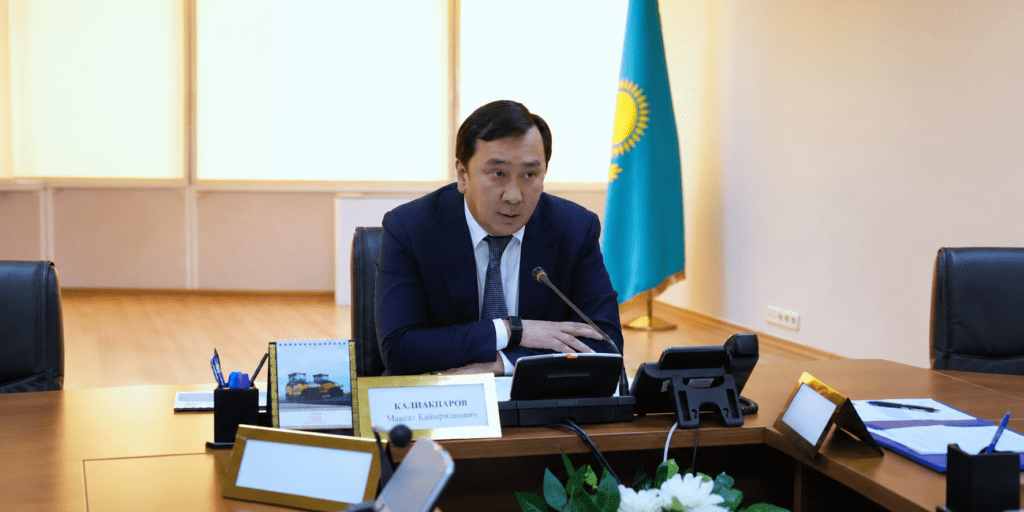
Kazakhstan is positioning itself as a more attractive destination for private investment, as authorities push to expand infrastructure, improve access to capital, and strengthen its role along key Eurasian trade routes. In an interview with The Times of Central Asia, Lisa Kaestner, the new Regional Director for Türkiye, Kazakhstan, and Uzbekistan at the International Finance Corporation (IFC), outlines how the World Bank Group’s private sector arm plans to support that shift, from backing transport corridors to mobilizing capital for businesses and infrastructure projects. TCA: Since taking up your new role, how has your career path and leadership experience shaped your approach to this position? Kaestner: I joined IFC as Resident Representative in Georgia in 1999, and that early experience shaped how I approach working directly with local partners and stakeholders. Since then, I've held several leadership roles across IFC and the World Bank, primarily in Eastern Europe and Central Asia, while also expanding into Africa, where I led advisory services to governments across Eastern and Southern Africa — working across sectors like agribusiness, tourism, housing, technologies and financial services to support private sector-led growth. More recently, I served as Country Manager for Ukraine and earlier also Moldova, where I led IFC's strategic work on expanding support for businesses and financial institutions and helping lay the groundwork for private sector participation in Ukraine’s reconstruction. In March 2026, I stepped into my current role as Director overseeing IFC's activities in Türkiye, Kazakhstan, and Uzbekistan, focused on mobilizing private investment and advancing reforms in close partnership with governments and the private sector. TCA: How do you assess the investment attractiveness of Kazakhstan at present? Kaestner: Kazakhstan presents a compelling investment story. The country benefits from a strategic geographic position at the heart of Eurasia, significant natural resources, and a government that has demonstrated a genuine commitment to reform and private sector development. From our point of view, several factors stand out as particularly encouraging. Kazakhstan has made meaningful progress in strengthening financial sector regulation and advancing infrastructure development. At the same time, we recognize that challenges remain. One key factor is the dominant role of the state in the economy, which represents roughly 40% of GDP, especially in major sectors like natural resources, electricity, telecommunications, and infrastructure. In this regard, we support the government’s efforts to increase private sector participation through privatization, IPOs, and public-private partnerships (PPPs). Additionally, maintaining steady progress on governance, transparency, and the rule of law remains crucial for sustaining investor confidence in the long term. Diversifying the economy away from commodity dependence — while significant strides have been made — remains a priority, as does deepening domestic capital markets to reduce reliance on external financing. Broader reforms are needed to achieve stable economic growth and improve the business climate, which will allow Kazakhstan to reach the level of developed countries. Significant efforts to develop the Trans-Caspian Transport Corridor (TCTC)—also known as the Middle Corridor, which is becoming increasingly important as an alternative trade route between Asia and Europe are...

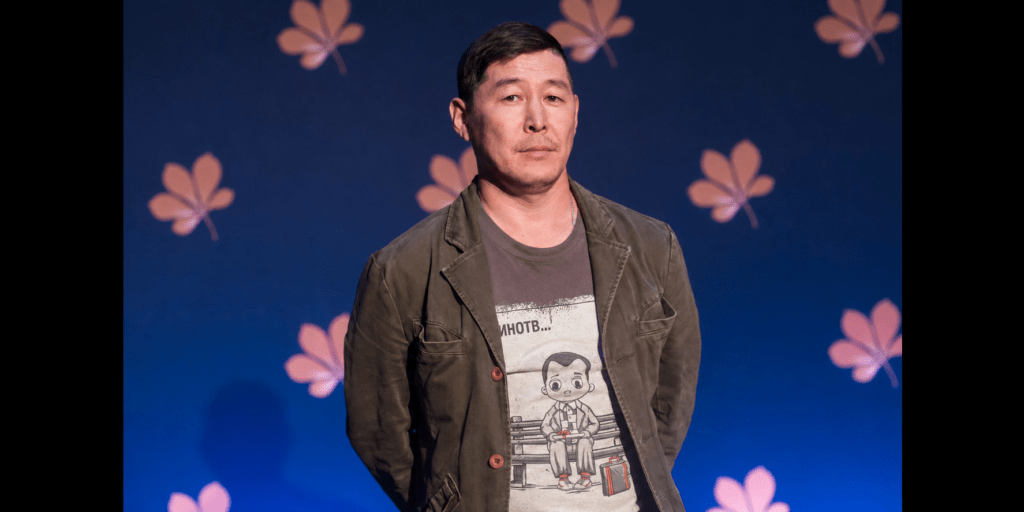
Actor Rauan Akhmedov on Cinema in Kazakhstan and Why He Has No Interest in Hollywood

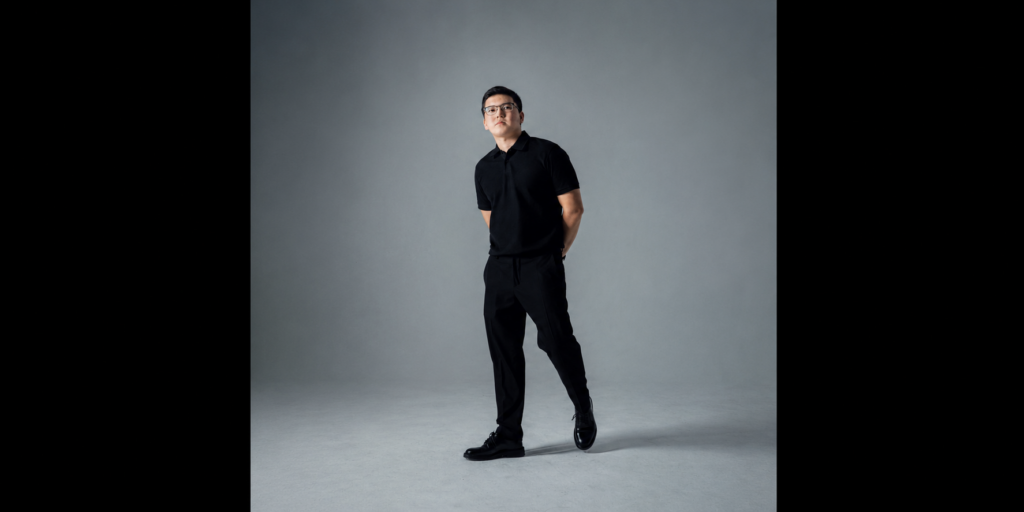
Rauan Akhmedov is one of Kazakhstan’s most sought-after young actors. Despite his rapidly rising career and growing international interest in Kazakh cinema, the 22-year-old says his priority is to continue developing within the domestic industry. In an interview with The Times of Central Asia, he discusses the state of cinema in Kazakhstan, the role of personal experience in his acting, and why tradition and modernity are not mutually exclusive. TCA: Your breakthrough came with Black Yard, directed by Dias Bertis. Is it true he noticed you while you were filming a small cameo in the series The Player? Rauan: Yes. I came to the audition, and we were rehearsing a scene with another candidate, I think he was reading for a doctor. We weren’t getting it right, so at some point the director stepped away. I then suggested to my scene partner that we try a different approach. Dias overheard us, came over, and said, “Switch roles.” We did, and he decided I should take the part. Apparently, he liked my performance, and later he invited me to Black Yard. TCA: You have three films coming out this spring. Is the Kazakhstani film industry becoming overcrowded? Do you feel the urge to work abroad? Rauan: Not yet. I want to follow my own path and realize my potential here. I believe Kazakhstani cinema can reach a very high level. I don’t dream about Hollywood. If I ever end up there, I want it to be through a Kazakhstani project. It’s important for me to stay at home, the language, the culture, the people. I want to grow here and contribute to the development of cinema in my country. Especially as audiences abroad are beginning to take an interest in our films. We haven’t conquered the world yet, but we’re improving all the time. Kazakhstan has strong potential. TCA: Would you describe yourself as a patriot? Rauan: Yes. I respect our filmmakers. When someone succeeds, when a film performs well at the box office, I’m genuinely pleased, even if it’s not my project. I think that once we overcome internal divisions and start supporting one another, we can achieve a great deal. TCA: Many films are now being shot in the Kazakh language. Does that give Kazakh-speaking actors a competitive advantage? Rauan: Probably. But in my view, that’s natural. Every country produces films in its own language. We are Kazakhs, who else will make films in Kazakh? At the same time, I respect all languages, Russian, English, Chinese. The more languages you know, the broader your perspective. TCA: You often portray characters from the 1990s, even though you were born in the 2000s. How do you research that period? Rauan: Partly through my parents. But it’s not that long ago, you can find a lot online, and I experienced some of it myself. For example, we had a rotary phone at home. We often used a VCR to watch home videos, family celebrations, my parents’ wedding. I saw how young they...

Why More Students in Kazakhstan Choose to Study Abroad

An increasing number of students in Kazakhstan are considering education abroad. For some, it offers access to high-quality academic programs; for others, it provides opportunities to gain international experience, learn new languages, and improve career prospects. Interest in foreign universities is growing among school graduates and their parents, who increasingly view overseas education as an investment in their children’s future. According to the Bureau of National Statistics, 678,100 students were enrolled in higher education institutions in Kazakhstan at the start of the 2025-2026 academic year. At the same time, data from the International Trade Administration indicate that more than 90,000 Kazakhstani citizens are currently studying abroad.  Sanzhar Uvashev, an employee of InterPress Abroad, a company that assists applicants seeking admission to foreign universities, spoke about the factors influencing students’ choices and the opportunities offered by international education. TCA: Tell us about your work. What does your organization do? Uvashev: Our company helps students apply to universities abroad. We support applicants in selecting academic programs, preparing documents, and navigating the entire admissions process. One of our distinguishing features is that we are not limited to a specific list of partner institutions or countries. We can assist students in applying to a wide range of universities, depending on their individual preferences. TCA: Which countries are currently the most popular destinations? Uvashev: We work with a broad range of destinations, particularly the United Kingdom, the United States, and Canada, as well as countries across Europe and Asia. Recently, students have shown greater interest in exploring multiple options rather than focusing on a single country. Some prioritize studying in an English-speaking environment, others seek more affordable tuition, while some focus on scholarship opportunities and employment prospects after graduation. TCA: What opportunities exist today for students from Central Asia to study abroad? Uvashev: Opportunities are expanding. Many universities are paying closer attention to applicants from Central Asia, as international students contribute to a more diverse academic environment. As a result, institutions are offering scholarships, tuition discounts, and preparatory programs. Awareness of the region is growing, and with it the range of options available to students. TCA: Why do students continue to choose the U.S. and other destinations? Uvashev: The U.S. remains one of the most popular destinations because of its strong universities and perceived career opportunities. At the same time, countries such as Italy, Austria, and China are also attracting interest. Italy and Austria appeal to students because public universities there can offer relatively affordable, and in some cases almost free, education. China has gained popularity due to the quality of its universities, their rising positions in global rankings, and the availability of scholarships for international students. TCA: Are there programs that allow students to study free of charge? Uvashev: Yes. Students often inquire about scholarship schemes that significantly reduce tuition fees or cover them entirely. Examples include the Bolashak international scholarship program, Stipendium Hungaricum, and Erasmus Mundus. These initiatives provide talented applicants with real opportunities to obtain an education abroad, provided they are well...

Kazakhstani Cinema at a Turning Point: Screenwriter Sergey Litovchenko Discusses the Industry

Kazakhstani cinema may be entering a “golden age.” Kazakh films are increasingly appearing at international festivals, while television series are reaching major global streaming platforms and attracting millions of viewers. Yet the country has not broken through at the Oscars, and the reasons go beyond funding. Screenwriter and creative producer Sergey Litovchenko discusses the changes and challenges shaping the industry, why the pandemic unexpectedly benefited Kazakhstani cinema, and which projects he considers the most significant milestones to date. TCA: Sergey, the Oscars have just taken place. Will Kazakhstan ever win an Oscar? And when might that happen? Sergey: Our industry is developing rapidly, with the pace increasing every year. I believe we are close to that moment. However, it will probably come sooner in the short-film category. Although it may seem like an unattainable goal, that is not the case. Look at Brazil, for example, which has been prominent in the Oscar race for the second year in a row. Last year, the film I’m Still Here received three nominations and won an Oscar for Best International Feature Film. This year, Brazilian entries have already secured four nominations, including Best Picture. So anything is possible. At present, the main factor holding us back is technical capacity. TCA: The relatively low-budget film Sentimental Value won Best International Feature Film this year. Is technical prowess really the most important factor? Sergey: It is technically very well made. We should also remember that it participated in a major festival and featured Hollywood star Elle Fanning. The reason I mentioned the Brazilian example is that Brazilian cinema is not widely known to mass audiences, yet the technical quality and acting impressed me. It is clear they have the time and resources to prepare thoroughly for filming. For Kazakhstan, the situation is more complex. We often operate in a “we should have filmed this yesterday” mode. The only film to reach not just the shortlist but the nominations was Sergei Bodrov’s Mongol. It is a masterpiece of technical craftsmanship. Its $17 million budget is evident on screen. It is not only technically accomplished, but also a strong film artistically. There have been other worthy candidates: Sergei Dvortsevoy’s Aika and Tulpan, Yermek Tursunov’s Kelin, and Askhat Kuchinchirekov’s Bauryna Salu. All are high-level works. But for a major breakthrough, we need stronger production capacity. TCA: Is this primarily a question of money? Sergey: Not always. I often hear filmmakers say, “Give us a budget and we will make it happen.” I ask them how much they need, a billion? Two? Asghar Farhadi shot A Separation for $400,000. Andrey Zvyagintsev filmed The Return for about $300,000. So it is not only about money. Nor is it about casting, we have many talented people. To create a breakthrough film, you need not only a profound story but also extensive preparation and a certain uncompromising attitude, in a positive sense. In Kazakhstan, however, we often adapt films to circumstances. If the weather is unsuitable, we proceed anyway. If the actor...

How the Container Hub in Aktau Is Changing the Game on the Trans-Caspian Route

The Trans-Caspian International Transport Route (TITR) is experiencing rapid growth. Against the backdrop of geopolitical shifts and the restructuring of global supply chains, it is increasingly seen as a reliable alternative to traditional maritime routes. The next major step in its development will be the launch in 2026 of Kazakhstan’s first container hub in the port city of Aktau. The project is expected to accelerate cargo handling, create a full container infrastructure, and strengthen the competitiveness of the route as a whole. But will it be enough to elevate the corridor to the level of the world’s key transport routes? The Times of Central Asia sat down to discuss these important regional developments with Damir Kozhakhmetov, CEO of KTZ Express, the transportation and logistics subsidiary of Kazakhstan Railways (KTZ). TCA: The launch of the container hub at the Port of Aktau is scheduled for 2026. What stage is the project currently at? Are there already forecasts for handling volumes? DK: Construction of the container hub is proceeding according to schedule. The first phase of the project has already been completed: on December 25, 2025, the facility entered pilot industrial operation. The design capacity of the first phase is 140,000 twenty-foot equivalent units (TEUs) per year. As part of the project, a rail-track complex approximately three kilometers long has been built, a container yard covering 19,300 square meters has been created, and two modern rail-mounted gantry cranes with a lifting capacity of 41 tons each have been installed. The main loading and transport equipment has also been procured and commissioned. At the same time, supporting infrastructure has been developed, including roads, administrative and auxiliary buildings, engineering and utility networks, lighting systems, and perimeter security. Comprehensive testing of the process equipment is currently underway, and the terminal’s digital control systems are being configured. At the same time, the hub’s IT systems are being integrated with the digital infrastructure of the Port of Aktau to ensure operational transparency and reduce container processing times. Staff training and the refinement of production processes are also continuing during the trial-operation phase. Overall, the facility is steadily moving toward commercial operation, with commissioning work scheduled for completion by the end of March 2026. As for throughput, a phased ramp-up to design capacity is expected in 2026, with utilization increasing gradually. TCA: How will the launch of the container hub affect capacity utilization at Aktau itself? DK: We expect a significant synergistic effect. The project is primarily aimed at attracting additional container traffic, particularly within the TITR framework. This will allow for fuller and more efficient use of the port’s infrastructure. It is important to note that the development of port capacity is already aligned with projected cargo growth. Dredging work is underway in the port basin, while additional berths are being reconstructed and developed. Combined with the modernization of transshipment equipment, this creates the infrastructure reserve needed in advance. The container hub will operate in close cooperation with existing terminals, expanding the port’s logistics capabilities. This will...