The Trans-Caspian International Transport Route (TITR) is experiencing rapid growth. Against the backdrop of geopolitical shifts and the restructuring of global supply chains, it is increasingly seen as a reliable alternative to traditional maritime routes.
The next major step in its development will be the launch in 2026 of Kazakhstan’s first container hub in the port city of Aktau. The project is expected to accelerate cargo handling, create a full container infrastructure, and strengthen the competitiveness of the route as a whole.
But will it be enough to elevate the corridor to the level of the world’s key transport routes? The Times of Central Asia sat down to discuss these important regional developments with Damir Kozhakhmetov, CEO of KTZ Express, the transportation and logistics subsidiary of Kazakhstan Railways (KTZ).
TCA: The launch of the container hub at the Port of Aktau is scheduled for 2026. What stage is the project currently at? Are there already forecasts for handling volumes?
DK: Construction of the container hub is proceeding according to schedule. The first phase of the project has already been completed: on December 25, 2025, the facility entered pilot industrial operation.
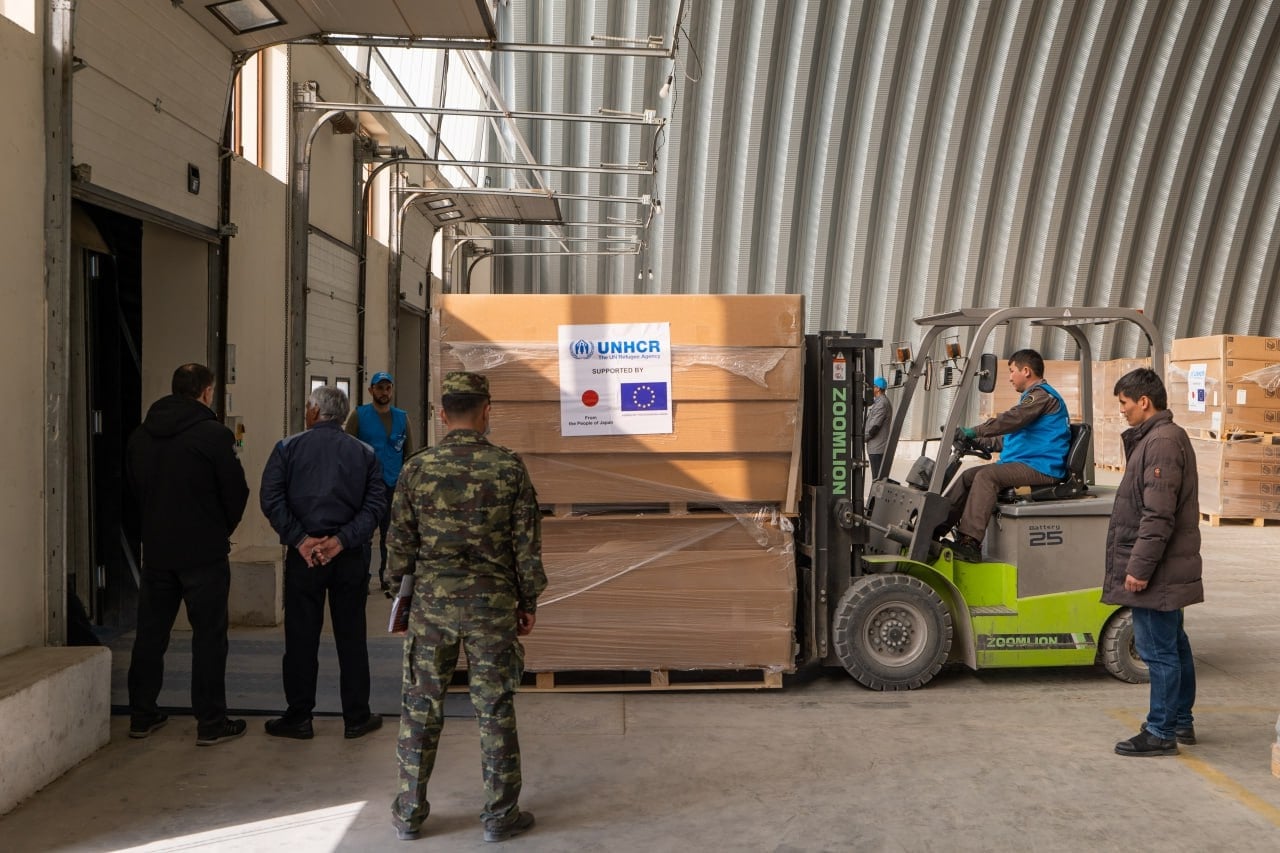
The design capacity of the first phase is 140,000 twenty-foot equivalent units (TEUs) per year. As part of the project, a rail-track complex approximately three kilometers long has been built, a container yard covering 19,300 square meters has been created, and two modern rail-mounted gantry cranes with a lifting capacity of 41 tons each have been installed. The main loading and transport equipment has also been procured and commissioned.
At the same time, supporting infrastructure has been developed, including roads, administrative and auxiliary buildings, engineering and utility networks, lighting systems, and perimeter security.
Comprehensive testing of the process equipment is currently underway, and the terminal’s digital control systems are being configured. At the same time, the hub’s IT systems are being integrated with the digital infrastructure of the Port of Aktau to ensure operational transparency and reduce container processing times.
Staff training and the refinement of production processes are also continuing during the trial-operation phase. Overall, the facility is steadily moving toward commercial operation, with commissioning work scheduled for completion by the end of March 2026.
As for throughput, a phased ramp-up to design capacity is expected in 2026, with utilization increasing gradually.
TCA: How will the launch of the container hub affect capacity utilization at Aktau itself?
DK: We expect a significant synergistic effect. The project is primarily aimed at attracting additional container traffic, particularly within the TITR framework. This will allow for fuller and more efficient use of the port’s infrastructure.
It is important to note that the development of port capacity is already aligned with projected cargo growth. Dredging work is underway in the port basin, while additional berths are being reconstructed and developed. Combined with the modernization of transshipment equipment, this creates the infrastructure reserve needed in advance.
The container hub will operate in close cooperation with existing terminals, expanding the port’s logistics capabilities. This will enhance its appeal as a transit hub and increase the regularity of vessel calls. As a result, both capacity utilization and operational efficiency should improve.
TCA: The project will serve as a key link between maritime and land transport. What technologies will enable faster cargo handling?
DK: The hub is equipped with modern handling equipment, including 41-ton RMG cranes manufactured by ZPMC, a global leader in port equipment. For Kazakhstan, these are unique solutions in terms of automation, productivity, and technical specifications.
The infrastructure also includes reach stackers, forklifts, rail sidings, container yards, and warehouse space.
Digitalization plays a key role. The hub has implemented an automated container tracking and control system, digital document management integrated with government agencies, and a real-time container tracking system.
This allows for the simultaneous processing of multiple trains, reduces cargo dwell time at the terminal, speeds up multimodal operations, and ensures transparency in logistics processes between maritime and land transport.
TCA: Is further expansion of the hub under consideration?
DK: Yes. We are currently working with our Chinese partner, the Port of Lianyungang, on the second phase of the project.
This phase involves increasing throughput capacity to 240,000 TEUs per year by expanding container yards, increasing warehouse space, and developing access infrastructure.
TCA: You mentioned staff training. Could you elaborate on the staffing plans for the hub?
DK: The organizational structure and staffing levels have already been approved. The model is designed to integrate related functions, optimize processes, and reduce redundant management layers, which is especially important during the launch phase.
Initially, the staff will consist of about 100 people, taking shift work into account. The structure includes an engineering and technical unit, production and operations personnel, crane operators, reach stacker operators, container truck drivers, stevedores, riggers, and dispatchers, as well as administrative departments and occupational safety and environmental services.
Systematic staff training is being carried out in parallel. Training covers work with modern transshipment equipment, digital systems, including the terminal operating system, container-handling procedures, equipment maintenance, industrial safety requirements, and interaction with customs authorities.
Both specialized training centers and practical sessions involving equipment manufacturers are being used. If necessary, international experts will be brought in. Priority is being given to Kazakhstani specialists.
TCA: What measures are being taken to develop container transport along the TITR?
DK: Today we are seeing steady growth in container transport along the route. At the same time, a comprehensive roadmap is being implemented to improve service efficiency and eliminate bottlenecks.
One of the key results is a reduction in delivery times. Whereas in 2023 transport between Xi’an and Poti, Georgia, took about 30 days, by 2025 that figure had fallen to 15 to 18 days.
On the infrastructure side, plans include dredging operations in the Caspian Sea on both the Kazakh and Azerbaijani sides, fleet expansion, and the development of the railway network in Georgia. This will increase the capacity of the maritime segments of the route.
TCA: What role does digitalization play?
DK: It delivers one of the most tangible benefits. We are developing a Single Digital Window platform that integrates document management, access to services, and cross-border data exchange.
Integration with the railways of Azerbaijan and Georgia has already been completed. In Georgia, for example, the time required for customs inspection of container trains has been reduced from eight to nine hours to about 40 minutes.
Integration has also been carried out with Chinese partners, including the Xi’an Free Trade Port Group and the Yiwu trading platform. This has reduced the time required to process transit declarations at the Altynkol crossing from 24 hours to about 30 minutes. Integration with China Railway Container Transport Corp. is planned for 2026, which should further improve the synchronization of operations on the Chinese section of the route.
TCA: How is cooperation with other market participants structured?
DK: The effective operation of the TITR is impossible without coordination among all participants. The container hub in Aktau was designed from the outset as part of a single logistics ecosystem. The main areas of focus are synchronizing vessel-call and container-train schedules, exchanging data, and introducing unified standards for container handling.
We are also working on the compatibility of information systems, the implementation of end-to-end container tracking, and the exchange of advance information. This helps reduce the risk of delays and improve planning accuracy.
TCA: When will the hub reach full capacity, and what KPIs have been set?
DK: Reaching design capacity will be a phased process, likely taking around two to three years after commissioning.
The key KPIs include container throughput, average processing time, capacity utilization, the degree of digitalization, and financial efficiency.
But our goal is broader: to create a sustainable, predictable, and competitive container logistics model that will be in demand internationally.