• KGS/USD = 0.01144 0%
  • KZT/USD = 0.00205 0%
  • TJS/USD = 0.10784 0%
  • UZS/USD = 0.00008 0%
  • TMT/USD = 0.28490 0%
  • KGS/USD = 0.01144 0%
  • KZT/USD = 0.00205 0%
  • TJS/USD = 0.10784 0%
  • UZS/USD = 0.00008 0%
  • TMT/USD = 0.28490 0%
  • KGS/USD = 0.01144 0%
  • KZT/USD = 0.00205 0%
  • TJS/USD = 0.10784 0%
  • UZS/USD = 0.00008 0%
  • TMT/USD = 0.28490 0%
  • KGS/USD = 0.01144 0%
  • KZT/USD = 0.00205 0%
  • TJS/USD = 0.10784 0%
  • UZS/USD = 0.00008 0%
  • TMT/USD = 0.28490 0%
  • KGS/USD = 0.01144 0%
  • KZT/USD = 0.00205 0%
  • TJS/USD = 0.10784 0%
  • UZS/USD = 0.00008 0%
  • TMT/USD = 0.28490 0%
  • KGS/USD = 0.01144 0%
  • KZT/USD = 0.00205 0%
  • TJS/USD = 0.10784 0%
  • UZS/USD = 0.00008 0%
  • TMT/USD = 0.28490 0%
  • KGS/USD = 0.01144 0%
  • KZT/USD = 0.00205 0%
  • TJS/USD = 0.10784 0%
  • UZS/USD = 0.00008 0%
  • TMT/USD = 0.28490 0%
  • KGS/USD = 0.01144 0%
  • KZT/USD = 0.00205 0%
  • TJS/USD = 0.10784 0%
  • UZS/USD = 0.00008 0%
  • TMT/USD = 0.28490 0%

Viewing results 1 - 6 of 82

UNEP Interview: From Space, Central Asia’s Methane Challenge Comes Into Focus

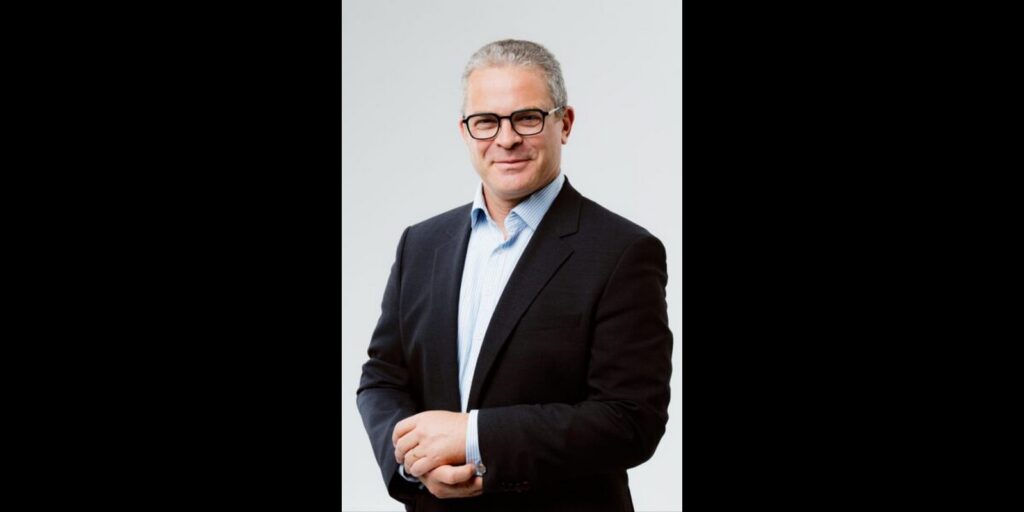
Satellites are changing the way the world sees methane. What was once an invisible leak from a well, flare, pipeline, landfill, or coal mine can now be detected from space, traced to a specific site, and sent to governments and companies for action. A new analysis by the United Nations Environment Programme’s International Methane Emissions Observatory puts that system to the test. Its Methane Alert and Response System, known as MARS, uses 35 satellite instruments to identify major human-caused methane “super-emitters” and notify those responsible. UNEP says the system has already enabled 41 mitigation cases in 11 countries, covering sources estimated to have released 1.2 million tonnes of methane. For Central Asia, the findings are especially relevant. UNEP’s new data includes a rolling list of the world’s 50 largest satellite-detected methane sources, covering oil and gas, coal, and waste, and shows where rapid action may be possible. Several of those sources are linked to Turkmenistan’s oil and gas sector, placing the region firmly inside a global debate over methane transparency, climate responsibility, and whether satellite alerts can lead to action on the ground. Of the 50 sources featured in the latest UNEP/IMEO snapshot, China has the largest number, while Turkmenistan stands out sharply for Central Asia, with the second-largest individual source and four of the top ten. Methane is shorter-lived than carbon dioxide, but far more powerful in the near term. That makes cutting large leaks one of the fastest ways to slow global warming. The harder question, as UNEP’s latest data makes clear, is no longer only where the leaks are, but who responds when they are found. On April 30, UNEP/IMEO presented the new MARS findings, highlighting the growing role of satellite-based monitoring in identifying major methane sources and pressing governments and companies to act. The Times of Central Asia spoke with Meghan Demeter, MARS Programme Manager, International Methane Emissions Observatory, UNEP. TCA: What does the new MARS data reveal about Central Asia specifically that may surprise readers? Demeter: The latest MARS data products depict the region as one with growing engagement and significant mitigation potential. Responses to MARS notifications are increasing, supported in particular by designated national focal points who play a key role in coordinating follow-up with operators. Based on the published 2025 data alone, the response rate across Central Asia currently stands at 22%. Managing a high volume of alerts requires more effort to achieve very high response rates compared to countries that receive only a handful of notifications. Encouragingly, the region has already recorded nearly 20 mitigation cases, underscoring the strong potential for emissions reductions when large methane sources are identified and addressed. TCA: Why does Central Asia matter in the global methane debate, even if it is not the world’s largest methane-emitting region? Demeter: Across Central Asia, looking at the 2025 data alone, UNEP’s International Methane Emissions Observatory, through the Methane Alert and Response System (MARS), detected and notified 298 emission sources from the oil and gas sector. While satellites detect only a fraction of global methane emissions, satellites are highly effective at identifying so-called “super-emitters,” methane emission events so large they can be detected from space. These represent opportunities where action can deliver the greatest and fastest climate wins, while also catalyzing broader change. Regarding the “top 50” list of emission events, 11 of these sources are located in Central Asia, all from...

Artist Aigerim Karibayeva on How Kazakhstan Is Searching for Its Visual Identity

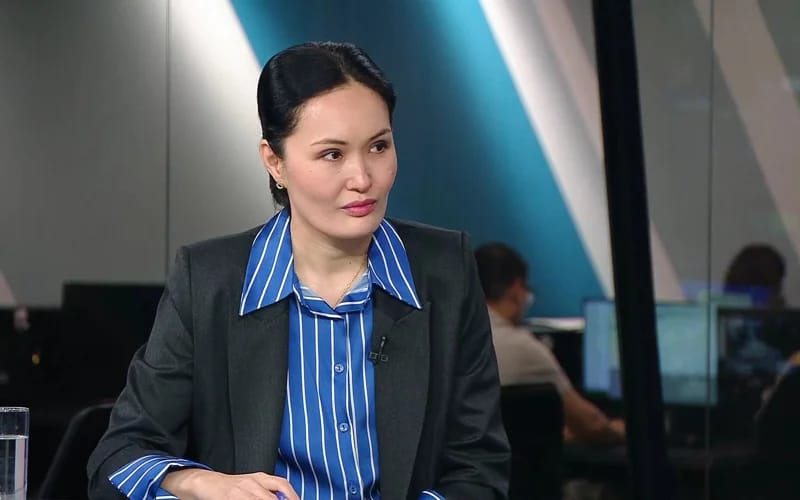
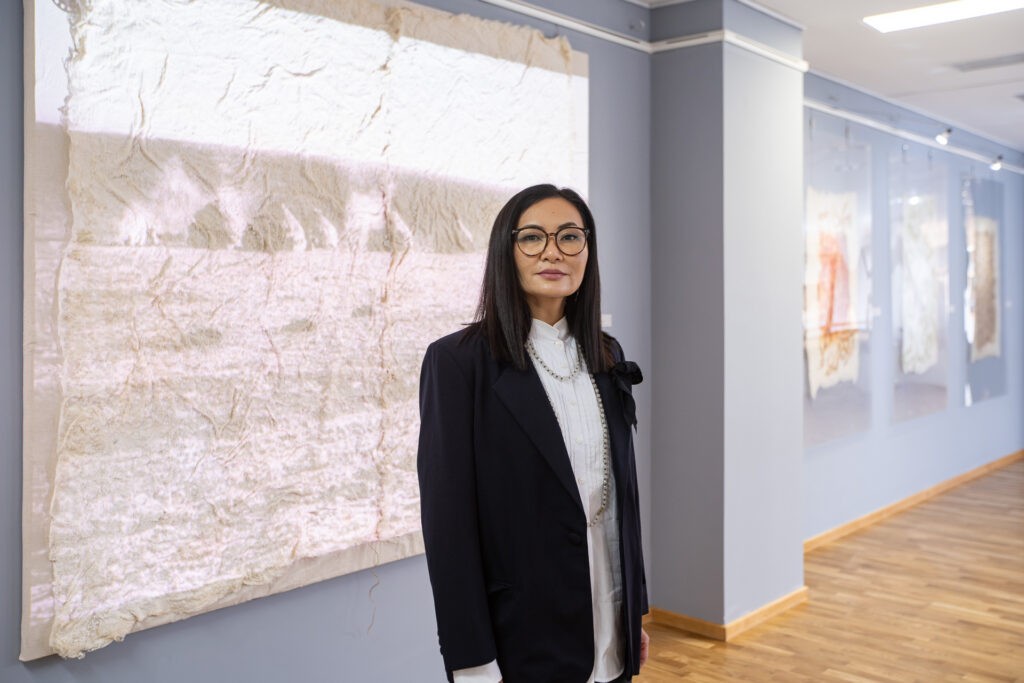
Kazakh artist Aigerim Karibayeva is part of a new visual wave that seeks to blend traditional culture and contemporary aesthetics. Her distinctive style – bright, airy, almost spring-like imagery infused with ethnic motifs and scenes from everyday life – has moved beyond social media into major exhibition spaces. Her works are currently on display at the Kasteyev State Museum of Arts, where her solo exhibition My Sky Above Me recently opened. In an interview with The Times of Central Asia, she discusses how she coined the term “ethno-modernism,” why ethnic aesthetics is surging in popularity, and how Kazakhstan is searching for its own visual identity. TCA: Aigerim, you describe your work as “ethno-modernism.” How did you arrive at that concept? Aigerim Karibayeva: I started moving in this direction and sharing my work on Instagram several years ago. I quickly found my audience; there was strong interest from the media and many interviews. To talk about my work, I needed a term that would define it, something verbal. But I didn’t want to call it simply “contemporary art,” because that didn’t reflect the essence of what I do. I thought: why not call it “ethno-modernism”? I consulted the well-known art historian Olga Baturina, and she approved. The term immediately caught on. I now see it used in the press, on social media, and even in the profiles of young designers. Today, “ethno-modernism” is used to describe an entire wave of artists and designers, the boom we’ve been seeing over the past five years. TCA: Why do you think ethno-modernism has become so popular now? Aigerim Karibayeva: I think it’s been building for a long time. I’m trained as a graphic designer, so I have a strong visual awareness. I saw how interest in national style and ethnic elements gradually emerged in the country. First, businesses began using it in branding, then advertising picked it up, and eventually it spread into mass culture. Now, ethnic elements combined with modern aesthetics have become a visible part of everyday life. [caption id="attachment_48156" align="aligncenter" width="2000"] From a personal photo archive[/caption] TCA: That was especially noticeable during recent Nauryz celebrations – everyone seemed to be wearing ethnic-inspired clothing. Aigerim Karibayeva: Exactly. Everyone is searching for a new cultural code right now, artists, musicians, filmmakers, craftspeople. At first, you create something within your own circle, among fellow artists, and then it spreads outward. You start seeing and hearing it everywhere, for example, in new interpretations of Kazakh music. You recognize that mix, and it becomes a kind of key. You try to translate that same cultural fusion into your own work. I’ve had people tell me they were inspired by my work. One woman approached me and said that after seeing a traditional headpiece, a taqiya, in my illustration, she was inspired to start making them herself and  launched a successful business. That’s how this wave works, there’s a ripple effect, and everyone picks it up. TCA: There’s clearly strong demand for ethnic aesthetics right now. Aigerim...

Singer MEREY on Kazakh-Language Music, Tradition, and a New Sound

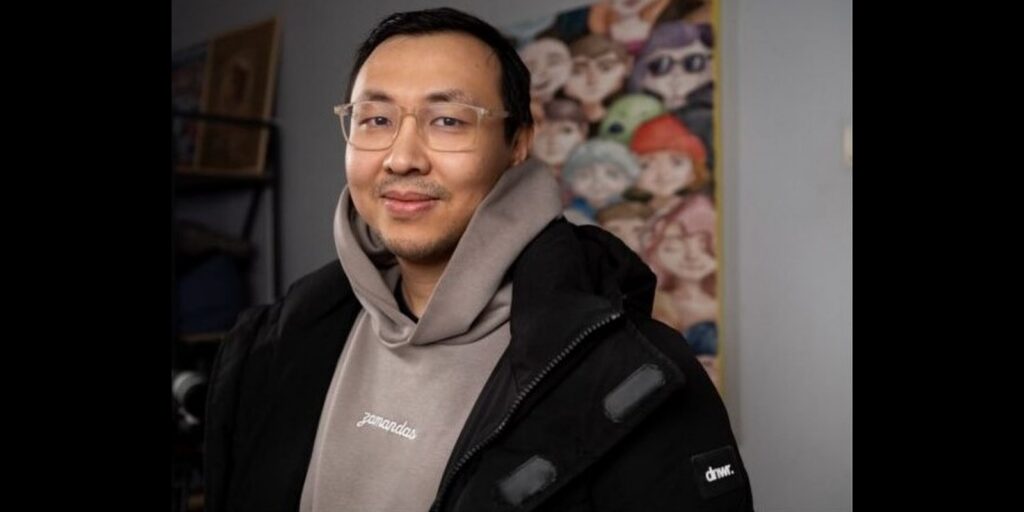
Singer, poet, and lyricist MEREY is among a younger group of artists bringing a different sensibility to music in Kazakhstan. Her work is rooted in Kazakh-language expression, but it also pushes beyond familiar expectations of how a female singer should sound and present herself. In an interview with The Times of Central Asia, MEREY discusses the influence of poetry on her lyrics, the reaction to experimentation, and what she believes is missing from Kazakhstan’s contemporary music scene. TCA: Tell us a little about yourself. How did you get into music? MEREY: I came to music at 17, that’s when I wrote my first song in English. Before that, for as long as I can remember, I had been writing poetry; it was my first form of self-expression. During my school years, I also studied music more formally. I played in a national orchestra, where I both sang and performed dombra parts. That experience strongly shaped my sense of stage presence and musical language. Today, I position myself as a poet, singer, and lyricist. For me, text and music are inseparable. TCA: Who or what influenced your artistic development the most? MEREY: Since school, I have read the works of Mukaghali Makatayev, a classic of Kazakh poetry known for lyrical verses about love, homeland, and the human experience, and Fariza Ongarsynova, a prominent poet who wrote about emotions, time, and women’s lives. They left a deep mark on me as a poet, and echoes of their style can be found in my lyrics. As a teenager, I listened to Billie Eilish, Lana Del Rey, and The Neighbourhood. Later, Mitski, Zemfira, Valentin Strykalo, and Børns. Now I feel close to what Chappell Roan and Meg Myers are doing. My taste leans toward alternative music with an emphasis on vocals, lyrics, and guitar riffs, with a slightly detached aesthetic. This directly informs my own music. TCA: Your music is often described as a blend of traditional elements and modern electronics. How did this sound take shape? MEREY: I wouldn’t fully agree with the phrasing about electronics, but my sound is in many ways inspired by Darkhan Juzz. He was the first artist from Kazakhstan who truly impressed me with his sound. I come from a Kazakh-speaking background, so my lyrics tend to be more literary rather than conversational, unlike many artists of the new school. That’s thanks to my parents and my education in a Kazakh-language school. The modern side comes from my musical tastes, especially the Western scene. My sound combines a Western sensibility with precise, expressive Kazakh language. It’s a mix of Western thinking and Kazakh tradition and that is exactly what resonates with listeners. TCA: How important is it for you to preserve cultural roots in contemporary music? MEREY: It is fundamentally important. As I grow older, I become more conscious, and even stricter, about the Kazakh language and tradition. I’m glad that today national elements, ornaments, traditional clothing, interest in Tengriism, and the language itself, are once again becoming part of the cultural...

Ukrainian Ambassador to Kazakhstan: From Chornobyl to Zaporizhzhia – Lessons Humanity Risks Forgetting

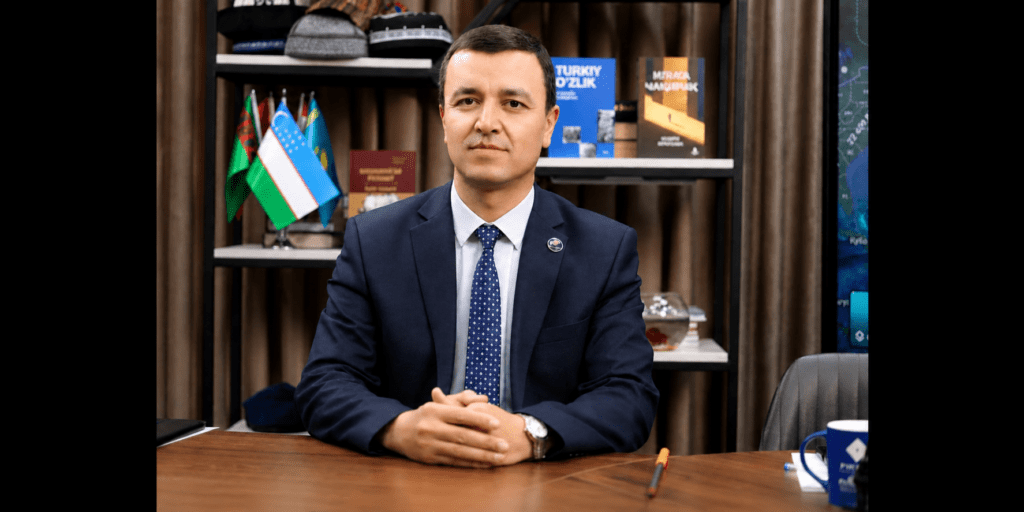
April 26 marks a date that changed the course of world history. This year marks the 40th anniversary of the Chornobyl nuclear disaster, one of the world’s worst nuclear accidents, the consequences of which are still felt today. In an interview with The Times of Central Asia, Ukraine’s Ambassador Extraordinary and Plenipotentiary to Kazakhstan, Victor Mayko, spoke about the scale of the tragedy and emerging threats to nuclear safety. TCA: Forty years have passed. Why does Chornobyl remain a relevant issue today? Ambassador Mayko: Because it is not a story that has ended. It is an ongoing process, the consequences of which continue to unfold. Chornobyl is not only the explosion of a reactor; it is the long-term impact on people, nature, and the economy. In terms of scale, it is, without exaggeration, the largest manmade disaster in human history. TCA: What exactly defines that scale? Ambassador Mayko: First and foremost, the territory. Around 150,000 square kilometers were contaminated. The most dangerous area is the 10-kilometer zone. Isotopes were recorded there that had not previously been observed; they were formed as a result of processes during the explosion. According to estimates, this territory will only become suitable for habitation in about 20,000 years, once the decay of radioactive isotopes reaches safe levels. These were fertile lands, chernozem soils suitable for agriculture. Today, the area is a protected zone, essentially a vast natural reserve where wild animals live. But this is a forced outcome. TCA: As far as we know, you were personally a liquidator. What did you witness? Ambassador Mayko: I was sent there through mobilization. I spent almost a month at the plant, in two rotations. I saw people working on the reactor roof, clearing debris and removing radioactive materials. These were difficult, frightening scenes. People went there understanding the risk, but not always fully realizing its scale. TCA: How many people were affected? Ambassador Mayko: We still don’t know the exact figures. The Soviet system concealed information. I believe the immediate death toll was at least 10,000. But if we include those who later died from radiation-related illnesses, thyroid cancer, stomach cancer, and others, the number rises into the hundreds of thousands. In total, around 600,000 people took part in the cleanup. That is an enormous figure. TCA: Why was information about the accident concealed for so long? Ambassador Mayko: Because the system was built that way. Until the radioactive cloud moved beyond the borders of the USSR, there was silence. Only when elevated radiation levels were detected in Sweden, Finland, and the United Kingdom did international inquiries begin. Then the Soviet Union was forced to acknowledge the accident. TCA: How did this affect people in the first days? Ambassador Mayko: People continued living their normal lives. On May 1, there was a public demonstration. I was there myself with my family, with a small child. No one warned us about the danger. Many felt throat irritation and coughing, but didn’t understand the cause. If people had been...

Kazakhstan’s Ruslan Kurbanov on Reaching the World Fencing Elite

Ruslan Kurbanov is a Kazakhstani épée fencer, a Master of Sport of International Class in Kazakhstan, a World Cup medalist, a two-time World Championships bronze medalist, and a two-time Olympian. He began his journey in a children’s fencing club in Ust-Kamenogorsk and has since risen to fourth in the world rankings. Today, he competes on the biggest stages, where a single touch can decide the outcome of a bout and the pressure from the stands can be overwhelming. In an interview with The Times of Central Asia, he explains how he handles that pressure, maintains focus amid crowd noise, and stays in control when everything is at stake. TCA: Congratulations, you’ve already won two World Cup medals this year, gold and silver. That’s an impressive result. Ruslan: Thank you. I’m pleased with these medals because, in reality, very few athletes can deliver consistent results across two consecutive competitions. TCA: How did you manage it? Ruslan: With experience, you gradually learn more about your body and how to prepare for competitions. You also become more familiar with the fencing world, you get to know many athletes, understand their strengths and weaknesses, study them, and prepare accordingly. Over time, you mature as an athlete and become more consistent. You develop a clear understanding of the level of results you are capable of. [caption id="attachment_47744" align="aligncenter" width="300"] @kazfencing.kz[/caption] TCA: You won silver in Astana. Do home conditions give you an advantage? Ruslan: There are two sides to that. On the one hand, the advantages are obvious: you’re at home, with familiar food, climate, and time zone, all of which help you prepare in a comfortable environment. On the other hand, there is pressure. When you compete at home, people expect you to deliver your best result. TCA: So winning a medal was a must? Ruslan: Of course. But I also had another goal. This was the first World Cup event held in Kazakhstan, and I understood that many local spectators would attend, perhaps seeing fencing for the first time. First impressions are crucial. People either fall in love with the sport or they don’t. For me, it was important to present fencing at its best, dynamic, exciting, and worthy. Maybe “present” is too strong a word, but I wanted people, especially children, to feel inspired, to have that spark. When kids see victories and the emotions athletes experience afterward, they start thinking, “I want that too,” and they come into the sport. TCA: Do you think you managed to inspire them? Ruslan: I hope so. After the final, when I stepped off the piste, many children came up to me, and parents asked for photos and autographs. It’s very rewarding to see that it resonated with someone and may have stayed with them. TCA: You were ranked seventh in the world? Ruslan: Now I’m fourth. After the tournament in Astana, I moved up to fourth place. TCA: In the final, you lost only to Ukraine’s Roman Svichkar. Do they have a particularly strong...

From From Global Streaming to International Productions: Kazakhstan Filmmakers Go International

Makpal Kursabayeva is a sound engineer whose work has increasingly extended beyond Kazakhstan’s local film industry. Over the years, she has contributed to projects with international teams, from working alongside The Matrix cinematographer Bill Pope to taking part in series produced for global streaming platforms. Her career highlights the expanding role of Kazakhstani professionals in international production and shows that local crews can compete with their Western counterparts. Her work includes on-set recording, post-production, and sound capture in environments ranging from military airbases and nighttime steppes to urban locations. In an interview with The Times of Central Asia, she discusses how the industry works and why crews from Kazakhstan are competitive in international productions. TCA: You are a highly experienced sound engineer, but most of your work has been on local projects. Do you think Kazakhstani specialists are competitive in the global market? Makpal: I have no doubt about it, however confident that may sound. Recently, we worked on an international series filmed in Kazakhstan by Turkish filmmakers. Many department heads were Turkish, but I led the sound department. We worked and communicated seamlessly; there were no barriers at all. And that’s always the case. I also worked on a commercial project for Chevron, where the cinematographer was Bill Pope, who shot the legendary film The Matrix, the Ant-Man films, Shang-Chi, and more. TCA: Was the entire crew international as well? Makpal: The second director was American. Playback equipment was brought from Moscow. It was a mix, bringing together the best. The Russian team even said that such sound equipment isn’t available in Moscow. Technically, we are not lagging behind at all. We also have plenty of talented and highly skilled professionals. TCA: Were they at all arrogant? Makpal: Not at all. Bill Pope was great to work with. He’s like a rock star, very open, loves music. We talked about ethnic music; I let him listen to the band Turan. He even asked me to play the dombra. I was a bit nervous because the executive producer was very strict, and I thought she might say I was disrupting the workflow. But he went to her himself and asked, and then she was the one chasing me to make it happen, so the question isn’t whether we can work at a Western level; we already do. TCA: You’ve also worked with German teams on Emir Baigazin’s films, and with French teams on projects by Yermek Shinarbayev and Akan Satayev’s epic Myn Bala: Warriors of the Steppe? Makpal: Yes. There was an interesting experience with one Western specialist, I won’t say from which country. I thought they had a different school and that I could learn from him. But while he was good on set, he wasn’t very strong in post-production. It even got to the point where I was teaching him, explaining how to properly edit sound and the technology behind it. Sometimes I would suggest something, and the next day those ideas would be presented as his own....