• KGS/USD = 0.01144 0%
  • KZT/USD = 0.00208 0%
  • TJS/USD = 0.10439 0%
  • UZS/USD = 0.00008 0%
  • TMT/USD = 0.28571 0%
  • KGS/USD = 0.01144 0%
  • KZT/USD = 0.00208 0%
  • TJS/USD = 0.10439 0%
  • UZS/USD = 0.00008 0%
  • TMT/USD = 0.28571 0%
  • KGS/USD = 0.01144 0%
  • KZT/USD = 0.00208 0%
  • TJS/USD = 0.10439 0%
  • UZS/USD = 0.00008 0%
  • TMT/USD = 0.28571 0%
  • KGS/USD = 0.01144 0%
  • KZT/USD = 0.00208 0%
  • TJS/USD = 0.10439 0%
  • UZS/USD = 0.00008 0%
  • TMT/USD = 0.28571 0%
  • KGS/USD = 0.01144 0%
  • KZT/USD = 0.00208 0%
  • TJS/USD = 0.10439 0%
  • UZS/USD = 0.00008 0%
  • TMT/USD = 0.28571 0%
  • KGS/USD = 0.01144 0%
  • KZT/USD = 0.00208 0%
  • TJS/USD = 0.10439 0%
  • UZS/USD = 0.00008 0%
  • TMT/USD = 0.28571 0%
  • KGS/USD = 0.01144 0%
  • KZT/USD = 0.00208 0%
  • TJS/USD = 0.10439 0%
  • UZS/USD = 0.00008 0%
  • TMT/USD = 0.28571 0%
  • KGS/USD = 0.01144 0%
  • KZT/USD = 0.00208 0%
  • TJS/USD = 0.10439 0%
  • UZS/USD = 0.00008 0%
  • TMT/USD = 0.28571 0%

Viewing results 1 - 6 of 125

Kazakhstan Bets on U.S. Technology to Modernize Railways

Kazakhstan’s railways are not just about moving freight - they are about positioning the country at the heart of Eurasia’s transport map. In a region where China’s Belt and Road, Russia’s transit corridors, and Europe’s markets converge, rail infrastructure has become a strategic asset. Against this backdrop, Kazakhstan Temir Zholy (KTZ) has signed a landmark $4.2 billion agreement with U.S.-based Wabtec for the supply of 300 TE33A locomotives and the maintenance of both existing and newly acquired rolling stock. The deal, which includes the construction of social infrastructure in regions where service centers are located, is one of the largest in the history of Kazakhstan’s rail sector, underscoring Astana’s ambition to cement its role as a key Eurasian logistics hub. To explore the agreement’s significance and the implications for Kazakhstan’s rail sector, The Times of Central Asia spoke with Asan Umbetov, Deputy General Director for Locomotive Operations at KTZ-Freight Transportation. TCA: What does this agreement mean for Kazakhstan’s railway sector? Umbetov: Kazakhstan is increasingly positioning itself as a key transport and logistics hub in Eurasia, with freight volumes having multiplied in recent years. To remain competitive, we need a modern and reliable locomotive fleet. Many of our diesel locomotives from the 1970s and 1980s are nearing the end of their service life. The TE33A series offers clear advantages: reduced fuel consumption, lower maintenance costs, operational readiness of up to 95%, enhanced traction, and resilience in extreme weather. They also improve working conditions for crews, featuring air conditioning, refrigerators, and onboard sanitation. This investment supports not only transport efficiency but also job creation, increased tax revenue, and the growth of adjacent industries, such as maintenance, warehousing, and logistics. In essence, modernizing our locomotive fleet is an investment in Kazakhstan’s broader economic and strategic positioning in Eurasian freight transport. TCA: How would you assess KTZ’s cooperation with Wabtec to date? Umbetov: Wabtec brings over a century of global experience and has operated in Kazakhstan for more than 27 years. Initially focused on modernizing 2Т10МК locomotives, the company launched the Locomotive Assembly Plant (LAP) in Astana in 2009. Today, the plant is staffed entirely by Kazakh citizens, including its management, and manufactures freight, passenger, and shunting locomotives certified under Eurasian Customs Union standards. In 2024, Wabtec opened an engineering center at LAP to provide technical expertise across the CIS. Its specialists will also participate in the development of the new TE33A series. Wabtec’s Astana Diesel Service plant handles major overhauls of Evolution-series diesel engines and other components, while seven service centers across Kazakhstan ensure ongoing maintenance. The company also supports the Bolashak program, offering paid internships for Kazakh students at its U.S. facilities. Since LAP’s launch, 572 locomotives have been produced for KTZ, and 40 units have been exported to Kyrgyzstan, Moldova, Tajikistan, Azerbaijan, Ukraine, Turkmenistan, and Mongolia. The plant has achieved a localization level of 40%. TCA: When will the new locomotives be delivered? Umbetov: Deliveries under the current contract will continue until 2026. The new agreement, covering 300 locomotives, spans the...

Shared Values, Shared Voices: An Interview With Spain’s Ambassador to Kazakhstan

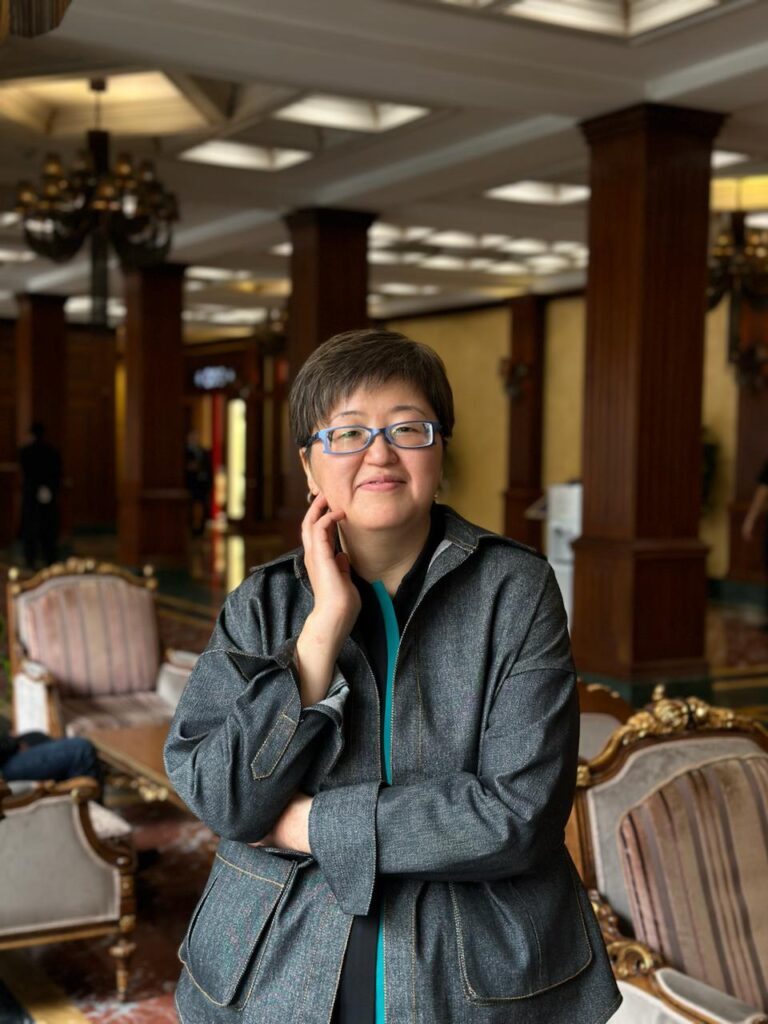
In recent years, cultural cooperation between Spain and Kazakhstan has gained new momentum. Although the two countries are separated by a vast geographical distance, their cultural ties are growing closer through shared values. The Embassy of Spain in Kazakhstan has implemented a number of major projects in this regard. TCA spoke with the Ambassador of Spain to Kazakhstan, Luis Martínez Montes. TCA: It’s been several months since you became the Ambassador to Kazakhstan. What aspects of our culture do you enjoy? LMM: In fact, this is my second diplomatic posting to Kazakhstan. The first was from 1999 to 2002, when Spain opened its embassy in Almaty before moving to Astana. Twenty-five years later, I’ve returned as Ambassador to a country I consider my second home. There are so many things I love about Kazakhstan, including its nature and its gastronomy, that it’s hard to choose. But if I had to pick one, it would be the people, especially the younger generations. I spend much of my time visiting schools and universities, where I see a tremendous energy and thirst for knowledge among Kazakh students. I organize weekly lectures, debate clubs, and informal lunches at my residence with students and Kazakh intellectuals. Their conversations enrich me and help me better understand the direction this country is taking. TCA: You once mentioned that you visited the Mausoleum of Khoja Ahmed Yasawi. What impression did it leave on you? LMM: I visited Turkistan in 1999, and I have a memorable anecdote from that trip. While visiting the mausoleum, the local guide found out I was from Spain and enthusiastically mentioned Ibn Arabi, the great Sufi poet from Al-Andalus [the name for Spain during its Islamic period]. She spoke of him as a near-contemporary of Ahmed Yasawi. I’m grateful for that moment because it was through this cultivated Kazakh woman who could recite at length poems by both Sufi sages that I developed my lifelong admiration for Ibn Arabi. I found it truly fascinating that two poets, Ibn Arabi and Khoja Ahmed Yasawi, living at opposite ends of the Eurasian continent, could produce such profound and beautiful poetry, inspired by the same spiritual quest for God. TCA: Abai Kunanbayuly, like Cervantes, elevated a nation’s literature and culture. We translated Cervantes into Kazakh many years ago, and Don Quixote has been reprinted many times. We also heard that Abai’s works have been translated into Spanish. How has the Spanish readership received him? LMM: As you know, the late Pope Francis, who was from Argentina, quoted Abai more than a dozen times at the opening of the Seventh Congress of Leaders of World and Traditional Religions in 2022. Some works by Abai were translated into Spanish in 2020 by María Sánchez Puig, who received the Order of Dostyk for her work in bringing Kazakh literature closer to Spanish-speaking audiences. Another project is currently underway to translate selections from Abai’s Book of Words into Spanish this year. We’re also developing the first Kazakh-Spanish dictionary to make it...

Behind the Scenes in Hollywood: Kyrgyz Screenwriter Guljan Toktogul on the Industry Without the Glamour

Screenwriter Guljan Toktogul spent nearly a decade in Hollywood. She wrote the script for the movie Salam, New York, about a Kyrgyz man adapting to life in America, and also has writing credits for the short films I'll Be A Star and Alexandra. A graduate of the American Film Institute (AFI), she now plans to continue her screenwriting career in her native Kyrgyzstan, having recently returned to Bishkek. The Times of Central Asia spoke with Toktogul about how screenwriters sell scripts in the U.S., how much they earn, what the bidding process entails, and whether it’s all worth it. TCA: What was it like living in Hollywood? Did it ever feel like home? Toktogul: It became comfortable, but not immediately, only after I built some connections. I first arrived in the U.S. in 2016 with my brother, who was there for work. We lived in Washington, D.C. for two years. When he left, I suddenly felt anxious. The thought of being alone so far from family, literally a day’s flight away, was overwhelming. I cried. But when I moved to L.A., completed a semester, and made friends, things improved quickly. I was lucky to be studying screenwriting at film school. TCA: Did the school feel like a second family? Toktogul: Exactly. Writing and working together means sharing deeply personal memories and thoughts, so people bond much faster than in everyday life. The school created a very supportive environment, full of people just as obsessed with film as I was. You live and breathe cinema, nothing else seems to matter. TCA: How are screenwriters treated in the U.S. compared to Central Asia? Toktogul: In the U.S., screenwriters are respected, but still often in the background. Producers and directors are the main creative forces. That’s why many screenwriters eventually try directing, to retain more control. You hand over your script, but what happens next is out of your hands. We don’t just write randomly, there’s meaning in every scene. When a script is mishandled on set, it’s painful. Many screenwriters avoid being on set for that reason. TCA: Are screenwriters usually present during filming? Toktogul: Yes, and rightly so. Unexpected problems always arise, maybe an actor drops out or a location falls through, so changes must be made on the spot. This is especially true for low-budget projects. I once worked on an indie film in Chicago and realized just how crucial a screenwriter’s presence can be. TCA: But aren’t things in the U.S. locked down by contracts before filming begins? Toktogul: Only if you're someone like Aaron Sorkin. He insists on filming scripts exactly as written. He’s known for demanding that actors deliver 10 pages of dialogue in nine minutes with no cuts. And it works, his dialogue has a musical quality. But most writers aren’t in that position. Ideally, scripts would be treated with more care. We’re not trying to take over, we just want the best version of the story to be told. TCA: Were you a member of...

“Ergenekon Is Not Just a Myth, It’s a Cultural Bridge”: An Interview with Artist and Designer Emre Erdur

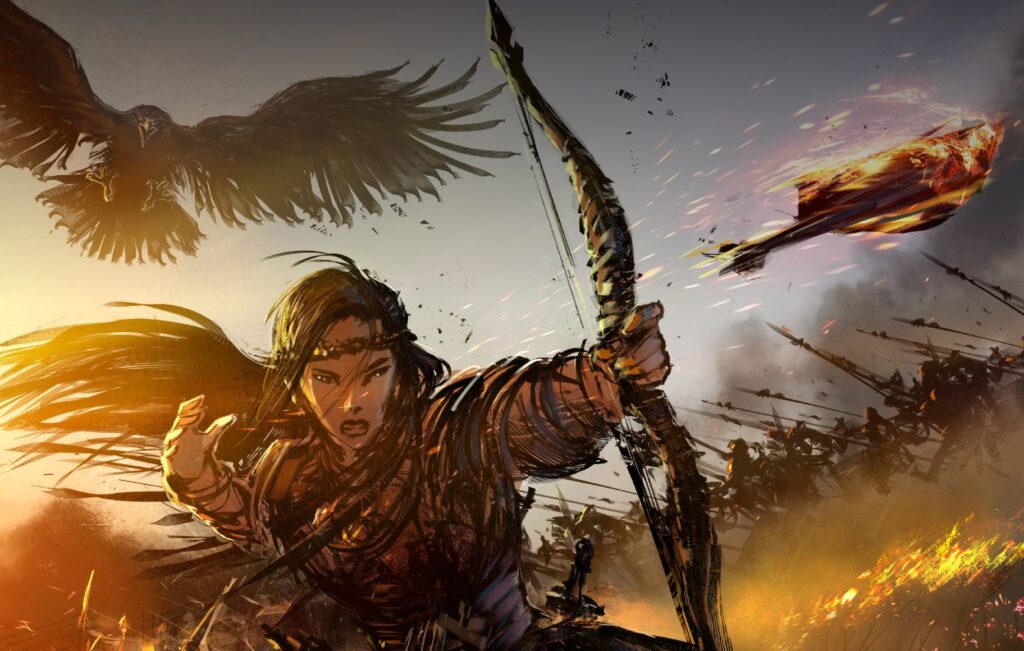
Today, comics and visual storytelling are increasingly going beyond entertainment. They are becoming part of a cultural dialogue, helping audiences reconnect with their roots. One such project is the graphic novel series The Legend of Ergenekon (Ergenekon Destanı), created by Turkish artist and designer Emre Erdur. The Legend of Ergenekon is a Turkic origin myth that tells of a people driven into a remote valley after defeat in battle, where they lived in isolation for centuries until a blacksmith forged a path through the surrounding mountains. Guided by a gray wolf, they emerged to reclaim their strength and expand across the steppe. In Central Asia, the story symbolizes resilience, unity, and renewal, often invoked as a metaphor for nations overcoming hardship to reassert independence and identity on the Eurasian crossroads. It resonates strongly in Kazakhstan, Kyrgyzstan, Turkmenistan, and Uzbekistan, where Turkic identity, language, and heritage are foundational. Born in Istanbul and trained as an architect at Mimar Sinan Fine Arts University, Emre Erdur worked for many years in the entertainment and design industries. Since 2019, however, he has dedicated himself to developing a multi-volume graphic novel series inspired by ancient Turkic history and mythology. His work was first presented at a festival in Taldykorgan. As part of his research, he visited the National Museum of Kazakhstan in Astana and collaborated with historian Assoc. Prof. Dr. Talgat Moldabay to ensure historical accuracy. [caption id="attachment_35647" align="aligncenter" width="1824"] Image: Emre Erdur[/caption] For Central Asia, Ergenekon Destanı is more than a creative project; it represents an effort to connect a shared heritage through the language of comics and popular culture. In an interview with The Times of Central Asia, Emre Erdur spoke about his inspiration, research, the role Kazakhstan plays in his work, and his plans for expanding this unique visual universe. TCA: You were born and educated in Turkey, yet you chose to dedicate yourself to wider ancient legends and Turkic history. When did you first feel drawn to this theme? Erdur: Yes, I was born in the westernmost corner of Turkic geography, but every individual in this world has cultural roots that reach out and nourish them. Naturally, as an artist, the desire to draw from and explore my own roots is an inner force. Although I was born and raised in Istanbul, you can find traces of our roots as far as Yakutia in Russia, Buryatia, Mongolia, the Altai, further south in East Turkestan, in the Gobi Desert, and even in Korea. None of these places feels separate from us; you can sense the connection. Of course, as a human being, every part of this world is valuable and fascinating; each region holds its own beauty and heritage. But there is also something called “national identity,” which is different from our individual identity. Our soul cannot be confined to this world; it knows no geography or race, it belongs beyond time and space. Yet during our lifetime on Earth, we do carry both national and individual identities, and defining them correctly...

Nigora Fazliddin: The Social Media Storyteller Bringing Life in Tajikistan to the World

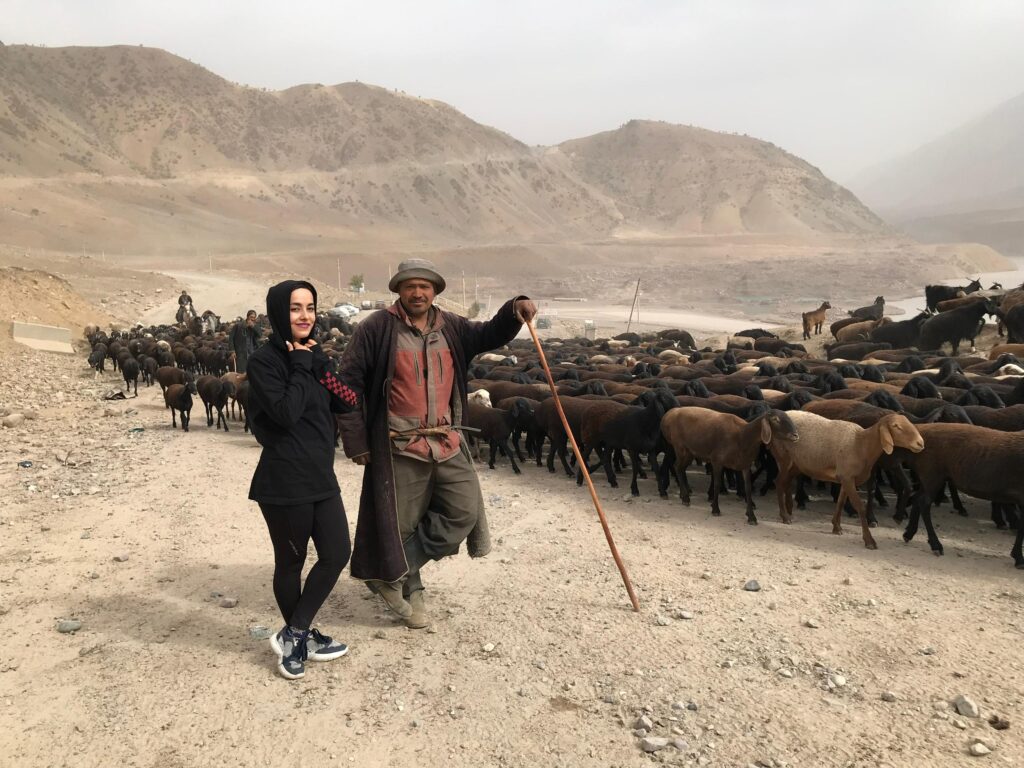
For all its beauty and Silk Road history, Tajikistan remains one of the least visited countries on earth. Life in its epic mountain ranges is rarely captured by photographers, and documentary films are few and far between – mainly half-hearted vlogs by the foreigners who pass through on the Pamir Highway. But in recent years, one Tajik filmmaker and travel influencer has made it her mission to show both her own people and the wider world what makes her homeland so extraordinary. Nigora Fazliddin, a former journalist from Dushanbe, is part of a new generation of creators using social media to bridge cultural distances. Posting simple videos and photographs from her journeys in Tajikistan, she captures the landscapes and communities that outsiders, and even many Tajiks, rarely get to see. "This love I have for our land – its wild beauty, its silence, its soul – I try to share with others," she tells The Times of Central Asia. "On X I mostly reach an international audience, since it's not very popular in Tajikistan. But on Instagram, it's a different story. That’s where Tajiks find me, and where I find them." [caption id="attachment_35211" align="aligncenter" width="400"] Image: Nigora Fazliddin[/caption] One of her favorite discoveries, she says, is Shirkent National Park in the south-west of the country, where fossilized dinosaur footprints mark the earth. "It gives you goosebumps to stand there and imagine creatures walking those same paths millions of years ago," she adds. Then there are the Pamirs, often called “the roof of the world.” At 7,495 meters, Peak Somoni attracts mountaineers from Central Asia and further afield. The region is also home to the rare Marco Polo sheep and shaggy yaks, which are found only here. But what lingers most for Fazliddin is not the challenge of climbing or the sight of wildlife, but the solitude of valleys so remote that no car can reach them. She also cherishes journeys into the Yaghnob Gorge, where people still live as their ancestors did. There she met a shepherd in his seventies, Mirzoali, who has spent four decades with his flock among the peaks. "He told me, “I’ve been a shepherd for 40 years – and I never get tired of it.’” His secret? Clean air, peace, a healthy routine – and living in the mountains year-round. That’s the kind of wisdom you can only find in the mountains," she says. [caption id="attachment_35209" align="aligncenter" width="400"] Image: Nigora Fazliddin[/caption] What Fazliddin shares online is more than travel content. For many Tajiks, especially those in cities, her images bring new perspectives to familiar places. "My Instagram has become like a mirror where people can see themselves, their roots, and the beauty they grew up with – but may have never really looked at," she explains. The responses have been moving. Her social media followers now invite her to visit their villages. For Fazliddin, these moments confirm that her work is worth doing: "It makes me feel like what I do matters – even in...

Tennis Revolution in Kazakhstan: How Systemic Investment Is Creating Champions

Over the past decade, Kazakhstan has evolved from a promising tennis nation into a formidable contender on the global stage. Elena Rybakina’s Wimbledon triumph, Alexander Bublik’s steady rise, and a new wave of top-ranked juniors are no coincidence; they are the product of a long-term, meticulously executed strategy. In an interview with The Times of Central Asia, Yuriy Polskiy, President of the Asian Tennis Federation and Vice President of the Kazakhstan Tennis Federation (KTF), explains how strategic investment, public-private partnerships, and a grassroots approach have fundamentally reshaped the country's tennis landscape. TCA: Kazakhstani tennis players have recently made headlines at top international tournaments. How would you assess Kazakhstan’s current standing on the global tennis map? Are the successes of Elena Rybakina and Alexander Bublik, as well as the emergence of top juniors, the result of systemic work or just coincidence? Polskiy: Luck plays a role in any athlete’s career, but it's fleeting. Kazakhstan’s results, among both professionals and juniors, are consistent, which points to a system that delivers. Over the past decade, we’ve seen numerous players ranked in the world’s top 30: Shvedova, Voskoboeva, Kukushkin, Golubev, Korolev, Nedovyesov, and more recently, Diyas, Putintseva, Danilina, Bublik, and, of course, Rybakina. Together, they’ve secured four Grand Slam titles, reached multiple singles and doubles finals, and won WTA 1000, 500, and ATP/WTA 250 tournaments. Among the juniors, talents like Dastanbek Tashbulatov, Amir Omarkhanov, and Sonya Zhienbayeva have ranked in the ITF Top 5 and Top 20. Our Under-14 and Under-18 national teams have reached the world’s top four and consistently defeated traditional powerhouses such as Australia, France, Italy, and Argentina. These results underscore the strength of Kazakhstan’s national coaching program and the Federation’s long-term vision. In 2024, Kazakhstan had six players in the ITF junior Top 100, including three in the Top 50. Seven more under-14s were ranked in the Tennis Europe Top 100, more than Italy, currently the leader in that category. Notably, all 13 of these top-ranked juniors were born and raised in Kazakhstan, highlighting the success of a nationwide, structured development model that blends public support with private initiative. TCA: What is the Federation’s strategic outlook for the next five to ten years? How extensive is the infrastructure, and are there plans to expand into smaller cities? Polskiy: Since 2007, when businessman and philanthropist Bulat Utemuratov became the KTF president, Kazakhstan has built 38 major tennis centers, each with at least six courts, totaling 364 hard and clay courts nationwide. Over the past 17 years, more than $150 million has been invested in infrastructure. Hundreds of coaches have been trained, particularly for early childhood programs. The number of certified ITF coaches has nearly doubled in five years, now surpassing 400. Infrastructure growth has significantly reduced training costs: hourly court rental has dropped from $50 in 2007 to just $10 today. Facilities now exist in 16 of the 18 regional capitals and smaller cities like Lisakovsk. Major complexes in Astana, Almaty, Shymkent, Karaganda, Aktobe, and Ust-Kamenogorsk each include six indoor and...