• KGS/USD = 0.01144 0%
  • KZT/USD = 0.00213 0%
  • TJS/USD = 0.10543 -0.09%
  • UZS/USD = 0.00008 0%
  • TMT/USD = 0.28530 0%
  • KGS/USD = 0.01144 0%
  • KZT/USD = 0.00213 0%
  • TJS/USD = 0.10543 -0.09%
  • UZS/USD = 0.00008 0%
  • TMT/USD = 0.28530 0%
  • KGS/USD = 0.01144 0%
  • KZT/USD = 0.00213 0%
  • TJS/USD = 0.10543 -0.09%
  • UZS/USD = 0.00008 0%
  • TMT/USD = 0.28530 0%
  • KGS/USD = 0.01144 0%
  • KZT/USD = 0.00213 0%
  • TJS/USD = 0.10543 -0.09%
  • UZS/USD = 0.00008 0%
  • TMT/USD = 0.28530 0%
  • KGS/USD = 0.01144 0%
  • KZT/USD = 0.00213 0%
  • TJS/USD = 0.10543 -0.09%
  • UZS/USD = 0.00008 0%
  • TMT/USD = 0.28530 0%
  • KGS/USD = 0.01144 0%
  • KZT/USD = 0.00213 0%
  • TJS/USD = 0.10543 -0.09%
  • UZS/USD = 0.00008 0%
  • TMT/USD = 0.28530 0%
  • KGS/USD = 0.01144 0%
  • KZT/USD = 0.00213 0%
  • TJS/USD = 0.10543 -0.09%
  • UZS/USD = 0.00008 0%
  • TMT/USD = 0.28530 0%
  • KGS/USD = 0.01144 0%
  • KZT/USD = 0.00213 0%
  • TJS/USD = 0.10543 -0.09%
  • UZS/USD = 0.00008 0%
  • TMT/USD = 0.28530 0%

Viewing results 1 - 6 of 82

Kazakhstan to Enhance Middle Corridor Rail Connectivity with World Bank Support

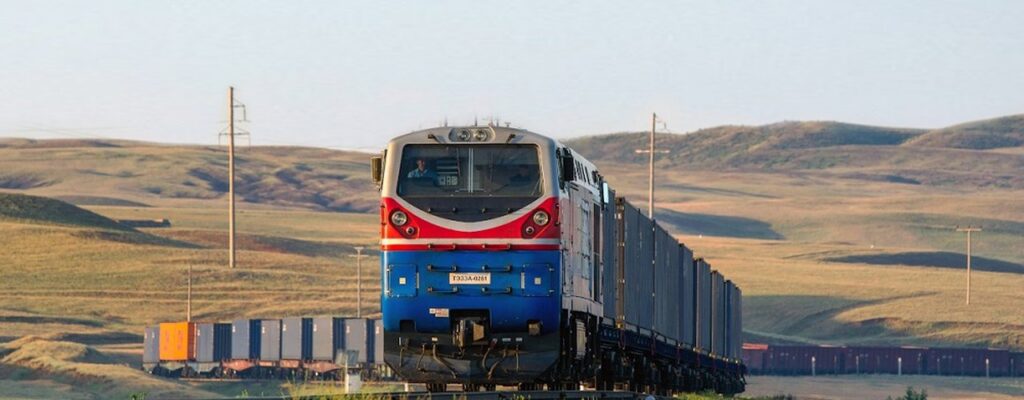
The Board of Executive Directors of the World Bank has approved an $846 million guarantee from the International Bank for Reconstruction and Development (IBRD) to mobilize $1.41 billion in long-term private financing for a major railway project along Kazakhstan’s section of the Trans-Caspian International Transport Route (TITR), also known as the Middle Corridor. The project is further backed by a $564 million co-guarantee from the Asian Infrastructure Investment Bank (AIIB). The initiative is designed to improve the efficiency and resilience of Kazakhstan’s rail network while strengthening the financial sustainability and commercial viability of Kazakhstan Temir Zholy (KTZ), the national railway operator. A central component of the project is the construction of a new 322.3-kilometer greenfield railway line between Mointy and Kyzylzhar. The link is expected to eliminate a significant detour, shorten the route by 149 kilometers, reduce congestion on heavily used sections, and enable double-stack container operations. The new line will be equipped with modern signaling and telecommunications systems and designed to allow for future expansion and electrification. According to project documentation, the upgrade is expected to contribute to tripling freight volumes and halving end-to-end transit times along the Middle Corridor by 2030. By shifting cargo from road to rail, it is also projected to reduce transport-related emissions, supporting Kazakhstan’s climate commitments and broader sustainable development objectives. Official data indicate that freight volumes transported through Kazakhstan along the TITR increased by 36% in 2025. In addition to infrastructure investment, the project includes technical assistance and institutional strengthening for KTZ. This includes support for tariff reform, exploration of alternative financing mechanisms, improvements in financial and environmental management, and preparation for a potential future initial public offering (IPO). “Beyond enabling critical infrastructure investments, this project supports important reforms that will strengthen Kazakhstan Temir Zholy’s financial sustainability and long-term competitiveness,” said Andrei Mikhnev, World Bank Country Manager for Kazakhstan and Turkmenistan. By combining phased infrastructure investments, institutional reforms, and private capital mobilization, the initiative aims to develop a modern rail system capable of delivering long-term economic and environmental benefits for Kazakhstan and the wider Eurasian region.

Kazakhstan to Digitalize Seaports to Boost Trans-Caspian Transport Route

Kazakhstan is advancing the digital transformation of its maritime infrastructure as part of broader efforts to strengthen the Trans-Caspian International Transport Route (TITR), also known as the Middle Corridor. The Ministry of Transport is developing an electronic Maritime Single Window system designed to replace paper-based documentation with digital data exchange for vessel entry and exit procedures at the country’s seaports. The initiative is included in the Roadmap for the Digitalization of Kazakhstan’s Transport Industry for 2025-2027. According to the ministry, the project is being implemented with support from the German Society for International Cooperation (GIZ). An international tender has already been held to select experts responsible for preparing the system’s technical specifications. In February, working meetings were held with stakeholders in Aktau and Kuryk, Kazakhstan’s two largest ports on the Caspian Sea. Discussions focused on port digitalization, simplifying administrative procedures, and reducing vessel processing times through the introduction of the Maritime Single Window. The project is viewed as a key component in the further development of the TITR, which connects China with Europe via Central Asia and the South Caucasus. By streamlining port operations and reducing bureaucratic delays, Kazakhstan aims to enhance the route’s competitiveness and reliability. Kazakhstan’s maritime transport sector has recorded steady growth in recent years. In 2025, maritime cargo volumes reached 8 million tons, a 7% increase compared to 2024. Container traffic through Kazakh seaports rose by 29% to 90,637 TEUs, while cargo volumes transported along the TITR increased by 36%. Infrastructure development has accompanied this growth. In 2025, construction of a container hub at the port of Aktau was completed, a dry cargo vessel was launched on the Kuryk-Baku route, and two new ferries were acquired. Overall transit cargo traffic through Kazakhstan reached 36.9 million tons in 2025, up 6.6% year on year, driven by the integrated development of road, rail, air, and maritime transport. Under the country’s comprehensive maritime infrastructure development plan for 2024-2028, Kazakhstan intends to establish a major transport and logistics cluster based on the ports of Aktau and Kuryk. The plan includes the expansion of container handling capacity, development of cargo terminals and international shipping logistics, and a reduction in administrative barriers. By 2028, total cargo throughput at the ports is expected to increase by 50%, while container handling volumes are projected to triple. To ensure year-round navigation and maintain competitiveness amid changing environmental and logistical conditions in the Caspian region, Kazakhstan has also prioritized dredging works, including the deepening of the ports of Aktau and Kuryk.

Can the New Multimodal Route Become a Sustainable Corridor for Central Asia?

The launch of the China-Kyrgyzstan-Uzbekistan-Turkmenistan-Caspian multimodal corridor has generated significant interest as another attempt to expand Eurasian transport connectivity. A pilot shipment in the fall of 2025 demonstrated the technical feasibility of the new route: cargo transported from Kashgar, China, passed through Kyrgyzstan and Uzbekistan, reached Turkmenistan, and was then delivered to Azerbaijan via the Caspian Sea, continuing along the Baku-Tbilisi-Kars railway toward Europe. Despite its evident geopolitical appeal, questions remain over the route’s long-term sustainability and commercial viability. The central question is whether this demonstration project can evolve into a regularly functioning transport corridor. A Third Alternative Between the Northern and Middle Corridors This multimodal route can be seen as a potential alternative to the two existing pathways: the northern route, China-Kazakhstan-Russia-Europe; and the Trans-Caspian International Transport Route (TITR), or Middle Corridor, which passes through Kazakhstan, the Caspian Sea, the South Caucasus, and Turkey. The growing geopolitical risks along the northern route since 2022, combined with capacity limitations on the Caspian segment of the TITR, have spurred interest in a third option, a so-called “southern belt” traversing Kyrgyzstan, Uzbekistan, and Turkmenistan. Each country along this route has its own strategic calculus. Uzbekistan is seeking to overcome its “double continental isolation” and elevate its role as Central Asia’s transit hub. Kyrgyzstan is aiming to monetize its geographic position between China and the Ferghana Valley. Turkmenistan is developing the port of Turkmenbashi as an alternative to the increasingly congested hubs of Aktau and Alat. China, meanwhile, continues to diversify its westward overland trade routes. The Uzbek Factor: Geoeconomics vs. Logistics From Tashkent's perspective, this corridor aligns with its long-term transport strategy. Analysts frequently cite Uzbekistan’s ambition to transition from a landlocked to a “land-linked” state with direct access to China, the Caspian Sea, and southern routes to the Indian Ocean. The new route offers Uzbekistan three strategic advantages: alternative access to China via Kyrgyzstan, enhanced status as a regional transit hub, and deeper transport cooperation with Turkmenistan, including potential joint development of the Turkmenbashi port. However, when shifting from geopolitical ambition to logistical execution, serious limitations emerge, many outside Uzbekistan’s control. Kyrgyzstan: A Bottleneck in the Chain Documents from the Central Asia Regional Economic Cooperation (CAREC) program highlight the continued challenges facing multimodal transport in the region, namely slow transit, poor modal integration, border delays, and outdated logistics technologies. Within this corridor, Kyrgyzstan remains the primary bottleneck. Approximately 82% of its foreign trade by weight is transported by road, making the route through this mountainous country highly seasonal, expensive, and unpredictable. According to the International Road Transport Union, Kyrgyzstan’s transport system faces severe constraints from alpine terrain, avalanches, and impassable mountain passes that render winter transport nearly impossible in many areas. It is therefore unsurprising that, following the pilot shipment, no major logistics operators committed to shifting regular cargo to this route. The Caspian Sea: Structural Constraints The Caspian Sea leg, anchored by Turkmenbashi port, presents another critical challenge. The limitations here are systemic rather than national. Key issues include insufficient...

Kazakhstan Deepens Kuryk Port on Trans-Caspian Transport Corridor

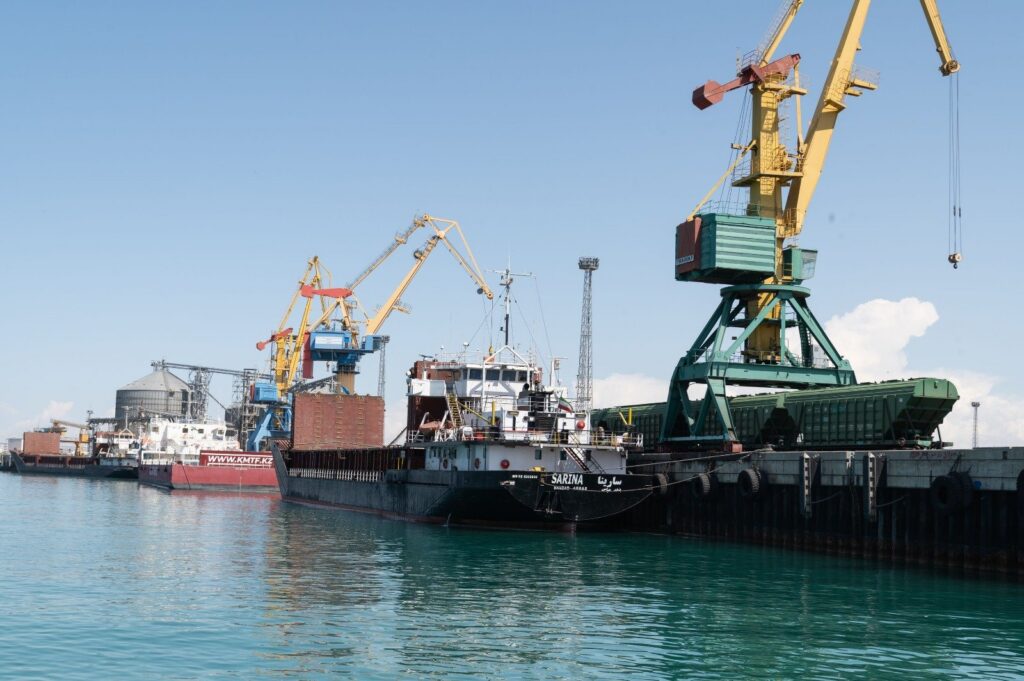
Kazakhstan has launched a strategic dredging project at the ERSAI industrial port, part of the Caspian Sea’s Kuryk Port, aimed at boosting its cargo-handling capacity and reinforcing its role as a key transit hub along the Trans-Caspian International Transport Route (TITR). Also known as the Middle Corridor, the TITR connects China to Europe via Central Asia and the South Caucasus. According to the Ministry of Transport, the project will deepen the port’s waters and approach channel to five meters, enabling year-round navigation. The initiative is fully financed by ERSAI, which is constructing its own Cutter Suction Dredger (CSD 650), named ERSAI 5, to carry out the dredging works between January and June 2026. Dredging is a core component of ERSAI’s broader expansion strategy, which also includes launching a new container terminal and expanding shipbuilding and repair operations. Located on the eastern coast of the Caspian Sea, south of the Aktau port, Kuryk’s ferry complex handles a variety of cargo, including grain, oil products, fertilizers, and chemicals. However, falling water levels in the Caspian have forced vessels to operate below full capacity to avoid grounding. As of early 2025, the Caspian Sea’s water level had declined by roughly two meters since 2006, posing growing challenges for Kazakhstan’s maritime logistics. In response, Kazakhstan has prioritized dredging efforts. In May 2025, the Ministry of Transport began deepening the Aktau port by 1.5 to 2 meters to expand its terminal capacity. Kuryk has already undergone a previous phase of deepening, completed in November 2024, which increased the port’s depth to 7-8 meters. The latest dredging project reflects Kazakhstan’s broader strategy to strengthen its maritime infrastructure and maintain the competitiveness of its ports amid shifting environmental and logistical conditions in the Caspian region.

Amid Global Unrest, the Trans-Caspian Corridor Faces a Crucial Test

The COVID-19 pandemic, geopolitical conflicts, and the ongoing shipping crisis in the Red Sea caused by Houthi attacks have severely disrupted global trade and logistics. These events have exposed the vulnerabilities of traditional supply chains and underscored the urgent need for diversification. For countries along the Trans-Caspian International Transport Route (TITR), this presents a unique opportunity to solidify the corridor’s position as a key global logistics artery. But are they prepared to capitalize on this moment, and can the existing infrastructure sustain the rising flow of cargo? Integration and Infrastructure in Focus For landlocked nations, the value of an efficient overland route cannot be overstated. The development of the Trans-Caspian route depends on synchronized multimodal logistics, the elimination of infrastructure bottlenecks, the implementation of digital solutions, expedited customs procedures, and a transparent tariff policy. Experts note that the TITR has evolved from a transport project into a strategic initiative. Its future growth hinges on the quality of intergovernmental coordination. In the past five years, transit volumes along the route have increased sixfold. The upward trend continues in 2025, with 2.6 million tons transported by rail in the first ten months alone. More than 400 types of goods now move along the corridor, including high-value items such as vehicles, electronics, clothing, and textiles. These products, which require timely delivery, signal the route’s growing integration into global supply chains. Demand from Chinese shippers is also rising, with shipments expanding beyond China’s interior to include Southeast Asian countries. At the VII International Transport and Logistics Business Forum “New Silk Way,” Wang Lixin, Deputy Director General of China Railway, announced a new route under development: Southeast Asia-China-Central Asia-Europe. Bottlenecks That Threaten Growth A comprehensive audit conducted in mid-2025 revealed key barriers to expansion. In Kazakhstan, the primary constraint is railway capacity, currently limited to 12 container trains per day. National rail operator KTZ plans to raise this to 20 by 2027 through upgrades and new construction. The maritime segment, particularly the Caspian Sea, remains a persistent risk. Aktau port can currently handle five trains, but the completion of the second phase of its container hub is expected to raise this to eight. The first phase alone will boost capacity by 140,000 TEU this year, bringing the port’s total capacity to 240,000 TEU. However, falling water levels in the Caspian pose a serious challenge. In September 2025, Kazhydromet reported a drop to -29.31 meters off Kazakhstan’s coast, limiting shiploads and raising the threat of “shallow water restrictions.” In response, Kazakhstan has expedited dredging to restore design depths by the end of Q1 2026. Fleet shortages compound the issue. Kazmortransflot operates just three 350 TEU container ships and two dry cargo vessels. In January 2025, the company signed an agreement with Abu Dhabi Ports Group to build shallow-draft container ships with over 500 TEU capacity and larger ferries. KTZ also plans to acquire six vessels (up to 9,000 tons deadweight) by 2027. Challenges in Azerbaijan and Georgia The western segment of the route faces similar constraints....

EU Supports Connectivity Improvements in Kazakhstan, Kyrgyzstan, and Uzbekistan as Part of Trans-Caspian Transport Corridor

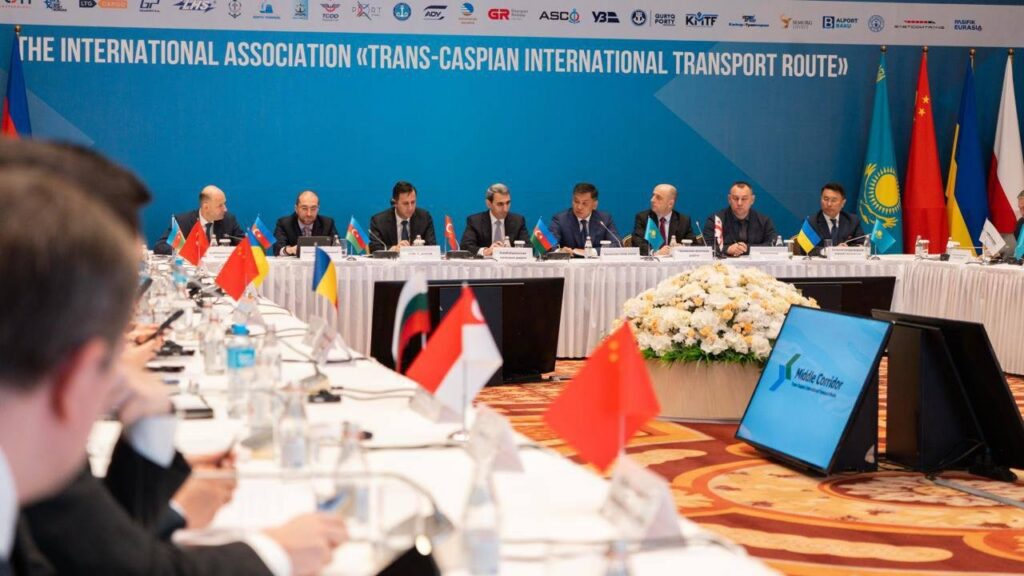
On November 27, Tashkent hosted the Trans-Caspian Transport Corridor (TCTC) and Connectivity Investors Forum, where representatives of the European Union, Central Asian and South Caucasus states, Türkiye, and international development banks reaffirmed the strategic importance of the TCTC as a fast and reliable route linking Europe and Asia. The TCTC is the EU’s designation for the Trans-Caspian International Transport Route (TITR), also known as the Middle Corridor. This multimodal route connects China and Southeast Asia to Europe via Central Asia, the Caspian Sea, Azerbaijan, Georgia, and Türkiye in no more than 15 days, offering an alternative to the northern route through Russia. Participants discussed efforts to modernize both hard infrastructure, roads, railways, ports, and logistics hubs and soft connectivity, including digitalization, regulatory alignment, and trade facilitation. According to the EU Delegation in Uzbekistan, the forum, attended by European Commissioner for International Partnerships Jozef Síkela and European Commissioner for Enlargement Marta Kos, produced several new agreements to enhance multimodal connectivity in Central Asia. The EU has committed EUR 10.4 million within an EBRD loan of EUR 35 million to modernize Aktau Port in Kazakhstan, a key logistics hub on the Caspian Sea. The project will expand berths, introduce energy-efficient cranes, and increase container-handling capacity, strengthening the Middle Corridor’s competitiveness. An envisaged EIB loan of EUR 150 million, backed by an EU guarantee of EUR 8.8 million, will support road rehabilitation in Kazakhstan. The financing for national operator KazAvtoZhol aims to improve sustainable transport infrastructure linked to the TCTC. The EU will contribute EUR 15.46 million within an EBRD loan of EUR 35 million for the modernization of the Karabalta-Chaldovar road in Kyrgyzstan. Upgrading the 31.7-kilometer section will enhance connectivity between Kyrgyzstan and Kazakhstan, reduce travel time and costs, and improve road safety. In Uzbekistan, an anticipated EIB loan of up to EUR 100 million, supported by an EU guarantee of EUR 6 million, will finance the Nukus Highway Development Project. The upgrade of 87 kilometers of the A380 highway, one of the country’s main transport arteries, is expected to strengthen regional trade and streamline transport flows with neighboring states. Speaking at the forum, Commissioner Marta Kos stressed the geopolitical and economic value of reliable east-west transport links: “All of us have learnt the hard way that excessive dependencies make us vulnerable," she said. "Investments in transport infrastructure, digital and energy connectivity create more options and less risk of blackmail. We need credible, long-term alternatives to the Northern Corridor. Cargo along the Middle Corridor has grown four-fold between 2022 and today. By 2030 it could again triple, if the right investments are made to increase capacity and close gaps.”