• KGS/USD = 0.01144 0%
  • KZT/USD = 0.00204 0%
  • TJS/USD = 0.10415 -0.19%
  • UZS/USD = 0.00008 0%
  • TMT/USD = 0.28571 0%
  • KGS/USD = 0.01144 0%
  • KZT/USD = 0.00204 0%
  • TJS/USD = 0.10415 -0.19%
  • UZS/USD = 0.00008 0%
  • TMT/USD = 0.28571 0%
  • KGS/USD = 0.01144 0%
  • KZT/USD = 0.00204 0%
  • TJS/USD = 0.10415 -0.19%
  • UZS/USD = 0.00008 0%
  • TMT/USD = 0.28571 0%
  • KGS/USD = 0.01144 0%
  • KZT/USD = 0.00204 0%
  • TJS/USD = 0.10415 -0.19%
  • UZS/USD = 0.00008 0%
  • TMT/USD = 0.28571 0%
  • KGS/USD = 0.01144 0%
  • KZT/USD = 0.00204 0%
  • TJS/USD = 0.10415 -0.19%
  • UZS/USD = 0.00008 0%
  • TMT/USD = 0.28571 0%
  • KGS/USD = 0.01144 0%
  • KZT/USD = 0.00204 0%
  • TJS/USD = 0.10415 -0.19%
  • UZS/USD = 0.00008 0%
  • TMT/USD = 0.28571 0%
  • KGS/USD = 0.01144 0%
  • KZT/USD = 0.00204 0%
  • TJS/USD = 0.10415 -0.19%
  • UZS/USD = 0.00008 0%
  • TMT/USD = 0.28571 0%
  • KGS/USD = 0.01144 0%
  • KZT/USD = 0.00204 0%
  • TJS/USD = 0.10415 -0.19%
  • UZS/USD = 0.00008 0%
  • TMT/USD = 0.28571 0%

Viewing results 1 - 6 of 649

From Electricity to Fuel, Central Asia is Doing More Business with Afghanistan

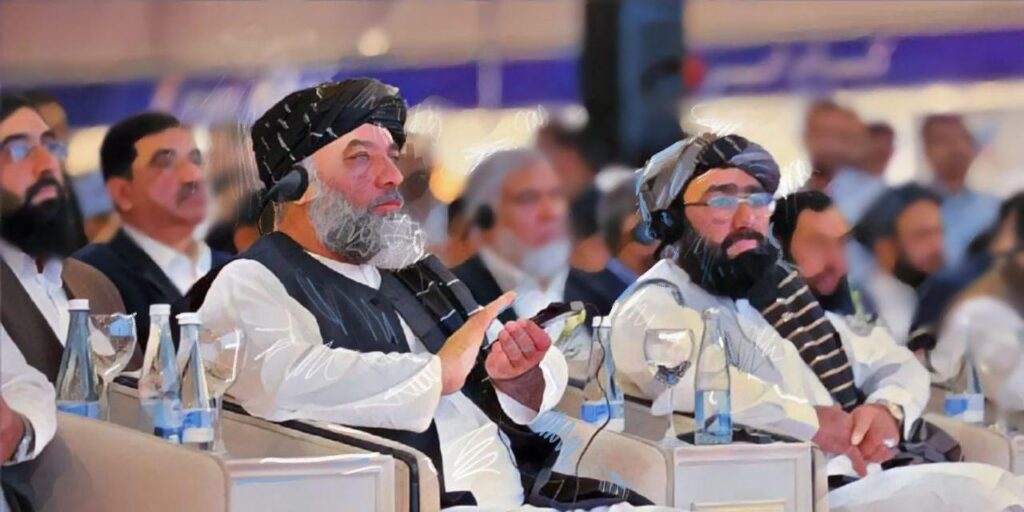
Central Asia is becoming even more important to Afghanistan. After the Taliban returned to power in August 2021, most of the countries of Central Asia established a dialogue with its leadership that focused on business potential, backed up by security promises. This understanding is more important than ever to the Taliban government, as events along Afghanistan’s eastern and western borders have left Central Asia as the only reliable import-export route for Afghanistan at the moment. Booming Trade At the start of March, Afghanistan’s Ministry of Industry and Commerce released figures for 2025 that showed trade with Central Asia increased from $1.79 billion in 2024 to $2.4 billion in 2025. While most of the trade is exports from Central Asia to Afghanistan, reports mentioned that Afghan exports to Central Asia -- mostly to Kazakhstan and Uzbekistan -- increased by 77 percent, from $122 million in 2024 to $216 million in 2025. A closer look shows that Uzbekistan-Afghanistan trade in 2025 totaled some $1.6 billion.  A full figure for Kazakh-Afghan trade in 2025 is not yet available. However, trade between Kazakhstan and Afghanistan amounted to some $525.2 million in 2024.  Kazakhstan's Deputy Prime Minister Serik Zhamangarin said at a Kazakh-Afghan business forum in Kazakhstan’s southern city of Shymkent in October 2025 that bilateral trade in the first eight months of 2025 had reached some $335.9 million. These figures are certain to have grown.  Fresh agreements worth more than $360 million were signed on the sidelines of the Kazakh-Afghan business forum. On March 6, Uzbekistan’s President Shavkat Mirziyoyev signed a decree ratifying the Preferential Trade Agreement between Uzbekistan and Afghanistan. Trade totals for Kyrgyzstan, Turkmenistan, and Tajikistan with Afghanistan are more modest, but, as in the cases of Kazakhstan and Uzbekistan, are set to grow.  Kyrgyz-Afghan trade for the 12 months to March 2025 came to some $66 million, but, during a Kyrgyz-Afghan business conference in Kabul commercial contracts worth some $157 million were signed.  There are no figures for Turkmen-Afghan trade in 2025, but Turkmen electricity exports to Afghanistan are increasing. Turkmenistan is also preparing to export natural gas to Afghanistan. A natural gas pipeline is slowly being constructed from the Turkmen border to the western Afghan city of Herat, which could start operation as soon as 2027. Tajikistan was the lone Central Asian country to shun contact with the Taliban after they returned to power. Representatives of the previous government of Ashraf Ghani continue to occupy the Afghan embassy in Dushanbe.  Tajik and Taliban authorities finally established contacts only in late 2024 but even to this day the two sides rarely meet face-to-face. However, Tajik-Afghan trade in 2025 still totaled some $120 million. Afghanistan’s Ministry of Industry and Commerce noted that most of Central Asia’s exports to Afghanistan are electricity, fuel products, and natural gas. Uzbekistan, Tajikistan, and Turkmenistan export electricity to Afghanistan via transmission lines that were built during the 20 years the Taliban were out of power. Some 80 percent of Afghanistan’s electricity is imported, and most of that (75-80 percent) comes...

Growing Trade Disputes Test the Eurasian Economic Union

Trade disputes within the Eurasian Economic Union (EAEU) are as old as its creation. Restrictions on the import and export of certain goods have long been common practice. However, analysts increasingly warn that tensions have reached a point at which the organization risks losing its core function, ensuring the free movement of goods across borders and maintaining simplified conditions for migrant workers. Mounting Restrictions The EAEU currently comprises Armenia, Belarus, Kazakhstan, Kyrgyzstan, and Russia. Economic integration among several post-Soviet states began in 2000 with the establishment of the Eurasian Economic Community (EurAsEC), formed by Belarus, Kazakhstan, Kyrgyzstan, Russia, and Tajikistan. Uzbekistan joined in 2006, but suspended its participation in 2008. The foundation of this organization was the Customs Union agreement, intended to abolish customs duties among member states. The structure of the integration project has since evolved. The EAEU treaty was signed in 2014 and entered into force on January 1, 2015. Tajikistan and Uzbekistan did not join, while Armenia became a member in 2015. More than two decades after the first integration agreements, however, many of the bloc’s original promises remain only partially fulfilled. Experts have long argued that protectionist measures remain widespread within the bloc and that full freedom of movement for all categories of goods, including strategic products, has not been achieved. They also point to pronounced economic asymmetry: Russia accounts for approximately 85–87% of the union’s combined GDP, whereas Kazakhstan accounts for approximately 9–10%. Russia’s significantly larger population and political influence have further reinforced perceptions of structural imbalance. Moscow is now preparing new regulatory measures affecting its partners. From April 1, 2026, a national system for confirming the arrival of goods will be introduced for road imports from EAEU countries. According to the Russian authorities, shifting key control procedures to the pre-border stage is intended to improve transparency in the administration of indirect taxes. Previously, such checks were conducted after goods entered the country through desk and field audits. At the same time, Russia has intensified selective customs controls on its borders with Kazakhstan and Belarus, officially citing efforts to combat counterfeit goods. Particular scrutiny is being applied to product labelling and accompanying documentation. Controls were tightened last summer, when mobile checkpoints were established along the Kazakh-Russian border, followed by the inspections of vehicles leaving Belarus in the autumn. Full-scale checkpoints are now operating on the Kazakh-Russian border, while a simplified regime linked to the Union State and EAEU agreements continues to apply on the Belarusian-Russian border. Logistics industry representatives report that stricter controls on the Kazakh border have significantly increased transit delivery times. Carriers often face lengthy delays at checkpoints even when their documentation is in order. According to Alexandra Pokumeiko, head of a freight-forwarding department, the changes have created uncertainty in delivery schedules along Belarus-Russia transport corridors and on transit routes through Russia to Kazakhstan. The growing number of administrative restrictions has begun to spill into specific sectors of the economy, triggering retaliatory measures between member states. Escalating Tensions in the Automotive Sector A new dispute...

Middle East Conflict May Slow Growth, but Gold and Oil Dynamics Could Cushion Impact

The escalating conflict in the Middle East could weigh on Uzbekistan’s economic growth if it persists, though higher gold prices and oil-driven gains in key partner economies may soften the impact, according to Uzbek economist Mirkomil Kholboyev. Kholboyev shared his analysis on his Telegram channel, examining both the direct and indirect channels through which the crisis could affect Central Asia’s largest economy. “Several days of geopolitical tensions in the Middle East have already turned into open military confrontation,” he wrote. “It is still difficult to say how long this situation will last. If it is short-term and the previous status quo is restored, the impact on our economy will likely be limited and temporary. But if the war continues for a longer period, the consequences could be more significant.” Direct trade exposure appears limited. According to data from Uzbekistan’s national statistics portal, the country exported $157 million worth of goods to Iran in 2025, accounting for just 0.5% of total exports. Imports from Iran totaled $421 million, or 0.9% of overall imports. Trade with Israel was even smaller, with exports of $33 million and imports of $22 million. “Even a complete halt in trade with these countries would not significantly affect total exports,” Kholboyev wrote, though he noted that export and import growth could slow. Iran also plays a role as a transit hub. Its ports are part of broader regional logistics networks, including the Central Asia-India corridor via Chabahar and the International North-South Transport Corridor (INSTC). According to a regional analytical report, Uzbekistan accounts for 5.5% of total traffic along this route, compared with 61.1% for Kazakhstan and 29.4% for Turkmenistan. Kholboyev pointed out that while some of Uzbekistan’s trade passes through Iranian ports, the country is less dependent on them than other Central Asian countries. Still, he cautioned that prolonged fighting would inevitably disrupt both direct trade and transit flows. “I do not have precise data on how much of our total foreign trade passes specifically through Iranian ports,” he wrote. “That makes it difficult to assess the full effect. But if the war continues, both direct trade and transit through Iran will suffer serious damage.” Even if trade with the wider region, including Iran and other countries affected by hostilities, were to stop entirely, Kholboyev estimates the impact would remain moderate. The region accounts for about 2.4% of Uzbekistan’s exports and 1.5% of imports. A complete halt could slow export growth by roughly 3% and imports by about 2.5%, reducing overall GDP growth by around 0.6 percentage points. A 50% reduction in trade with the region would shave an estimated 0.2-0.3 percentage points off GDP growth. Energy markets represent a more significant risk channel. As trading resumed after the latest escalation, global oil prices rose by about 9%, driven by concerns over potential disruptions in the Strait of Hormuz, through which roughly one-fifth of global oil consumption passes. “If tensions escalate further and oil flows are restricted, or if prices continue rising amid uncertainty, this could slow...

Central Asia Records Over 6% Growth as Trade with Russia Expands

Central Asian economies concluded 2025 with growth exceeding 6%, significantly outpacing major developed markets such as the United States and the Eurozone, where expansion stood at approximately 1.6% and 1.1%, respectively, according to Turkish newspaper Yeni Şafak. The figure aligns with the World Bank who puts regional expansion at 6.2% and the Eurasian who Development Bank (EDB) estimates growth at 6.6%. Economists attribute the region’s performance to strong domestic demand, active state investment programs, infrastructure development, and rising exports of raw materials and industrial goods. Kazakhstan and Uzbekistan accounted for the largest contributions to overall growth, supported by large-scale public investment initiatives and expanding foreign trade. By contrast, the U.S. and European economies experienced slower growth amid high interest rates, inflationary pressures, and weaker consumer demand. Uzbek economist Mirkomil Kholboyev, writing on his Telegram channel, said the trend reflects deeper structural factors. “In general, the average real growth in Central Asia has almost always been higher than in the United States or Europe, with the exception of 2021,” he wrote. “Beyond short-term effects, lower-income countries like ours tend to grow faster than high-income economies. In wealthier countries, the return on additional capital has declined, while in our region capital remains scarce, allowing investments to generate higher returns. Demographic growth is also higher here, and the steady expansion of the labor force serves as an additional driver of economic growth.” Trade data indicate that Central Asia’s economic ties with Russia have strengthened in recent years. In 2021, the region accounted for 3.2% of Russia’s imports. By the first 10 months of 2025, that share had risen to 4.6%. Over the same period, Central Asia’s share of Russian exports increased from 5.6% to 7%. Overall, during the first 10 months of 2025, Central Asia ranked as Russia’s third-largest import partner and fourth-largest export destination. Before the war in Ukraine, the region ranked seventh among Russia’s import partners and fourth in exports. Although Russia’s economy remains significantly larger, reaching approximately $2.1 trillion in 2024 and exceeding the combined size of Central Asian economies by about 4.4 times, the increase in trade shares over the past four years is notable. Kholboyev also noted that part of the rise in imports is attributable to re-export activity.

From Security Threat to Economic Partner: Central Asia’s New ‘View’ of Afghanistan

Afghanistan is quickly becoming more important to Central Asia, and the third week of February was filled with meetings that underscored the changing relationship. There was an “extraordinary” meeting of the Regional Contact Group of Special Representatives of Central Asian countries on Afghanistan in the Kazakh capital Astana. Also, a delegation from Uzbekistan’s Syrdarya Province visited Kabul, and separately, Uzbekistan’s Chamber of Commerce organized a business forum in the northern Afghan city of Mazar-i-Sharif. A Peaceful and Stable Future for Afghanistan The meeting in Astana brought together the special representatives of Kazakhstan, Kyrgyzstan, Tajikistan, and Uzbekistan for Afghanistan. The group was formed in August 2025. There was no explanation for why the fifth Central Asian country, Turkmenistan, chose not to participate. The purpose of the Astana meeting was to coordinate a regional approach to Afghanistan. Comments made by the representatives showed Central Asia’s changing assessment of its southern neighbor. Kazakhstan’s special representative, Yerkin Tokumov, said, “In the past [Kazakhstan] viewed Afghanistan solely through the lens of security threats… Today,” Tokumov added, “we also see economic opportunities.” Business is the basis of Central Asia’s relationship with the Taliban authorities. Representatives noted several times that none of the Central Asian states officially recognizes the Taliban government (only Russia officially recognizes that government). But that has not stopped Kazakhstan and Uzbekistan, in particular, from finding a new market for their exports in Afghanistan. Uzbekistan’s special representative, Ismatulla Ergashev, pointed out that his country’s trade with Afghanistan in 2025 amounted to nearly $1.7 billion. Figures for Kazakh-Afghan trade for all of 2025 have not been released, but during the first eight months of that year, trade totaled some $335.9 million, and in 2024, amounted to $545.2 million. In 2022, Kazakh-Afghan trade reached nearly $1 billion ($987.9 million). About 90% of trade with Afghanistan is exports from Kazakhstan and Uzbekistan. For example, Kazakhstan is the major supplier of wheat and other grains to Afghanistan, and Uzbekistan is the biggest exporter of electricity to Afghanistan. Kyrgyzstan’s trade with Afghanistan is significantly less, but from March 2024 to March 2025, it came to some $66 million. To put that into perspective, as a bloc, the Central Asian states are now Afghanistan’s leading trade partner, with more volume than Pakistan, India, or China. Kazakhstan’s representative, Tokumov, highlighted Afghanistan’s strategic value as a transit corridor that could open trade routes between Central Asia and the Indian Ocean. Kyrgyzstan’s representative, Turdakun Sydykov, said the trade, economic, and transport projects the Central Asian countries are implementing or planning are a “key condition for a peaceful and stable future for Afghanistan and the region as a whole.” The group also discussed humanitarian aid for Afghanistan. All four of these Central Asian states have provided humanitarian aid to their neighbor since the Taliban returned to power in August 2021. Regional security was also included on the agenda in Astana, but reports offered little information about these discussions. A few days before the opening of the meeting in Astana, Russian Ambassador to Kyrgyzstan Sergei...

Trade Accounted for More Than a Quarter of Kazakhstan’s Economic Growth in 2025

The trade sector accounted for 26% of Kazakhstan’s total economic growth in 2025, according to the Ministry of Trade and Integration. Data from the National Statistics Bureau show that the country’s GDP grew by 6.5% in January-December 2025, equivalent to $20.1 billion in nominal terms, bringing the total size of the economy to $305.9 billion. More than a quarter of this growth was generated by trade. At a government meeting, the Ministry of Trade and Integration reported that domestic trade turnover reached $162.3 billion in 2025, while investment in the sector amounted to $2.6 billion. Non-resource exports totaled $41 billion, and services exports increased by 3.7% to $12.3 billion. Speaking at the meeting, Deputy Prime Minister and Minister of National Economy Serik Zhumangarin said the ministry’s objective is not only to maintain current momentum but also to raise trade to a new level of efficiency and competitiveness. Key priorities include expanding wholesale and retail turnover, increasing the share of domestically produced goods in the market, ensuring stable supplies of socially important products, shortening the supply chain between producers and retailers, boosting exports, and systematically reducing the shadow economy in the trade sector. Special emphasis was placed on measures to curb inflation and ensure adequate food supplies for the domestic market. According to Zhumangarin, a preliminary pool of approximately 1,500 projects has been formed under the “Investment Order” initiative. These projects are aimed at expanding the production of goods with high import dependence, including more than 500 in the agro-industrial complex, over 400 in manufacturing, and the remainder in infrastructure. The ministry’s key task is to secure guaranteed sales channels for products manufactured within these projects. The Times of Central Asia previously reported that trade between Central Asian countries and China exceeded $100 billion in 2025, setting a new record.