• KZT/USD = 0.00226
  • TJS/USD = 0.10830
  • UZS/USD = 0.00009
  • TMT/USD = 0.29760
  • KZT/USD = 0.00226
  • TJS/USD = 0.10830
  • UZS/USD = 0.00009
  • TMT/USD = 0.29760
  • KZT/USD = 0.00226
  • TJS/USD = 0.10830
  • UZS/USD = 0.00009
  • TMT/USD = 0.29760
  • KZT/USD = 0.00226
  • TJS/USD = 0.10830
  • UZS/USD = 0.00009
  • TMT/USD = 0.29760
  • KZT/USD = 0.00226
  • TJS/USD = 0.10830
  • UZS/USD = 0.00009
  • TMT/USD = 0.29760
  • KZT/USD = 0.00226
  • TJS/USD = 0.10830
  • UZS/USD = 0.00009
  • TMT/USD = 0.29760
  • KZT/USD = 0.00226
  • TJS/USD = 0.10830
  • UZS/USD = 0.00009
  • TMT/USD = 0.29760
  • KZT/USD = 0.00226
  • TJS/USD = 0.10830
  • UZS/USD = 0.00009
  • TMT/USD = 0.29760
27 September 2026

Viewing results 1 - 6 of 5

Central Asia’s First Korea Summit Produces Different Deals for Each Country

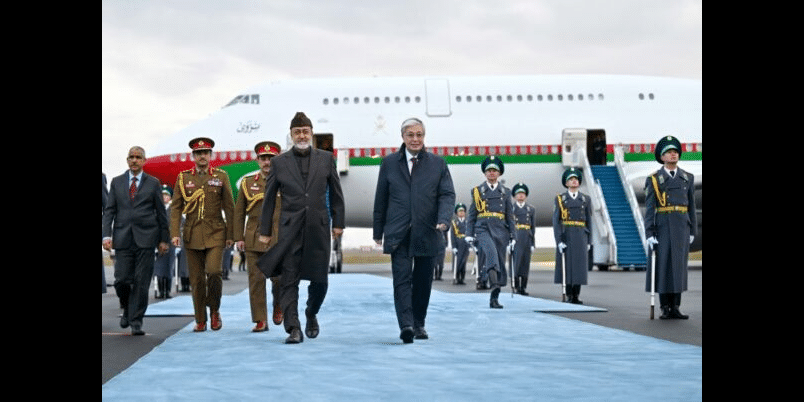
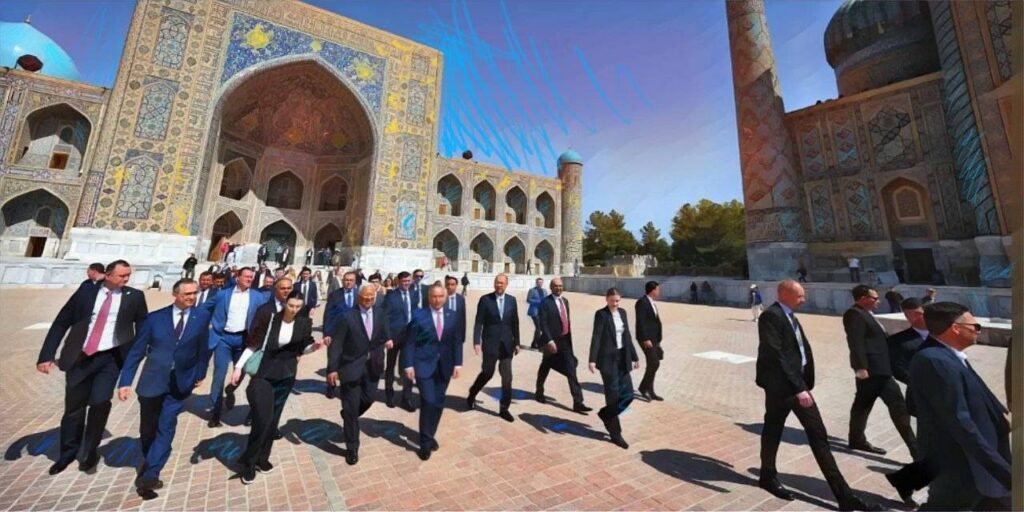
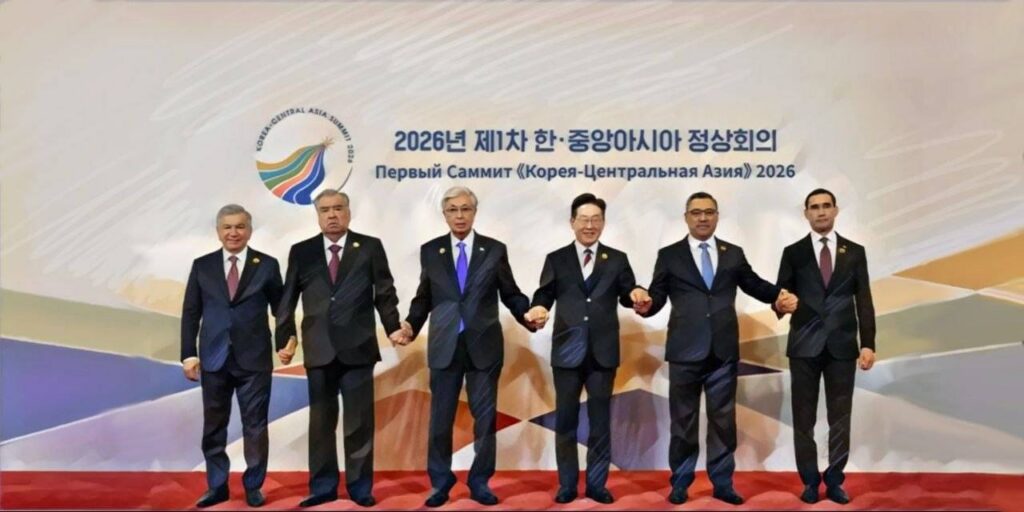
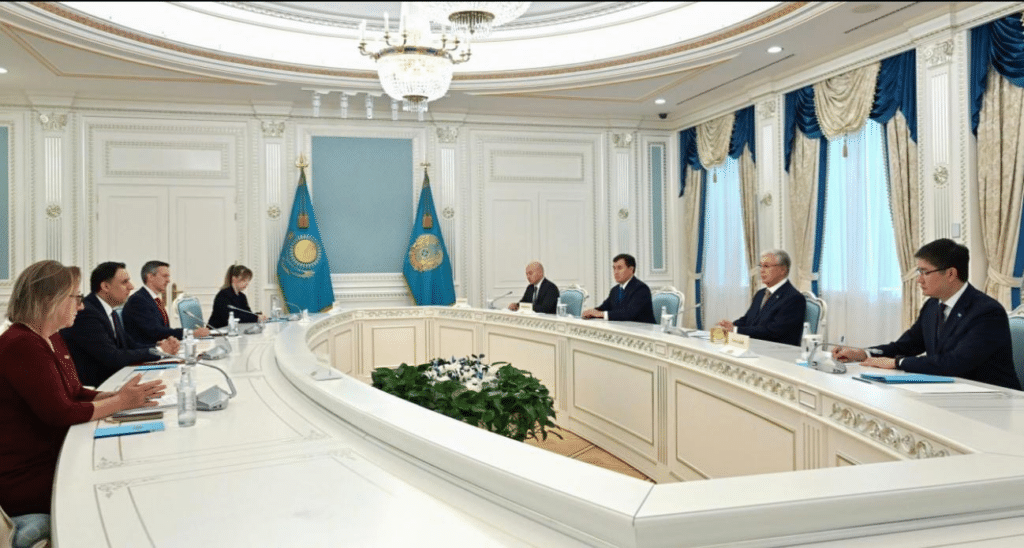
The first Central Asia-Republic of Korea Summit brought five countries to Seoul with very different records of working with Korean capital. Kazakhstan arrived with commercial agreements worth about $19 billion, while Uzbekistan is discussing multibillion-dollar financing through the state-owned Export-Import Bank of Korea. In Turkmenistan, Korean companies are expanding beyond their traditional role in the gas-chemical industry; Tajikistan is offering mineral resources; and Kyrgyzstan is establishing a dedicated government contact point to help attract Korean businesses. On September 16, the presidents of all five Central Asian states met South Korean President Lee Jae Myung together for the first time. Until now, the Korea-Central Asia Cooperation Forum, established in 2007, had operated mainly at a ministerial level. A permanent secretariat was established in 2017, and in 2020 the meetings were elevated to the level of foreign ministers. The leaders adopted the Seoul Declaration, agreeing to hold summits every two years, with Kazakhstan set to host the next in 2028. Ministerial meetings in the intervening years will review implementation and prepare the next summit’s agenda. The declaration also envisages Korea Desks across the five Central Asian countries to help businesses address administrative obstacles. The leaders expressed interest in combining Central Asian minerals with Korean technology to build joint production networks, and agreed to pursue measures to reduce non-tariff barriers. Seoul also sees Central Asia as part of its own industrial strategy. South Korea, one of the world’s leading producers of automobiles, electronics, batteries, and ships, needs stable supplies of energy and raw materials. Opening the summit, Lee spoke of combining the region’s resources with Korean exploration and processing technologies. Critical minerals, energy, and supply-chain resilience were among the main issues at the meeting. In 2025, South Korea’s trade with the five countries reached $10 billion for the first time: Korean exports totaled $8.67 billion, while imports from Central Asia amounted to $1.39 billion. Cumulative Korean investment in the region reached $6.48 billion. Kazakhstan and Uzbekistan continue to account for most of this trade and investment. The talks in Seoul showed how different the next step could look in each of the five countries. [caption id="attachment_56323" align="aligncenter" width="1774"] Image: Akorda[/caption] Kazakhstan: $19 Billion in Agreements and Large-Scale Industry Kazakhstan arrived at the summit with the largest announced commercial package. On September 15, a day before the regional summit, Kazakhstan and South Korea signed around 80 agreements worth approximately $19 billion through the Kazakhstan-Korea Business Council in Seoul. About $11 billion is associated with projects involving Samruk-Kazyna, Kazakhstan’s sovereign wealth fund, which controls major state assets in oil and gas, energy, transport, telecommunications, and uranium mining. The $19 billion figure represents the value of signed agreements and announced projects at different stages of development. Behind the headline figure are several major industrial projects. QazaqGaz and Hyundai Engineering agreed to implement a gas processing plant at Karachaganak with an annual capacity of 5 billion cubic meters. KazMunayGas and Samsung E&A signed an agreement on expanding the Pavlodar refinery’s capacity to 9 million metric tons a...

South Korea and Uzbekistan Sign 13 Agreements as Seoul Deepens Cooperation Across Central Asia

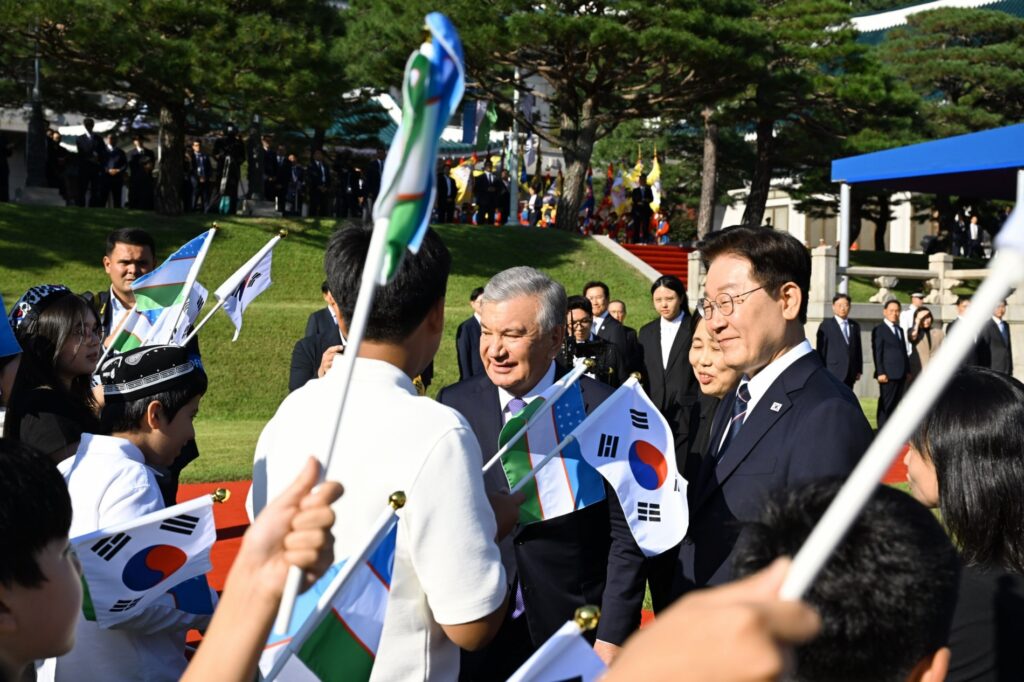
Uzbekistan and South Korea signed 13 cooperation documents during President Shavkat Mirziyoyev’s visit to Seoul on September 14, covering areas including critical minerals, artificial intelligence, rail transport and defense. South Korean President Lee Jae Myung will host the first summit with all five Central Asian states on September 16. The five Central Asian presidents due to attend are Kazakhstan’s Kassym-Jomart Tokayev, Uzbekistan’s Shavkat Mirziyoyev, Kyrgyzstan’s Sadyr Japarov, Tajikistan’s Emomali Rahmon, and Turkmenistan’s Serdar Berdimuhamedov. Mirziyoyev’s talks opened a series of bilateral meetings running through September 16, with Kazakhstan and Turkmenistan scheduled for September 15, and Tajikistan and Kyrgyzstan the following morning. Among the Uzbek agreements is a memorandum to launch feasibility studies under South Korea’s Economic Development Cooperation Fund on the introduction of eight high-speed train sets and the establishment of a national genome and biobank center. The projects’ scope will depend on the studies’ findings. Uzbekistan had already agreed to purchase six high-speed trains from Hyundai Rotem in 2024. The Export-Import Bank of Korea and Uzbekistan’s investment ministry also agreed to identify potential projects and explore financing in six priority areas. These include critical minerals, AI and data centers, smart cities, an industrial complex for Korean companies, pharmaceuticals and biotechnology, and food, beauty and cultural industries. The presidents also agreed to use the Korea–Uzbekistan Rare Metals Center as a base for strengthening cooperation across exploration, development and processing. They agreed to expand cooperation on the use of AI in manufacturing. The package includes a defense cooperation contract involving Korea Aerospace Industries and an Uzbek counterpart. The South Korean government’s published summary did not identify the equipment or disclose the contract’s value. The agreements build on South Korea’s established economic presence across Central Asia. Its foreign ministry identifies Kazakhstan as its largest investment destination in the region, based on investment data through 2023. Kazakhstan’s industry ministry has put bilateral industrial cooperation at 46 joint projects worth about $3.9 billion, covering Hyundai and Kia vehicle production, Hyundai trucks and buses, ferroalloys and Samsung home appliances. Hyundai Trans Kazakhstan, part of Kazakhstan’s Astana Motors, produced 52,040 vehicles in Almaty in 2025, while Kia Qazaqstan began operating in Kostanay late that year, according to TCA’s reporting on Kazakhstan’s automotive industry. Korean companies are also involved in transport infrastructure and urban development. A Turkish–South Korean consortium secured the Big Almaty Ring Road public-private partnership, while South Korean partners are involved in the planned K Smart City district at Alatau. South Korean companies have participated in major industrial projects in Turkmenistan, including the Kiyanly gas chemical complex and gas processing facilities at the Galkynysh field. Daewoo Engineering & Construction is working on a mineral fertilizer production complex in Turkmenabat, where South Korea’s ambassador reviewed construction preparations in June. Turkmenistan’s foreign ministry has also highlighted Korean participation in transport infrastructure and shipbuilding. In Kyrgyzstan, South Korea has provided technical assistance to the textile sector and committed funding for a five-year digital-transformation program starting in 2026. The two governments are also examining potential cooperation involving Kyrgyzstan’s antimony...

Kyrgyzstan and Afghanistan Launch Joint Business Council to Expand Trade and Investment

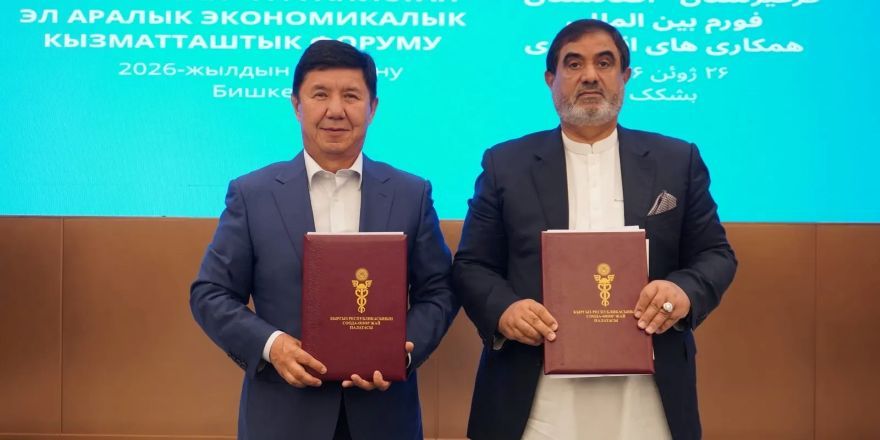
Kyrgyzstan and Afghanistan have established a joint Business Council aimed at boosting bilateral trade and promoting new investment projects, as Bishkek deepens economic engagement with Afghanistan following the removal of the Taliban from its list of banned organizations. The agreement to create the council was signed during an Afghan-Kyrgyz business forum in Bishkek, where officials and business leaders from both countries discussed opportunities in trade, agriculture, food processing, construction, and logistics. The new body is intended to serve as a permanent platform for direct dialogue between entrepreneurs, support joint initiatives, and coordinate business missions, according to Kyrgyz officials. Opening the forum, Temir Sariev, head of Kyrgyzstan’s Chamber of Commerce and Industry, said the move marked a new stage in bilateral economic relations. “Today, we are creating more than just a new structure. We are laying a solid foundation for systemic business interaction, which will increase trade volumes, attract investment, and open up new opportunities for entrepreneurs in Kyrgyzstan and Afghanistan,” Sariev said. According to Sariev, Kyrgyz exports to Afghanistan reached a record $50.4 million in 2024. The Afghan delegation was led by Sayed Karim Hashemi, who said Afghan businesses were particularly interested in expanding cooperation in agriculture, trade, and infrastructure projects. Trade between the two countries has accelerated since Kyrgyzstan removed the Taliban from its list of prohibited organizations in September 2024, a move the Kyrgyz Foreign Ministry said was intended to support regional stability and strengthen constructive dialogue. In December 2025, Kyrgyzstan opened its Trade House in Kabul, a platform designed to promote Kyrgyz exports and facilitate direct business contacts. According to Afghanistan’s Ministry of Industry and Commerce, the country’s main exports to Kyrgyzstan include aluminum and copper products, pressure cookers, carpets, fruits, and vegetables, while Kyrgyzstan exports significant volumes of petroleum products to Afghanistan. Kyrgyzstan has also expanded its regional trade infrastructure to support access to the Afghan market. In November 2024, it secured a pavilion at the Termez International Trade Center in Uzbekistan, near the Afghan border. The center has become a key transit hub for trade flows between Central Asia and Afghanistan, offering Kyrgyz exporters a strategic gateway into the Afghan market. The new Business Council reflects Kyrgyzstan’s broader strategy to diversify regional trade routes and strengthen economic ties with southern neighbors amid shifting geopolitical and logistics patterns in Central Asia.

Made In Central Asia: Leaders Eye $20 Billion Trade Milestone as Regional Cooperation Deepens

The first meeting of trade and investment ministers from Central Asian countries, joined by Azerbaijan, has taken place in Tashkent, where participants agreed to nearly double mutual trade to $20 billion and discussed launching a regional brand, Made in Central Asia. Opening the session, Uzbekistan’s Minister of Investment, Industry, and Trade, Laziz Kudratov, highlighted the substantial potential for increased trade due to the complementarity of regional economies and growing business interest in joint initiatives According to Uzbek data, intra-regional trade doubled between 2017 and 2024, reaching approximately $11 billion. Kudratov proposed developing an action plan to raise trade turnover to $20 billion. The proposed strategy includes harmonizing customs procedures, implementing digital document management, mutually recognizing permits, and developing “single window” systems at borders. Additional measures under discussion include creating a regional electronic catalog of goods and producers and integrating the digital platforms of chambers of commerce, industry, and export agencies. Uzbekistan also proposed hosting the Central Asia and Azerbaijan Investment Forum in Samarkand in 2026, positioning it as a platform to launch the Made in Central Asia brand. Kazakhstan’s Minister of Trade and Integration, Arman Shakkaliev, urged countries to shift from a “buy-sell” model to an “invest-produce-sell” approach. He noted that Kazakhstan is entering a new investment cycle aimed at building export-oriented industries and sustainable value chains. Shakkaliev added that the upcoming industrial cooperation development program with Uzbekistan could be expanded to other Central Asian countries and Azerbaijan. Kazakhstan also supported the common branding initiative and proposed a pilot project using digital trading platforms. Tajikistan’s Minister of Economic Development and Trade, Zavki Zavkizoda, underscored the importance of digital technologies and cited examples of regional companies operating at an international level. Nazar Agakhanov, Turkmenistan’s Minister of Trade and Foreign Economic Relations, stressed that simplifying trade procedures and developing electronic platforms are essential to meeting shared goals. Ashgabat expressed its readiness to join the working group to be established following the meeting. Kyrgyzstan was represented by its ambassador to Uzbekistan, Duishonkul Chotonov, who noted that Bishkek views the format as a platform for collective decisions that advance regional economic development. Azerbaijan’s First Deputy Minister of Economy, Elnur Aliyev, reported that trade with Central Asian states grew by 58% in the first nine months of 2025, surpassing $1 billion. He said Azerbaijan is prepared to expand its transport infrastructure through new logistics hubs and the promotion of joint ventures. The meeting concluded with the signing of a joint communiqué expressing intentions to deepen economic ties, establish joint ventures, and develop new instruments for investment cooperation. The seventh Consultative Meeting of the Heads of State of Central Asia will be held in Tashkent on November 15-16. Azerbaijani President Ilham Aliyev is also expected to attend.

U.S. Envoys Hail Stronger Kazakhstan Partnership Ahead of C5+1 Summit

On October 29, Unites States Special Envoy for South and Central Asia Sergio Gor and Deputy Secretary of State Christopher Landau concluded their visit to Kazakhstan ahead of the upcoming C5+1 summit in Washington. During their trip, the U.S. envoys met with President Kassym-Jomart Tokayev and held discussions with representatives of Kazakhstan’s government and business community, which they described as highly productive. “We are concluding a memorable trip to Kazakhstan in the beautiful capital, Astana, which did not even exist 30 years ago and now boasts a population of more than 1.5 million,” Landau posted on social media. He also stated that bilateral relations between the U.S. and Kazakhstan “have never been so strong” and expressed gratitude for the hospitality.  Gor and Landau held talks with Prime Minister Olzhas Bektenov and key cabinet members, including Minister of Trade and Integration Arman Shakkaliev, Minister of Energy Yerlan Akkenzhenov, Minister of Transport Nurlan Sauranbayev, and Deputy Prime Minister and Minister of National Economy Serik Zhumangarin, to discuss Kazakhstan’s economic priorities and areas for expanding bilateral cooperation. According to the Kazakh government, the talks focused on expanding trade and investment cooperation between the two countries. Priority areas included transport and logistics, energy, agriculture, the digital economy, and artificial intelligence. During their visit, the U.S. envoys also met with Deputy Prime Minister Murat Nurtleu, who reaffirmed Kazakhstan’s readiness to cooperate on sustainable development and energy security. The meetings demonstrated Kazakhstan’s active engagement with the United States in the lead-up to the upcoming Central Asia–U.S. summit. Deputy Prime Minister and Minister of National Economy Serik Zhumangarin, who highlighted Kazakhstan’s economic strengths during talks with Gor and Landau, had recently returned from a high-level visit to the United States. His delegation, which included Deputy Head of the Presidential Administration Erbolat Dossaev and Chairperson of the Agency for Regulation and Development of the Financial Market Madina Abylkasymova, held meetings in New York and Washington with American business leaders and members of Congress. During the visit, the Kazakh delegation presented the country’s economic growth strategy, highlighted ongoing GDP expansion, and discussed the potential listing of government securities on the New York Stock Exchange. They also raised the possible repeal of the Jackson–Vanik Amendment, a long-standing priority for Kazakhstan’s diplomatic agenda. Against this backdrop, the White House’s decision to convene a summit between President Donald Trump and the leaders of the Central Asian republics may partly reflect Kazakhstan’s sustained diplomatic outreach. In that context, Gor and Landau’s remarks of appreciation as they departed Astana underscored recognition of Kazakhstan’s role in shaping this evolving partnership.   Explore our critical minerals special coverage for a timeline of Central Asia’s growing place in U.S. supply-chain strategy.