• KGS/USD = 0.01144 0%
  • KZT/USD = 0.00204 0%
  • TJS/USD = 0.10415 -0.19%
  • UZS/USD = 0.00008 0%
  • TMT/USD = 0.28571 0%
  • KGS/USD = 0.01144 0%
  • KZT/USD = 0.00204 0%
  • TJS/USD = 0.10415 -0.19%
  • UZS/USD = 0.00008 0%
  • TMT/USD = 0.28571 0%
  • KGS/USD = 0.01144 0%
  • KZT/USD = 0.00204 0%
  • TJS/USD = 0.10415 -0.19%
  • UZS/USD = 0.00008 0%
  • TMT/USD = 0.28571 0%
  • KGS/USD = 0.01144 0%
  • KZT/USD = 0.00204 0%
  • TJS/USD = 0.10415 -0.19%
  • UZS/USD = 0.00008 0%
  • TMT/USD = 0.28571 0%
  • KGS/USD = 0.01144 0%
  • KZT/USD = 0.00204 0%
  • TJS/USD = 0.10415 -0.19%
  • UZS/USD = 0.00008 0%
  • TMT/USD = 0.28571 0%
  • KGS/USD = 0.01144 0%
  • KZT/USD = 0.00204 0%
  • TJS/USD = 0.10415 -0.19%
  • UZS/USD = 0.00008 0%
  • TMT/USD = 0.28571 0%
  • KGS/USD = 0.01144 0%
  • KZT/USD = 0.00204 0%
  • TJS/USD = 0.10415 -0.19%
  • UZS/USD = 0.00008 0%
  • TMT/USD = 0.28571 0%
  • KGS/USD = 0.01144 0%
  • KZT/USD = 0.00204 0%
  • TJS/USD = 0.10415 -0.19%
  • UZS/USD = 0.00008 0%
  • TMT/USD = 0.28571 0%

Viewing results 1 - 6 of 649

Kyrgyzstan Ready to Act as a ‘Gateway’ for Tajik Goods to EAEU and EU Markets

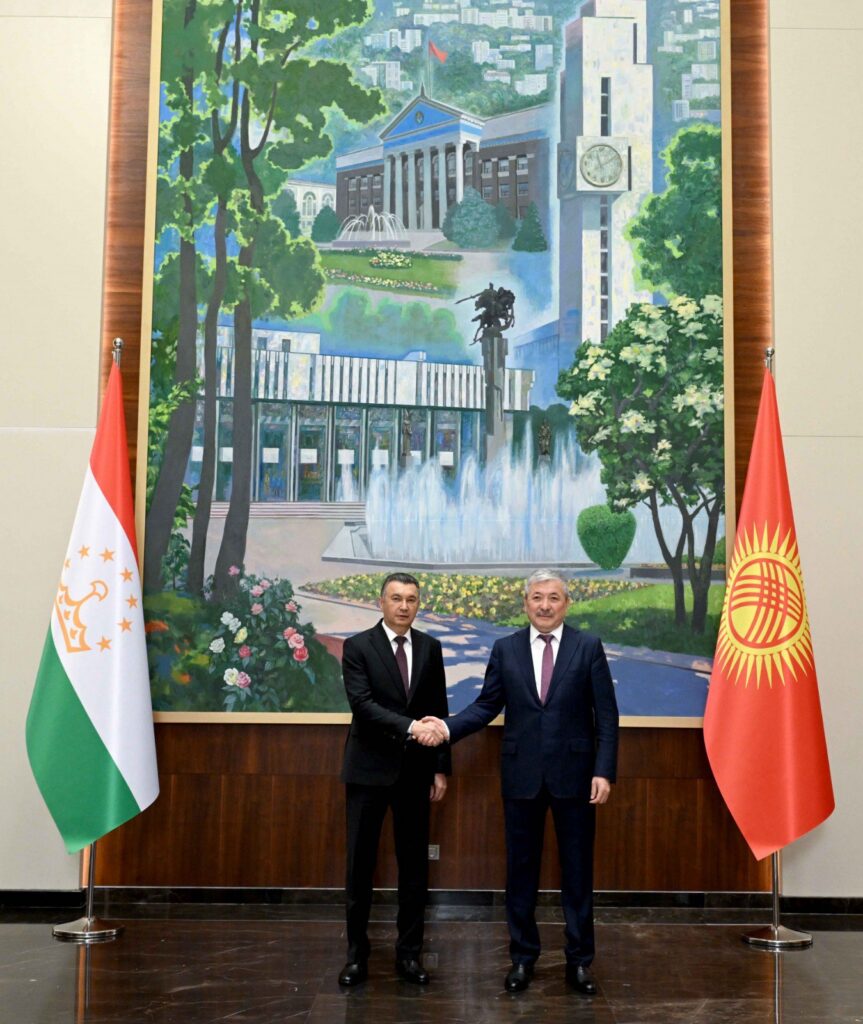
On February 13 in Bishkek, Chairman of the Cabinet of Ministers of Kyrgyzstan Adylbek Kasymaliev and Prime Minister of Tajikistan Kokhir Rasulzoda held the first meeting of the Kyrgyz-Tajik Intergovernmental Council. Opening the session, Kasymaliev said that 2025 marked a historic milestone in bilateral relations, citing the completion of the delimitation process of the Kyrgyz-Tajik border. He described the agreement as “a decisive factor in strengthening security and stability not only in our countries but also in the entire region.” Addressing trade and economic cooperation, Kasymaliev stated that Kyrgyzstan is ready to expand supplies of meat and dairy products, clothing and textiles, coal, glass, and sugar to Tajikistan. According to official figures, bilateral trade turnover reached $36 million in 2025, representing a nearly 24-fold increase compared to 2024. Both sides have set a target of increasing annual trade to $500 million. In the field of transport and logistics, Kasymaliev emphasized the need to improve border infrastructure and enhance the efficiency of checkpoints. Proposed measures include modernizing existing border crossings, expanding capacity, developing logistics and cargo terminals, and introducing digital solutions in customs and border administration. “Kyrgyzstan is ready to act as a trade gateway for Tajik goods to the markets of the Eurasian Economic Union (EAEU), as well as the European Union through the Generalised Scheme of Preferences Plus (GSP+),” Kasymaliev said. He also highlighted the strategic China-Kyrgyzstan-Uzbekistan railway project, which he said would significantly increase Kyrgyzstan’s transit potential and strengthen its role as a logistics hub in Eurasia. According to the Kyrgyz prime minister, the new transport corridor will create additional opportunities for Tajikistan. Kasymaliev further noted positive dynamics in tourism cooperation. In 2025, 86,000 tourists from Tajikistan visited Kyrgyzstan, a 12-fold increase compared to 2024. Kyrgyzstan reaffirmed its interest in developing joint tourism initiatives, including the possible introduction of a unified visa for third-country nationals traveling across Central Asia. Rasulzoda stated that Tajikistan places particular importance on good-neighborly relations and mutually beneficial cooperation with Kyrgyzstan, confirming readiness to further strengthen the partnership. As part of his visit to Bishkek, Rasulzoda toured a recently opened waste-to-energy plant constructed by a Chinese company. He described the facility as a promising example of modern waste recycling and expressed Tajikistan’s interest in implementing similar projects.
Central Asia Launches Regional Electricity Market with World Bank Support

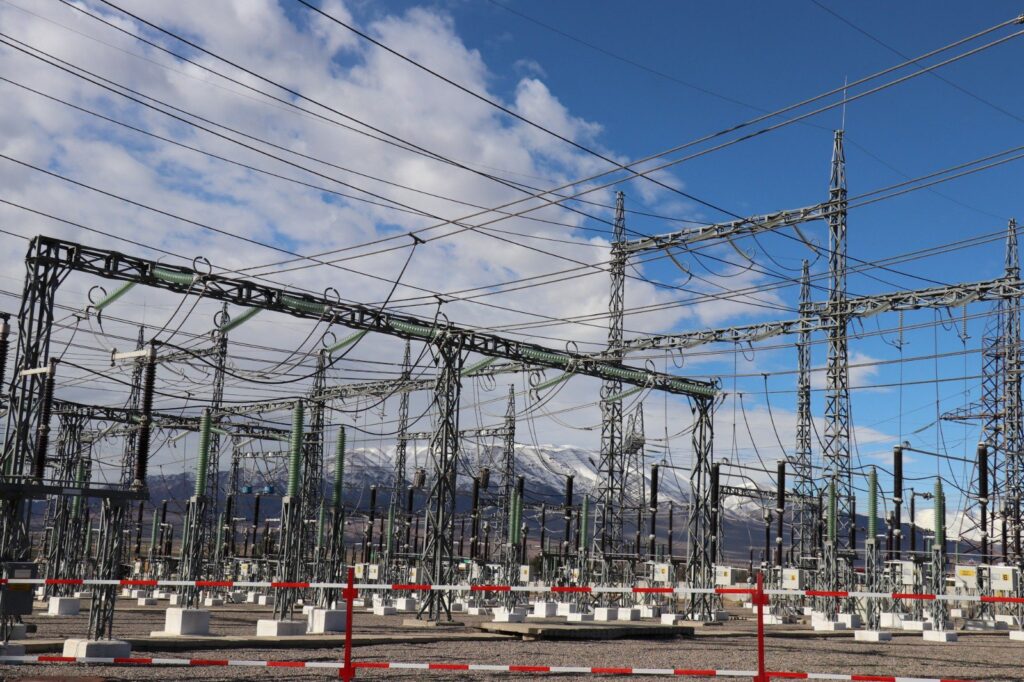
On January 22, the World Bank’s Board of Executive Directors approved the 10-year Regional Electricity Market Interconnectivity and Trade (REMIT) Program, an ambitious initiative to establish Central Asia’s first regional electricity market. The program aims to boost cross-border electricity trade, expand transmission capacity, and lay the foundation for large-scale renewable energy integration across the region. Electricity demand in Central Asia is projected to triple by 2050 under a business-as-usual scenario. Yet electricity trade in the region currently accounts for only 3% of total demand. The REMIT Program seeks to harness Central Asia’s diverse and complementary energy resources: hydropower in Kyrgyzstan and Tajikistan, thermal power from coal and natural gas in Kazakhstan, Turkmenistan, and Uzbekistan, and the region’s rapidly expanding solar and wind potential. Over the next decade, REMIT aims to: Increase regional electricity trade to at least 15,000 GWh annually, enough to supply millions of consumers Triple regional transmission capacity to 16 GW Enable up to 9 GW of clean energy integration The initiative is designed to enhance regional energy security, reduce power outages, lower electricity costs, and promote a more resilient and interconnected grid system. Total indicative financing for the program is $1.018 billion, to be deployed in three phases. These funds will support the creation and operation of a regional energy market, boost transmission infrastructure, introduce digital technologies to improve grid reliability, and strengthen regional energy institutions and coordination mechanisms. Investments are also expected to generate both construction-related employment and high-skilled jobs tied to market operations. In the program’s first phase, Kyrgyzstan, Tajikistan, Uzbekistan, and the Central Asian Countries’ Coordinating Dispatch Center (CDC) Energia will benefit from grants and concessional financing totaling $143.2 million. This comprises $140 million from the World Bank’s International Development Association (IDA) and $3.2 million from the Central Asia Water and Energy Program (CAWEP). “The REMIT Program supports Central Asian countries’ ambition to deepen energy cooperation and create a regional electricity market,” said Najy Benhassine, World Bank Regional Director for Central Asia. “This will enable more efficient use of energy resources, including cross-border deployment of clean energy, improve access to reliable and affordable electricity, and support jobs. By 2050, stronger regional connectivity could generate up to $15 billion in economic benefits.” Charles Cormier, World Bank Regional Infrastructure Director for Europe and Central Asia, added that REMIT will advance energy security and unlock private sector investment. “The first phase alone is expected to enable about 900 MW of new clean energy capacity, leveraging $700 million in private investment. This will pave the way for a more resilient and interconnected power system across this dynamic region,” he said. CDC Energia will lead the implementation of market and institutional activities, while national transmission companies will be responsible for infrastructure investments.

Uzbekistan Signals Possible Retaliation Over Increased Trade Costs in Tajikistan

Uzbekistan may introduce reciprocal measures in response to trade barriers impacting its exports to Tajikistan, Deputy Prime Minister Jamshid Khodjaev announced on January 17 during a meeting of entrepreneurs, ambassadors, and government officials in Tashkent. Khodjaev highlighted challenges faced by Uzbek exporters, particularly in the construction materials sector, despite full compliance with required documentation. “We have problems related to Tajikistan. We export products to this market, but even when all documents are complete, our goods are cleared under a so-called ‘reserve’ procedure,” he said. “As a result, the price of our products in that market rises by about 15%.” Meeting participants reported that additional charges imposed at Tajik customs are inflating the cost of Uzbek construction materials and reducing competitiveness. Khodjaev warned that if such restrictions are not lifted, Uzbekistan may respond with similar trade measures. The issue was also raised by representatives of German construction materials giant Knauf. The company’s commercial director noted that exporters face similar obstacles not only in Tajikistan but also in Turkmenistan and parts of the Caucasus region. In Tajikistan’s case, the “reserve” customs clearance procedure was cited as a key driver of increased costs. “This is pushing the price of our products in the Tajik market up by as much as 15%,” the representative said. Entrepreneurs stated that combined logistics and customs costs for shipments to Tajikistan have surged from approximately $2,000 to $12,000. Despite multiple appeals to Tajik authorities, they said no resolution has been achieved, and the elevated costs are undermining export volumes. “If they impose duties, we can do the same,” Khodjaev stated. “Our customs officials will talk to their counterparts. If this practice continues, we will take response measures. Our ambassador should clearly convey this signal.” Despite the ongoing friction, trade between Uzbekistan and Tajikistan surpassed $700 million in 2024, nearly three times higher than in previous years. Both governments have indicated they are exploring new logistics corridors and simplified customs procedures to deepen bilateral economic ties.

Central Asia Trade with China Tops Record $100 Billion in 2025

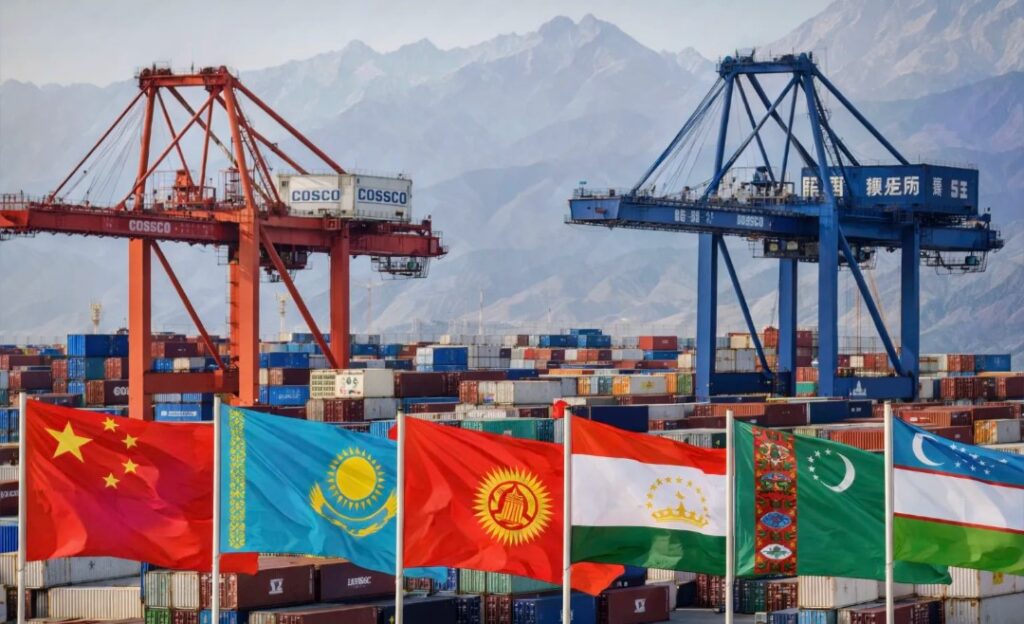
Trade between China and Central Asia increased to a record of more than $100 billion in 2025, despite challenges to global economic growth, the Chinese government said on Monday.  Citing data from China’s General Administration of Customs, Foreign Ministry spokesman Guo Jiakun said the trade structure with the Central Asian nations of Kazakhstan, Kyrgyzstan, Tajikistan, Turkmenistan and Uzbekistan had improved and that more high-end products were entering the Chinese market from the region.   “As global economic growth remains sluggish and the international trading system faces serious challenges, the economic and trade cooperation between China and Central Asian countries has withstood external headwinds, and the trade volume surpassed US$100 billion,” Guo said.  He attributed the increasing cooperation in part to a China-Central Asia summit in Astana, Kazakhstan last year that was attended by Chinese President Xi Jinping and the five Central Asian leaders.  China’s Belt and Road initiatives, which include the development of trade routes that pass through Central Asia and link up with Europe, are also making progress, according to the Chinese official.  Total trade between China and Central Asia was $106.3 billion in 2025, an increase of 12 percent over the previous year, China’s state-run Xinhua news agency reported. Chinese exports such as machinery, electronics and high-tech goods were $71.2 billion, an increase of 11 percent over the previous year. Imports from Central Asia amounted to $35.1 billion, a rise of 14 percent from 2024. China is involved in major projects in Central Asia, including the extraction of minerals used for “clean” technology, equipment manufacturing and the modernization of agriculture. China imports oil and natural gas as well as a growing number of other products from the region.  Russia was once the main trading partner of Central Asia after the fall of the Soviet Union, but China has the lead position now. The United States is also seeking to develop more trade with resource-rich Central Asia, which is diversifying its international partnerships.     

Kazakhstan Boosts Trade with Turkic States on Back of Rising Exports

Kazakhstan has significantly increased mutual trade volumes with member states of the Organization of Turkic States (OTS), primarily driven by a surge in exports. According to data from the first ten months of 2025, trade turnover with OTS countries rose by nearly 11%, Deputy Minister of National Economy Asan Darbaev announced at the Third General Assembly of the Union of Turkic Chambers of Commerce and Industry (TCCI) in Astana. The OTS includes Azerbaijan, Kazakhstan, Kyrgyzstan, Turkmenistan, Turkey, and Uzbekistan as full members. Hungary and Northern Cyprus hold observer status and contribute to deepening economic, cultural, and political cooperation across the Turkic world. “At the end of ten months of 2025, the volume of mutual trade between Kazakhstan and OTS countries reached approximately $10.4 billion, which is almost 11% higher than the same period last year,” Darbaev stated. He noted that this growth was largely due to a 16.6% increase in Kazakhstani exports to OTS member states, which totaled $7.6 billion. Imports from these countries to Kazakhstan amounted to $2.8 billion. The export surge was driven by increased shipments of copper and copper cathodes, crude oil, wheat, petroleum products, sunflower oil, and a range of metallurgical and agro-industrial goods. According to Darbaev, this indicates not only the continued strength of Kazakhstan’s raw materials sector but also the gradual diversification of exports with higher value-added products. Turkey, Uzbekistan, Kyrgyzstan, and Azerbaijan remain Kazakhstan’s principal trading partners within the OTS. Turkey leads with a trade turnover of $4.36 billion, followed by Uzbekistan at $3.88 billion. Trade with Kyrgyzstan reached $1.78 billion, while trade with Azerbaijan stood at approximately $390 million. During the assembly, Kazakhstan assumed the rotating chairmanship of the TCCI for the first time since the Union's establishment in 2019. The organization includes chambers of commerce and industry from Azerbaijan, Kazakhstan, Kyrgyzstan, Turkey, Uzbekistan, Turkmenistan, and Hungary. It serves as a key platform for advancing trade, industrial cooperation, investment, and technology exchange among member and observer states. Raimbek Batalov, chairman of the presidium of Kazakhstan’s National Chamber of Entrepreneurs “Atameken,” was appointed head of the TCCI for a one-year term. “The Turkic economic space today possesses all the prerequisites for a qualitative leap forward, scale, resources, an institutional foundation, and political will. Our shared goal is to convert this potential into sustainable production, investment, job creation, and improved living standards,” Batalov said. Delegates at the assembly identified priority areas for future cooperation, including the development of joint industrial projects, operationalization of the Turkic Investment Fund, reduction of trade and technical barriers, and enhanced transport and logistics connectivity. Previously, The Times of Central Asia reported that energy ministers from OTS countries had discussed key joint initiatives in December 2025 as part of ongoing regional collaboration.

Tokayev Sets Agenda for Kazakhstan’s 2026 EAEU Chairmanship

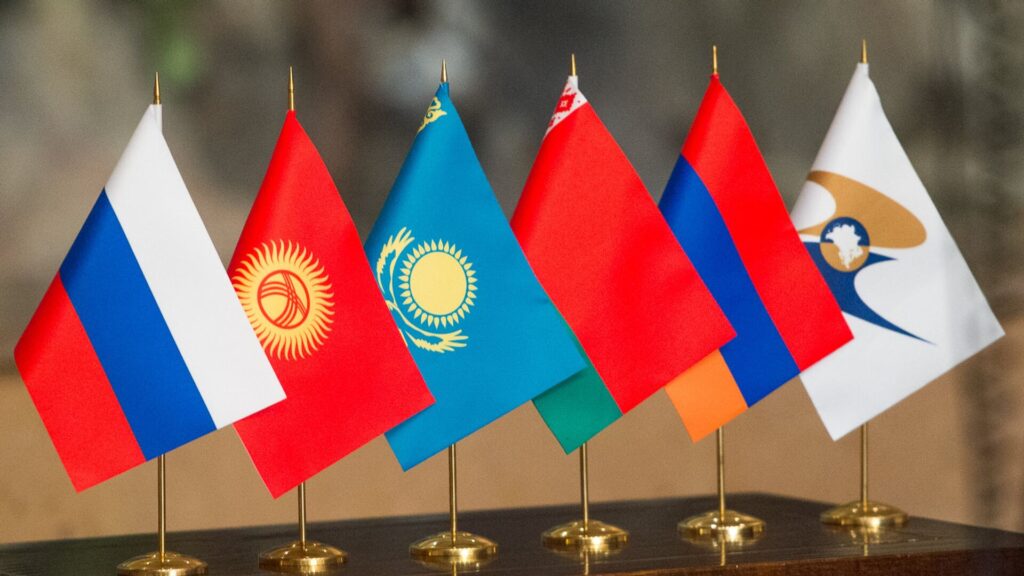
Kazakhstan has assumed the rotating chairmanship of the Eurasian Economic Union (EAEU) for 2026, pledging to focus on digital transformation, logistics integration, and the removal of internal trade barriers across the bloc. In a statement published on December 31, 2025, President Kassym-Jomart Tokayev outlined five key priorities for Kazakhstan’s EAEU presidency. The EAEU includes Armenia, Belarus, Kazakhstan, Kyrgyzstan, and Russia, and facilitates the free movement of goods, services, capital, and labor among its members. Artificial Intelligence and Economic Integration Tokayev identified artificial intelligence (AI) as a vital tool for deepening integration within the bloc. AI technologies, he said, are already being used to forecast trade flows and assess the impact of tariffs and trade agreements on member economies. Kazakhstan, which has set a national goal of becoming a digital nation, expressed readiness to share its expertise with other EAEU members in areas such as AI, digital regulation, and economic transformation. Tokayev proposed the adoption of a Joint Statement on the Responsible Development of Artificial Intelligence at the 2026 Eurasian Economic Forum in Astana. The document would define a new framework for digital cooperation within the bloc. Positioning the EAEU as a Eurasian Logistics Hub Highlighting the EAEU’s geographic position as a natural bridge between East and West, Tokayev called for transforming the bloc into a leading logistics hub for the Eurasian continent. He emphasized the need to modernize transport, customs, and logistics infrastructure, and to develop international transport corridors and multimodal transport solutions. He also proposed an integrated, AI-based cargo flow management system across the EAEU to reduce delivery times, cut costs, and enhance the bloc’s global competitiveness in logistics. Digitalizing Industry and Agriculture Calling industry and agriculture the economic foundation of the EAEU, Tokayev urged deeper cooperation to produce globally competitive products. While financial mechanisms for joint projects already exist, he argued that more emphasis should be placed on innovation-led initiatives. He proposed launching demonstration centers, automation startups, and competence hubs to drive digitalization at both enterprise and farm levels. Barrier-Free Trade as a Core Principle Tokayev stressed the elimination of administrative and regulatory barriers within the bloc as a central priority. He criticized artificial restrictions on trade, constraints on the movement of citizens, and long freight queues at borders. He also warned against the use of customs procedures and regulatory controls, including sanitary, veterinary, and phytosanitary measures, as tools of political or economic leverage. To address this, he proposed deploying AI to monitor legislative initiatives across the EAEU and flag potential internal trade barriers at an early stage. Expanding External Economic Ties Kazakhstan’s chairmanship will also focus on expanding the EAEU’s external partnerships. In 2025, the bloc signed Free Trade Area agreements with Mongolia and Indonesia and concluded an Economic Partnership Agreement with the United Arab Emirates. Tokayev said greater attention will be paid to building economic ties with countries in the Global South, the Arab world, Southeast Asia, Africa, and regional economic organizations. Macroeconomic Context Tokayev’s agenda is being launched against a backdrop of solid macroeconomic performance...