• KGS/USD = 0.01144 0%
  • KZT/USD = 0.00193 -0%
  • TJS/USD = 0.10838 -0.09%
  • UZS/USD = 0.00008 0%
  • TMT/USD = 0.28490 0%
  • KGS/USD = 0.01144 0%
  • KZT/USD = 0.00193 -0%
  • TJS/USD = 0.10838 -0.09%
  • UZS/USD = 0.00008 0%
  • TMT/USD = 0.28490 0%
  • KGS/USD = 0.01144 0%
  • KZT/USD = 0.00193 -0%
  • TJS/USD = 0.10838 -0.09%
  • UZS/USD = 0.00008 0%
  • TMT/USD = 0.28490 0%
  • KGS/USD = 0.01144 0%
  • KZT/USD = 0.00193 -0%
  • TJS/USD = 0.10838 -0.09%
  • UZS/USD = 0.00008 0%
  • TMT/USD = 0.28490 0%
  • KGS/USD = 0.01144 0%
  • KZT/USD = 0.00193 -0%
  • TJS/USD = 0.10838 -0.09%
  • UZS/USD = 0.00008 0%
  • TMT/USD = 0.28490 0%
  • KGS/USD = 0.01144 0%
  • KZT/USD = 0.00193 -0%
  • TJS/USD = 0.10838 -0.09%
  • UZS/USD = 0.00008 0%
  • TMT/USD = 0.28490 0%
  • KGS/USD = 0.01144 0%
  • KZT/USD = 0.00193 -0%
  • TJS/USD = 0.10838 -0.09%
  • UZS/USD = 0.00008 0%
  • TMT/USD = 0.28490 0%
  • KGS/USD = 0.01144 0%
  • KZT/USD = 0.00193 -0%
  • TJS/USD = 0.10838 -0.09%
  • UZS/USD = 0.00008 0%
  • TMT/USD = 0.28490 0%
10 December 2025

Viewing results 1 - 6 of 10

Kazakhstan Proposes Digital Points System for Traffic Violations

Kazakhstan may introduce a digital points-based system to monitor and penalize traffic violations, enabling authorities to automatically identify repeat offenders, mandate retesting, and revoke driving licenses. The proposal was announced by Prosecutor General Berik Asylov during a recent meeting of the Law Enforcement Coordination Council. According to Asylov, noncompliance with traffic regulations remains a major cause of road accidents. He noted that 81% of those responsible for traffic accidents had previously been held accountable for multiple violations. For instance, in East Kazakhstan, one driver committed 32 infractions in a single year, including 13 speeding violations, before fatally crashing into oncoming traffic, killing himself and two passengers. A more striking case occurred in Almaty, where a driver with 72 violations over two years, including 30 for speeding, killed a pedestrian on August 30. To prevent such incidents, participants at the council meeting proposed the implementation of a digital points system that would automatically record repeat violations. Drivers who exceed a predetermined threshold would be required to retake their driving test. Chronic offenders would face temporary suspension of their driving privileges. Asylov also emphasized the need for stricter oversight in the issuance of driver’s licenses. “Cases of illegal acquisition of licenses will be considered a factor that increases the threat to society,” he stated. As previously reported by The Times of Central Asia, lawmakers have also proposed introducing mandatory psychological evaluations, dubbed the “idiot test”, for repeat offenders who systematically violate the same traffic rules.

Almaty Targets Scooter Safety After Tokayev Calls for Urgent Action

Kazakhstan has become the first country in Central Asia where public concern over electric scooters reached such intensity that the issue was addressed by the president himself. Kassym-Jomart Tokayev mentioned electric scooters in his latest Address to the People of Kazakhstan, a key policy document that outlines the country’s development priorities for the year ahead. In recent weeks, multiple high-profile incidents involving electric scooters have dominated headlines: a woman suffered a broken leg after being hit by teenagers on a scooter; schoolchildren collided with a baby stroller in Almaty; two girls were struck by a bus while riding a scooter; a passerby lost an eye after confronting an aggressive rider; and a fight broke out between two scooter users unable to share the road. These events, widely reported in local media, have fostered growing public frustration toward both scooter riders and the companies that rent out these vehicles. Demonstrating a commitment to what he calls a “responsive state,” Tokayev addressed the issue directly in his national address. “Attention should also be paid to electric scooters, a topic that is being actively discussed in society,” he said. “Two years ago, legislative changes were made that impose restrictions on riding on sidewalks. But the situation in public places has not changed much, and citizens are still at risk. Legislative amendments regulating this area have now been prepared and must be adopted without delay.” The changes referenced by the president came into effect on August 30, 2023. They prohibit scooter use on public roads without a driver’s license, helmet, and reflective elements. Riders are also barred from exceeding 6 km/h on sidewalks. However, these regulations have had limited impact, largely due to a lack of enforcement. Scooter rental companies pledged to implement technical solutions such as speed limiters on sidewalks, single-rider restrictions, and designated parking zones to prevent scooters from obstructing pedestrian pathways. But many of these promises have yet to materialize. On the issue of underage riders, operators have deflected responsibility, saying parents must supervise their children. "It is the parents themselves who give teenagers access to rental scooters," one business representative noted. In response to the president’s remarks, a roundtable was quickly convened in Astana with participation from police and kick-sharing companies. Authorities reported that of 31 traffic accidents involving scooters this year, 18 involved minors. In Almaty, the epicenter of most high-profile incidents, raids were carried out in response to mounting public pressure. In a single day, police recorded over 800 scooter-related violations, including 11 cases involving parental negligence. A total of 259 scooters were impounded. To bolster enforcement, 50 additional police patrols were deployed in high-traffic areas using scooters provided by rental companies. The Almaty City Administration’s Urban Mobility Department also announced plans to expand infrastructure to manage the problem of scooters left haphazardly on sidewalks. Currently, 67 workers, referred to as “scouts”, relocate abandoned vehicles to 15 designated parking zones. An additional 10 parking areas are expected to be operational by October. In short, the problem may not...

Kazakhstan Expands AI-Powered Video Surveillance Network

Kazakhstan has installed more than 19,000 street surveillance cameras equipped with artificial intelligence (AI), enhancing law enforcement's ability to respond swiftly to incidents, the Ministry of Internal Affairs has announced. The ministry stated that the country continues to expand its digital security infrastructure. The AI-enabled cameras are capable of facial recognition, detecting abandoned objects, and analyzing traffic patterns. “The integration of these systems with Operational Management Centers allows us to respond to incidents in real time,” it noted. Police officers have also been equipped with tablets and smart tokens to improve mobility. For the public, reporting tools have been introduced through the 102 mobile app and the “Law and Order” service, accessible via eGovMobile and banking applications. Since the start of 2025, over 8,300 reports have been submitted through these digital platforms. However, the digital transition has coincided with a rise in cybercrime, particularly online fraud. In response, the internal ministry has implemented early detection systems and mechanisms to block suspicious calls and transactions. “In recent months alone, we have prevented the theft of more than 2.6 billion tenge, confiscated over 88,000 SIM cards used by fraudsters, and blocked more than 67 million fraudulent international calls,” the ministry reported. Despite the uptick in cybercrime, traditional crime rates have declined. Since the beginning of the year, more than 10,000 criminal cases have been solved, and nearly 10 million administrative offenses have been prevented. “Thanks to preventive measures, the overall crime rate has dropped by 13%, that’s 9,000 fewer cases compared to last year. We’ve seen decreases in murders, robberies, acts of hooliganism, theft, and livestock rustling. Crimes involving weapons, committed in public places, or by previously convicted individuals have also gone down,” said Minister of Internal Affairs Yerzhan Sadenov. In the area of narcotics enforcement, more than 4,600 drug-related offenses were recorded between January and July 2025. Authorities dismantled 13 organized groups and seized over 11 tons of drugs and 23 tons of chemicals. The ministry also reported 44 extremist-related criminal offenses during the same period, 23 of which have been forwarded to the courts. Addressing domestic violence, the ministry established a dedicated department at the beginning of 2025. In the first seven months, more than 8,000 criminal cases were registered, over 56,000 protective court orders issued, and more than 19,000 offenders detained. As previously reported by The Times of Central Asia, the adoption of a new domestic violence law has led to a decline in crimes against women and children, though challenges remain.

Kazakhstan Considers Lowering Speed Limits in Populated Areas

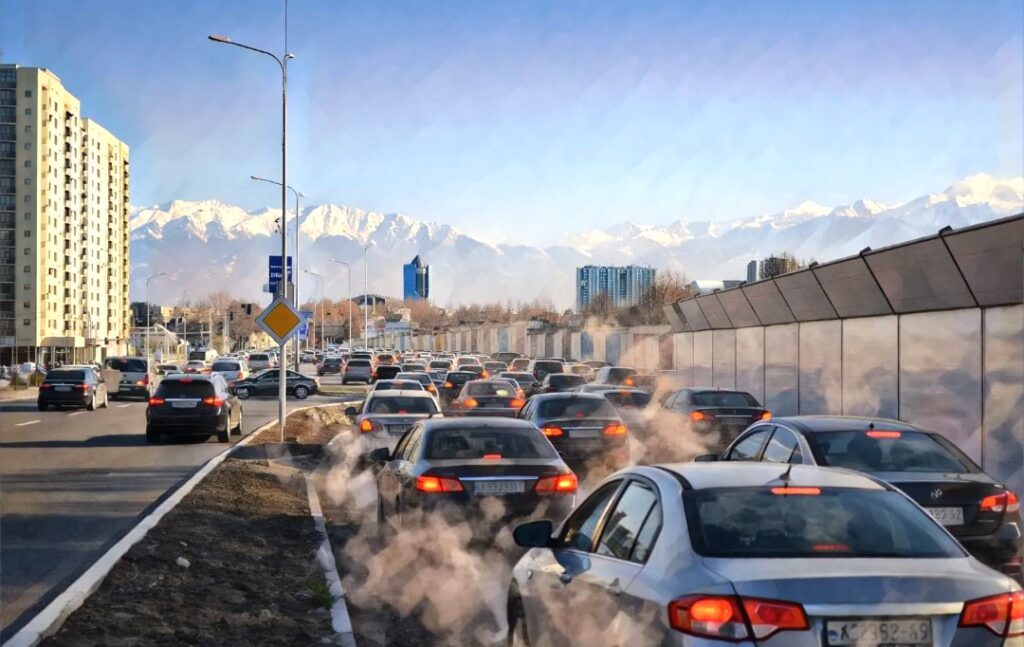
Kazakhstan’s parliament is set to debate reducing the maximum speed limit for motor vehicles in populated areas when deputies return from their summer recess, according to Kaisar Sultanbaev, chairman of the Administrative Police Committee of the Ministry of Internal Affairs. “As for reducing the speed limit in populated areas, we are constantly working on legislation and our regulatory documents. We are currently considering this issue in working order. When our MPs return from their vacation, we will discuss it with them. The issue is in progress, and we will provide additional information about the decisions taken,” Sultanbaev said at a briefing. Currently, the standard speed limit in populated areas is 60 km/h, with variations in certain zones: 40 km/h near schools and up to 80 km/h on bypass roads within city limits. Sultanbaev did not indicate what the new limit might be. The Interior Ministry has previously raised similar initiatives. In spring 2024, it proposed reducing the speed of freight vehicles in populated areas to 50 km/h. The Urban Forum Kazakhstan foundation has also suggested lowering limits in Almaty to 30-50 km/h for all vehicles. More recently, in February 2025, the Prosecutor General’s Office proposed cutting the maximum speed on suburban roads from 90 to 60 km/h. Road safety remains a pressing concern. In the first half of 2025 alone, police recorded more than 3 million speeding violations nationwide. Speeding remains one of the leading causes of fatal crashes: 1,129 traffic accidents in populated areas were attributed to speeding in that period, resulting in 95 deaths. On national and regional highways, 986 similar accidents killed 180 people. At the same time, Sultanbaev noted that stricter enforcement is helping reduce casualties. Between January and June 2025, traffic accidents left 16,000 people injured, down from 26,000 a year earlier. Road fatalities also fell by 8 percent, from 1,480 to 1,366. Kazakhstan’s growing vehicle fleet compounds the challenge. Over the past 34 years, the number of registered vehicles has risen from 2 million to 5.5 million. Earlier this year, The Times of Central Asia reported that senators also proposed introducing a so-called “idiot test”, a psychophysiological assessment for repeat offenders who frequently violate traffic rules, including speed limits.

Issyk-Kul Authorities Launch Campaign to Improve Traffic Rule Awareness

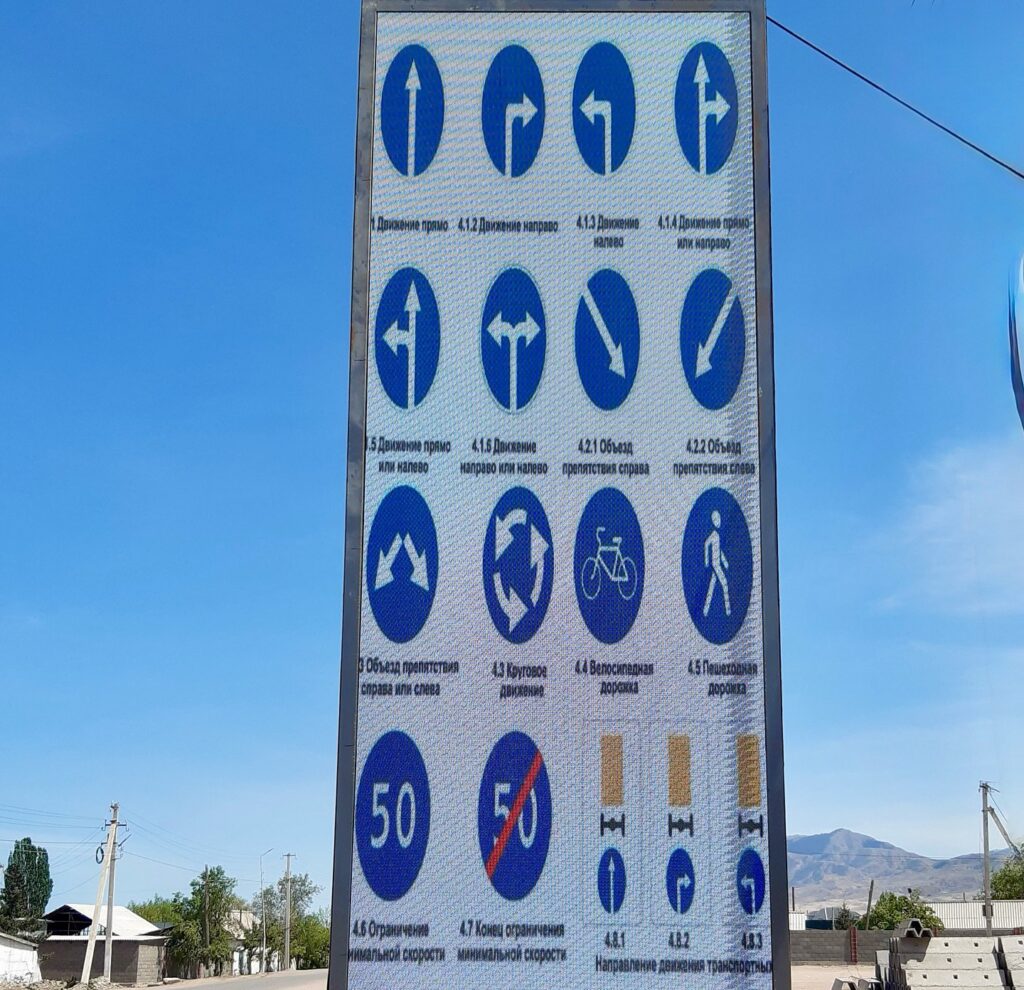
Law enforcement authorities in Kyrgyzstan’s Issyk-Kul region have launched a campaign to improve public knowledge of traffic regulations. As part of the initiative, information boards explaining the meaning of road signs have been installed along major roads. The Ministry of Internal Affairs stated that the campaign aims to promote better understanding and adherence to traffic laws among both drivers and pedestrians. In addition to roadside boards, educational content is being disseminated via LED screens and billboards across the region. “The main objective of the campaign is to help citizens better understand and follow traffic rules. These materials will be useful for both drivers and pedestrians, and are also aimed at improving overall road safety,” the ministry noted. Official statistics indicate that Kyrgyzstan ranks third among Central Asian countries for the number of traffic accidents, with one in three incidents attributed to violations of rules of the road by drivers. “Our efforts are aimed at ensuring road safety in the Issyk-Kul region. Compliance with traffic rules is important for each of us and is a guarantee of safety for both us and other road users,” stated the regional Department of Internal Affairs. The initiative comes amid broader concerns about driving standards in Kyrgyzstan. Earlier this year, government officials revealed that more than half of all driver's licenses in the country were obtained illegally, a disclosure that has spurred new efforts to enforce compliance and raise road safety standards nationwide.

Kyrgyz Drivers to Face On-the-Spot Traffic Rule Tests During Stops

Beginning September 1, drivers in Kyrgyzstan may be required to demonstrate their knowledge of traffic regulations during routine stops by traffic police. The directive aims to reduce road accidents by ensuring that motorists are familiar with basic driving rules. The new policy was announced by government spokesperson Askat Alagozov on his Facebook page. Oral Exams During Traffic Stops Under the initiative, drivers found violating traffic rules may be asked to take an oral exam on the spot. Those who fail will have their driver’s license temporarily suspended until they pass the test. According to Alagozov, the fee for the first retest attempt will be 500 Kyrgyz som (approximately $5.70). The cost increases with each failed attempt, 1,000 KGS ($11.50) for the second, 2,000 KGS ($23) for the third, and 4,000 KGS ($46) for the fourth try. The entire testing process will be recorded on video to help prevent corruption. Drivers will regain their licenses immediately upon successfully passing the exam. A Response to Rising Road Fatalities Alagozov said the initiative responds to the country’s high number of traffic accidents, which have claimed hundreds of lives. He attributed many of these incidents to drivers lacking basic knowledge of road safety rules. “Because of those who do not know the rules of the road, children become orphans, parents lose their sons and daughters, experiencing terrible tragedies. Many become disabled,” he said. He added that prior to 2020, driver's licenses were routinely sold for 15,000 to 20,000 KGS ($80 to $150), with only 20-30% of motorists having actually passed the required exams. Mixed Reactions From the Public The initiative has sparked heated debate on social media. While some citizens support the move as a necessary step toward improving road safety, others fear it could open the door to new forms of corruption and extortion by traffic police. Authorities maintain that the video-recorded testing procedure will act as a safeguard against abuse, and insist the new policy is a serious step toward safer roads in Kyrgyzstan.