• KGS/USD = 0.01144 0%
  • KZT/USD = 0.00205 0%
  • TJS/USD = 0.10722 0.19%
  • UZS/USD = 0.00008 0%
  • TMT/USD = 0.28490 -0.28%
  • KGS/USD = 0.01144 0%
  • KZT/USD = 0.00205 0%
  • TJS/USD = 0.10722 0.19%
  • UZS/USD = 0.00008 0%
  • TMT/USD = 0.28490 -0.28%
  • KGS/USD = 0.01144 0%
  • KZT/USD = 0.00205 0%
  • TJS/USD = 0.10722 0.19%
  • UZS/USD = 0.00008 0%
  • TMT/USD = 0.28490 -0.28%
  • KGS/USD = 0.01144 0%
  • KZT/USD = 0.00205 0%
  • TJS/USD = 0.10722 0.19%
  • UZS/USD = 0.00008 0%
  • TMT/USD = 0.28490 -0.28%
  • KGS/USD = 0.01144 0%
  • KZT/USD = 0.00205 0%
  • TJS/USD = 0.10722 0.19%
  • UZS/USD = 0.00008 0%
  • TMT/USD = 0.28490 -0.28%
  • KGS/USD = 0.01144 0%
  • KZT/USD = 0.00205 0%
  • TJS/USD = 0.10722 0.19%
  • UZS/USD = 0.00008 0%
  • TMT/USD = 0.28490 -0.28%
  • KGS/USD = 0.01144 0%
  • KZT/USD = 0.00205 0%
  • TJS/USD = 0.10722 0.19%
  • UZS/USD = 0.00008 0%
  • TMT/USD = 0.28490 -0.28%
  • KGS/USD = 0.01144 0%
  • KZT/USD = 0.00205 0%
  • TJS/USD = 0.10722 0.19%
  • UZS/USD = 0.00008 0%
  • TMT/USD = 0.28490 -0.28%

Viewing results 1 - 6 of 41

Azerbaijan, Kazakhstan, and Turkmenistan Push Ahead with Digital Corridor Across Caspian

Marine research is underway to determine the optimal route for the Trans-Caspian fiber-optic cable, a vital component of the ambitious “Digital Silk Way” initiative aimed at building a high-capacity digital corridor connecting Europe and Asia, Media.az reported. The ongoing survey, which includes shoreline assessments and detailed seabed analysis, will define the shortest, safest, and most environmentally sustainable path for the cable. Research began simultaneously from the Azerbaijani and Kazakhstani coasts and is expected to take up to four weeks. Emil Masimov, Chairman of AzerTelecom’s Board, visited the Turkan research vessel, where the survey is being conducted. During his visit, he reviewed the ship’s technical capabilities and met with the crew and engineering teams. “The Trans-Caspian cable project is progressing rapidly. With the launch of this marine survey, we are entering a crucial phase of construction,” Masimov said. “This step will boost regional digital connectivity and position the Caspian Sea as a key link in global digital infrastructure. Both Azerbaijani and Kazakh teams are using cutting-edge technology and professional expertise, and I am confident the work will be completed on schedule.” The 380-kilometer underwater cable will run from Sumgayit, Azerbaijan, to Aktau, Kazakhstan, and is expected to offer a transmission capacity of up to 400 terabits per second. Once operational, the line will significantly strengthen intercontinental data flows. Construction is scheduled to be completed by the end of 2026. Kazakhtelecom is leading the project on the Kazakh side, while U.S.-based Pioneer Consulting is providing technical oversight and consultancy services. The Trans-Caspian cable is a central element of the broader “Digital Silk Way” initiative, which envisions a modern telecommunications corridor passing through Azerbaijan, Georgia, Turkey, Kazakhstan, and Turkmenistan. The project aims to deliver high-speed, low-latency data routes that promote regional cooperation, digital integration, and sustainable economic development.

Kazakhstan and China Boost Rail Trade via Middle Corridor Agreement

Kazakhstan and China have signed a renewed strategic agreement to strengthen rail connectivity and increase freight volumes along the Trans-Caspian International Transport Route (TITR), also known as the Middle Corridor. At a ceremony in Beijing, Kazakhstan Temir Zholy (KTZ) and China State Railway Group concluded a new Agreement on Comprehensive Strategic Cooperation, replacing the framework established in 2014. The updated agreement reflects evolving priorities in railway transport and logistics between the two countries. According to KTZ, the agreement aims to reinforce Kazakhstan’s role as a key logistics hub between East and West and expand the Middle Corridor’s capacity as an alternative trade route linking China and Europe. Surging Freight Volumes and Strategic Exports Rail freight between China and Kazakhstan continues to grow rapidly. From January to May 2025, cargo volumes reached 14.2 million tons, an 11% increase compared to the same period last year. Grain exports, in particular, surged by 46% to 1.6 million tons, underscoring Kazakhstan’s expanding role not only as a transit state but also as a supplier of strategic commodities such as agricultural products and raw materials. This growth aligns with Kazakhstan’s broader economic goals of trade diversification and regional integration. Zhetysu Terminal: A Key Infrastructure Milestone A critical component of the strengthened transport network is the Zhetysu container terminal in Almaty, inaugurated on June 10. Jointly developed by Kazakhstan and China, the terminal is expected to serve as a central logistics hub for the consolidation and distribution of Chinese cargo transported via rail and road. As previously reported by The Times of Central Asia, the terminal is positioned to become a key platform for transshipment along the TITR, further enhancing its competitiveness as a vital link in East-West trade flows. Strategic Implications for the Region As Kazakhstan accelerates transport infrastructure modernization and strengthens rail cooperation with China, the newly signed agreement is anticipated to deliver long-term benefits for regional connectivity, supply chain resilience, and Eurasian trade corridors. The enhanced focus on the Middle Corridor comes amid global efforts to diversify trade routes and reduce dependence on traditional corridors through Russia, reinforcing the geopolitical and economic significance of Kazakhstan’s transport strategy.

Kazakhstan Launches Dredging Project to Expand Aktau Port on Key Trans-Caspian Corridor

Kazakhstan’s Ministry of Transport has initiated dredging works at the Caspian Sea port of Aktau, aiming to enhance the capacity and navigational safety of a critical hub on the Trans-Caspian International Transport Route (TITR), also known as the Middle Corridor. The Aktau port, located in the Mangistau region, is being deepened by 1.5 to 2 meters using specialized dredging equipment supplied by European contractor Jan De Nul. Mobilization of the equipment is set to be completed in May, with full dredging operations scheduled for completion by the fourth quarter of 2025. The project is expected to significantly increase the port's terminal capacity. Currently, Aktau handles approximately 15 million tons of cargo annually, including up to 140,000 twenty-foot equivalent units (TEUs). This infrastructure enhancement forms part of Kazakhstan’s broader strategy to develop the TITR, a key transit corridor linking China to Europe through Central Asia and the Caucasus. According to the Ministry of Transport, container traffic via the TITR through Kazakhstan surged by 3.5 times in the first quarter of 2025, reaching 25,000 TEUs, up from 7,200 TEUs during the same period in 2024. In a related development, Kazakhstan completed dredging works at another major Caspian port, Kuryk, in November 2024. That project, also executed by Jan De Nul Kazakhstan LLP, was finished in just four months. The water depth at Kuryk was increased to 7-8 meters, substantially enhancing its handling capacity and reinforcing its strategic importance on the Trans-Caspian route.

EU-Central Asia Ministerial Meeting Highlights Enhanced Cooperation and Strategic Priorities

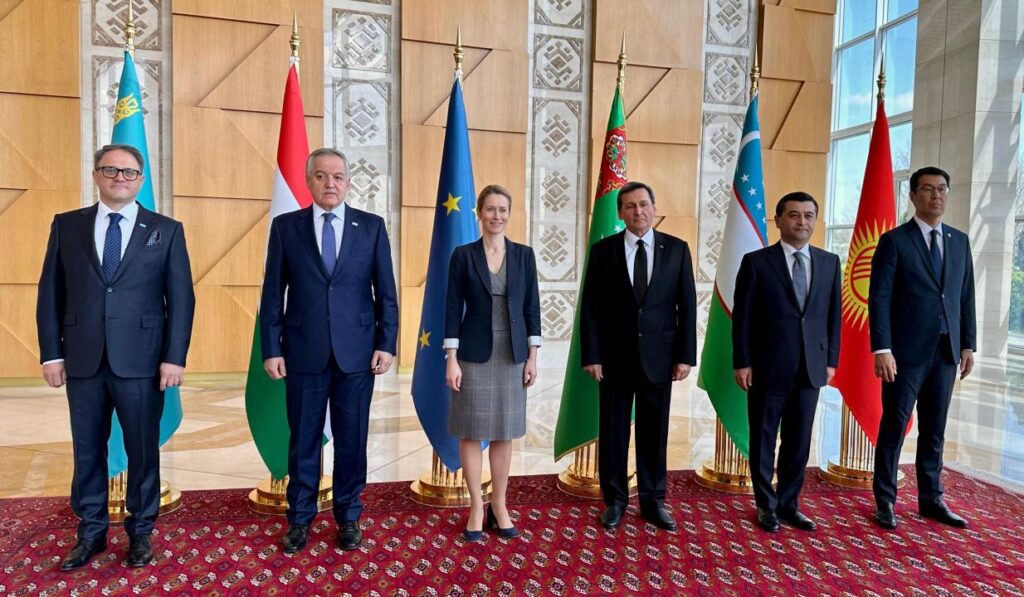
The 20th EU-Central Asia Ministerial Meeting took place on March 27 in Ashgabat, Turkmenistan, reaffirming the parties’ strong political will to deepen engagement and strengthen cooperation in strategically significant areas. The meeting brought together the EU High Representative for Foreign Affairs and Security Policy, Kaja Kallas, along with the foreign ministers of Tajikistan, Turkmenistan, and Uzbekistan, and the deputy foreign ministers of Kazakhstan and Kyrgyzstan. A key item on the agenda was preparation for the inaugural EU-Central Asia Summit, scheduled for April 4, 2025, in Samarkand, Uzbekistan. Advancing Strategic Cooperation Kallas and Central Asian ministers discussed a broad spectrum of mutual priorities under the EU’s Global Gateway Flagship Initiatives, including trade, transport, energy, water resource management, climate change, digitalization, and critical raw materials. Both sides also highlighted advancing cooperation in education, vocational training, research, and skills development to foster deeper people-to-people ties. In a joint communiqué adopted at the meeting, the EU and Central Asian states reaffirmed their shared commitment to further strengthening their comprehensive partnership, grounded in mutual interests and values. The discussions were guided by the “Joint Roadmap for Deepening Ties between the EU and Central Asia,” previously adopted in Luxembourg in October 2023. Focus on Connectivity and the Trans-Caspian Corridor Connectivity emerged as a central theme, with the participants stressing the need to expand sustainable connections between Central Asia and Europe. The EU’s Global Gateway Strategy was highlighted as a key vehicle for supporting regional infrastructure in trade, transport, water, and energy. The participants recalled the success of the Global Gateway Investors Forum on EU-Central Asia Transport Connectivity, held in Brussels in January 2024. They welcomed commitments by European and international financial institutions to invest €10 billion in the Trans-Caspian Transport Corridor (TCTC), aimed at significantly enhancing East-West transport links. Critical Raw Materials and Local Value Chains Another focal point was the growing strategic importance of critical raw materials (CRMs). Ministers reviewed progress following the signing of a Strategic Partnership Memorandum of Understanding between the EU and both Kazakhstan and Uzbekistan in the CRM sector. The meeting acknowledged EU support for strengthening local value chains in Central Asia. Discussions stressed alignment with international labor and environmental standards and the development of sustainable investment projects across the region. Sanctions Compliance The EU also briefed participants on its restrictive measures in the current geopolitical environment, underlining the need to prevent sanctions circumvention. Central Asian countries expressed readiness to continue cooperating with the EU to prevent re-exports of sensitive items, particularly those classified as “high priority.” Strategic Outlook The meeting reaffirmed the EU’s 2019 Strategy on Central Asia, which recognizes the region’s increasing strategic relevance to Europe. The Ashgabat gathering further solidified this recognition, highlighting Central Asia’s growing role in regional connectivity, resource security, and global diplomacy.

Central Asia’s Pivotal Role in the Global Energy Transition

The United States and Europe are driving a global shift from fossil fuels to renewable energy, though progress has been slow. Central Asia’s oil, gas, uranium, and green hydrogen resources are expected to remain vital for Europe and global energy security for years to come. Within Central Asia, a shift to cleaner natural gas and nuclear energy is anticipated to replace coal-fired power, reducing environmental harm. Europe’s push for electrification has also renewed focus on nuclear energy, increasing the strategic and commercial value of Central Asia’s uranium deposits. On December 16, 2024, The Times of Central Asia, in cooperation with the Central Asia-Caucasus Institute and the American Foreign Policy Council, hosted a Burgut Expert Talk titled, "Central Asia in the Energy Transition". The event featured presentations by Dr. Svante Cornell and Dr. Brenda Shaffer, who outlined their takes on the topic. The discussion focused on Central Asia’s significant role in the global energy landscape, particularly in light of the push for renewable energy and Europe's efforts to diversify its energy sources. Challenging the notion of a true "energy transition," Shaffer argued that despite substantial investment in renewable energy, fossil fuels remain dominant. Shaffer pointed out that traditional biomass burning continues to be a major energy source in developing countries, posing significant health risks. Highlighting the fact that renewables often rely on a baseload of fossil fuels, Shaffer noted that this makes complete reliance on renewables impractical, especially in regions with harsh winters, such as Central Asia. Dr. Shaffer further emphasized that European policies, including the reluctance to finance fossil fuel projects and the instability of U.S. LNG exports, serve to hinder diversification efforts. Stressing the need for affordable and accessible energy solutions - particularly for developing countries - to address the issue of indoor pollution caused by traditional biomass burning, she argued that natural gas can serve as a bridge fuel, offering a cleaner alternative to traditional methods. Dr. Cornell focused on the rising importance of Central Asia as a major uranium producer, supplying a crucial element for nuclear energy, which is gaining renewed interest as a low-carbon energy source. Cornell highlighted the dependence of the EU on uranium imports and the potential for Central Asia, particularly Kazakhstan, to play a pivotal role in supplying this demand. Outlining the geopolitical dynamics surrounding uranium, Cornell noted the involvement of France, Russia, and China in Central Asia's uranium sector, emphasizing the importance of Central Asian states maintaining a balance in their foreign relations and partnering with various countries to ensure their independence in the uranium market. Drawing parallels to the oil and gas diplomacy of the 1990s - when Central Asian countries strategically engaged with multiple actors to safeguard their interests - Cornell advocated for the development of a robust domestic nuclear industry in Central Asia, enabling the region to move beyond raw material production and gain greater control over the value chain. Cornell also stressed the need for Western powers to actively engage in the region's nuclear sector, supporting the development...

Dredging Project in Kazakhstan’s Kuryk Port Completed

Kazakhstan Temir Zholy, the country’s national railway company, has announced the early completion of dredging works at the Caspian Sea port of Kuryk. The project was completed by its general contractor, Jan De Nul Kazakhstan LLP, in just four months. The dredging operation involved removing over 990,000 cubic meters of soil from the port’s seabed using the Vesalius, the most powerful dredger in the Caspian Sea. As a result, the water depth in the port’s operational area and approach channel has been increased to 7–8 meters. This enhancement allows for an increased draft of vessels entering the port, enabling them to achieve full loading capacity. The project significantly boosts the port's terminal capacity, further strengthening its role as a vital transit hub on the Trans-Caspian International Transport Route (TITR), also known as the Middle Corridor. This strategic route connects China and Europe via Central Asia and the Caucasus. The Kuryk port currently handles up to 6 million tons of cargo annually, including 4.1 million tons through its railway terminal and 1.9 million tons via its automobile terminal.