• KZT/USD = 0.00217
  • TJS/USD = 0.10830
  • UZS/USD = 0.00008
  • TMT/USD = 0.29760
  • KZT/USD = 0.00217
  • TJS/USD = 0.10830
  • UZS/USD = 0.00008
  • TMT/USD = 0.29760
  • KZT/USD = 0.00217
  • TJS/USD = 0.10830
  • UZS/USD = 0.00008
  • TMT/USD = 0.29760
  • KZT/USD = 0.00217
  • TJS/USD = 0.10830
  • UZS/USD = 0.00008
  • TMT/USD = 0.29760
  • KZT/USD = 0.00217
  • TJS/USD = 0.10830
  • UZS/USD = 0.00008
  • TMT/USD = 0.29760
  • KZT/USD = 0.00217
  • TJS/USD = 0.10830
  • UZS/USD = 0.00008
  • TMT/USD = 0.29760
  • KZT/USD = 0.00217
  • TJS/USD = 0.10830
  • UZS/USD = 0.00008
  • TMT/USD = 0.29760
  • KZT/USD = 0.00217
  • TJS/USD = 0.10830
  • UZS/USD = 0.00008
  • TMT/USD = 0.29760
24 November 2026

Viewing results 1 - 6 of 2

U.S. Backs New Routes for Turkmen Gas Exports and Caspian Trade

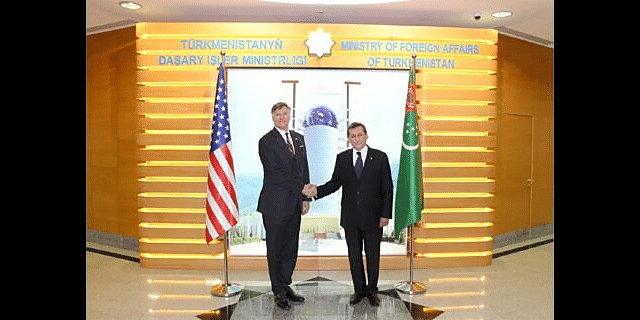
The United States is seeking to help Turkmenistan diversify its energy exports and expand trade across the Caspian Sea. U.S. Deputy Secretary of State Christopher Landau and Turkmen Foreign Minister Rashid Meredov discussed both priorities at talks in Ashgabat on November 23. Landau also met with President Serdar Berdimuhamedov that day. In addition to energy and transportation, they discussed trade and investment. Berdimuhamedov expressed interest in joint renewable energy projects. Turkmenistan depends heavily on China, its largest natural gas customer. In October, Maksat Babayev, chairman of the state-owned gas company Türkmengaz, said Turkmenistan had supplied China with more than 477 billion cubic meters of gas between the opening of the export pipeline in December 2009 and October 1, 2026. Ashgabat also hopes to reach South Asian markets. Babayev said Türkmengaz was building a section of the Turkmenistan-Afghanistan-Pakistan-India (TAPI) gas pipeline from the Turkmen border town of Serhetabat to the Afghan city of Herat. TAPI is designed to supply the three importing countries with up to 33 billion cubic meters of gas a year. The proposed Trans-Caspian Gas Pipeline would run beneath the Caspian Sea, connecting Turkmenistan’s gas network to Azerbaijan. From there, gas could reach European markets through existing pipelines in Georgia and Turkey. Construction of the subsea link has yet to begin. Ferries already carry trucks and trailers between the port of Turkmenbashi and the Azerbaijani port at Alat, near Baku. Cargo can then continue overland through the South Caucasus. Turkmenistan was one of nine countries covered by a September World Bank study of the Trans-Caspian Transport Corridor, also known as the Middle Corridor, which links Asia and Europe. To reduce delays, the bank recommended a single digital system for transport and trade documents. It called for rail operators to coordinate more closely with ports and shipping companies. Washington is also backing the Trump Route for International Peace and Prosperity (TRIPP), which would connect mainland Azerbaijan to its Nakhchivan exclave through southern Armenia. It would give Central Asian freight another route through the South Caucasus toward Turkey and Europe. In a November 7 joint statement, Armenia and Azerbaijan agreed with the United States to form two working groups for the project, one on transportation and the other on electricity transmission. Ahead of Landau’s visit, the State Department identified TRIPP and the Middle Corridor as areas for cooperation with Turkmenistan. On the day of the Ashgabat talks, Armenian Prime Minister Nikol Pashinyan announced that preparatory construction work had begun in southern Armenia.

At Ashgabat Conference, Turkmenistan Seeks Wider Gas Export Markets

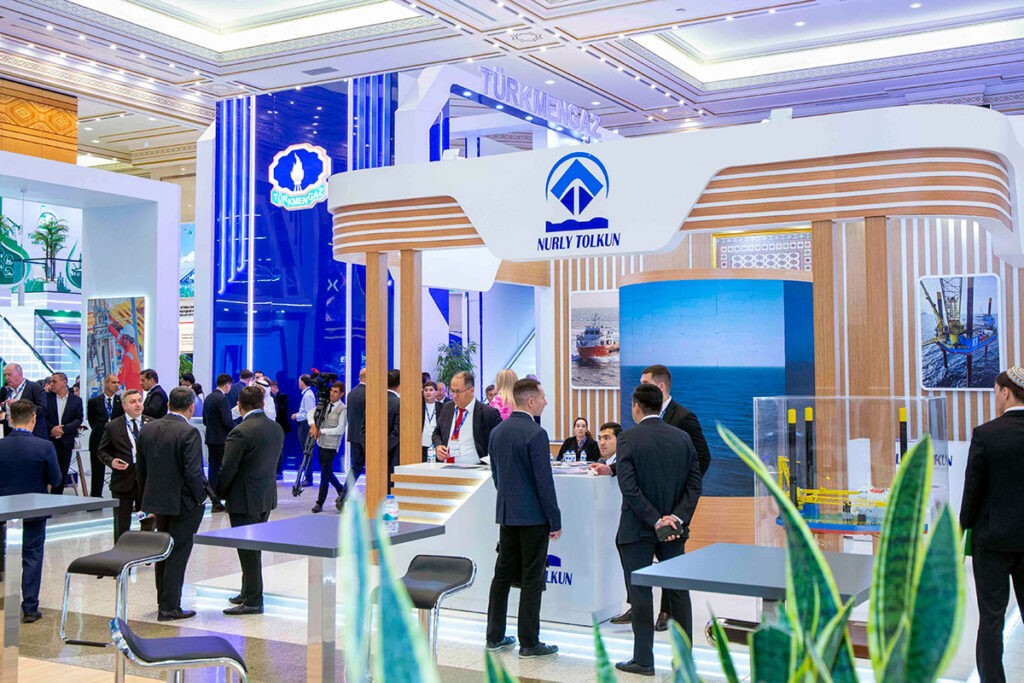
About 700 foreign participants attended an annual oil and gas conference in Turkmenistan, a 40% increase over the previous year, according to one of the organizers. Chinese and Malaysian firms had an especially strong presence. The three-day conference, titled Oil and Gas of Turkmenistan 2026, ended on Friday. It came as the global energy industry faced volatility and supply disruptions linked to conflict in the Middle East and the effective closure of the Strait of Hormuz, a key transit corridor for international energy markets. The number of foreign participants at the conference in Ashgabat was a “record,” according to Nazar Atajanov, director of the Turkmen Energy Forum, which organizes events for the country’s oil and gas sector. State institutions Turkmengaz, Turkmennebit, and Turkmengeologiya helped organize the event, according to the Turkmenportal news outlet. Atajanov said artificial intelligence was among the discussion topics because oil and gas companies are increasingly using AI, the outlet reported. Separately, Turkmenistan supports the Trans-Caspian Gas Pipeline project and stands ready to supply it with gas, said Maksat Babayev, chairman of Turkmengaz. “He noted that the country is interested not only in the gas pipeline itself, but also in the Trans-Caspian corridor as a whole — including the laying of cables, logistics routes, and port infrastructure,” Turkmenportal reported. Babayev said supplying the route would require further development at the Galkynysh gas field. Turkmenistan’s interest in the project, which has been in the planning stages for many years, reflects its efforts to diversify energy exports at a time of upheaval in traditional transit corridors, including in the Middle East as well as Russia, whose war with Ukraine has reshaped regional energy trade. Turkmenistan has the fourth-largest natural gas reserves in the world. While the country mainly exports to China, it has been stepping up efforts to develop alternative routes and expand its customer base. Turkmenistan “places great importance on expanding natural gas export routes,” President Serdar Berdimuhamedov said in a message to conference participants. As an example, he mentioned the construction of the Turkmenistan–Afghanistan–Pakistan–India gas pipeline (TAPI), saying there had been progress in laying the pipeline in Afghanistan’s Herat province. The TAPI project, however, has faced years of delays and challenges in its implementation. As the conference in Ashgabat was continuing, Turkmenistan’s representative to the European Union met François-Régis Mouton de Lostalot, managing director of the European division of the International Association of Oil and Gas Producers. Turkmen Ambassador Sapar Palvanov spoke about collaboration between his country and European energy interests, according to Turkmenistan’s embassy in Brussels, Belgium. “Particular attention was paid to prospects for transporting Turkmen natural gas to the European market, including the development of energy infrastructure in the Caspian region,” the embassy said.