• KGS/USD = 0.01144 0%
  • KZT/USD = 0.00215 0%
  • TJS/USD = 0.10718 0.28%
  • UZS/USD = 0.00008 0%
  • TMT/USD = 0.28530 0%
  • KGS/USD = 0.01144 0%
  • KZT/USD = 0.00215 0%
  • TJS/USD = 0.10718 0.28%
  • UZS/USD = 0.00008 0%
  • TMT/USD = 0.28530 0%
  • KGS/USD = 0.01144 0%
  • KZT/USD = 0.00215 0%
  • TJS/USD = 0.10718 0.28%
  • UZS/USD = 0.00008 0%
  • TMT/USD = 0.28530 0%
  • KGS/USD = 0.01144 0%
  • KZT/USD = 0.00215 0%
  • TJS/USD = 0.10718 0.28%
  • UZS/USD = 0.00008 0%
  • TMT/USD = 0.28530 0%
  • KGS/USD = 0.01144 0%
  • KZT/USD = 0.00215 0%
  • TJS/USD = 0.10718 0.28%
  • UZS/USD = 0.00008 0%
  • TMT/USD = 0.28530 0%
  • KGS/USD = 0.01144 0%
  • KZT/USD = 0.00215 0%
  • TJS/USD = 0.10718 0.28%
  • UZS/USD = 0.00008 0%
  • TMT/USD = 0.28530 0%
  • KGS/USD = 0.01144 0%
  • KZT/USD = 0.00215 0%
  • TJS/USD = 0.10718 0.28%
  • UZS/USD = 0.00008 0%
  • TMT/USD = 0.28530 0%
  • KGS/USD = 0.01144 0%
  • KZT/USD = 0.00215 0%
  • TJS/USD = 0.10718 0.28%
  • UZS/USD = 0.00008 0%
  • TMT/USD = 0.28530 0%

Viewing results 1 - 6 of 171

Kyrgyzstan Signals Possible End to EU Aviation Ban

Kyrgyzstan says it is close to ending a near two-decade ban that has kept its airlines off European routes, after President Sadyr Japarov said the country has reached a “critical point” in efforts to leave the European Union’s air safety blacklist. The comments come as Kyrgyz officials push for international recognition of reforms in aviation oversight and airport infrastructure. Japarov said Kyrgyzstan has been developing civil aviation “on its own initiative,” investing “billions of soms,” buying aircraft for domestic and international routes, and building new airports. He described the effort as a state priority and added: “Kyrgyzstan has reached a critical point in its exit from the European Union’s ‘blacklist’… with God’s help, the skies of Europe will open to Kyrgyzstan.” The EU Air Safety List is the bloc’s mechanism for restricting airlines that, in the EU’s assessment, do not meet international safety standards. Airlines on the list are banned from operating “to, in and from the EU,” and the EU can also apply restrictions to all carriers certified in a country if national oversight is deemed inadequate, according to the European Commission’s official Q&A on the EU Air Safety List. Updates are prepared with support from the EU Air Safety Committee and the European Union Aviation Safety Agency (EASA), and are based on standards set through the International Civil Aviation Organization (ICAO), the Commission says. Kyrgyz airlines have been on the EU list since 2006. The EU’s most recent comprehensive update, published on December 8, 2025, still includes Kyrgyzstan among the countries whose airlines are banned because of “a lack of safety oversight by the aviation authorities,” according to the Commission’s December 2025 materials and the linked EU Air Safety List documentation. Kyrgyz airlines would be allowed to apply for operations linked to the European Union if the country is removed from the EU Air Safety List. Any carrier seeking to fly to, from, or within the EU needs to meet European safety requirements, including obtaining Third Country Operator authorization from the European Union Aviation Safety Agency, according to the European Commission’s air safety rules. Kyrgyzstan’s public messaging has framed the potential removal as an economic lever, with Japarov stating it would support tourism, attract investment, and improve the country’s international image. It could also lead to more direct scheduled flights between Kyrgyzstan and EU destinations, rather than relying on connections via third countries. The EU has not announced a decision to remove Kyrgyzstan, and any change would require a formal update to the list after technical review. Past EU updates show that changes can cut both ways. In June 2025, for example, the Commission added all carriers certified in Suriname and Tanzania after identifying serious shortcomings in national oversight, in an official announcement on its Mobility and Transport site. For now, Japarov’s statement signals confidence that Kyrgyzstan believes it has supplied the documentation and reforms the EU expects. Whether that will translate into removal will depend on the EU’s technical findings and the next formal update cycle of...

Why Regional Connectivity Is Reshaping Central Asia: Insights from ISRS Director Eldor Aripov (Part Two)

The Times of Central Asia presents the second part of an interview in Washington, D.C. with Eldor Aripov, Director of the Institute for Strategic and Regional Studies under the President of Uzbekistan. Dr. Aripov sat down with our Washington Correspondent, Javier M. Piedra, to discuss Uzbekistan’s geoeconomic and geopolitical strategic thinking. The conversation focused on Uzbekistan’s and the region’s efforts to cooperate diplomatically to maintain peace and stability with neighbors, irrespective of historical “hotspots,” cultural sensitivities, or the all-important matter of water resources. Aripov comments on Afghanistan, Chabahar Port (Iran), Ferghana Valley, and business development – key for U.S. investors thinking about Uzbekistan and the broader Central Asian region. TCA: What message do you have for businesses and private investors who do not have any experience in Central Asia? Many companies are sniffing around at this time – what do you want to tell them? Aripov: Uzbekistan is ready for committed investors - those who deliver lasting benefits, quality jobs, and shared prosperity. A decade of reforms has strengthened our fiscal discipline, boosted SMEs, and anchored stability. Coupled with our focus on good relations and a secure, integrated Central Asia, we offer a reliable platform for long-term, sustainable investment. While we have more work to do, we invite you to be part of our momentum. TCA: What are the risks that companies might face when considering long-term investment? Aripov: No country is immune to downside risks – not only in the developed but developing world. Having said that, downside risks, including trade shocks, commodity price volatility, tighter external financing, and contingent liabilities from state-owned enterprises, are mostly exogenous factors driven by global conditions. Risks are mitigated through political stability, diversification of the economy, prudent macroeconomic management, and reforms to state-owned enterprises and governance. For more in-depth commentary, I refer you to recent IMF, World Bank, and Asian Development Bank assessments about our economic conditions and trends. TCA: Let me move on to more regional issues. The first Ferghana Peace Forum was held in October 2025. How can it serve as a replicable model for other regions seeking sustainable peace? Aripov: First of all, I’d like to put this important forum on everyone’s radar. I’d like to underscore that peace is possible when hard work, respect for others, and a commitment to understanding guide our actions, despite historical memories and past differences. Someone should write a case study about our ability to bring consensus into an otherwise challenging region. In any event, the inaugural Ferghana Peace Forum brought together over 300 participants from more than 20 countries — representatives of Central Asian governments, international organizations, leading think tanks, research institutions, and local communities. A joint communiqué was adopted, confirming the intention to institutionalize the Forum as a permanent platform with rotating hosts. This broad participation highlighted an important reality: the Ferghana Valley is no longer viewed as a fragile zone; it is now viewed as a model of pragmatic peacebuilding. The Forum demonstrated how regional leadership — particularly the openness and...

The New Geoeconomics of Uzbekistan: Insights from ISRS Director Eldor Aripov

The Times of Central Asia presents a two-part interview in Washington, D.C. with Eldor Aripov, Director of the Institute for Strategic and Regional Studies under the President of Uzbekistan. Dr. Aripov sat down with our Washington Correspondent, Javier M. Piedra, to discuss Uzbekistan’s strategic thinking regarding its diplomatic posture, regional integration, and relations with Central Asian and global partners. The conversation includes commentary on “Great Game” geopolitics, U.S.–Uzbekistan relations, trade, the meaning of “Uzbekistan First,” the historically explosive Ferghana Valley, and water management. Recognizing the link between investment, a stable geopolitical ecosystem, and the need to de-risk potentially conflictive issues, Aripov further sheds light on Tashkent’s practical approach to internal governance and business development. [caption id="attachment_40284" align="aligncenter" width="2360"] Central Asia on the Front Lines; image: Defense.info[/caption] TCA: “America First” refers to U.S. policies prioritizing national interests, often associated with non-interventionism, nationalism, and protectionist trade. Given Uzbekistan’s pragmatic foreign policy, can we speak of an “Uzbekistan First” policy? It is certainly not isolationist — but how is it manifested on a day-to-day basis? Aripov: What you describe as “Uzbekistan First” is, in our understanding, fundamentally about prioritizing national interests – stability and predictability for the people of Uzbekistan. Yet Uzbekistan’s uniqueness lies in the fact that our national interests are closely intertwined with those of the entire region – this means shared upsides at the transactional and strategic levels and thinking long-term. We border every Central Asian country as well as Afghanistan, and therefore any issue — security, trade, transport, or water management — directly depends on the quality of our relationships with neighbors. From his first days in office, President Shavkat Mirziyoyev — with his strategic vision and deep understanding of regional dynamics — declared that regional unity and mutual benefit stand at the core of Uzbekistan’s foreign policy. The essence of his doctrine is to resolve agreeably any historically or materially problematic issues with neighbors, remove barriers to understanding, and create predictable, stable conditions for mutually beneficial cooperation and the free movement of goods, ideas, and people. That is the true meaning of “Uzbekistan First”: not isolation, but openness, predictability, and regional consolidation. TCA: How are you realizing “Uzbekistan First” in practice? Aripov: Uzbekistan is strengthening its economy domestically and global track - putting in place the building blocks for internal sustainable development and accelerating accession to the World Trade Organization. The latter means expanding the geography and composition of exports and increasing the country’s investment attractiveness. This approach is rooted in the logic of sustainable development within the broader international context: long-term national interests are best served by Uzbekistan integrating into global value chains and markets. The results speak for themselves: in 2024, Uzbekistan’s GDP grew by 6.5%, foreign direct investment increased by more than 50% to reach $11.9 billion, and the target for 2025 is to attract $42 billion. This performance is also a tribute to our style of diplomacy, grounded in respect and having a constructive attitude towards others. Thus, “Uzbekistan First” represents a modern model...

Containerization in Kazakhstan: How Simple “Packaging” Could Transform the Economy

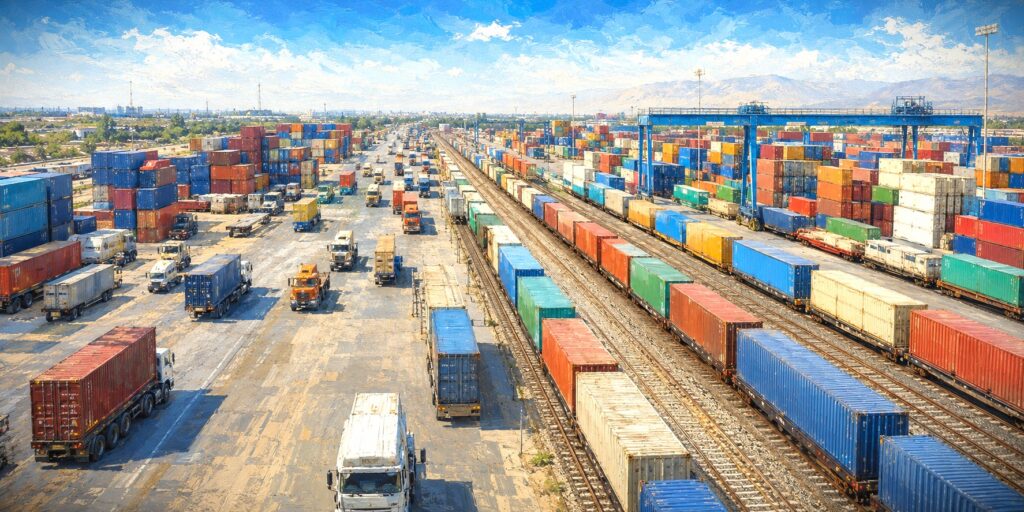
Containerization is rapidly becoming one of the most talked-about topics in Kazakhstan’s logistics sector. Amid surging transit traffic, the question is increasingly raised: why, despite clear potential, is the domestic market still underutilized? What’s holding Kazakhstan back from making containerization a cornerstone of its integration into global trade? Currently, transport costs account for up to 30% of the final price of goods in Kazakhstan, nearly three times the global average of around 11%. Experts agree that a systemic transition to containerized transport could speed up delivery times, cut logistics costs, and boost the competitiveness of Kazakhstani products. Yet progress remains sluggish. A Priority Still in Waiting In September, President Kassym-Jomart Tokayev named the development of containerization as a strategic economic priority. Despite this, containers make up only 7% of domestic freight transport, less than half the global average of over 16%. Meanwhile, transit volumes are surging. According to Kazakhstan Temir Zholy, the national rail company, container transit grew by 59% last year to 1.4 million twenty-foot equivalent units (TEU). The national target is 2 million TEU by 2030. Yet this growth is bypassing the domestic economy: Kazakhstan remains a transit bridge between China and Europe without yet unlocking containerization for its own industries. Hidden Resources Still Untapped Research by Russian consulting company Arthur Consulting suggests that Kazakhstan has the potential to containerize 50-55 million tons of domestic cargo, a volume capable of revitalizing the country’s entire logistics ecosystem. So why hasn’t it happened? The reasons are well known. First, infrastructure remains underdeveloped. Modern terminals capable of handling high volumes are lacking. Many transport routes lack essential repair facilities and service centers, meaning containers must often be returned without proper maintenance. Second, there is a chronic shortage of containers and fitting platforms. This forces businesses to opt for cheaper, less efficient alternatives. Third, current tariffs make container transportation less attractive than road transport or covered railcars. Under such conditions, containerization appears more costly than beneficial. And lastly, there is a widespread lack of expertise. Some industrial players still don’t fully understand how to work with containers, optimize logistics, or implement modern transport solutions. As a result, a significant portion of cargo is still transported the “old-fashioned way”, in covered railcars. This increases costs, extends delivery times, and limits access to multimodal transport routes. Speaking at the New Silk Way transport and logistics forum, held in Almaty in September, Arthur Consulting partner Boris Poretsky described the sector as being “stifled” by systemic barriers. He emphasized the need for industrial companies to re-evaluate their logistics strategies. While nearly any cargo from bulk materials and liquids to heavy machinery can now be containerized, many exporters and consignees have yet to capitalize on the benefits. Containers allow for door-to-door delivery without transshipment, reduce loading and unloading times, improve cargo safety, and offer maximum flexibility, whether by sea, rail, road, or even air. [caption id="attachment_39789" align="aligncenter" width="300"] @Dauren Moldakhmetov[/caption] A Global Shift Worldwide, industries are rapidly adopting containerized logistics. The benefits are significant: 10-15% cost savings,...

Kazakhstan and Armenia Forge Strategic Partnership in Landmark Summit

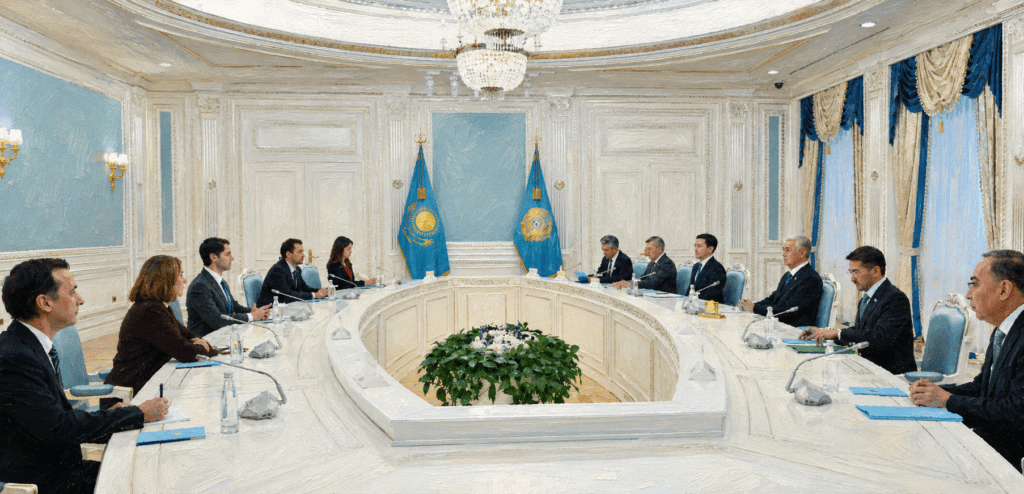
Kazakhstan and Armenia have upgraded their relations to a strategic partnership after high-level talks between President Kassym-Jomart Tokayev and Prime Minister Nikol Pashinyan in Astana on 21 November. The decision was sealed in a joint statement and framed as the start of a new phase in cooperation between the two Eurasian partners. During the official visit, the two sides exchanged 15 intergovernmental and interagency documents. These cover the protection of classified information, land for diplomatic missions, a trade and economic roadmap for 2026–2030, and cooperation in industry, agriculture, healthcare, science, education, digitalization, and the peaceful use of atomic energy, as well as new links between national museums, libraries, and film institutions. A Kazakhstan–Armenia Business Council was also created to bring companies into the process. Tokayev underlined the political meaning of the upgrade, stating that an “open and trusting political dialogue has been established between Astana and Yerevan at all levels. Interstate ties are truly constructive, with significant potential for their comprehensive strengthening and expansion.” Pashinyan, meanwhile, stressed the human dimension, noting that “we respect the Kazakh people, and this respect is the foundation for the further development of bilateral relations.” Their meeting builds on Tokayev’s official visit to Yerevan in April 2024, when the two governments first drew a roadmap for closer ties. Symbolism played a significant role in the visit, with Tokayev awarding Pashinyan the Order of Altyn Qyran (Golden Eagle), Kazakhstan’s highest state honor, in recognition of his role in Armenia’s development, regional peace efforts, and bilateral relations. This year, Yerevan has hosted the Days of Kazakhstan Culture and opened a park named after the Kazakh poet, Abai, while Kazakhstan has promoted Armenia’s cultural presence at events and academic centers, helping anchor the relationship beyond government channels. [caption id="attachment_39747" align="aligncenter" width="900"] Image: Akorda.kz[/caption] The strategic label is the high point of more than three decades of diplomatic relations. Armenia and Kazakhstan first established ties in August 1992, and shortly opened embassies in each other’s capitals. A Treaty of Friendship and Cooperation was signed in Astana in September 1999. Both are members of the Eurasian Economic Union and the Collective Security Treaty Organization, which lends their interaction a dense multilateral framework. Now, trade and connectivity are catching up with political rhetoric, with both sides eyeing room to expand. According to Armenia’s economy minister, bilateral trade reached $104 million in 2023, up 2.4 times from 2020, with Armenian exports making up more than two-thirds of the total. Kazakh figures, meanwhile, show mutual trade rising but still at a modest $53.1 million by the end of 2023, partly due to the lack of rail links and past transit restrictions in the South Caucasus. Those obstacles, however, are beginning to ease. In October, Azerbaijani President Ilham Aliyev lifted restrictions on transit to Armenia, which allowed the first shipment of 1,000 tons of Kazakh wheat to reach Armenian markets via Azerbaijani territory in November. Kazakhstan and Armenia also plan to launch direct air links and expand air cargo, a step Tokayev has called...

Traffic Jam of 1,500 Trucks Reported at Kazakhstan-China Border Crossing

Approximately 1,500 freight trucks have been stranded at the Nur Zholy border checkpoint between Kazakhstan and China, Nur.kz has reported, citing the State Revenue Committee (SRC) of Kazakhstan. According to the SRC, the congestion occurred despite a prior agreement with China to allow at least 800 trucks to pass through the crossing daily, with plans to increase that figure to 1,000 by year-end. However, from November 8 to 12, the actual number of vehicles processed by the Chinese side averaged only 700 to 750 per day. This shortfall was cited as the primary reason for the backlog on the Kazakh side. Compounding the issue, repair and installation work at the Kalzhat-Dulaty crossing significantly reduced its capacity for about a week. As a result, part of the freight traffic was diverted to Nur Zholy, placing additional pressure on its infrastructure. To alleviate the congestion, authorities have implemented a temporary adjustment to the electronic queue system. Starting November 13, daily vehicle entries will be capped at 650 to ensure a more balanced distribution of traffic and to support operational stability. The SRC stated that the situation is under constant monitoring and that negotiations with Chinese officials have resulted in mutual agreement on measures to improve border throughput. In May, President Kassym-Jomart Tokayev issued a formal reprimand to then Transport Minister Marat Karabayev for persistent problems at border crossings and delays in key transit infrastructure projects. Karabayev was dismissed from his post the following month.