• KZT/USD = 0.00209
  • TJS/USD = 0.10820
  • UZS/USD = 0.00008
  • TMT/USD = 0.29850
  • KZT/USD = 0.00209
  • TJS/USD = 0.10820
  • UZS/USD = 0.00008
  • TMT/USD = 0.29850
  • KZT/USD = 0.00209
  • TJS/USD = 0.10820
  • UZS/USD = 0.00008
  • TMT/USD = 0.29850
  • KZT/USD = 0.00209
  • TJS/USD = 0.10820
  • UZS/USD = 0.00008
  • TMT/USD = 0.29850
  • KZT/USD = 0.00209
  • TJS/USD = 0.10820
  • UZS/USD = 0.00008
  • TMT/USD = 0.29850
  • KZT/USD = 0.00209
  • TJS/USD = 0.10820
  • UZS/USD = 0.00008
  • TMT/USD = 0.29850
  • KZT/USD = 0.00209
  • TJS/USD = 0.10820
  • UZS/USD = 0.00008
  • TMT/USD = 0.29850
  • KZT/USD = 0.00209
  • TJS/USD = 0.10820
  • UZS/USD = 0.00008
  • TMT/USD = 0.29850

Viewing results 1 - 6 of 17

Kyrgyzstan to Temporarily Open Alternative North-South Highway from June to November

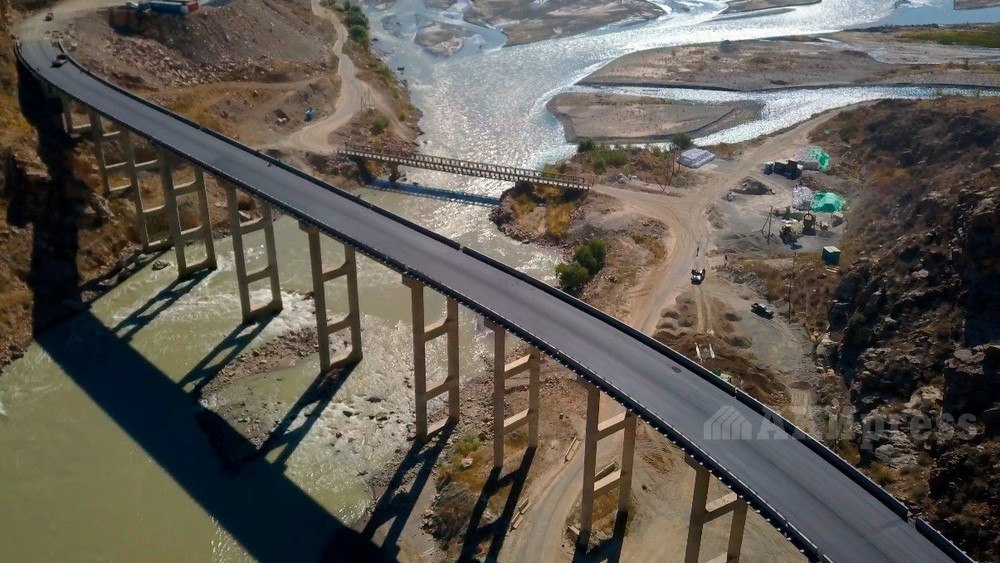
Kyrgyzstan’s alternative North-South highway will be open to traffic from June to November 2026, the Ministry of Transport and Communications has announced. Preparatory work for the seasonal opening is currently underway, including the implementation of additional safety measures. The long-anticipated 433-kilometer highway is a strategic transport corridor linking Balykchy in the Issyk-Kul Region with Jalal-Abad in southern Kyrgyzstan. Approximately 200 kilometers of the route pass through areas where no roads previously existed. Key engineering achievements along the route include Kyrgyzstan’s longest tunnel, located at the Kok-Art mountain pass, and two major overpass bridges. Once operational, the highway is expected to reduce travel time between Jalal-Abad and Balykchy from 13 hours to just six. Currently, the only route connecting Kyrgyzstan’s northern and southern regions is the Bishkek-Osh highway. The new North-South corridor is expected to improve both passenger and freight transportation between the regions, particularly given the absence of a direct railway connection. Construction of the North-South highway began in 2014, but the opening has been repeatedly postponed. The highway is expected to become fully operational year-round in 2028, according to Minister of Transport and Communications Talantbek Soltobaev. He said that in 2026 the highway would only operate during the summer season. “Until we resolve safety issues, we will be closing the highway for the winter,” the minister said, referring to the need to eliminate risks associated with rockfalls, avalanches and other natural hazards along certain sections of the road.

Kazakhstan’s Logistics: Mukhtar Tolegen on Infrastructure and Reform

Kazakhstan has invested tens of billions of dollars in transport infrastructure in recent years and has positioned itself as a key transit link between Europe and Asia. Yet the country still ranks in the middle of the World Bank’s Logistics Performance Index (LPI). Why have these large investments not produced a sharper improvement, and what reforms are needed to change that? The Times of Central Asia spoke with Mukhtar Tolegen, executive director for transport logistics at the Union of Transport Workers of Kazakhstan, “KAZLOGISTICS.” TCA: What is Kazakhstan's current position in the LPI, and how has it changed? Mukhtar: In the World Bank's 2023 LPI ranking, Kazakhstan ranks 79th out of 139 countries, with an overall score of 2.7 on a five-point scale. This represents a decline from the previous ranking, when the country ranked 71st. It's important to note that the index's methodology was updated in 2023. In addition to expert assessments, the calculation now includes real-world cargo tracking data, including GPS-based data. This made the ranking more objective and simultaneously increased competition between countries. Despite its decline, Kazakhstan is demonstrating steady progress in a number of areas. This is primarily due to the development of transport infrastructure, the construction of new highways, the modernization of checkpoints, and the creation of transport and logistics centers. Strengthening the country's transit potential within international transport corridors, including the Middle Corridor, the North-South Corridor, and the China-Kazakhstan-Europe route, is also playing a significant role. At the same time, digitalization of logistics is rapidly advancing, including electronic customs solutions, cargo tracking systems, and other technological tools. An additional driver is the growing interest of international investors, including in the context of the Belt and Road Initiative. TCA: How does a country's position in the ranking affect its economy and investment attractiveness? Mukhtar: The LPI index is not simply a reflection of the state of the logistics system, but an important indicator of a country's economic competitiveness. The higher a country's ranking, the lower its logistics costs for exports and imports, the faster cargo flows across borders, and the higher the level of trust among international partners and investors. Low scores, on the other hand, indicate bottlenecks, for example, in customs procedures or infrastructure. Under such conditions, large international companies may choose alternative routes, which reduces the country's transit potential. Thus, the LPI serves as a tool that directly influences the development of international trade, investment attractiveness, and the country's strategic position in the global market. TCA: In which index components is Kazakhstan showing progress, and where are challenges remaining? Mukhtar: The LPI index is based on six key components, and the dynamics of these components in Kazakhstan remain uneven. Quality of Infrastructure Steady progress is being observed here, driven by large-scale investments in the transport system. The modernization of the Dostyk-Moiynty railway section has significantly increased the capacity of the Kazakhstan-China route. Projects are underway to build new lines, including a bypass of Almaty, as well as the Moiynty-Kyzylzhar, Darbaza-Maktaaral, and Ayagoz-Bakhty routes....

World Bank Approves $200 Million for Road and Transport Reforms in Uzbekistan

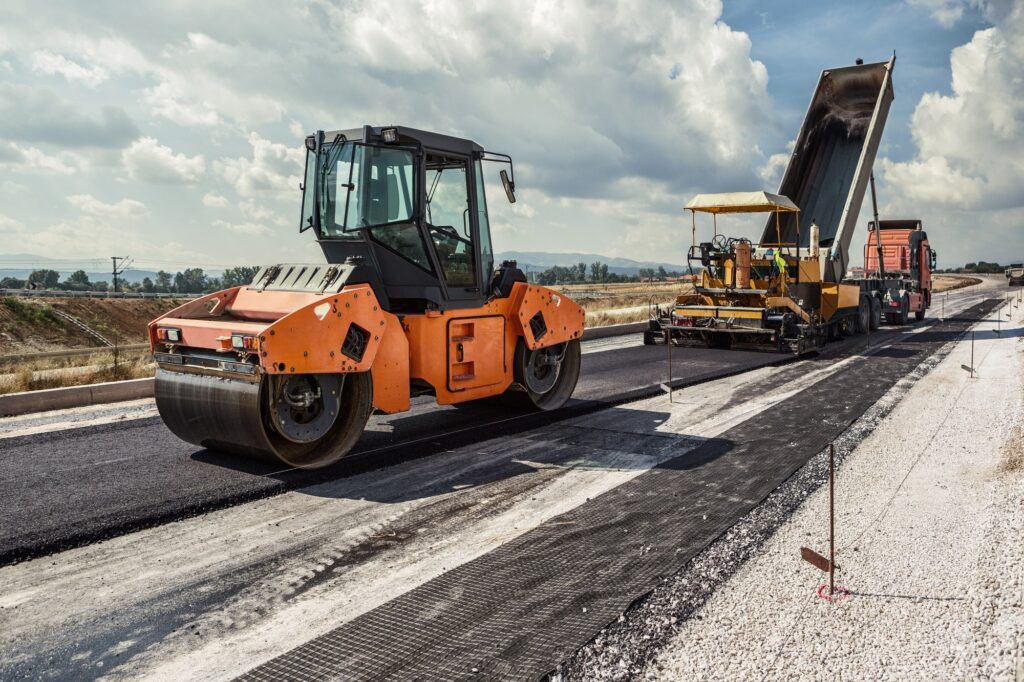
The World Bank’s Board of Executive Directors has approved a $200 million project to modernise transport infrastructure in Uzbekistan’s Surkhandarya region, the institution said in a statement on March 23. According to the World Bank, the five-year initiative will focus on reconstructing a key section of the M41 regional road corridor while also supporting broader reforms in the country’s transport sector. The project is expected to contribute to job creation and stimulate business activity along the upgraded route. Uzbekistan’s transport sector currently accounts for nearly 8% of gross domestic product and employs around one million people. Its performance has improved in recent years, with the country rising from 129th to 88th place in the World Bank’s Logistics Performance Index between 2014 and 2023. However, rapid growth in the number of vehicles has placed increasing pressure on infrastructure, with officials estimating that road capacity will need to expand by about 500% by 2030 to meet rising freight demand. “Developing efficient and safe road and railway networks is essential to connect people to jobs, support domestic and international trade, and strengthen Uzbekistan’s overall competitiveness,” said Najy Benhassine, the World Bank’s Division Director for Central Asia. A central component of the project involves reconstructing a 91-kilometer stretch of the M41 highway in Surkhandarya, a region bordering Tajikistan, Kyrgyzstan, and Afghanistan. The existing two-lane road will be expanded into a four-lane highway. Once completed, it is expected to serve around 35,000 drivers and passengers daily and improve access to transport services for approximately 550,000 residents living in nearby communities. The project will also finance upgrades to road surfaces, safety features, and bus stops, as well as the construction and rehabilitation of around 180 bridges and drainage systems designed to reduce flood risks. These improvements are expected to shorten travel times, with average speeds projected to increase from 65 to about 90 kilometers per hour on interurban sections, and to reduce accidents along the route. In addition to infrastructure works, the World Bank will support the development of a National Multimodal Transport Strategy. The roadmap is intended to strengthen government capacity, improve coordination between different modes of transport, and promote more resilient and efficient logistics systems. Further support will be provided to Uzbekistan Railways, aimed at improving corporate governance, financial transparency, service planning, and its ability to attract private investment. The latest project builds on ongoing cooperation between Uzbekistan and the World Bank. In December last year, the institution approved a $250 million loan to support reforms in the country’s education system through the Edumkon programme, which aims to expand access to higher and vocational education for around 600,000 young people between 2026 and 2028.

European Investment Bank to Allocate €100 Million for Tajikistan’s Transport Infrastructure Upgrade

The European Investment Bank (EIB) plans to allocate €100 million to finance transport infrastructure projects in Tajikistan, according to an announcement by the country’s Ministry of Transport. The funding will support upgrades to existing infrastructure and improve the accessibility of transport services across the country. The investment is aimed at accelerating economic development, reinforcing the national transport network, and enhancing Tajikistan’s integration into regional logistics corridors. The funding is outlined in a Memorandum of Understanding signed between Tajikistan and the EIB, which serves as a framework for long-term cooperation. The memorandum was initially presented at the Global Gateway Investor Forum on Sustainable Transport Links between Europe and Central Asia, held in Brussels in January 2024, and was formally signed on April 4, 2025. Implementation efforts advanced during a working meeting on January 19 between Tajikistan’s Minister of Transport and Communications, Azim Ibrahim, and an EIB delegation led by Edvardas Bumsteinas, the bank’s Director for Asia and the Pacific Region. The two sides discussed project parameters, financing mechanisms, fund monitoring, and a preliminary list of initiatives eligible for support. The EIB reaffirmed its interest in “close cooperation” with Tajikistan and stressed that it will prioritize projects with regional significance that foster economic growth and transport integration. Officials on both sides believe that implementing the memorandum’s provisions will lay a foundation for the comprehensive development of Tajikistan’s transport sector and bolster its role as a key transit hub in Central Asia. This initiative complements a parallel effort by the European Bank for Reconstruction and Development (EBRD), which recently approved €10 million for the modernization of electric public transport in the city of Bokhtar. The EIB is the European Union’s official investment bank, wholly owned by EU member states. It operates in alignment with EU policy priorities and often partners with other European institutions to promote sustainable development globally.

Trans-Afghan Corridor Becomes Central Asia’s New Trade Gateway Amid Competition

Kazakhstan plans to join in the Trans-Afghan Corridor project by constructing a 120-kilometer railway from Turgundi to Herat and establishing a transport and logistics center on Afghan territory. The new route is expected to expand the volume and improve the efficiency of Kazakhstan’s export and import shipments, while also providing access to the Indian Ocean, the Middle East, and the Persian Gulf. In August, Kazakhstan’s Deputy Prime Minister and Minister of National Economy, Serik Zhumangarin, announced that the country plans to invest $500 million in the construction of the Turgundi-Herat railway in Afghanistan. The 120-kilometer line will provide the shortest route to the Indian Ocean, linking Kazakhstan and Central Asia with Pakistan’s seaports of Karachi and Gwadar. Kazakhstan’s Deputy Minister of Transport, Zhanibek Taizhanov, told The Times of Central Asia that the project is expected to take about three years from the approval of the design and cost documentation. “More precise timelines will be determined after the completion of all design stages, approvals, and the signing of contracts with contractors and investors,” said the ministry representative. The railway will give Kazakhstan access to new transport routes and markets. Amid intensifying global competition for transit flows, it offers a cheaper alternative shipping option and represents an important new logistics solution for the republic. This promising route, however, also carries risks, as Afghanistan remains one of the world’s most unstable countries. Even so, trade potential between Kazakhstan and Afghanistan is considerable. In 2024, bilateral trade turnover reached $545.2 million, with $527.7 million accounted for by Kazakh exports. Kazakhstan remains one of Afghanistan’s largest trading partners and a leading supplier of grain and flour. Looking ahead to exports and imports moving toward Pakistan, India, and beyond, the potential is considerable. Yet market participants have repeatedly noted that logistics remains the main barrier to trade in this direction. “Projected freight volumes along the route are estimated at 35–40 million tons per year. A comprehensive study of the region’s economic potential, logistics flows, and expansion prospects is underway,” Taizhanov told TCA, adding that once operational, the line is expected to become a crucial link in the international transport system, boosting trade between Central Asia and South Asia. In Afghanistan, the Taliban resumed nearly all regional and interregional transport projects initiated under the previous government. Active negotiations are underway on the construction of the Termez–Naibabad–Maidan Shahr–Logar–Kharlachi line, commonly referred to as the “Kabul Corridor,” the Mazar-i-Sharif–Herat railway, and the completion of the Khaf–Herat line, among others. Regional countries have also joined this large-scale effort. The Trans-Afghan project involves the interests of Russia, China, Uzbekistan, Turkmenistan, and Iran, all of which are seeking to benefit from its implementation. Geopolitics and transport interests In pursuit of greater export, import, and transit opportunities, Kazakhstan, Russia, Uzbekistan, and Turkmenistan are actively participating in these initiatives, offering their own rail routes through Afghanistan to Pakistan’s borders. For Iran and Tajikistan, the transnational corridor through Afghanistan is also attractive, providing a potential route to China via Kyrgyzstan. Turkmenistan and Kazakhstan plan to...

EDB Estimates Central Asia-China Transport Connectivity Projects at $9 Billion

China has emerged as the principal investor in regional transport infrastructure, with analysts from the Eurasian Development Bank (EDB) estimating that cross-border projects linking Central Asia and China will require $9 billion in funding through 2035. According to the EDB, 12 projects valued at more than $9 billion are either underway or in the planning stages. These account for 17% of the $52.8 billion allocated to 90 transport corridor projects across Central Asia. The initiatives are expected to significantly boost trade and cargo flows with China, already the region’s largest trading partner. China-Kyrgyzstan-Uzbekistan Railway The most ambitious among them is the long-anticipated China-Kyrgyzstan-Uzbekistan (CKU) railway, a $4.7 billion project that will establish the first direct rail link between China and these two Central Asian states. Half of the funding will come from a Chinese concessional loan, while the remainder will be provided by a joint venture created to build and operate the railway. China will hold a 51% stake in the venture, while Kyrgyzstan’s contribution is valued at $575.75 million. On August 31 in Tianjin, Kyrgyz President Sadyr Japarov met with Chinese President Xi Jinping. Following the meeting, officials signed a letter of intent regarding China’s preferential loan to finance Kyrgyzstan’s share, according to the Kyrgyz presidency. The 523-kilometer railway officially broke ground on December 27, 2024, in Jalal-Abad, Kyrgyzstan. Once completed, the CKU will link Kashgar (China) with Torugart, Makmal, and Jalal-Abad (Kyrgyzstan), and Andijan (Uzbekistan). The line is projected to carry up to 15 million tons of cargo annually, significantly reshaping regional trade flows. Currently, Kazakhstan is the only Central Asian country with a direct railway connection to China. Kazakhstan’s Leading Role Kazakhstan leads Central Asia in cross-border infrastructure investment with China, accounting for $3.4 billion or 37% of the total. Key projects include: The modernization of the Dostyk-Moiynty railway section (836 km), scheduled for completion in 2025, which will increase freight capacity fivefold. Construction of the Ayagoz-Bakhty railway line and the launch of a third border crossing with China, aimed at further diversifying transit corridors. Regional Impact The scale and scope of these initiatives underscore the strategic importance of transport connectivity in China-Central Asia relations, particularly under the Belt and Road Initiative. By 2035, upgraded infrastructure is expected not only to enhance regional logistics and reduce transport bottlenecks but also to strengthen Central Asia’s position as a vital transit corridor between China and Europe, fostering deeper economic integration across the Eurasian continent.