• KGS/USD = 0.01144 0%
  • KZT/USD = 0.00208 0%
  • TJS/USD = 0.10391 -0.48%
  • UZS/USD = 0.00008 0%
  • TMT/USD = 0.28571 0%
  • KGS/USD = 0.01144 0%
  • KZT/USD = 0.00208 0%
  • TJS/USD = 0.10391 -0.48%
  • UZS/USD = 0.00008 0%
  • TMT/USD = 0.28571 0%
  • KGS/USD = 0.01144 0%
  • KZT/USD = 0.00208 0%
  • TJS/USD = 0.10391 -0.48%
  • UZS/USD = 0.00008 0%
  • TMT/USD = 0.28571 0%
  • KGS/USD = 0.01144 0%
  • KZT/USD = 0.00208 0%
  • TJS/USD = 0.10391 -0.48%
  • UZS/USD = 0.00008 0%
  • TMT/USD = 0.28571 0%
  • KGS/USD = 0.01144 0%
  • KZT/USD = 0.00208 0%
  • TJS/USD = 0.10391 -0.48%
  • UZS/USD = 0.00008 0%
  • TMT/USD = 0.28571 0%
  • KGS/USD = 0.01144 0%
  • KZT/USD = 0.00208 0%
  • TJS/USD = 0.10391 -0.48%
  • UZS/USD = 0.00008 0%
  • TMT/USD = 0.28571 0%
  • KGS/USD = 0.01144 0%
  • KZT/USD = 0.00208 0%
  • TJS/USD = 0.10391 -0.48%
  • UZS/USD = 0.00008 0%
  • TMT/USD = 0.28571 0%
  • KGS/USD = 0.01144 0%
  • KZT/USD = 0.00208 0%
  • TJS/USD = 0.10391 -0.48%
  • UZS/USD = 0.00008 0%
  • TMT/USD = 0.28571 0%

Viewing results 1 - 6 of 13

Turkmenistan Effectively Bans Passengers from Taking Food Abroad

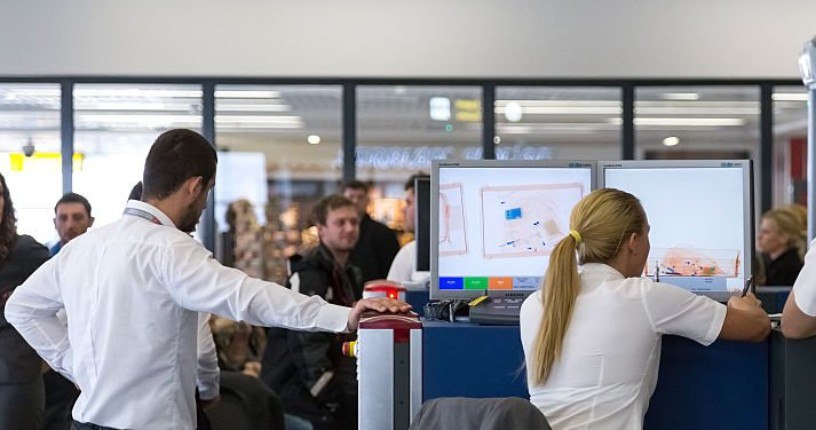
Since February, passengers departing from Turkmenistan’s capital Ashgabat have effectively been prohibited from taking food products out of the country. The restrictions reportedly apply to meat and fish products, canned goods and even bread. No official explanation has been provided. According to turkmen.news, a ban on the export of most food items was introduced at Ashgabat International Airport in February. The measures affect passengers flying to Turkey, the United Arab Emirates and other destinations. Controls are reportedly carried out before the main customs inspection, in the oversized baggage area. Only after this additional screening are travelers allowed to proceed to standard border control procedures. However, few passengers reportedly pass the initial check without issue. Eyewitnesses cited by the outlet say that many passengers are found carrying canned kaurma (meat preserved in fat), as well as sausages, smoked and salted fish, canned meat and fish, condensed milk, homemade preserves, vinegar and bread. Confiscated products must be left behind. Passengers accompanied by relatives are reportedly allowed to hand over the food to them. Those traveling alone are said to ask taxi drivers to return the items to their homes, while some leave bags on airport benches. There has been no official statement clarifying the situation. The Customs Service of Turkmenistan has not published any formal ban on the export of food products, except for sturgeon. Food items are also not listed among prohibited exports on the website of Turkmenistan Airlines. Sources cited by turkmen.news suggest that the tightened controls may be linked to cases in which Turkmen food products were confiscated at foreign airports, particularly in Istanbul and the Russian city of Kazan. In early February, more than 10 kilograms of honey and over 53 kilograms of meat were reportedly seized from Turkmen citizens in Kazan. A year earlier, turkmen.news reported increased scrutiny of passengers carrying food. At that time, checks were described as less systematic and, according to sources, were often accompanied by alleged demands for bribes rather than consistent enforcement of formal regulations. For many Turkmen students studying abroad, food brought from home is not only a matter of preference but also an economic necessity. Preserved products such as canned goods and kaurma can be stored for extended periods and significantly reduce living expenses. Turkmen food products are generally cheaper than comparable goods in Turkey, Russia or the United Arab Emirates.

U.S. Expands Visa Bond Policy for Kyrgyzstan, Tajikistan and Turkmenistan

The United States has expanded a visa bond policy that increases the upfront cost of short-term travel for citizens of Kyrgyzstan, Tajikistan, Turkmenistan, and dozens of other countries. Under the policy, applicants for B-1 and B-2 business and tourism visas may be required to post bonds of $5,000, $10,000, or $15,000. The State Department set out the latest rules and the country list on its visa bond policy page. The program now covers nationals from 38 countries. In Central Asia, it was applied to Turkmenistan on January 1, and is scheduled to extend to Kyrgyzstan and Tajikistan starting from January 21. The bond is refundable when travelers follow visa terms and leave on time, but it can tie up large sums for the duration of a trip and may put U.S. travel beyond reach for many applicants. Turkmenistan, where emigration is tightly controlled, sees low numbers of its citizens entering the United States. Department of Homeland Security data for Fiscal Year 2024 indicates that the total number of Turkmen nationals issued B-1/B-2 visas to the U.S. was 1,759. Tajikistan, meanwhile, saw 1,772 visas granted, and Kyrgyzstan 9,625. By way of comparison, Saudi Arabia saw over 54,000 visas granted. The expansion has already triggered public pushback in Kyrgyzstan. In a post on X on Thursday, Edil Baisalov, the deputy chairman of Kyrgyzstan’s Cabinet of Ministers and a prominent ally of President Sadyr Japarov, urged the Kyrgyz authorities to review visa-free access for U.S. citizens. Kyrgyzstan currently allows U.S. travelers to enter without a visa for stays of up to 30 days. “I believe that we should initiate a review of our visa-free regime for U.S. citizens following the new visa requirements announced yesterday by the State Department, under which Kyrgyz citizens are required to pay a visa deposit of up to $15,000 when submitting visa applications,” Baisalov wrote. “Visa policy is a matter of parity and mutual respect. If such high barriers are introduced for our citizens, we cannot pretend that nothing has happened.” Baisalov did not specify precisely what changes Kyrgyzstan might pursue, and any escalation risks provoking a dispute with a far stronger partner. The remarks also come as Kyrgyzstan and other Central Asian governments seek closer engagement with President Donald Trump’s administration while managing competing pressures from Russia and China. The measure is a setback for Kyrgyz efforts to ease travel barriers with the United States. Kyrgyz Foreign Minister Zheenbek Kulubaev raised visa issues with U.S. Deputy Secretary of State Christopher Landau during a meeting on the sidelines of the U.N. General Assembly in New York in September. So far, Tajikistan has not matched Kyrgyzstan’s public stance, with no prominent statement appearing on Tajik government channels addressing the bond requirement or signaling reciprocity. Discussion has instead focused on what the new U.S. rules mean for applicants, the implementation timeline, and the bond amounts that may be set at the interview stage. For Turkmenistan, the requirement adds another hurdle to an already narrow path to U.S. travel. The country’s...

Turkmenistan Included as Trump Tightens U.S. Immigration Ban After D.C. Shooting

President Donald Trump has announced a sweeping crackdown on immigration following a deadly shooting near the White House this week, placing new scrutiny on immigrants from certain countries – including Turkmenistan. Trump vowed to “permanently pause migration” from what he called “Third World” countries after two National Guard members were shot in Washington, D.C., one of them fatally. In response, U.S. immigration authorities are re-examining green cards and visa approvals for people from 19 countries deemed “countries of concern,” a list that features Turkmenistan alongside nations in Asia, Africa, and the Middle East. New Immigration Review Follows D.C. Attack The policy shift comes in the wake of an ambush-style attack on Wednesday in which an Afghan national allegedly opened fire on U.S. service members outside the White House. Army Specialist Sarah Beckstrom, 20, died from her injuries, and another Guardsman was critically wounded. Authorities arrested Rahmanullah Lakanwal, a 29-year-old Afghan man who arrived in the U.S. in 2021, as the suspect. Trump condemned the shooting as “an act of terror” and highlighted that the suspect entered under a Biden-era Afghan resettlement program. By Thursday, Trump directed U.S. Citizenship and Immigration Services (USCIS) to conduct a “full-scale, rigorous reexamination” of all current green card holders from every “country of concern.” USCIS Director Joseph Edlow said the review was ordered “at the direction of the President” and stressed that “American lives come first.” When pressed on which nations fall under the “countries of concern,” USCIS officials pointed to Trump’s June 4, 2025, presidential proclamation on foreign entry restrictions, which identified 19 countries with deficient security vetting or high visa overstay rates. It imposed a full travel ban on 12 nations and partial visa bans on 7 others. Turkmenistan’s Status in Trump’s Travel Ban Turkmenistan is one of seven countries under partial U.S. travel restrictions, meaning certain visa categories for Turkmen nationals have currently been suspended or tightened. According to the Trump administration, Turkmenistan was flagged due to security screening gaps and a high rate of U.S. visa overstays by its citizens. U.S. officials noted that about 15.35% of Turkmen visitors on tourist visas overstayed their permitted time in recent years. Turkmenistan has also been cited for limited cooperation on repatriating its citizens who are deported from the U.S. Under the June proclamation, Turkmen nationals were barred from obtaining immigrant visas or tourist and student visas for the U.S., though other travel may be allowed on a case-by-case basis. By invoking what he called a “permanent pause” on migration, Trump signaled that even more sweeping immigration restrictions could be ahead. He wrote on social media that anyone who is “not a net asset to the United States, or is incapable of loving our Country” will be removed. For Turkmenistan, inclusion in the U.S. ban list marks a rare spotlight on the country in American immigration policy. Turkmenistan, where emigration is tightly controlled, sees low numbers of its citizens entering the U.S. Department of Homeland Security data for Fiscal Year 2023 indicates that the...

Citizens of Central Asia Face New Entry Restrictions To Russia and the U.S.

Citizens of Central Asian countries are encountering a wave of new travel restrictions from two major global powers, Russia and the United States. In recent weeks, Moscow and Washington have both introduced or expanded measures that complicate entry for citizens of the region, raising concerns about migration rights, bilateral relations, and regional security. Russia Tightens Border Rules Starting June 30, 2025, citizens from visa-free countries, including Kazakhstan, will be required to obtain a special QR code to enter Russia. The code must be secured in advance via the Gosuslugi RuID app, at least 72 hours before travel, or four hours in emergency cases. The app is not yet operational, but Russian Prime Minister Mikhail Mishustin has confirmed its planned launch on the same date. While Russia maintains visa-free arrangements with over 30 countries, including Argentina, Brazil, Israel, and all CIS members, these new digital entry requirements apply broadly. Exceptions include citizens of countries already subject to visa regimes, diplomats, and citizens of Belarus, a Union State member. Additionally, as of January 1, 2025, the allowable visa-free stay in Russia for citizens of these countries has been reduced from 90 days per half-year to 90 days per calendar year. Many Kazakhstani travelers fear that the new rules will result in long queues and technical delays at border crossings. More broadly, critics point out that the move undermines the spirit of the Eurasian Economic Union (EAEU), whose member states, Kazakhstan, Kyrgyzstan, Armenia, Belarus, and Russia, are supposed to enjoy facilitated mobility. Response to the Crocus City Hall Attack The changes come in the wake of the March 22, 2024 terrorist attack at Moscow’s Crocus City Hall, which left at least 145 dead and more than 500 injured. The suspects in the attack were reportedly citizens of Tajikistan, sparking a wave of anti-migrant sentiment in Russia. According to Temur Umarov, a Berlin-based political analyst at the Carnegie Center, Russian authorities are prioritizing security over economic necessity. "Russia is doing everything possible to reduce the number of migrants from Central Asia," he said, noting the vital role these workers play in several Russian industries. Regional Backlash Public figures and officials in Kyrgyzstan, Uzbekistan, and Tajikistan have expressed frustration over Russia’s tightened migration policy. In Kyrgyzstan, the Ministry of Foreign Affairs lodged a formal protest with the Russian ambassador following a widely publicized incident in which Kyrgyz citizens were forcibly removed from a Moscow bathhouse. Member of Parliament Zhana Akayev strongly condemned the treatment of Kyrgyz nationals: “Partners and allies do not behave like this. They are humiliating our citizens,” he said. Tajik Foreign Minister Sirojiddin Muhriddin criticized Russia’s approach as inhumane and called for migration policies that respect mutual interests and fundamental rights. In Uzbekistan, several bloggers have gone further, calling for entry bans on Russian public figures, including Foreign Ministry spokeswoman Maria Zakharova, for alleged chauvinistic remarks. Kazakhstan has taken a more measured stance. Aibek Smadiyarov, a spokesman for the Kazakh Foreign Ministry, emphasized that the QR code system does not constitute a...

Kyrgyzstan Seeks Clarity from U.S. on Possible Travel Restrictions

Kyrgyzstan’s Ministry of Foreign Affairs says it plans to summon the top diplomat at the U.S. Embassy to clarify whether and on what grounds the United States will impose restrictions on Kyrgyz nationals seeking to enter the country. In a statement released on Sunday, the ministry responded to a U.S. media report that Kyrgyzstan might be in a group of countries whose citizens could be subject to restrictions and bans similar to those imposed on Turkmenistan and other nations earlier this month. “Today, the United States continues to review immigration laws aimed at ensuring security and regulating the entry of foreign citizens into the country. At present, there has been no official information from the United States regarding the introduction of any restrictions on citizens of the Kyrgyz Republic,” the ministry said. “According to information published in The Washington Post, it remains unclear to the Kyrgyz Republic what criteria will be used to compile the list of countries whose citizens may be subject to restrictions,” it said. On Saturday, The Washington Post reported that the U.S. “is considering restricting entry to citizens of an additional 36 countries in what would be a significant expansion of the travel ban announced by the Trump administration early this month,” which had affected 19 countries, including Turkmenistan. The newspaper cited a State Department memo that it said set a 60-day deadline for the targeted countries to meet “certain requirements” or face a full or partial entry ban. Countries might be added to the restricted list for failing to meet U.S. benchmarks on identity documentation, government cooperation, visa overstays, or for issues like fraud, citizenship-for-investment programs, or other security and cooperation concerns. “Among the new list of countries that could face visa bans or other restrictions are 25 African countries, including significant U.S. partners such as Egypt and Djibouti, plus countries in the Caribbean, Central Asia, and several Pacific Island nations,” the newspaper reported. Kyrgyzstan said it plans to summon the chief U.S. diplomat in Bishkek “to provide an official explanation on these issues.” Lesslie Viguerie, a career diplomat and former deputy assistant secretary of state for Central Asia and Pakistan affairs, is the U.S. ambassador in Kyrgyzstan. Turkmenistan is among seven countries whose citizens face partial restrictions on travel to the United States, such as not being able to move permanently to the U.S. or get tourist and student visas. Nationals from another 12 countries face a full travel ban, subject to case-by-case waivers and other exceptions. The U.S. measures are part of the Trump administration's broader policy to address immigration and manage the entry of foreign nationals. Trump emphasized immigration policies during his campaign for a second presidential term, stating that stricter measures were aimed at enhancing national security. These policies have faced legal challenges and public criticism, with some cities experiencing protests following actions by agents conducting immigration enforcement operations.

Turkmenistan Among Nations Targeted in New U.S. Travel Restrictions and Bans

Citizens from Turkmenistan face restrictions on travel to the United States under an order signed by President Donald Trump that bans or curbs the entry of nationals from 19 countries. Trump said in a statement released by the White House on Wednesday that the order, which takes effect on June 9, aims to protect national security and prevent people from overstaying their visas in the United States. The measure resembles an effort in Trump’s first term as president to tighten control of the influx of foreign nationals, prompting court challenges and criticism that such sweeping policies are discriminatory. “Many of these countries have also taken advantage of the United States in their exploitation of our visa system and their historic failure to accept back their removable nationals,” said Trump, who has cracked down on immigration since his second term began in January. A full travel ban, subject to case-by-case waivers and other exceptions, will go into effect for nationals from Afghanistan, Myanmar, Chad, the Republic of Congo, Equatorial Guinea, Eritrea, Haiti, Iran, Libya, Somalia, Sudan and Yemen. Turkmenistan is among seven countries whose citizens face partial restrictions, such as not being able to move permanently to the U.S. or get tourist and student visas. The other countries are Burundi, Cuba, Laos, Sierra Leone, Togo, and Venezuela. “According to the Overstay Report, Turkmenistan had a B-1/B-2 visa overstay rate of 15.35 percent and an F, M, and J visa overstay rate of 21.74 percent,” the Trump administration’s order said. “The entry into the United States of nationals of Turkmenistan as immigrants, and as nonimmigrants on B-1, B-2, B-1/B-2, F, M, and J visas is hereby suspended.” B-1 (business) and B-2 (tourism) refer to non-immigrant visas for people who want to stay temporarily in the U.S. F, M, and J visas are for non-immigrant visas used by students and other visitors enrolled in exchange programs. Turkmenistan tightly controls its population and it is difficult to get independent information about the country. Despite Turkmenistan’s vast energy resources, some of its nationals attempt to seek opportunities abroad.