• KZT/USD = 0.00225
  • TJS/USD = 0.10870
  • UZS/USD = 0.00008
  • TMT/USD = 0.29850
  • KZT/USD = 0.00225
  • TJS/USD = 0.10870
  • UZS/USD = 0.00008
  • TMT/USD = 0.29850
  • KZT/USD = 0.00225
  • TJS/USD = 0.10870
  • UZS/USD = 0.00008
  • TMT/USD = 0.29850
  • KZT/USD = 0.00225
  • TJS/USD = 0.10870
  • UZS/USD = 0.00008
  • TMT/USD = 0.29850
  • KZT/USD = 0.00225
  • TJS/USD = 0.10870
  • UZS/USD = 0.00008
  • TMT/USD = 0.29850
  • KZT/USD = 0.00225
  • TJS/USD = 0.10870
  • UZS/USD = 0.00008
  • TMT/USD = 0.29850
  • KZT/USD = 0.00225
  • TJS/USD = 0.10870
  • UZS/USD = 0.00008
  • TMT/USD = 0.29850
  • KZT/USD = 0.00225
  • TJS/USD = 0.10870
  • UZS/USD = 0.00008
  • TMT/USD = 0.29850
12 November 2026

Viewing results 1 - 6 of 10

Kazakhstan Showcases Middle Power Role in Washington D.C.: Kazakh Ambassador Ashikbayev Spreads the Message

Like it or not, the world is moving away from unipolar dominance and entering an era of multipolarity where national interests increasingly counter the globalist ambitions of some major powers. In this evolving landscape, as the major powers adjust to new geopolitical realities, an increasing number of states are becoming more comfortable operating autonomously as sovereign nations. Against this backdrop, Kazakhstan is emerging as a middle power, conscious all the same of the risks associated with remaining neutral in the oft-times bitter rivalries between major powers. Over the past twenty years, Kazakhstan has consistently signaled that it will not be drawn into the strategic maneuverings of foreign powers, instead pursuing its own national interests in a measured fashion – rather like the other Central Asian states – so as not to undermine regional stability.  Accordingly, Astana offers good offices to foster dialogue and reconciliation among countries and blocs affected by conflict and/or heightened strategic competition. Murat Nurtleu, Kazakhstan’s Foreign Minister, underscores just that point: “In this era of geopolitical competition, Kazakhstan’s role as a bridge between East and West is more vital than ever.” These words not only highlight Kazakhstan’s confidence and expanding role as a rising middle power but aim to mitigate the potential consequences of great power overreach, whether in Central Asia or elsewhere. In a recent interview in Washington DC with this writer, Ambassador Yerzhan Ashikbayev of Kazakhstan to the United States elaborated: “Kazakhstan is a middle power, which means, broadly speaking, a country that holds an influential position in the international system, especially in Eurasia. Maintaining peaceful relations with our neighbors – major, middle, and minor powers – is a top priority for us. We work to shape outcomes beyond our own borders, keeping in mind our national interests, always fostering friendly and mutually beneficial ties – a modus vivendi – with our neighbors.” It is well-known that Astana’s global diplomatic strategy prioritizes fair trade and aims to strengthen inter-regional economic ties – especially in transport, logistics, finance, and communications. It views economic development – with an emphasis on building an economically stable middle class across ethnicities – as key to national unity and regional stability. It is less known that Kazakhstan, in its diplomatic pragmatism, winces at unequal power relations, preferring to focus on long-term equity outcomes over short-term efficiency in matters of economic development. Ambassador Ashikbayev emphasizes that “Kazakhstan’s foreign policy opens space where dialogue can flourish. Guided by pragmatism, we will concentrate on practical matters like communication, quality investment flows, fair commerce, energy, and critical minerals.” He insists that “for the international system to flourish, it should function well for all, promoting peace and the common good for the majority. That is what we export - peace.” U.S. Secretary of State Marcio Rubio also emphasizes the need to keep peace front and center: “President [Trump] wants to end wars.  He’s not a fan of wars.  He thinks wars are a waste of time and a waste of lives.  And we’re going to continue to do everything we can and engage...
U.S. Prosecutors Charge Two Tajik Nationals in Human Smuggling Operation

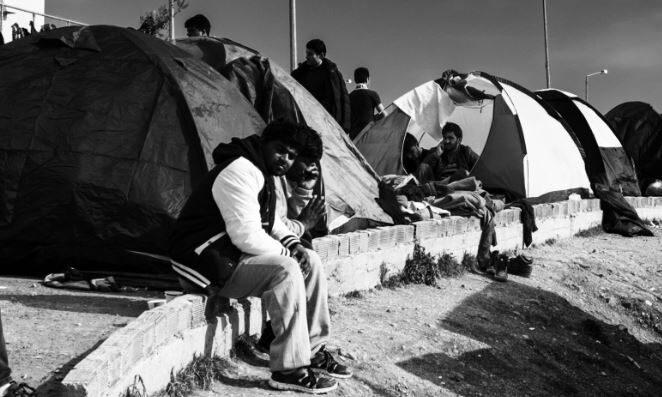
Two men from Tajikistan have been arrested and charged in Pennsylvania for allegedly smuggling people into the United States via the border with Mexico. Federal prosecutors said the defendants were charged with trying to bring a foreign citizen into the United States for financial gain and also conspiring to bring other foreigners into the U.S. as part of the smuggling operation. If convicted, they face a maximum of 10 years in prison for each count. “The indictment alleges that, as part of their conspiracy, the defendants assisted in smuggling Co-Conspirator #1 into the United States, and then received referrals through Co-Conspirator #1 to smuggle additional illegal aliens into the U.S.,” the U.S. Attorney’s Office for the Eastern District of Pennsylvania said in a statement on Tuesday. The statement identified the defendants as Bekhzod Rakhmatov, 30, of Maineville, Ohio, and Munis Khojiev, 31, of Philadelphia. It said they had also illegally entered the United States. Allegations against the suspects say that from about December 2022 to about May 2025, the two men worked to secure visas and passports for people who traveled through a number of countries with the aim of reaching the U.S.-Mexico border. “The defendants solicited and received funds from, and on behalf of, illegal aliens, as payment for smuggling the illegal aliens into the United States,” federal prosecutors said. The indictment comes as the U.S. cracks down on migration, including from some countries in Central Asia. Citizens from Turkmenistan face restrictions on travel to the United States under an order signed by President Donald Trump that bans or curbs the entry of nationals from 19 countries. The order took effect on June 9. Kyrgyzstan has expressed concern about reports that it might be included in another group of countries that will possibly be subject to similar U.S. bans and restrictions.

Kazakhstan’s Geoeconomic Rise and Why the U.S. Must Act Now – Opinion

The recent call between U.S. Secretary of State Marco Rubio and Kazakhstan’s Deputy Prime Minister and Foreign Minister Murat Nurtleu highlights an evolving but structurally inevitable dynamic: the growing convergence of interests between Washington and Astana. Kazakhstan has been explicit about its priorities — independence, sovereignty, territorial integrity, and balanced external relations. The U.S. has strategic imperatives that align directly with what Kazakhstan can offer, particularly in the domains of supply chain diversification, energy security, and critical minerals. The two countries now have the opportunity, reinforced by shifts in global economic and security networks, to establish a substantive and resilient bilateral relationship. Since the dissolution of the Soviet Union, Kazakhstan has pursued an adaptive strategy of multi-vector diplomacy. This balancing mechanism is not merely a preference but rather an intrinsic requirement for preserving its sovereignty in a structurally asymmetric regional environment that is dictated by its geostrategic positioning. U.S. policymakers should recognize that Kazakhstan’s entanglements with Russia through security frameworks and its economic cooperation with China are not exclusionary choices. They are stabilizing counterweights that act to sustain Kazakhstan’s agency. The U.S. must embed itself within this framework. This means serving as a complementary pillar of economic and strategic equilibrium and not supplanting those existing ties. That means Washington’s approach has to pivot. For too long, U.S. engagement with Kazakhstan has been episodic and reactive, lacking internal logic and conditioned by external crises. Diplomatic rhetoric on democratic values and governance, while relevant, cannot substitute for material economic and strategic interdependence. For the U.S. to secure a meaningful place in Kazakhstan’s geopolitical architecture, it must offer tangible incentives through structured economic integration that reinforces Astana’s sovereignty. The two countries’ geoeconomic interests coincide most strongly in the issue areas of energy security, critical minerals, and telecommunications infrastructure. Vulnerabilities exposed by recent global shocks have forced the U.S. to recalibrate toward supply chain resilience. In this context, redundancy and diversification are no longer inefficiencies but have become security imperatives. Kazakhstan’s relevance to these concerns is a direct consequence of its resource endowments and logistical positioning. Energy security is the first pillar of stabilization. Kazakhstan, one of the world’s foremost uranium producers and a major oil and gas supplier, has continually expanded non-Russian export corridors westward to reduce its dependence on Russian transit routes. The U.S., having maintained a legacy of investment in Kazakhstan’s energy sector, should now move toward embedding its involvement within these diversified export pathways. This win-win solution would ensure that Kazakhstan’s resource flows are not beholden to Russian infrastructure bottlenecks. Critical minerals represent the second pillar. The U.S. legislative push under the Inflation Reduction Act (IRA) and the CHIPS Act mandates a diversification of supply chains for rare earth elements (REEs) and other critical materials. Kazakhstan’s reserves of REEs, copper, and other industrial inputs logically make it an important node in a decentralized, resilient industrial network. However, investment must not remain exclusively extractive in nature. The objective must be to integrate Kazakhstan into midstream processing and value-added production, again producing...

Opinion: How Central Asia Has Strengthened Ties with the West Since 2022

The Russian invasion of Ukraine has changed the relationship between Russia and Central Asia. Russia’s decision to invade a neighboring country, and the devastation and destruction that followed, has forced Central Asia to reconsider its relationship with the Russian Federation.  Russia is no longer seen as an “invincible superpower,” meaning it cannot be relied on to protect other members of the CSTO (Collective Security Treaty Organization). In addition, the U.S. and European countries have levied heavy sanctions on Russia for its invasion of Ukraine. Russia has attempted to evade these sanctions by conducting business with third parties, but the international community has warned several organizations and countries not to partake in these relations. Otherwise, should these businesses and countries opt to help Russia, then the international community has said that it will impose stiff penalties on these Russian intermediaries as well. Given these events, the Central Asian states have now been actively pursuing new relationships beyond Russia to bolster national, economic, and energy security within the region. During this process, China has attempted to assert itself as Central Asia’s new ally. Like Russia, China already has a significant trade relationship with Central Asia. In addition, China is Central Asia’s largest gas consumer, meaning the Chinese have attempted to force Central Asia into an economic and energy partnership. Despite this relationship, the countries of Central Asia have opted not to increase their reliance on China. Instead, recent developments have led them to improve their relations with the United States, the United Kingdom, and the European Union. But how has the West strengthened its relationship with Central Asia since 2022? Take, for example, the United States. When Russia’s invasion began in February 2022, the then U.S. Secretary of State Antony Blinken met with foreign ministers from Kazakhstan, Kyrgyzstan, Tajikistan, and Uzbekistan to discuss the war. During their meeting, Secretary Blinken stated that the United States supports Central Asia’s “sovereignty, independence, and territorial integrity.” He also said that the United States will continue to strengthen its relationship with the region. Since this meeting, Blinken has met with foreign ministers from Central Asia on several occasions in 2023 and 2024, where they further discussed how Central Asia can “develop the strongest possible capacities for their own security, their growing economic prosperity, and the strength and resilience of their societies.” Furthermore, U.S. President Joe Biden met with senior officials from Central Asia. During his meeting with his Central Asian counterparts in September 2023, Biden said that the United States would help “invest in and develop Central Asia’s energy infrastructure.” The United States also established a new business initiative with Central Asia, where the United States has provided hundreds of millions of dollars in assistance to the region. Then, during the United States-Central Asia Trade Investment Framework Council in June 2024, the United States and the Central Asian states discussed new investment opportunities and how they could diversify trade. These discussions were well received, and the United States called for future engagements between it and Central...
