• KZT/USD = 0.00225
  • TJS/USD = 0.10860
  • UZS/USD = 0.00008
  • TMT/USD = 0.29850
  • KZT/USD = 0.00225
  • TJS/USD = 0.10860
  • UZS/USD = 0.00008
  • TMT/USD = 0.29850
  • KZT/USD = 0.00225
  • TJS/USD = 0.10860
  • UZS/USD = 0.00008
  • TMT/USD = 0.29850
  • KZT/USD = 0.00225
  • TJS/USD = 0.10860
  • UZS/USD = 0.00008
  • TMT/USD = 0.29850
  • KZT/USD = 0.00225
  • TJS/USD = 0.10860
  • UZS/USD = 0.00008
  • TMT/USD = 0.29850
  • KZT/USD = 0.00225
  • TJS/USD = 0.10860
  • UZS/USD = 0.00008
  • TMT/USD = 0.29850
  • KZT/USD = 0.00225
  • TJS/USD = 0.10860
  • UZS/USD = 0.00008
  • TMT/USD = 0.29850
  • KZT/USD = 0.00225
  • TJS/USD = 0.10860
  • UZS/USD = 0.00008
  • TMT/USD = 0.29850
18 November 2026

Viewing results 1 - 6 of 3

U.S. Midterms Hand Democrats a Central Asia Agenda They Helped Build

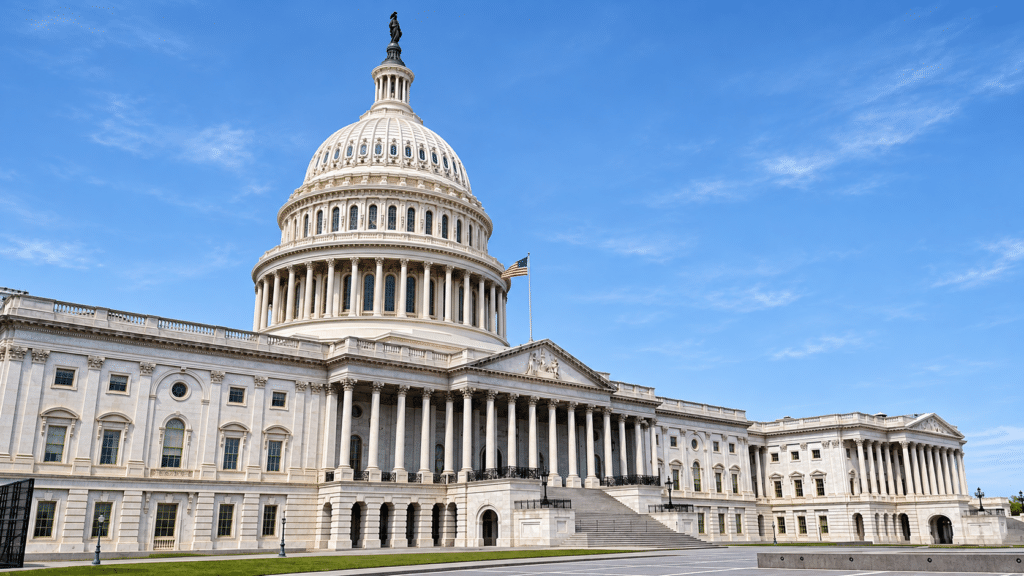
Democrats have won control of Congress in the November 3 midterms, ending President Donald Trump’s Republican majority. But they inherit a Central Asia agenda their party helped build, backed by substantial orders for American manufacturers. Uzbekistan Airways’ new Boeing deliveries are due to begin in 2031, while Kazakhstan’s $4.2 billion Wabtec agreement covers a decade. For American businesses, the region’s importance is already measured in export orders that outlast a congressional majority. American Jobs Behind the Diplomacy Kazakhstan signed its Wabtec agreement in September 2025. The U.S. Commerce Department said the Pennsylvania-based manufacturer would supply 300 heavy-haul locomotive kits over the next decade. It estimated that the deal would support more than 11,000 American jobs. Uzbekistan Airways initially ordered 14 Boeing 787-9 Dreamliners, with options for eight more. The Commerce Department valued that package at approximately $8.5 billion. The airline subsequently exercised the options, bringing its firm order to 22 aircraft. Those purchases give Astana and Tashkent a direct argument in Washington: engaging with them brings business to American factories. The relationship also gives U.S. manufacturers a reason to support continued engagement, whichever party controls congressional committees. From Biden to Trump The minerals agenda has already survived a change of president. The Biden administration signed a critical minerals cooperation memorandum with Uzbekistan in September 2024, aimed at diversifying global supplies. Under Trump, critical minerals and digital infrastructure remained on the agenda at the October 19 C5+1 meeting in Samarkand. The United States and the five Central Asian republics also backed increased trade through the Trans-Caspian route and closer links between their business communities. Congressional support crosses the same party divide. In October, Democratic Senator Chris Coons and Republican Senator Tim Sheehy introduced legislation to strengthen critical mineral supply chains through mining and processing partnerships with U.S. allies. A bipartisan artificial intelligence (AI) bill, reintroduced in February, similarly aims to strengthen American research and testing capacity. Kazakhstan’s June 2026 agreements with Firebird, a U.S. technology company, cover proposed AI infrastructure and advanced computing capacity. Central Asia offers customers for American technology as well as potential sources of strategic minerals. Both fit priorities Democrats have backed alongside Republicans. The incoming majority has reasons of its own to maintain that engagement. Congress’s Unfinished Business The Democratic majority will take office in January 2027, gaining control of committees and greater influence over legislation and oversight. Central Asian governments will also lose two established advocates. Republican Steve Daines and Democrat Gary Peters, who founded the Senate Central Asia Caucus in 2024, are both retiring that month. Their successors will inherit an unfinished trade agenda. Kazakhstan and Uzbekistan remain subject to the Cold War-era Jackson-Vanik Amendment, despite years of calls to remove its trade restrictions. Republican and Democratic lawmakers introduced repeal legislation in November 2025. While American manufacturers are booking Central Asian business into the 2030s, Congress is still debating whether to lift trade restrictions dating from 1974. At a September 2026 House hearing, lawmakers from both parties heard arguments for removing the restrictions. The discussion...

C5+1 Statement Omits Afghanistan, Prioritizes Trans-Caspian Trade

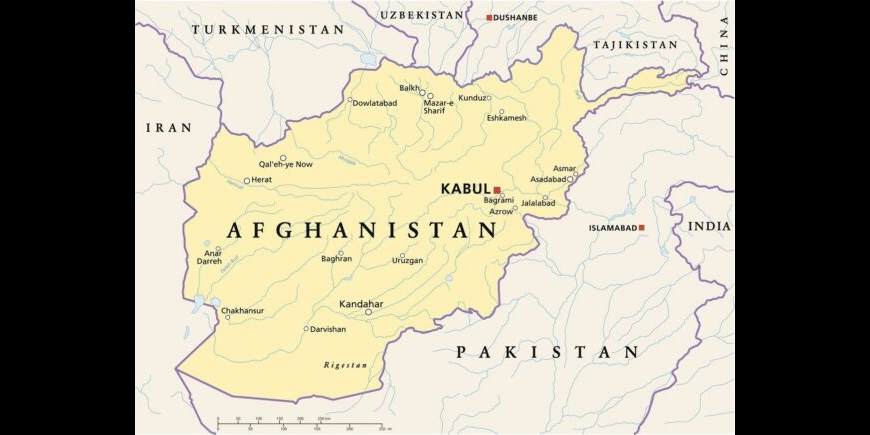
The United States and the five Central Asian republics have issued a joint statement on economic and security cooperation that makes no mention of Afghanistan, once a central concern of U.S. regional policy. The document followed the October 19 C5+1 ministerial meeting in Samarkand, Uzbekistan. Afghanistan's absence from the statement does not mean it has disappeared from negotiations or Washington's strategic interests. Nevertheless, a comparison with earlier C5+1 documents reveals a shift in the published agenda. Where Washington once placed considerable importance on connecting Central Asia with South Asia through Afghanistan, the latest statement focuses on trade across the Caspian Sea and investment in the region's minerals. Afghanistan's Changing Place in C5+1 Talks In July 2021, just weeks before the Taliban retook Kabul, C5+1 participants at a conference in Tashkent explicitly supported closer trade and transport links between Central and South Asia through Afghanistan, as well as efforts to secure peace in the country. That month, the U.S., Uzbekistan, Afghanistan, and Pakistan also announced plans for a quadrilateral platform to support trade and transportation projects linking the two regions. In July 2023, Afghanistan was the subject of a separate C5+1 special session in Astana. Officials called for an inclusive Afghan government that respected women's rights and backed further development of transport and energy links through the country. A joint statement issued by C5+1 leaders that September described Afghanistan as an important factor in Central Asian security. In the 2026 Samarkand statement, Afghanistan goes unmentioned even in the section on border security and terrorism. However, the October 2023 C5+1 connectivity statement had already highlighted the Trans-Caspian Trade Route, which connects Central Asia to Western markets, and also omitted Afghanistan. For Central Asian countries, the Afghan route remains important in practical terms. Uzbekistan is pursuing plans for a railway through Afghanistan to Pakistan, which would give it access to Indian Ocean ports. Kazakhstan is already a major supplier of food to Afghanistan, exporting around $216 million worth of flour and $122 million of wheat in the first seven months of 2026. In September, Kazakhstan and Uzbekistan also agreed with the United Arab Emirates to study a railway corridor through Afghanistan to Pakistan. Tajikistan, Uzbekistan, and Turkmenistan all share borders with Afghanistan. Uzbekistan and Turkmenistan also face the prospect of reduced water supplies from the Amu Darya as Afghanistan builds its Qosh Tepa Canal. Afghanistan's omission from a joint statement should therefore not be taken as a complete account of the policies of all five Central Asian states. What Constrains Washington One possible explanation lies in the U.S. approach to Afghanistan's current authorities. Washington allows practical contacts with representatives of the Taliban but does not recognize the government it has formed. The movement remains designated as a Specially Designated Global Terrorist, although it is not included in the U.S. Department of State's separate list of Foreign Terrorist Organizations. The designation restricts dealings with the Taliban, although U.S. sanctions rules permit many commercial transactions involving Afghanistan's governing institutions, including civilian infrastructure and transportation projects....

Citibank Kazakhstan Chairperson Sees Opportunities for U.S.-Central Asia Collaboration

Foreign investors are looking outside Kazakhstan’s oil and gas sector. But turning that interest into investment will require predictable regulations and stronger cross-border connections, according to Saule Zhakayeva, chairperson of Citibank Kazakhstan’s management board and president of the American Chamber of Commerce in Kazakhstan (AmCham). Citi has operated in Kazakhstan since 1994, when it opened a representative office in Almaty. In an interview with The Times of Central Asia, Zhakayeva discussed the country’s investment climate and its role as a regional business hub. She also addressed the future of economic relations between the United States and Kazakhstan. TCA: How is foreign investor interest in Central Asia evolving, and which of Kazakhstan’s strengths are already translating into investment? Where do you see the strongest commercial opportunities over the next three to five years, and what would help turn untapped potential into committed capital? Zhakayeva: Investors today are looking for markets that combine economic stability, access to natural resources, strategic geography, and long-term growth potential. Kazakhstan offers each of these attributes. The country has established itself as the largest economy in Central Asia, maintains a relatively strong institutional framework, and continues to pursue reforms aimed at improving the investment climate. Most notably, investor interest is becoming increasingly diversified. Historically, foreign investment was concentrated primarily in oil and gas. Today, we see growing interest in transportation and logistics, renewable energy, critical minerals, digital infrastructure, financial services, manufacturing, and data-related investments. This growing interest is also reflected in the increasing level of engagement between international investors and Kazakhstan. As President of the American Chamber of Commerce in Kazakhstan, I have seen firsthand the strong momentum in U.S.-Kazakhstan business relations. Throughout 2026, Kazakhstan has hosted a growing number of high-level business engagements involving senior representatives of American companies and institutions, including the U.S. Chamber of Commerce Business Mission to Kazakhstan and other executive-level dialogues focused on investment, trade, digital transformation, energy, and infrastructure. AmCham Kazakhstan also led its first business delegation to Washington, D.C., bringing member companies together to strengthen bilateral economic ties, promote Kazakhstan's investment opportunities, and advocate for deeper economic cooperation. These activities underscore the growing recognition of Kazakhstan and Central Asia as strategically important destinations for long-term investment and commercial cooperation. More importantly, they are beginning to translate into tangible outcomes. For example, in 2026, the U.S. International Development Finance Corporation announced plans to explore up to $700 million in financing opportunities to support the development of Kazakhstan's critical minerals sector. Kazakhstan's location at the crossroads of Europe and Asia has become increasingly important as global companies diversify supply chains and seek alternative trade routes. The development of the Trans-Caspian International Transport Route is further strengthening Kazakhstan's role in regional and global commerce, creating opportunities far beyond traditional sectors. Similar dynamics are being observed across the region, where alternative trade routes, logistics investments, and infrastructure development are becoming increasingly important to global investors. We are also seeing growing international interest in strategic sectors linked to global energy security and the energy transition....
