• KGS/USD = 0.01144 0%
  • KZT/USD = 0.00208 0%
  • TJS/USD = 0.10440 -0.19%
  • UZS/USD = 0.00008 0%
  • TMT/USD = 0.28571 0.28%
  • KGS/USD = 0.01144 0%
  • KZT/USD = 0.00208 0%
  • TJS/USD = 0.10440 -0.19%
  • UZS/USD = 0.00008 0%
  • TMT/USD = 0.28571 0.28%
  • KGS/USD = 0.01144 0%
  • KZT/USD = 0.00208 0%
  • TJS/USD = 0.10440 -0.19%
  • UZS/USD = 0.00008 0%
  • TMT/USD = 0.28571 0.28%
  • KGS/USD = 0.01144 0%
  • KZT/USD = 0.00208 0%
  • TJS/USD = 0.10440 -0.19%
  • UZS/USD = 0.00008 0%
  • TMT/USD = 0.28571 0.28%
  • KGS/USD = 0.01144 0%
  • KZT/USD = 0.00208 0%
  • TJS/USD = 0.10440 -0.19%
  • UZS/USD = 0.00008 0%
  • TMT/USD = 0.28571 0.28%
  • KGS/USD = 0.01144 0%
  • KZT/USD = 0.00208 0%
  • TJS/USD = 0.10440 -0.19%
  • UZS/USD = 0.00008 0%
  • TMT/USD = 0.28571 0.28%
  • KGS/USD = 0.01144 0%
  • KZT/USD = 0.00208 0%
  • TJS/USD = 0.10440 -0.19%
  • UZS/USD = 0.00008 0%
  • TMT/USD = 0.28571 0.28%
  • KGS/USD = 0.01144 0%
  • KZT/USD = 0.00208 0%
  • TJS/USD = 0.10440 -0.19%
  • UZS/USD = 0.00008 0%
  • TMT/USD = 0.28571 0.28%

Viewing results 1 - 6 of 63

Zelensky Steps Up Claims of Uzbek and Tajik Citizens Fighting for Russia in Ukraine

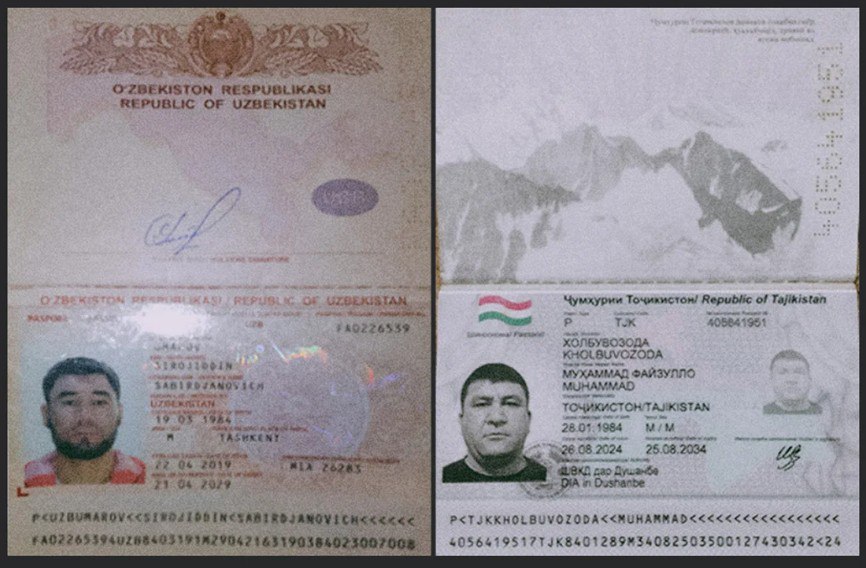
Ukrainian President Volodymyr Zelensky has claimed that citizens of Uzbekistan and Tajikistan are among foreign fighters serving in the Russian army in Ukraine. The statement was made on August 4 via his official Telegram channel, following a visit to the 17th Separate Motorized Infantry Battalion in the northern city of Vovchansk, Kharkiv region. “Today I was alongside those defending our country on the Vovchansk front the soldiers of the 17th Separate Motorized Infantry Battalion of the 57th Brigade named after Kostiantyn Hordiienko,” Zelensky wrote. “We spoke with commanders about the situation on the front line, the defense of Vovchansk, and the dynamics of the fighting. Soldiers on this front are recording the participation of mercenaries from China, Tajikistan, Uzbekistan, Pakistan, and several African countries. We will respond.” During the visit, Zelensky also discussed issues related to drone supplies, recruitment, and direct funding for brigades. He awarded service medals to Ukrainian troops and stated: “It is an honor for me to be here. Thank you for fighting, serving your state, the Ukrainian people, and supporting one another.” However, independent verification of these claims is limited. In some cases, reports suggest a different dynamic: in May, Alexander Bastrykin, head of Russia’s Investigative Committee, stated that authorities had “tracked down 80,000” newly naturalized Russian citizens, many originally from Uzbekistan, Tajikistan, and Kyrgyzstan, who had tried to evade military service. Around 20,000 were reportedly sent to the front lines. These figures, while not independently verified, suggest that conscription, rather than voluntary enlistment or mercenary recruitment, may account for much of Central Asian involvement. The war continues to have a profound economic impact. Ukraine’s industrial production index dropped from 101.7% in December 2021 to 69.3% by December 2024. Trade between Ukraine and Central Asia has also declined sharply. Kazakhstan’s trade turnover with Ukraine fell from $5.5 billion in 2012 to just $391 million in 2023. Once Ukraine’s 15th-largest trading partner in 2021, Kazakhstan ranked 35th by the end of 2023.
Ukraine Eyes Central Asia: Can War-Weary Kyiv Forge New Regional Alliances?

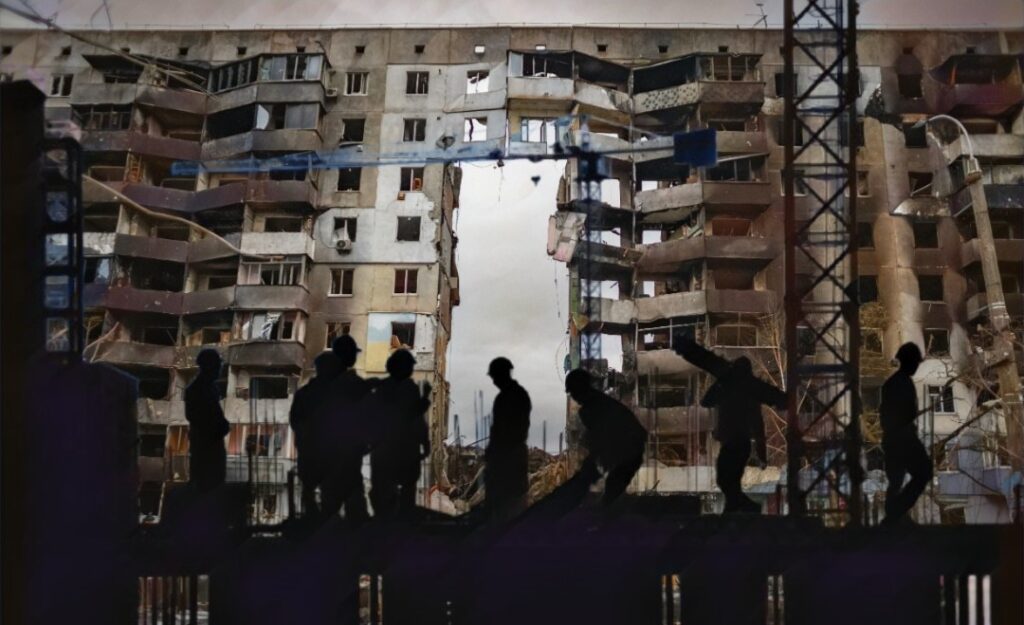
Despite the ongoing war with Russia, Ukraine is attempting to intensify its diplomatic and economic ties with Central Asia. Kyiv is seeking the region’s de facto political support against Moscow, and aiming to rebuild trade relations with the former Soviet republics. But how do the Central Asian nations view Ukraine’s regional ambitions? Ukraine’s Ministry of Foreign Affairs has recently launched a new department focused on Central Asia – a region that has traditionally been in Russia’s zone of influence. The move comes as no surprise, given that Kyiv is also actively seeking to make diplomatic inroads in Africa, a continent where the Kremlin harbors significant geopolitical ambitions. But unlike in Africa, which represents relatively new ground for Ukraine — and where it struggles to compete with Russia’s growing influence — Kyiv appears to be in a stronger position in Central Asia. Ukraine and the countries of Central Asia share a common Soviet past, which has left its mark on their relations in various areas, including the economy, culture, and education. A Ukrainian diaspora also lives in all of the Central Asian states and serves as an important link between the nations. That, however, does not mean that Kyiv’s diplomatic initiative will go flawlessly. Besides the ongoing war, geography is one of the biggest obstacles to Ukraine’s efforts to increase its presence in Central Asia. As a result of the conflict, the Eastern European nation can no longer use its old transport and trade routes to Central Asia through Russia. Since 2022, trade between Ukraine and the regional countries has dropped significantly, as sending goods back and forth has become more expensive. To bypass Russian territory, products from Ukrainian manufacturers are now transported to Central Asia through countries such as Romania, Bulgaria, Turkey, Azerbaijan, and Georgia. Although these routes are functional, their profitability remains questionable. Moreover, statistics show that Ukraine’s industrial production index collapsed from 101.7% in December 2021 to 69.3% in December 2024, which is why the war-torn nation is no longer among Central Asia’s major trading partners. In 2012, long before the war, trade turnover between Ukraine and Kazakhstan – Central Asian largest economy – amounted to $5.5 billion, while in 2023 it was only $391 million. At the end of 2023, Ukraine ranked 35th in Kazakhstan’s list of trading partners, while before the war, in 2021, it was the energy-rich nation’s 15th largest trade partner. Economic ties between Ukraine and Kyrgyzstan are faring no better. According to Idris Kadyrkulov, Kyrgyzstan’s Ambassador to Ukraine, trade between the two countries has “mostly stopped” because many Ukrainian businesses have been hurt by the war, and shipping goods between Ukraine and Kyrgyzstan has become “at least three times more expensive than before the Russian invasion.” That is why, under the current circumstances, strengthening economic ties between Ukraine and the Central Asian states does not seem realistic. Fully aware of this, Kyiv is counting on the regional nations’ economic support in the post-war era – an area in which Kazakhstan has already shown...

Central Asian Migrants Coerced Into Russia’s War in Ukraine

Citizens of Central Asian countries, including Uzbekistan and Tajikistan, are increasingly being coerced into joining Russia’s war effort in Ukraine, according to a recent statement from Ukraine’s military intelligence agency. Many of those affected are labor migrants who originally traveled to Russia for work but were later pressured or misled into signing military contracts. Reports suggest that Russian army representatives have been enticing migrants with promises of fast money through short-term enlistment. In practice, however, many of these so-called “volunteers” are deployed to the most dangerous front-line positions. Ukraine’s Defense Intelligence claims most do not survive. Among the recently reported casualties were nationals from Uzbekistan and Tajikistan who had enlisted earlier this year. Ukraine's warning also highlights the legal risks facing survivors. Returning home after fighting in a foreign conflict can expose them to criminal charges and potentially long prison sentences under national laws that prohibit participation in overseas military operations. Russian officials have also acknowledged the recruitment of migrants. Alexander Bastrykin, head of Russia’s Investigative Committee, stated during a legal forum in St. Petersburg that his office had identified around 80,000 individuals who received Russian citizenship but then attempted to evade military service. Of those, approximately 20,000 are currently serving on the front lines in Ukraine, according to Bastrykin. As of September 2024, Russia hosted nearly four million citizens from Central Asia. Uzbekistan accounted for the largest share with an estimated 1.79 million migrants, followed by Tajikistan and Kazakhstan. While some migrants sign military contracts out of economic desperation, others reportedly face coercion, threatened with the loss of citizenship or imprisonment for avoiding conscription. The practice of deploying foreign labor migrants to the battlefield has caused mounting concern across Central Asia. Families fear for the fate of relatives drawn into a distant and escalating conflict, often without clear legal protection or state support.

Another Suspected Drone Discovered in Kazakhstan’s Mangistau Region

On June 19, fragments of a suspicious object resembling an unmanned aerial vehicle (UAV) were discovered in the Karakiyan district of Kazakhstan’s Mangistau Region, near the Bolashak border station. According to the Mangistau Region Police Department, the UAV debris was found in a remote area, far from populated settlements. Authorities emphasized that "no damage" was reported. The incident is currently under investigation in cooperation with the relevant agencies. Potential Iranian Link Suggested While officials have not confirmed the origin or type of the device, speculation is growing. The KazTAG news agency reported that the shape of the debris may resemble that of an Iranian Shahed-136 drone. These drones have been reportedly supplied by Iran to Russia since late 2022 and used extensively in the war in Ukraine. According to independent sources, Russia may have paid Iran approximately 1.8 tons of gold, worth around $104 million, for a consignment of Shahed-136 drones. Despite denials from both Moscow and Tehran, the drones' deployment in Ukraine has been documented by independent journalists and military experts. Meanwhile, pro-Kremlin sources have speculated that it could be a British Banshee drone used by the Ukrainian Armed Forces. [caption id="attachment_33143" align="aligncenter" width="1280"] Image: TCA[/caption] Pattern Emerges Along Western Border This is not an isolated occurrence. Since early 2024, at least three similar incidents have been recorded in the West Kazakhstan Region (WKR). UAVs or drone parts were discovered in the villages of Ualy (February 18), Atameken (March 18), and Zhanibek (March 25). Regional media have noted that some of the discovered objects bear a resemblance to French-made Crecerelle reconnaissance drones, produced by Sagem. However, no official conclusions have been issued. Broader Security Implications The repeated discovery of drone-like objects in Kazakhstan raises broader security concerns, particularly given the proximity of Russian regions frequently targeted by Ukrainian drones. Strategic installations in Russia’s Saratov region, including airfields and oil depots, have been hit multiple times. In this context, the unexplained appearance of aerial objects near Kazakhstan’s borders is concerning. Experts stress the need for transparent investigations and enhanced monitoring of airspace, especially near critical infrastructure and transportation corridors. Kazakhstan’s Ministry of Defense previously stated that UAV fragments found in February and March 2025 may have originated from activities at Russia’s 929th State Flight Test Center, located near the Kazakh border. The facility, named after Chkalov, is used by the Russian Ministry of Defense for testing military aircraft.

Ukrainian Children Arrive in Uzbekistan for Rest and Recovery

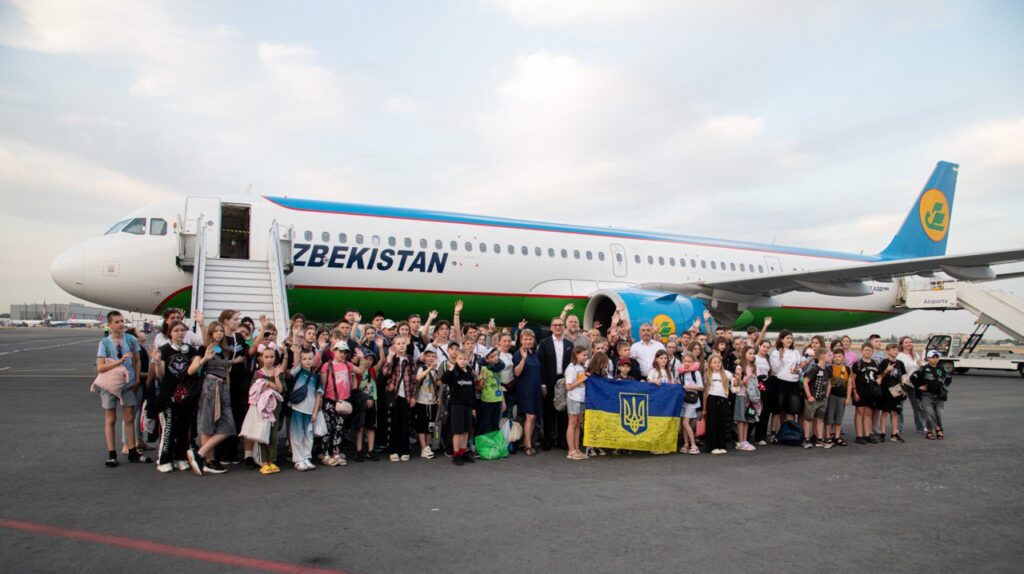
Just ahead of Eid al-Adha, a group of Ukrainian children have arrived in Tashkent for a 12-day program of rest and psychological rehabilitation. The Ukrainian Embassy in Uzbekistan reported that the visit was fully organized and funded by the Uzbek government. The children, who come from war-affected regions including Kharkiv, Kherson, Mykolaiv, Zaporizhzhia, Sumy, Khmelnytskyi, Lviv, and Kyiv, received a warm welcome upon arrival at Tashkent International Airport. From there, they traveled to a mountain camp nestled in a valley near the Tien Shan range. According to the embassy, the initiative was launched at the request of the Ukrainian side and is intended to help the children recover emotionally from the ongoing trauma of air raid sirens and missile strikes. The camp offers a structured program of daily themed events, such as “National Values Day” and “Sports and Health Day,” along with creative competitions and excursions. Evenings are reserved for social gatherings. Ukrainian adults are present to supervise the children throughout their stay. Nearly all major ministries and government agencies in Uzbekistan are participating in the effort, demonstrating strong coordination and compassion. The Ukrainian Embassy emphasized that the initiative reflects Uzbekistan’s genuine interest in supporting Ukrainian children during this difficult period. The program aims not only to provide physical and emotional relief, but also to express solidarity and goodwill from the Uzbek people. Uzbekistan previously provided similar humanitarian assistance to Palestinian civilians, evacuating 100 injured women and children, along with their guardians, from Rafah for medical treatment and care. Uzbekistan’s response to Russia’s war in Ukraine has been cautious yet distinct, reflecting its careful balancing act in international diplomacy. Tashkent has refrained from openly condemning Moscow, a key economic and regional partner, but has also demonstrated a firm commitment to Ukraine’s sovereignty and territorial integrity within the framework of its foreign policy principles. Uzbekistan has supported UN General Assembly resolutions calling for an end to the conflict, signaling alignment with global norms, while urging a peaceful resolution through dialogue. Officials have consistently avoided taking sides but have voiced concerns about the war’s human cost and economic repercussions. Beyond formal diplomatic statements, Uzbekistan’s humanitarian actions have highlighted its concern for those impacted by the war. The government’s decision to host Ukrainian children for rehabilitation reflects its broader efforts to provide tangible support to civilians in crisis zones.

Operation Spider Web Rattles Russia as Kazakhstan Battles Disinformation

Sunday, June 1, was described by some Russian commentators as the country’s own “Pearl Harbor” following a Ukrainian drone offensive that struck multiple Russian military airfields. Dubbed Operation Spider’s Web, the strikes, targeting air bases in Murmansk, Irkutsk, Ivanovo, Ryazan, and Amur regions were carried out by Ukraine’s Security Service (SBU) and sent shockwaves through Russian society. As criticism mounted over the failures of Russia’s air defense and intelligence apparatus, some voices in Russia began directing attention toward Kazakhstan, attempting to link it, however tenuously, to the Ukrainian operation. The Operation and Its Tactics The Russian Ministry of Defense confirmed the June 1 drone attacks but reported fires at only two bases, in Murmansk and Irkutsk, with no casualties. Ukrainian President Volodymyr Zelensky hailed the operation as an "absolutely brilliant result,” emphasizing that it had been in development for 18 months. The method of using vehicles disguised as civilian freight, such as trucks carrying wooden houses filled with drones, was not new. Russian special services have previously intercepted similar transport efforts, and some military bloggers had already documented such tactics. Kazakhstan’s Alleged Involvement According to the Russian authorities, operational preparations for the June 1 attack began in December 2024. Officials in Irkutsk announced a manhunt for 37-year-old Artem Timofeev, a Ukrainian former DJ suspected of organizing the drone launches from vehicles registered to him. Timofeev’s background remains murky: while some sources say he was born in Zhytomyr, others claim Donetsk. He reportedly lived in Kyiv before relocating to Russia’s Chelyabinsk region. The only known connection to Kazakhstan is unconfirmed reports of Timofeev’s departure - along with his wife, an erotic fiction writer  - to Astana just days before the strikes. This limited detail, however, fueled speculation on Russian Telegram channels that drone components may have entered Russia via Kazakhstan or that its proximity made it a convenient staging point, with one baselessly claiming that "All the spare parts and explosives arrived via fraternal Kazakhstan." Official Response from Kazakhstan Kazakh officials quickly dismissed these allegations. Foreign Ministry spokesperson Aibek Smadiyarov stated, “There is no official confirmation of this. I will leave it to the theorists among our experts. I cannot comment on conspiracy theories and all sorts of mysteries.” Mazhilis deputy Konstantin Avershin characterized the accusations as “information sabotage” aimed at destabilizing Kazakhstan’s relations with Russia. “I regularly visit such production facilities and can officially state that neither components nor finished products could have fallen into the wrong hands,” he said. Military analyst and retired colonel Darkhan Daniyarov echoed this view, calling the allegations external propaganda. “Kazakhstan complies with all international norms, ensures transparent export controls, and remains a supporter of peace, neutrality, and good neighborliness,” he stated, adding that since 2022, Kazakhstan has introduced strict controls on dual-use goods to prevent their re-export for military purposes. Former KNB Chairman Nartay Dutbayev also questioned the plausibility of the claims, stating it would be easier to obtain explosives within Russia than to smuggle them from Kazakhstan. A Broader Narrative Accusations implicating Kazakhstan...