• KGS/USD = 0.01144 0%
  • KZT/USD = 0.00212 0%
  • TJS/USD = 0.10864 0%
  • UZS/USD = 0.00008 0%
  • TMT/USD = 0.28571 0%
  • KGS/USD = 0.01144 0%
  • KZT/USD = 0.00212 0%
  • TJS/USD = 0.10864 0%
  • UZS/USD = 0.00008 0%
  • TMT/USD = 0.28571 0%
  • KGS/USD = 0.01144 0%
  • KZT/USD = 0.00212 0%
  • TJS/USD = 0.10864 0%
  • UZS/USD = 0.00008 0%
  • TMT/USD = 0.28571 0%
  • KGS/USD = 0.01144 0%
  • KZT/USD = 0.00212 0%
  • TJS/USD = 0.10864 0%
  • UZS/USD = 0.00008 0%
  • TMT/USD = 0.28571 0%
  • KGS/USD = 0.01144 0%
  • KZT/USD = 0.00212 0%
  • TJS/USD = 0.10864 0%
  • UZS/USD = 0.00008 0%
  • TMT/USD = 0.28571 0%
  • KGS/USD = 0.01144 0%
  • KZT/USD = 0.00212 0%
  • TJS/USD = 0.10864 0%
  • UZS/USD = 0.00008 0%
  • TMT/USD = 0.28571 0%
  • KGS/USD = 0.01144 0%
  • KZT/USD = 0.00212 0%
  • TJS/USD = 0.10864 0%
  • UZS/USD = 0.00008 0%
  • TMT/USD = 0.28571 0%
  • KGS/USD = 0.01144 0%
  • KZT/USD = 0.00212 0%
  • TJS/USD = 0.10864 0%
  • UZS/USD = 0.00008 0%
  • TMT/USD = 0.28571 0%

Viewing results 1 - 6 of 72

Despite War’s Challenges, Kazakhstan Says Trump-Putin Meeting Was “The Beginning”

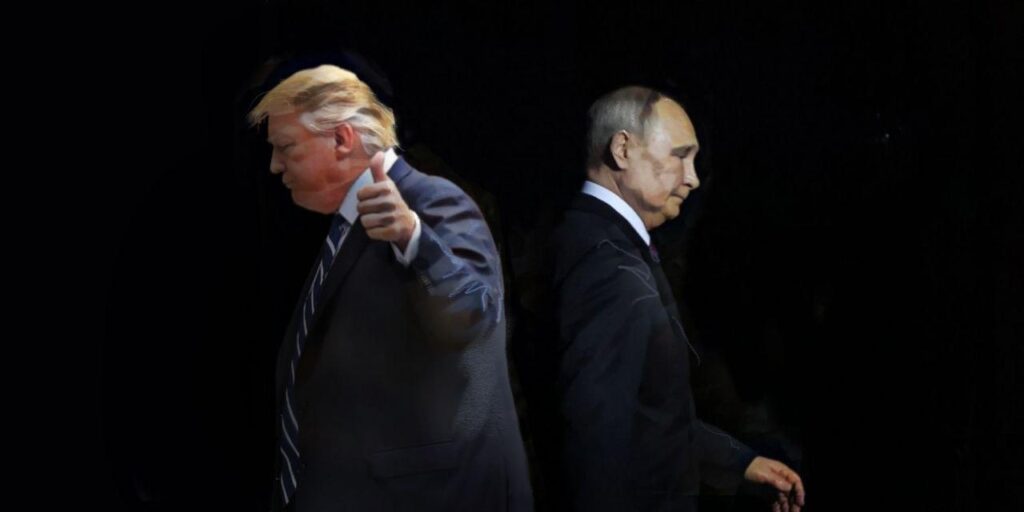
Kazakhstan has praised Russian President Vladimir Putin and U.S. President Donald Trump for their meeting in Alaska, describing it as “the beginning of high-level negotiations on the situation in Ukraine.” President Kassym-Jomart Tokayev “regards the summit as a historic event, made possible by the political will and sincere determination of both leaders to seek common approaches to resolving contemporary global challenges, including the cessation of hostilities in Ukraine,” Tokayev´s press secretary, Ruslan Zheldibay, said on X on Saturday. Tokayev’s statement generally aligned with the positive statements made by Putin and Trump after their meeting on Friday, even though the two leaders provided few details about how they envisioned resolving the conflict when they spoke briefly to the media after their discussion. Ukraine and its European allies have been concerned that Trump could favor Putin’s terms for ending the war, leaving Ukraine vulnerable to renewed Russian pressure in the future. Ukrainian President Volodymyr Zelenskyy is expected to meet Trump at the White House on Monday. In a Truth Social post on Saturday, Trump appeared to back away from his previous demand for a Ukraine-supported ceasefire, saying it was better to “go directly to a Peace Agreement, which would end the war, and not a mere Ceasefire Agreement, which often times do not hold up.” Despite their concerns, European leaders have welcomed Trump’s negotiation efforts, noting a statement by the U.S. president that the United States “is prepared to give security guarantees” so that Ukraine can defend its sovereignty. “It will be up to Ukraine to make decisions on its territory. International borders must not be changed by force,” a joint statement by European leaders said. Kazakhstan is not directly involved in negotiations over Ukraine, but it has become an intermittent venue for international diplomacy and has offered to assist as needed since it maintains ties with both Russia and Ukraine. Tokayev has spoken in support of Ukraine’s sovereignty and territorial integrity. But in a phone call a week ago, Tokayev told Zelenskyy that “A bad peace is better than a good war,” possibly a pitch to the Ukrainian leader to consider concessions such as giving up territory in order to preserve the country’s independence. Russia occupies an estimated 20% of Ukraine and has made gains in eastern Ukraine in recent days. At least publicly, Zelenskyy has opposed the idea of giving up territory, saying the Ukrainian constitution prevents him from doing so. On Saturday, he said on X: “A real peace must be achieved, one that will be lasting, not just another pause between Russian invasions.” Kazakhstan, which has sought neutrality over the war, shares a long land border with Russia and has closer trade and diplomatic ties with Moscow than Kyiv. Since Russia’s full-scale invasion of Ukraine in February 2022, Tokayev has spoken to Zelenskyy several times in phone calls that, according to Kazakhstan’s presidency, were initiated by the Ukrainian side. Tokayev has spoken to Putin by phone on more than twice as many occasions and has also met the Russian...

Trump-Putin Alaska Summit Ends Without Ceasefire

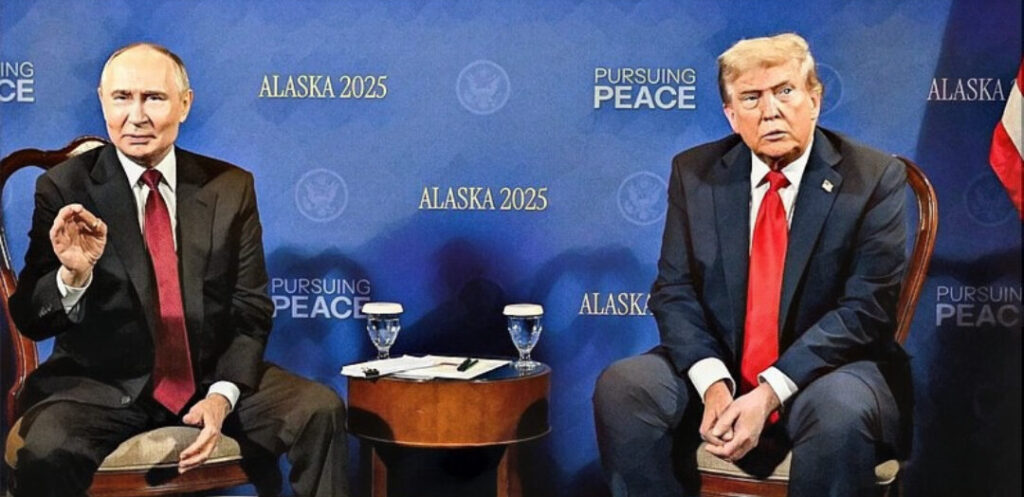
U.S. President Donald Trump and Russian President Vladimir Putin met on Friday in Alaska for their first face-to-face summit since the start of the Ukraine war. Despite optimism from the U.S. side, the talks ended without an agreement on a ceasefire. The leaders met for nearly three hours at Joint Base Elmendorf-Richardson in Anchorage, following a red-carpet welcome and military flyover. Only a handful of aides joined the private session. Afterward, Trump called the exchange “extremely productive” and said “some headway” had been made, but stressed that “there’s no deal until there’s a deal.” Putin described “progress” and “agreements,” though neither leader offered specifics, and neither took questions. No Ceasefire, Continued Dialogue Ending Russia’s invasion of Ukraine dominated the agenda. Trump had vowed to bring the war to a close quickly, but the Alaska talks produced no ceasefire. Ukrainian officials noted that Putin appeared to have “bought more time” as fighting continues. Air raid sirens sounded in Ukraine, and Russian border regions came under drone attack even as the summit unfolded. Having previously said on the way to his summit with Russian President Vladimir Putin that he wouldn’t “be happy if I walk away without some form of a ceasefire,” U.S. President Donald Trump walked away from the talks with no agreement in place, instead urging Ukrainian President Volodymyr Zelenskyy to “make a deal.” “I believe we had a very productive meeting,” Trump stated. “There were many, many points that we agreed on… I will call up NATO… I’ll of course call up President Zelenskyy and tell him about today’s meeting… We really made some great progress… I’ve always had a fantastic relationship with President Putin – with Vladimir…We were interfered with by the ‘Russia, Russia, Russia’ hoax,” he added. “Again, Mr. President, I’d like to thank you very much, and we’ll speak to you very soon and probably see you again very soon,” Trump said. “Thank you very much, Vladimir.” “Next time in Moscow,” Putin replied, chuckling, with a rare use of English, before Trump abruptly ended his press event, refusing to take any questions. Both leaders said the dialogue would continue. Trump claimed he and Putin agreed on “most things” and floated the idea of joining a future meeting between Putin and Ukrainian President Volodymyr Zelenskyy. Putin, while not referencing direct talks with Kyiv, urged Ukraine and its allies not to “derail” what he called constructive progress. Signals from Washington and Moscow Trump emphasized his desire to stop the fighting, stating, “I want the killing to stop,” and suggested he believed Putin wanted peace as well. He also said he would hold off on imposing new “severe” measures on Russia, a shift from earlier rhetoric. Trump also revealed that he would pause plans to levy tariffs on Chinese imports over Beijing’s purchases of Russian oil, saying progress in Alaska made that step unnecessary for now. Putin, meanwhile, repeated his long-standing demands that NATO expansion and other “root causes” be addressed before peace can be achieved. He warned that...

Ending the War: Tokayev and Zelenskyy Talk Ahead of Trump-Putin Meeting in Alaska

“A bad peace is better than a good war.” That was the advice from Kazakh President Kassym-Jomart Tokayev to Ukrainian President Volodymyr Zelenskyy in a phone call on Sunday in which the two leaders discussed prospects for a resolution to the war between Russia and Ukraine.  Whether Zelenskyy agreed with Tokayev’s comment is open to question. In a readout of the conversation from the Ukrainian presidency, he used other adjectives to describe the kind of peace that Ukraine wants –“reliable” and “real.”  The talk happened ahead of a meeting in Alaska on Friday between U.S. President Donald Trump and Russian President Vladimir Putin that Ukraine fears could leave it left out of deliberations and provide momentum for an end to the conflict on Russia’s terms.  Tokayev told Zelenskyy that Kazakhstan has advocated for a solution that adheres to the United Nations Charter and respects “the inviolability of the borders of sovereign states, and the territorial integrity of sovereign states.” While that statement implies criticism of the current state of affairs, in which Russia occupies an estimated 20 percent of Ukrainian territory, Tokayev also appeared to suggest that Ukraine should be prepared to make difficult compromises over territory because its independence as a nation was on the line.    “In his view, given the current highly complex situation, it is essential to approach the resolution of the conflict with balance and reason, ensuring the preservation and protection of Ukraine’s statehood,” Kazakhstan’s presidential office said. “He stressed that all parties should be guided by the wisdom that ´a bad peace is better than a good war.´” Tokayev stirred some debate last year when he said that Russia was too strong to be defeated on the battlefield. Critics interpreted the remark as defeatism in the face of Russian aggression, while others thought it was a blunt assessment of the war. Kazakhstan and other Central Asian countries have tried to be neutral in the conflict, not endorsing the Russian invasion but maintaining traditional ties with Moscow. The Ukrainian presidency said Zelenskyy, in remarks to Tokayev, “noted that attempts to partition any independent state are extremely dangerous for every nation. History has repeatedly shown that if such injustice is allowed against one state, it does not end there.” While Zelenskyy has ruled out territorial concessions to Russia, a poll conducted by the Kyiv International Institute of Sociology in May and June explored the nuance of the topic in a population that is both defiant and weary after years of war. The results show that “the only option where there is at least room for discussion is de facto recognition of Russian control without de jure recognition,” according to the institute.   Zelenskyy invited Tokayev to visit Ukraine, according to the Ukrainian presidency. The Kazakh statement didn’t mention the invitation. 

Zelensky Steps Up Claims of Uzbek and Tajik Citizens Fighting for Russia in Ukraine

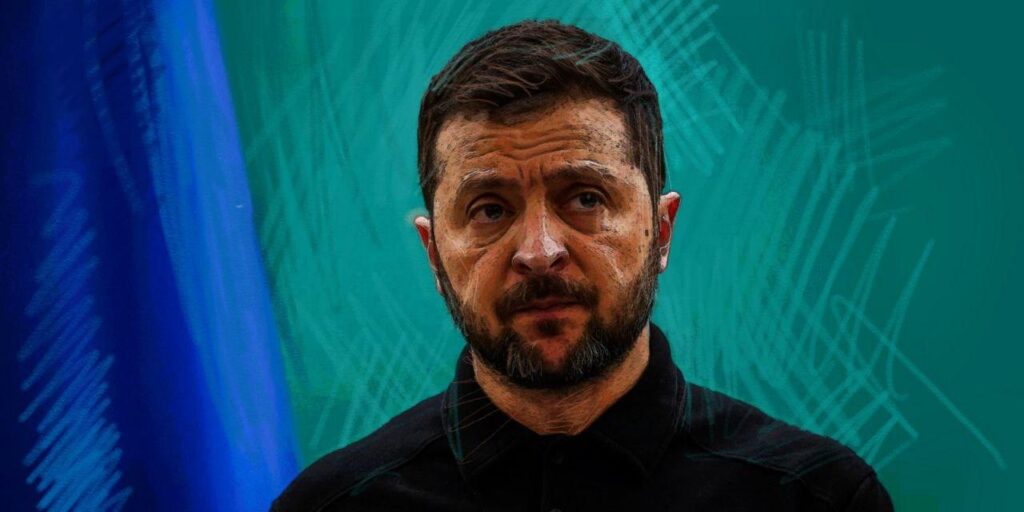
Ukrainian President Volodymyr Zelensky has claimed that citizens of Uzbekistan and Tajikistan are among foreign fighters serving in the Russian army in Ukraine. The statement was made on August 4 via his official Telegram channel, following a visit to the 17th Separate Motorized Infantry Battalion in the northern city of Vovchansk, Kharkiv region. “Today I was alongside those defending our country on the Vovchansk front the soldiers of the 17th Separate Motorized Infantry Battalion of the 57th Brigade named after Kostiantyn Hordiienko,” Zelensky wrote. “We spoke with commanders about the situation on the front line, the defense of Vovchansk, and the dynamics of the fighting. Soldiers on this front are recording the participation of mercenaries from China, Tajikistan, Uzbekistan, Pakistan, and several African countries. We will respond.” During the visit, Zelensky also discussed issues related to drone supplies, recruitment, and direct funding for brigades. He awarded service medals to Ukrainian troops and stated: “It is an honor for me to be here. Thank you for fighting, serving your state, the Ukrainian people, and supporting one another.” However, independent verification of these claims is limited. In some cases, reports suggest a different dynamic: in May, Alexander Bastrykin, head of Russia’s Investigative Committee, stated that authorities had “tracked down 80,000” newly naturalized Russian citizens, many originally from Uzbekistan, Tajikistan, and Kyrgyzstan, who had tried to evade military service. Around 20,000 were reportedly sent to the front lines. These figures, while not independently verified, suggest that conscription, rather than voluntary enlistment or mercenary recruitment, may account for much of Central Asian involvement. The war continues to have a profound economic impact. Ukraine’s industrial production index dropped from 101.7% in December 2021 to 69.3% by December 2024. Trade between Ukraine and Central Asia has also declined sharply. Kazakhstan’s trade turnover with Ukraine fell from $5.5 billion in 2012 to just $391 million in 2023. Once Ukraine’s 15th-largest trading partner in 2021, Kazakhstan ranked 35th by the end of 2023.

Ukraine Eyes Central Asia: Can War-Weary Kyiv Forge New Regional Alliances?

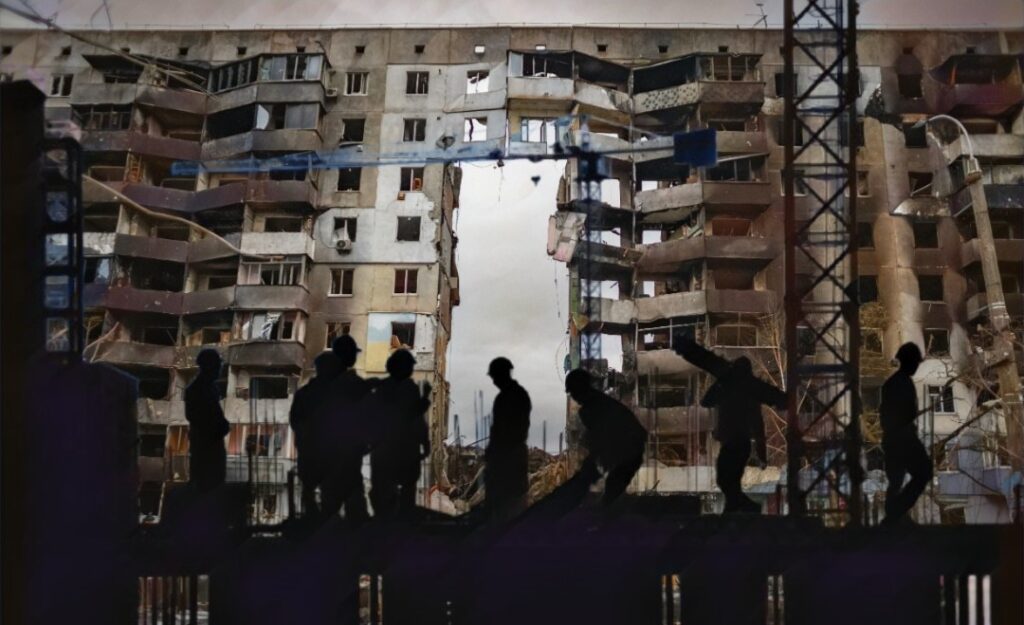
Despite the ongoing war with Russia, Ukraine is attempting to intensify its diplomatic and economic ties with Central Asia. Kyiv is seeking the region’s de facto political support against Moscow, and aiming to rebuild trade relations with the former Soviet republics. But how do the Central Asian nations view Ukraine’s regional ambitions? Ukraine’s Ministry of Foreign Affairs has recently launched a new department focused on Central Asia – a region that has traditionally been in Russia’s zone of influence. The move comes as no surprise, given that Kyiv is also actively seeking to make diplomatic inroads in Africa, a continent where the Kremlin harbors significant geopolitical ambitions. But unlike in Africa, which represents relatively new ground for Ukraine — and where it struggles to compete with Russia’s growing influence — Kyiv appears to be in a stronger position in Central Asia. Ukraine and the countries of Central Asia share a common Soviet past, which has left its mark on their relations in various areas, including the economy, culture, and education. A Ukrainian diaspora also lives in all of the Central Asian states and serves as an important link between the nations. That, however, does not mean that Kyiv’s diplomatic initiative will go flawlessly. Besides the ongoing war, geography is one of the biggest obstacles to Ukraine’s efforts to increase its presence in Central Asia. As a result of the conflict, the Eastern European nation can no longer use its old transport and trade routes to Central Asia through Russia. Since 2022, trade between Ukraine and the regional countries has dropped significantly, as sending goods back and forth has become more expensive. To bypass Russian territory, products from Ukrainian manufacturers are now transported to Central Asia through countries such as Romania, Bulgaria, Turkey, Azerbaijan, and Georgia. Although these routes are functional, their profitability remains questionable. Moreover, statistics show that Ukraine’s industrial production index collapsed from 101.7% in December 2021 to 69.3% in December 2024, which is why the war-torn nation is no longer among Central Asia’s major trading partners. In 2012, long before the war, trade turnover between Ukraine and Kazakhstan – Central Asian largest economy – amounted to $5.5 billion, while in 2023 it was only $391 million. At the end of 2023, Ukraine ranked 35th in Kazakhstan’s list of trading partners, while before the war, in 2021, it was the energy-rich nation’s 15th largest trade partner. Economic ties between Ukraine and Kyrgyzstan are faring no better. According to Idris Kadyrkulov, Kyrgyzstan’s Ambassador to Ukraine, trade between the two countries has “mostly stopped” because many Ukrainian businesses have been hurt by the war, and shipping goods between Ukraine and Kyrgyzstan has become “at least three times more expensive than before the Russian invasion.” That is why, under the current circumstances, strengthening economic ties between Ukraine and the Central Asian states does not seem realistic. Fully aware of this, Kyiv is counting on the regional nations’ economic support in the post-war era – an area in which Kazakhstan has already shown...

Central Asian Migrants Coerced Into Russia’s War in Ukraine

Citizens of Central Asian countries, including Uzbekistan and Tajikistan, are increasingly being coerced into joining Russia’s war effort in Ukraine, according to a recent statement from Ukraine’s military intelligence agency. Many of those affected are labor migrants who originally traveled to Russia for work but were later pressured or misled into signing military contracts. Reports suggest that Russian army representatives have been enticing migrants with promises of fast money through short-term enlistment. In practice, however, many of these so-called “volunteers” are deployed to the most dangerous front-line positions. Ukraine’s Defense Intelligence claims most do not survive. Among the recently reported casualties were nationals from Uzbekistan and Tajikistan who had enlisted earlier this year. Ukraine's warning also highlights the legal risks facing survivors. Returning home after fighting in a foreign conflict can expose them to criminal charges and potentially long prison sentences under national laws that prohibit participation in overseas military operations. Russian officials have also acknowledged the recruitment of migrants. Alexander Bastrykin, head of Russia’s Investigative Committee, stated during a legal forum in St. Petersburg that his office had identified around 80,000 individuals who received Russian citizenship but then attempted to evade military service. Of those, approximately 20,000 are currently serving on the front lines in Ukraine, according to Bastrykin. As of September 2024, Russia hosted nearly four million citizens from Central Asia. Uzbekistan accounted for the largest share with an estimated 1.79 million migrants, followed by Tajikistan and Kazakhstan. While some migrants sign military contracts out of economic desperation, others reportedly face coercion, threatened with the loss of citizenship or imprisonment for avoiding conscription. The practice of deploying foreign labor migrants to the battlefield has caused mounting concern across Central Asia. Families fear for the fate of relatives drawn into a distant and escalating conflict, often without clear legal protection or state support.