• KGS/USD = 0.01144 0%
  • KZT/USD = 0.00190 -0%
  • TJS/USD = 0.10837 0.37%
  • UZS/USD = 0.00008 0%
  • TMT/USD = 0.28571 0%
  • KGS/USD = 0.01144 0%
  • KZT/USD = 0.00190 -0%
  • TJS/USD = 0.10837 0.37%
  • UZS/USD = 0.00008 0%
  • TMT/USD = 0.28571 0%
  • KGS/USD = 0.01144 0%
  • KZT/USD = 0.00190 -0%
  • TJS/USD = 0.10837 0.37%
  • UZS/USD = 0.00008 0%
  • TMT/USD = 0.28571 0%
  • KGS/USD = 0.01144 0%
  • KZT/USD = 0.00190 -0%
  • TJS/USD = 0.10837 0.37%
  • UZS/USD = 0.00008 0%
  • TMT/USD = 0.28571 0%
  • KGS/USD = 0.01144 0%
  • KZT/USD = 0.00190 -0%
  • TJS/USD = 0.10837 0.37%
  • UZS/USD = 0.00008 0%
  • TMT/USD = 0.28571 0%
  • KGS/USD = 0.01144 0%
  • KZT/USD = 0.00190 -0%
  • TJS/USD = 0.10837 0.37%
  • UZS/USD = 0.00008 0%
  • TMT/USD = 0.28571 0%
  • KGS/USD = 0.01144 0%
  • KZT/USD = 0.00190 -0%
  • TJS/USD = 0.10837 0.37%
  • UZS/USD = 0.00008 0%
  • TMT/USD = 0.28571 0%
  • KGS/USD = 0.01144 0%
  • KZT/USD = 0.00190 -0%
  • TJS/USD = 0.10837 0.37%
  • UZS/USD = 0.00008 0%
  • TMT/USD = 0.28571 0%
06 November 2025

Viewing results 1 - 6 of 13

Afghanistan Absent, Not Forgotten – Central Asia’s UNGA Strategy

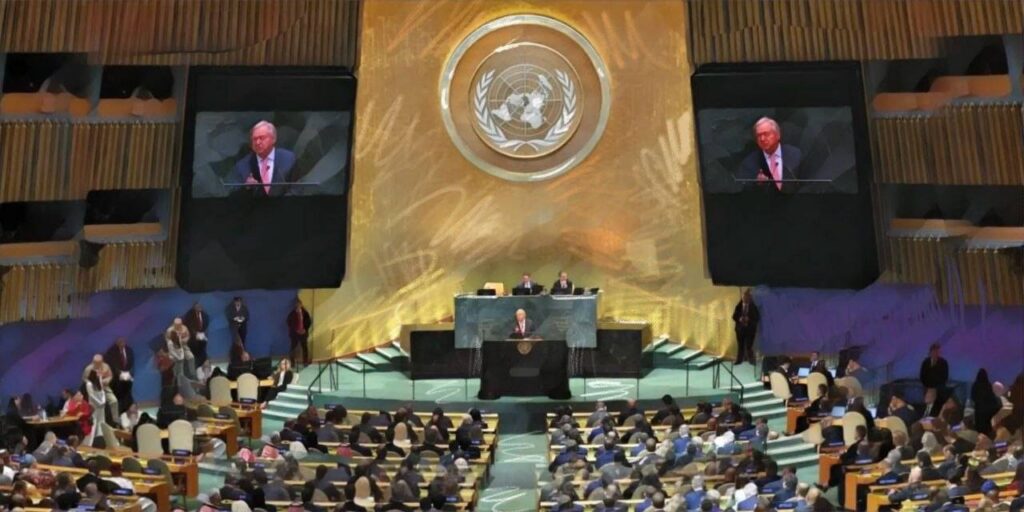
From September 23–29, 2025, the UN General Assembly’s general debate unfolded without an Afghan delegation addressing those assembled amid the unresolved UN seat issue. Yet Afghanistan was hardly absent. Central Asian presidents used their platform to project a collective stance that stopped short of recognition while rejecting isolation. Their message reflected a regional doctrine of managed engagement: keep the neighbor connected enough to limit collapse, through corridors, energy grids, and humanitarian channels. President Shavkat Mirziyoyev of Uzbekistan offered the clearest blueprint, urging the international community to “prevent [Afghanistan’s] isolation,” and calling for support to develop transport and energy corridors across Afghan territory. That language aligns with initiatives already underway: a multilateral framework signed in Kabul on July 17 to move the Trans-Afghan railway toward feasibility, and fresh agreements on the 500 kV Surkhan–Pul-i-Khumri line designed to stabilize Afghanistan’s power supply while linking it to a regional grid. Mirziyoyev’s message was a bid to convert geography into risk management. Kazakhstan struck a technocratic note. Kassym-Jomart Tokayev told the Assembly that “inclusive development in Afghanistan” is the basis for long-term regional peace and stability. This phrasing matches Almaty’s UN-backed hub for the Sustainable Development Goals and Astana’s self-image as the region’s administrative center. The goal is to stabilize the weakest link so trade and transit do not fracture. Kyrgyz President Sadyr Japarov used part of his brief UN address to demand that roughly $9 billion in Afghan central-bank assets frozen in Western jurisdictions be returned to “the Afghan people,” and called isolation “unacceptable.” In a remittance-dependent economy like Kyrgyzstan’s, collapse next door risks hunger, displacement, and crime. His remarks were both moral and practical, and marked the sharpest public challenge to Western policy voiced by any Central Asian leader this week. Traditionally, Tajikistan has taken the hardest line on the Taliban. This time, Emomali Rahmon emphasized humanitarian assistance, citing drought-hit regions and areas devastated by the August 31 eastern Afghanistan earthquake, and said Dushanbe supports peace, stability, and socio-economic development next door. The quake killed more than 2,000 people and destroyed thousands of homes across Kunar, Nangarhar, and Laghman just as aid budgets were shrinking. Turkmenistan took a different approach. President Serdar Berdimuhamedov did not mention Afghanistan, instead promoting Ashgabat’s permanent neutrality as a proposed UN agenda item, “Neutrality for Peace and Security,” along with broad transport and energy initiatives. This approach preserved flexibility on projects like TAPI without committing to specifics in New York. What makes these speeches consequential is how closely they mirror work on the ground. The Trans-Afghan railway, long dismissed as only a plan, now has a political framework and a declared security pledge from Kabul. Whether it moves forward depends on both capital and security, but for Tashkent, a southern outlet to Pakistani ports is the difference between landlocked and land-linked. The Surkhan–Pul-i-Khumri line is more conventional and urgent: a 200-kilometer fix to keep the lights on and the revenues flowing. The long-troubled CASA-1000 power corridor is also inching back into view after being paused post-2021, with...

After New York, a Shake-Up in Astana: Tokayev Resets His Foreign Policy Team

At the end of last week, the most talked-about news in Kazakhstan was the latest reshuffle in the upper echelons of government. Just one day after returning from New York, where he participated in the UN General Assembly, President Kassym-Jomart Tokayev began issuing personnel decrees resulting in the dismissals and appointments of high-level foreign and trade policy officials. Murat Nurtleu left his position of Deputy Prime Minister and Minister of Foreign Affairs and was reassigned as Assistant to the President for International Investment and Trade Cooperation. Nurtleu navigated a turbulent regional environment marked by the Russia–Ukraine war, which destabilized trade routes and supply chains, and emphasized building broader alliances with China while balancing ties with Russia, the U.S., and other partners. In his new post, the president has tasked Nurtleu with advancing Kazakhstan’s foreign investment and trade cooperation, refocusing his mandate squarely on securing economic gains from diplomacy. Yermek Kosherbayev was appointed as the incoming Foreign Minister. He was most recently Deputy Prime Minister and is a career diplomat and administrator, having also held senior posts in the Foreign Affairs and Agriculture ministries. President Tokayev has tasked him with reinforcing a balanced foreign policy, expanding economic diplomacy, deepening multilateral engagement, and strengthening the protection of citizens abroad. The former Assistant to the President for International Affairs, Yerzhan Kazykhan, was reappointed as Kazakhstan’s Permanent Representative to the UN in Geneva. A seasoned diplomat and ex–foreign minister, Kazykhan coordinated Tokayev’s international outreach with the U.S., EU, and OSCE. His posting to Geneva - where debates on human rights, trade, and security are shaped - signals Astana’s trust in a heavyweight envoy. He succeeds Yerlan Alimbayev, who has been in the post since 2022. Yerzhan Ashikbayev was recalled as Ambassador to the United States after more than four years in Washington. His tenure was defined by efforts to deepen political and economic ties, including advancing the U.S.–Kazakhstan Enhanced Strategic Partnership Dialogue, supporting the first C5+1 leaders’ summit and Critical Minerals Dialogue, and expanding cooperation through the U.S.–Kazakhstan Strategic Energy Dialogue. Beyond the personnel changes themselves, observers quickly began parsing what the reshuffle reveals about Tokayev’s foreign policy priorities. As is customary in Kazakhstan, no official comments were offered on the reshuffle in Akorda. Nevertheless, speculation quickly spread across social media, with journalists and bloggers debating the implications throughout the weekend. Political scientist Gaziz Abishev framed Murat Nurtleu’s reassignment as shifting him from foreign policy towards the execution of the investment–trade agenda. Abishev noted that the “additional responsibilities for working with the investment bloc… which Nurtleu held as deputy prime minister, will go with him to the Presidential Administration,” narrowing his focus to delivery rather than strategy. This interpretation was later reinforced in more formal terms by the Presidential Administration’s spokesman, who explained that in his new post, Nurtleu “will develop contacts with representatives of foreign states at the highest level, as well as heads of major foreign companies, in order to accelerate the promotion of international investment and trade cooperation.” Analyst Andrei Chebotarev suggested...

Uzbekistan and Ukraine Pledge to Strengthen Ties During UN Assembly Meeting

Uzbekistan’s Foreign Minister Bakhtiyor Saidov met with his Ukrainian counterpart Andrii Sybiha on the sidelines of the UN General Assembly, Saidov announced via his official Telegram channel. According to Saidov, the ministers discussed a broad range of issues, including trade, investment, education, cultural exchange, and multilateral cooperation within international organizations. “Our meeting reaffirmed the mutual commitment of Uzbekistan and Ukraine to deepen dialogue, strengthen partnership, and explore new opportunities that will benefit our peoples,” Saidov wrote. Sybiha also confirmed the outcome of the talks on X, stating: “I was sincerely glad to meet with Bakhtiyor Saidov at UNGA. We agreed to resume political dialogue and enhance bilateral and multilateral cooperation in areas of mutual interest. Ukraine is committed to developing relations with Uzbekistan and strengthening ties with Central Asia.” The meeting took place amid recent reports in Ukrainian media that 13 Uzbek citizens had been subjected to forced labor at a greenhouse in the Kyiv region. Following these reports, officials from Uzbekistan’s embassy in Ukraine visited the site and later confirmed that the case was under full consular control. In response, the embassy issued official notes to Ukraine’s Foreign Ministry and Prosecutor General’s Office, demanding legal protection for the affected citizens. The embassy stated that a criminal case had been opened, suspects were facing trial, and measures were being taken to repatriate the workers. It emphasized that consular and legal support was ongoing, and that the rights and interests of Uzbek nationals remained a top priority.

Kazakhstan Recasts Its Foreign Policy at the United Nations

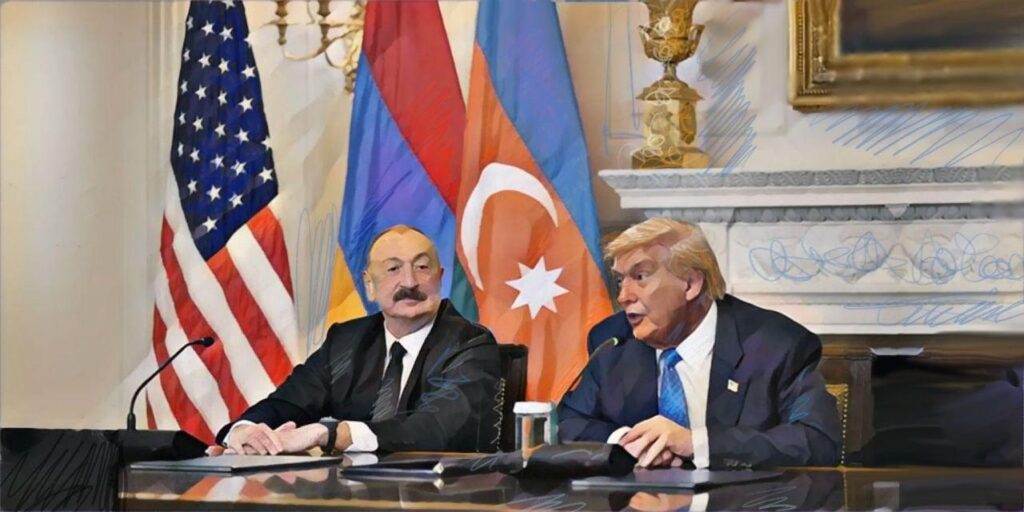
Several days ago I argued here that Kazakhstan’s diplomacy had begun to try to move from survival-mode balancing into a more entrepreneurial phase, testing its accumulated diplomatic capital on the world stage. President Kassym-Jomart Tokayev’s September 24, 2025, speech to the United Nations General Assembly confirms this. It was a statement of intent, marking a departure from decades of careful multivectorism toward a doctrine of initiative and responsibility. The speech sought to anchor a claim that Kazakhstan is not only balancing among vectors but weaving them into a systemic position of leverage to support active participation in the agenda-setting of global affairs. The multivector line, crafted under Nazarbayev, kept Moscow, Beijing, and Western capitals equidistant during a period when Kazakhstan’s priority was survival and gradual integration. The price of that prudence was that the distinct voice that Astana was trying to cultivate could not be heard. The country appeared more like a venue for great-power competition rather than an autonomous actor in favor of its own interests. On the UNGA stage, Tokayev did not abandon the old formula outright. Instead, he pressed it into service as a platform for what he called “bridge building,” but which looks in practice like a bid to shape the rules of the international order, instead of merely accommodating them. Railways, Corridors, and Diplomacy in Motion Tokayev declared to the Assembly: “Kazakhstan today carries eighty percent of all overland freight between Asia and Europe. By 2029, we will build five thousand kilometers of new railway to strengthen the Middle Corridor.” These words accompanied the announcement, only a few days before, of a multibillion-dollar deal with the American company Wabtec for the purchase of three hundred locomotives over ten years. Timed with his UN appearance itself, the announcement highlighted Tokayev's view of infrastructure as diplomacy. In systems terms, railways are not discrete projects but nodes in a meso-level build-out capable of reconfiguring macro-level flows. By embedding a commercial contract into the theater of UNGA, Tokayev gave it a transformational headline. The “Middle Corridor” now functions in two registers. In one, it is freight tonnage, Caspian ferry capacity, Azerbaijan–Georgia transit. In the other, it is a political instrument. Only weeks before UNGA, Astana hosted talks that facilitated the U.S.-backed Armenia–Azerbaijan declaration. By enabling that dialogue, Kazakhstan projected itself into the South Caucasus as an intermediary claiming credibility with both sides. Hosting the South Caucasus dialogue projected Astana's view of itself as a systems-level creator of interdependence at the infrastructural level. From there, the loop feeds back to the structuration of political behavior. Economically, Kazakhstan remains the only Central Asian state with diversified sources of foreign direct investment (FDI). The Netherlands and the United States together still outpace China and Russia in cumulative FDI. Uzbekistan, despite rising visibility, remains structurally dependent on its two large neighbors. By contrast, Astana uses diversification to demonstrate optionality. The locomotive deal is one example; the C5+1 dialogues with Washington are yet another. Reforming the Global Order Tokayev spoke about a “crisis of...

From Reform to Deals: Central Asia Steps Onto the Global Stage at UNGA-80

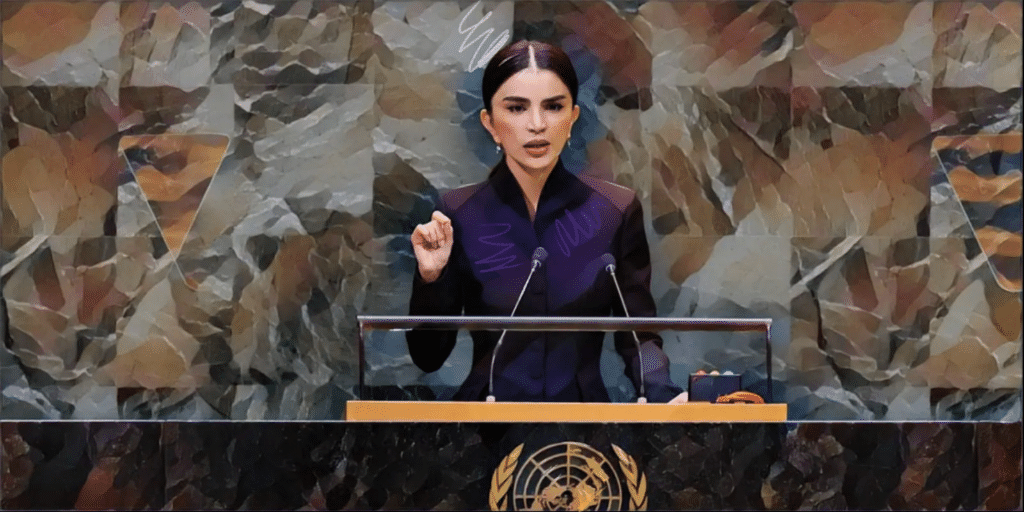
Ecology, global instability, and the need for UN reform dominated the speeches of all five Central Asian presidents at the 80th session of the UN General Assembly. Presenting a united front while emphasizing national priorities, the leaders made clear that Central Asia intends to play a pivotal role in shaping the global future. UN Reform Kazakh President Kassym-Jomart Tokayev was the first among the CIS leaders to address the assembly, speaking of a growing crisis of trust in multilateral institutions and calling for sweeping reforms. Tokayev emphasized the need to expand the UN Security Council, arguing that major powers from Asia, Africa, and Latin America must receive rotational representation, and that the influence of middle powers should be strengthened. “We need to create a new group of like-minded states that will professionally and decisively advance concrete proposals for reforming the UN so that it better responds to today’s challenges and tomorrow’s tasks,” he said, proposing Kazakhstan as a platform for these discussions. Uzbek President Shavkat Mirziyoyev echoed these concerns, highlighting the weakening of international institutions and the proliferation of global conflicts. He endorsed UN Secretary-General António Guterres’ UN-80 initiative and voiced support for the Pact for the Future, which sets out commitments to strengthen multilateral cooperation and address global challenges through 2045, the UN’s centenary. Mirziyoyev also advocated for an expanded Security Council to better represent developing countries. In his address, Kyrgyz President Sadyr Japarov called for a more just and representative Security Council, underscoring Africa’s right to greater participation. He also announced Kyrgyzstan’s candidacy for a non-permanent seat on the Security Council for 2027-2028, noting that his country has never before held such a position. Tajik President Emomali Rahmon warned of growing instability, uncertainty, and complexity in world affairs. Rahmon stressed the UN’s role as a platform for dialogue and cooperation and called for equal partnerships between large and small states to restore adherence to international law. Turkmen President Serdar Berdimuhamedov argued that the current global situation requires a "decisive shift toward coordinated interaction among states and international organizations to maintain peace and security.” He proposed declaring 2028 the Year of International Law to strengthen the legal foundations of global cooperation. Ecology and Finance On environmental issues, the Central Asian leaders focused on national and regional concerns. Tokayev addressed the ongoing shallowing of the Caspian Sea, while both he and Mirziyoyev raised the issue of the Aral Sea crisis, often described as "one of the world’s worst environmental disasters." Rahmon highlighted the rapid disappearance of glaciers, a point supported by Japarov, given the critical dependence of Kyrgyzstan and Tajikistan on mountain water resources. Berdimuhamedov, meanwhile, proposed establishing a regional center for combating desertification in Central Asia. Other initiatives included the proposed Caspian Environmental Forum in 2026 and continued advancement of the Caspian Environmental Initiative, originally introduced by Ashgabat. Financial concerns were also prominent. Rahmon called for reforms to international financial mechanisms, citing the continued suffering of vulnerable developing countries from the impacts of economic crises, poverty, disease, natural disasters,...

Billion-Dollar Agreements and a Boeing Deal: Inside Mirziyoyev’s Visit to New York

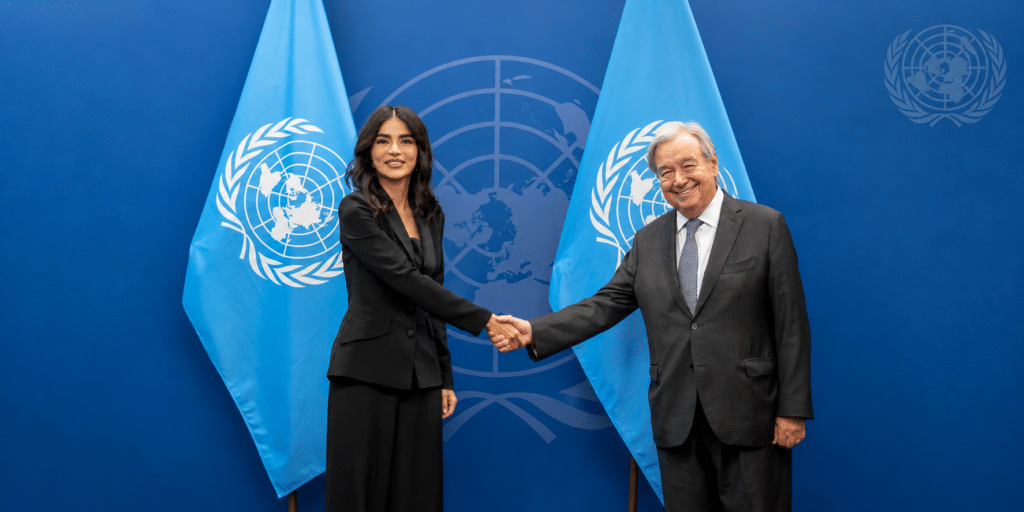
On September 20, President of Uzbekistan Shavkat Mirziyoyev arrived in New York to participate in events marking the 80th session of the UN General Assembly. At John F. Kennedy Airport, he was welcomed by Paolo Zampolli, Special Envoy of the U.S. President for Global Partnerships, Carolyn Lamm, Chair of the American-Uzbekistan Chamber of Commerce, and other officials. Finance and Critical Minerals Cooperation On September 22, Mirziyoyev held a series of high-level meetings with executives from leading corporations and international institutions. Uzbekistan is seeking to position itself as a reliable supplier in the global critical minerals chain. With reserves of copper, gold, uranium, and rare earths, officials have prioritized foreign partnerships to accelerate exploration and processing capacity, while also ensuring environmental and governance standards are met. In talks with IMF Managing Director Kristalina Georgieva, the two sides discussed expanding cooperation on monetary policy, statistical reform, and educational programs. Georgieva commended Uzbekistan’s economic reforms and reaffirmed the Fund’s support. A $1 billion package of initiatives was finalized with Traxys, the Colorado School of Mines, FLSmidth, McKinsey, and Go Green Partners. These projects focus on critical minerals mining and processing, alongside the creation of a Competence Center in Uzbekistan. Discussions with BlackRock board member Adebayo Ogunlesi centered on establishing a joint infrastructure fund. With Citigroup Chairman John Dugan, the president addressed IPOs of state-owned enterprises, Eurobond issuance, and trade finance mechanisms. Franklin Templeton CEO Jenny Johnson confirmed agreements related to the transformation of state-owned companies and the development of the Tashkent Stock Exchange. President Brian Friedman of the New York-based global investment banking and capital markets firm, Jefferies, meanwhile, expressed interest in helping attract strategic investors to Uzbekistan’s National Investment Fund. Franklin Templeton’s management of Uzbekistan’s $1.7 billion National Investment Fund signals growing trust in U.S. asset managers. Meanwhile, Jefferies’ potential involvement in attracting strategic investors highlights the rising role of global capital markets in Uzbekistan’s privatization and modernization agenda. NASDAQ CEO Adena Friedman discussed the modernization of the Tashkent Stock Exchange and the introduction of a government bond trading platform. Oppenheimer Holdings CEO Robert Lowenthal pledged support for Uzbekistan’s private sector and participation in Eurobond issuance. [caption id="attachment_36462" align="aligncenter" width="1280"] Image: president.uz[/caption] Strategic Agreements Signed A signing ceremony was held in the presence of President Mirziyoyev and U.S. Presidential Special Envoy Sergio Gor. Agreements were exchanged with Boeing, FLSmidth, Cleveland Clinic, Citigroup, Cargill, Pangea Filtration Technology, SLB, Biologic International, and others. During a meeting with WTO Director-General Ngozi Okonjo-Iweala, Mirziyoyev reaffirmed Uzbekistan’s commitment to aligning its legislation with international standards, with the goal of completing WTO accession by 2026. Uzbekistan’s WTO accession is being closely watched in Central Asia, as its success could set a precedent for other countries still outside the organization. For investors, WTO membership would mean greater legal predictability and integration into global trade frameworks. The president also met with Air Products CEO Eduardo Menezes. The company has already invested over $1 billion in Uzbekistan, with projects at the GTL plant, Ferghana Refinery, and “Navoiazot.” Both parties agreed to...