• KGS/USD = 0.01144 0%
  • KZT/USD = 0.00207 0%
  • TJS/USD = 0.10463 0%
  • UZS/USD = 0.00008 0%
  • TMT/USD = 0.28490 0%
  • KGS/USD = 0.01144 0%
  • KZT/USD = 0.00207 0%
  • TJS/USD = 0.10463 0%
  • UZS/USD = 0.00008 0%
  • TMT/USD = 0.28490 0%
  • KGS/USD = 0.01144 0%
  • KZT/USD = 0.00207 0%
  • TJS/USD = 0.10463 0%
  • UZS/USD = 0.00008 0%
  • TMT/USD = 0.28490 0%
  • KGS/USD = 0.01144 0%
  • KZT/USD = 0.00207 0%
  • TJS/USD = 0.10463 0%
  • UZS/USD = 0.00008 0%
  • TMT/USD = 0.28490 0%
  • KGS/USD = 0.01144 0%
  • KZT/USD = 0.00207 0%
  • TJS/USD = 0.10463 0%
  • UZS/USD = 0.00008 0%
  • TMT/USD = 0.28490 0%
  • KGS/USD = 0.01144 0%
  • KZT/USD = 0.00207 0%
  • TJS/USD = 0.10463 0%
  • UZS/USD = 0.00008 0%
  • TMT/USD = 0.28490 0%
  • KGS/USD = 0.01144 0%
  • KZT/USD = 0.00207 0%
  • TJS/USD = 0.10463 0%
  • UZS/USD = 0.00008 0%
  • TMT/USD = 0.28490 0%
  • KGS/USD = 0.01144 0%
  • KZT/USD = 0.00207 0%
  • TJS/USD = 0.10463 0%
  • UZS/USD = 0.00008 0%
  • TMT/USD = 0.28490 0%

Viewing results 1 - 6 of 42

Kazakhstan Maintains Diplomatic Balance Following Gaza Ceasefire

On Monday, the Palestinian group Hamas handed over the final 20 surviving hostages to Israel in a two-stage exchange, reportedly mediated with the involvement of Qatari representatives. By midweek, the outcome of the latest ceasefire attempt between Israel and Hamas may become clearer. On October 13, U.S. President Donald Trump addressed the Knesset in Israel, before traveling to Egypt for a summit. The hostages had been held for more than two years, mirroring the duration of Israel’s military campaign that has reverberated across the region. The two-stage exchange formed part of a broader ceasefire framework backed by the United States, Egypt, and Qatar. Washington has framed the deal as a cornerstone of its renewed Middle East peace initiative, which aims to establish a long-term truce and pave the way for gradual reconstruction in Gaza. Trump described the agreement as the "beginning of a new security architecture for the region,” though analysts caution that deep mistrust between the parties could still derail implementation. The ongoing war in the Middle East is impacting Kazakhstan, as it is across Central Asia. Anti-Israeli sentiment has grown in this majority-Muslim country, though the government continues to advocate for a balanced and diplomatic approach. For Astana, maintaining neutrality amid the polarized reactions to the war is not just a matter of diplomacy, but also a matter of regional stability. Kazakhstan’s leadership views itself as a potential bridge between Muslim-majority nations and Western partners, drawing on its history of multivector foreign policy. Officials stress that Astana’s engagement is guided by the principles of dialogue and international law rather than religious or ideological alignment. A Delicate Diplomatic Position Kazakhstan has consistently supported international peacekeeping efforts. On September 30, President Kassym-Jomart Tokayev backed Trump's Gaza peace plan, and on October 9, Tokayev welcomed the ceasefire agreement in the Gaza Strip and the release of hostages, as announced by his press secretary, Ruslan Zheldibay. Tokayev commended the mediation efforts of Egypt, Qatar, and Turkey, and acknowledged the contributions of the United States and President Trump in advancing peace negotiations in the region. Kazakhstan recognized the State of Palestine in 1992 and established diplomatic ties. While economic relations remain minimal, the recognition holds symbolic political significance. At the same time, Kazakhstan maintains relatively strong relations with Israel, with a notable volume of bilateral trade. The country's longstanding diplomatic stance emphasizes the principle of “two states for two peoples.” Bilateral trade between Kazakhstan and Israel exceeded $450 million in 2023, driven primarily by exports of Kazakh metals and imports of Israeli technology and agricultural products. Cooperation in water management, healthcare, and defense technologies has continued despite regional instability. Kazakh officials have also emphasized the importance of Israeli investment in innovation and renewable energy sectors. Kazakhstan's diplomatic position has been reiterated consistently. In November 2023, the Ministry of Foreign Affairs reaffirmed that the only sustainable solution to the conflict lies in the creation of two sovereign states. Amid intensified hostilities in October 2023, Israel imposed a blockade on Gaza. At that time, 76...

Uzbekistan Day on Capitol Hill Highlights Deepening Ties With the U.S.

On July 23, the U.S. Capitol hosted “Uzbekistan Day,” a significant event co-organized by the Congressional Uzbekistan Caucus to reaffirm growing ties between Uzbekistan and the United States. More than a hundred participants — including lawmakers, diplomats, officials from the State Department and Pentagon, business leaders, and journalists — gathered to engage with the Uzbek delegation and explore new areas for bilateral cooperation. The forum focused on Uzbekistan’s ongoing political and socio-economic reforms and its foreign policy vision centered on regional stability and international cooperation. A central priority discussed was Uzbekistan’s accession to the World Trade Organization (WTO), with officials framing it as a vital step to ensuring long-term reform and global market integration. U.S. Lawmakers Praise Reforms At the event, Congressman Trent Kelly, Co-chairman of the Caucus on Uzbekistan, praised President Shavkat Mirziyoyev’s leadership, stating, “I want to express my gratitude to President Shavkat Mirziyoyev. He is a bold reformer, a reliable partner, and a sincere friend of the U.S. Under his leadership, Uzbekistan is confidently moving along the path of change. Human rights are being strengthened, democratic institutions expanded, and opportunities for international cooperation opened. These achievements inspire all of us.” On a more personal note, Kelly added, “I have had the opportunity to visit Uzbekistan four times, and each visit left a deep impression on me. I was moved by the kindness of the Uzbek people, the richness of their cultural heritage, and the hospitality of your country. Music, cuisine, and deep traditions — all of this makes Uzbekistan truly unique… We will soon remove the Jackson-Vanik Amendment from our agenda because Uzbekistan is doing everything right and carrying out reforms,” he concluded. Senator Steve Daines, Co-chairman of the Caucus on Central Asia, described himself as a “sincere friend of Uzbekistan.” Reflecting on his March 2024 trip to Tashkent, he said, “I felt at home and among friends. This meeting strengthened my desire to continue supporting the Central Asian countries.” [caption id="attachment_34350" align="aligncenter" width="2560"] Montana Senator Steve Daines, Co-chairman of the Caucus on Central Asia[/caption] Congresswoman Carol Miller, also part of the March delegation, spoke of her personal connection to Uzbekistan’s heritage. “Uzbekistan, with its ancient history, has long aroused my professional interest, since I am a historian by education. The opportunity to see the country’s unique historical and cultural heritage in person was an invaluable experience.” Miller emphasized that, “The conversation took place in a trusting and open atmosphere. The topics raised during the meeting were not only relevant but also extremely promising from the viewpoint of the future development of Uzbek-American relations.” [caption id="attachment_34351" align="aligncenter" width="1020"] West Virginia Congresswoman Carol Miller[/caption] Miller underscored her commitment to concrete legislative goals: “The removal of the Jackson-Vanik Amendment regarding our country and support for Uzbekistan’s accession to the WTO are priority tasks. I am currently working closely with members of Congress to accelerate these issues.” Economic Cooperation and Business Confidence The event also featured remarks from American business leaders highlighting Uzbekistan’s economic potential. Peter Flanagan, Senior Vice President...

Uzbekistan Leads Central Asia in U.S. Visa Rejections in 2024

In 2024, the United States rejected 64.41% of B-1/B-2 visa applications submitted by citizens of Uzbekistan, the highest refusal rate among Central Asian countries, according to the U.S. State Department. B-1/B-2 visas are issued for short-term travel related to business and tourism. Uzbekistan has consistently topped the region in visa denials. In 2023, the rejection rate for Uzbek applicants stood at 59.56%. The trend reflects continued challenges faced by Uzbek travelers in securing U.S. entry permits. The refusal rates for other Central Asian countries in 2024 were also significant: Turkmenistan: 58.8% Kazakhstan: 46.29% Tajikistan: 45.24% Kyrgyzstan: 39.14% Similar patterns were observed in 2023, with Turkmenistan at 51.10%, Kazakhstan at 41.93%, Tajikistan at 54.96%, and Kyrgyzstan at 41.54%. Trade Volumes Remain Low Across the Region Trade between Central Asia and the United States remains limited. In 2024, Uzbekistan exported only $42.4 million worth of goods to the U.S., while its total foreign trade turnover reached $66 billion, highlighting the minimal share of U.S.-bound exports. Kazakhstan remains the region’s largest trading partner with the United States. Bilateral trade in 2024 reached $3.4 billion, primarily driven by exports of crude oil, uranium, and silver. Notably, only $95.2 million of Kazakhstan’s exports to the U.S. are expected to be impacted by new U.S. tariffs, a small fraction of the country's total trade volume of $141.4 billion. Other Central Asian nations also maintain modest trade flows with the U.S.: Kyrgyzstan exported $16.7 million in goods, with a total trade turnover of $16 billion. Tajikistan exported $4.6 million, out of a total trade turnover of $8.9 billion. Limited Mobility and Economic Ties The data underscores broader limitations in U.S.-Central Asia engagement both in terms of mobility and economic integration. High visa refusal rates continue to hinder travel for business and personal reasons, while trade volumes remain a marginal component of most Central Asian economies. While diplomatic and economic ties between Washington and the region have grown in recent years, the figures suggest that significant barriers to deeper cooperation remain.

After U.S. Strikes, Kazakhstan Warns of Deteriorating Security in Caspian Region

Kazakhstan said on Sunday that U.S. military strikes on Iran pose “serious consequences” for security in the Caspian region. “As a result of recent U.S. military actions against Iran, the international situation is rapidly deteriorating, posing serious consequences for the security of states in our region,” Kazakhstan’s Ministry of Foreign Affairs said after the United States joined Israel’s war against Iran and attacked several Iranian nuclear sites. “Kazakhstan, as one of the Caspian region states, maintains cooperation with Iran in various spheres. We believe that all disputes, including those related to nuclear issues, must be resolved through negotiations based on the United Nations Charter,” the ministry said. “We urge all relevant states to accelerate the development of an agreement aimed at preventing the proliferation of nuclear weapons and providing security guarantees for states that comply with the non-proliferation regime under international oversight,” it said. Kazakhstan, Azerbaijan, Turkmenistan, Iran and Russia border the Caspian Sea. The area is an important trade route.

Kazakhstan Reshapes Its U.S. Partnership

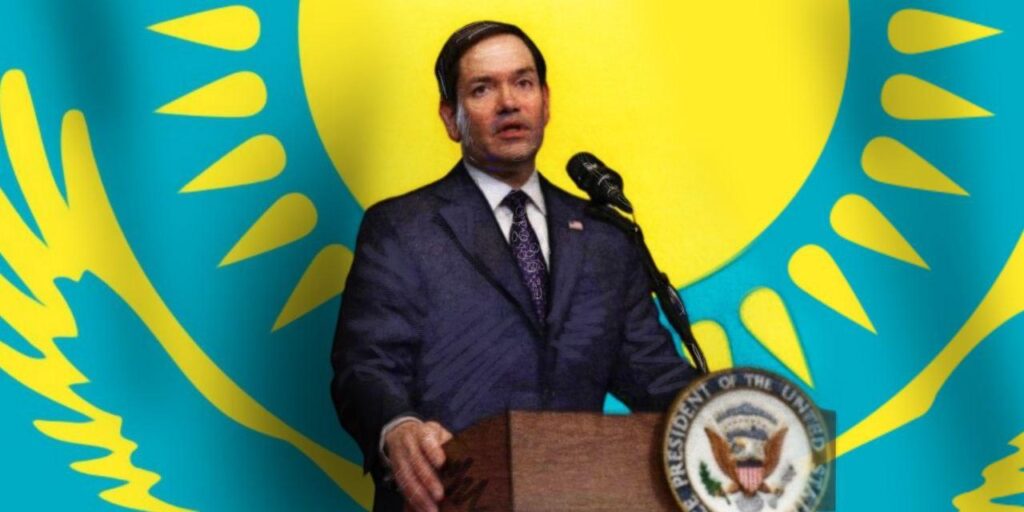
On June 12, U.S. Secretary of State Marco Rubio met with Kazakhstan's Deputy Prime Minister–Foreign Minister Murat Nurtleu in Washington. According to the State Department readout, the American side reiterated its commitment to Kazakhstan’s independence, sovereignty, and territorial integrity while the two diplomats discussed the expansion of “opportunities for bilateral trade and investment” and the importance of “trusted infrastructure and a favorable regulatory landscape for U.S. companies in Kazakhstan.” Other policy issue-areas targeted for cooperation included the expansion of security cooperation, promotion of regional integration (through the C5+1 diplomatic platform), and exploration of commercial opportunities “particularly in the technology and critical minerals sectors.” The bilateral meeting is an expression of deeper structural adaptation within a rapidly transforming international system. While U.S.-Kazakhstan relations were once characterized by only episodic contact and simple tactical cooperation, they have recently been reconstituted into a stable and operationally integrated bilateral relationship with system-wide relevance. Trade between the United States and Kazakhstan reached $4.1 billion in 2023, a 30 percent increase from the year prior, with projections for 2025 surpassing $4.5 billion by mid-year. Long anchored in oil exports and machinery imports, the bilateral trade structure is now undergoing strategic deepening. Kazakhstan’s 12 percent share of global uranium reserves, alongside its emerging lithium sector and other rare earth elements, makes one of the most alluring partners in U.S. efforts to restructure supply chains and reduce overdependence on China, owing to its export reliability, geographic position between major powers, and regulatory openness to Western investment. Kazakhstan, for its part, is demonstrating a granular grasp of what structural integration into global supply networks requires. Domestic reforms have included the modernization of investment regimes and coordinated institutional adjustments across ministries and frameworks such as the Astana International Financial Centre. Nonetheless, uneven rail capacity, limited downstream processing, and gaps in customs harmonization still pose material constraints to full Western alignment. The C5+1 framework, launched in 2015 and revitalized since 2021, has matured into a semi-institutionalized platform for intra-regional coordination. Thanks partly to Kazakhstan's initiatives, it now offers both practical counterweights to Russian influence and Chinese economic presence, including infrastructure collaboration and trade diversification, as well as symbolic ones like diplomatic visibility and regional leadership signaling. More than a diplomatic forum, it reflects a broader regional strategy in which Central Asian states, led by Astana, seek to institutionalize a distinct strategic space through multilateral formats. This architecture enables selective cooperation on infrastructure, trade, and regulatory standards while preserving flexibility amid the competing pressures of a multipolar order. Foreign Minister Murat Nurtleu has been instrumental in this conceptual and operational shift. After serving as Chief of Staff to the President from 2022 to 2023, he was appointed Deputy Prime Minister–Minister of Foreign Affairs in April 2023. His career trajectory—including postings at Kazakhstan’s UN Mission in Geneva (overlapping with Tokayev's tenure as Director General of the UN Office in Geneva) and his leadership in Asia-Africa diplomatic affairs—reflects an evolving strategic mindset. Nurtleu has emerged not merely as a representative of state policy but...

Opinion – The Quiet Competition: How the U.S. Is Losing Ground to China in Central Asia

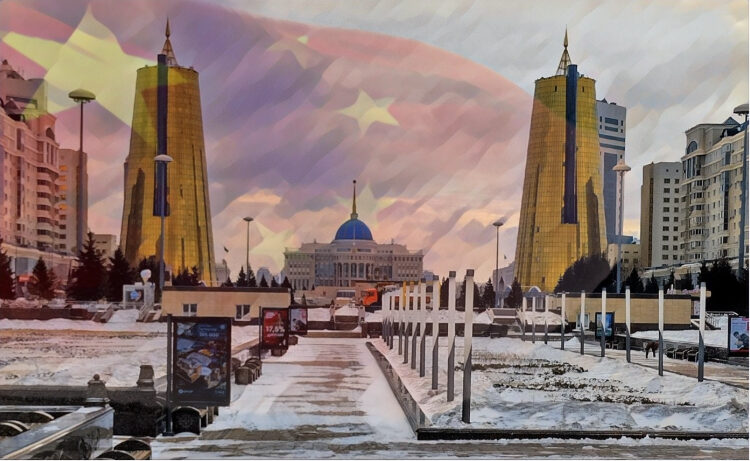
Over the past decade, China has steadily expanded its presence in Central Asia, not through military force, but by building roads, trade corridors, and digital infrastructure. As the United States scaled back its regional footprint following its withdrawal from Afghanistan, Beijing moved quickly to fill the void. Today, China has positioned itself as the region's dominant external power, while the U.S. risks being left on the sidelines. At the heart of China’s strategy is the Belt and Road Initiative (BRI), which has provided over $1 trillion into infrastructure projects globally since its launch in 2013. This includes $704 billion in construction contracts and $470 billion in non-financial investments. In 2024 alone, BRI engagement reached $121.8 billion – $70.7 billion in construction and $51 billion in investments – and trade between China and the countries of Central Asia hit a record $95 billion, highlighting the depth of China's economic integration. This engagement has also created significant financial dependencies. Central Asian countries owe China roughly $15.7 billion, about 8% of the region's total external debt, and these loans are often opaque and carry terms that provide Beijing with outsized political leverage. Chinese firms are also laying fiber-optic networks and constructing electric vehicle corridors to link western China with its neighbors. In Tajikistan, for example, contractors are upgrading the Pamir Highway to support cross-border EV transport. Huawei and other Chinese tech giants are also expanding the region’s telecommunications infrastructure, raising serious concerns about surveillance, data sovereignty, and long-term digital dependency. China’s economic outreach is reinforced by high-level diplomacy. The China–Central Asia (C+C5) format has become the centerpiece of Beijing’s regional engagement. At the 2025 summit, leaders from across the region gathered to coordinate on connectivity, climate resilience, and trade facilitation. The regularity and substance of these summits stand in sharp contrast to the United States’ more sporadic diplomatic presence. The U.S. maintains the C5+1 platform and launched a promising Critical Minerals Dialogue in 2024. However, these initiatives have yet to match the scale or consistency of China's approach as U.S. infrastructure investment is limited, its commercial footprint is small, and diplomatic engagement is too infrequent to shift the region’s strategic trajectory. This matters. Central Asia is strategically located, resource-rich, and increasingly central to global supply chains and geopolitical competition. Kazakhstan alone supplies more than 40% of the world’s uranium. The region also serves as a testing ground for competing development models, and if the United States fails to become a more engaged and credible partner, China’s infrastructure-heavy, state-centric model may become the default. To remain competitive, Washington should recalibrate its approach in Central Asia. This includes pursuing bilateral deals that deliver real impact, such as deepening ties with Uzbekistan and Kazakhstan through targeted investment packages, trade agreements, and joint-sector initiatives. It also means securing access to critical minerals by expanding private-sector investment in mining, processing, and transport infrastructure aligned with U.S. supply chain needs. Offering digital infrastructure alternatives is equally essential; the United States must support secure, interoperable, and transparent technology networks that...