• KZT/USD = 0.00210
  • TJS/USD = 0.10820
  • UZS/USD = 0.00008
  • TMT/USD = 0.29760
  • KZT/USD = 0.00210
  • TJS/USD = 0.10820
  • UZS/USD = 0.00008
  • TMT/USD = 0.29760
  • KZT/USD = 0.00210
  • TJS/USD = 0.10820
  • UZS/USD = 0.00008
  • TMT/USD = 0.29760
  • KZT/USD = 0.00210
  • TJS/USD = 0.10820
  • UZS/USD = 0.00008
  • TMT/USD = 0.29760
  • KZT/USD = 0.00210
  • TJS/USD = 0.10820
  • UZS/USD = 0.00008
  • TMT/USD = 0.29760
  • KZT/USD = 0.00210
  • TJS/USD = 0.10820
  • UZS/USD = 0.00008
  • TMT/USD = 0.29760
  • KZT/USD = 0.00210
  • TJS/USD = 0.10820
  • UZS/USD = 0.00008
  • TMT/USD = 0.29760
  • KZT/USD = 0.00210
  • TJS/USD = 0.10820
  • UZS/USD = 0.00008
  • TMT/USD = 0.29760

Viewing results 1 - 6 of 47

Kazakhstan Launches Smart City Project in Taldykorgan

The Taldykorgan City Administration (akimat), Kazakh telecommunications company ASTEL, and French Internet of Things (IoT) solutions developer Actility have signed a memorandum of cooperation to implement a Smart City project in the town of Taldykorgan. The initiative, based on LoRaWAN technology, will establish a comprehensive urban monitoring system aimed at improving city management and residents’ quality of life. The agreement was signed in Paris during the 16th meeting of the Intergovernmental Commission on Economic Cooperation between Kazakhstan and France. The project involves deploying a LoRaWAN-based IoT network that will collect real-time data from environmental sensors across the city. This data will feed into a centralized monitoring platform, enabling municipal services to respond swiftly to environmental changes. The initiative also includes urban transport management and measures to enhance safety in schools. Taldykorgan Governor (akim) Ernat Bazil told The Times of Central Asia that the memorandum represents a key milestone in the city’s digital development strategy. According to Bazil, the project aims not only to introduce cutting-edge technologies but also to deliver tangible improvements for residents, such as better environmental oversight, more efficient public services, enhanced public transport, and safer educational institutions. Full implementation of the Smart City system is scheduled for 2026. ASTEL President Miras Kasymov said the LoRaWAN-based project in Taldykorgan will serve as a model for scalable smart city solutions across Kazakhstan, marking an important advancement in the country’s digital infrastructure. The project is supported by the French government’s FASEP program (Fonds d'Études et d'Aide au Secteur Privé) and the French Embassy in Kazakhstan. Actility, a global leader in IoT and LoRaWAN technologies, serves as the technical partner. The company’s platform is currently used in over 70 countries. Actility CEO Olivier Hersent noted that the Taldykorgan project aligns with FASEP’s goals of promoting innovation in urban safety, environmental monitoring, and sustainable development, particularly in small and mid-sized cities. French Ambassador to Kazakhstan Sylvain Guillegot said the initiative highlights France’s commitment to supporting digital transformation in Kazakhstan’s regions. He described the project as a concrete example of Franco-Kazakh collaboration in infrastructure modernization and sustainable development. The system is set to launch in 2026. If successful, it could be replicated in other cities throughout Kazakhstan. LoRaWAN (Long Range Wide Area Network) is an energy-efficient, cost-effective wireless communication protocol widely used for IoT deployments, especially in smart urban infrastructure projects.

Pakistani Developer Proposes “New Uzbekistan” Complex in Islamabad

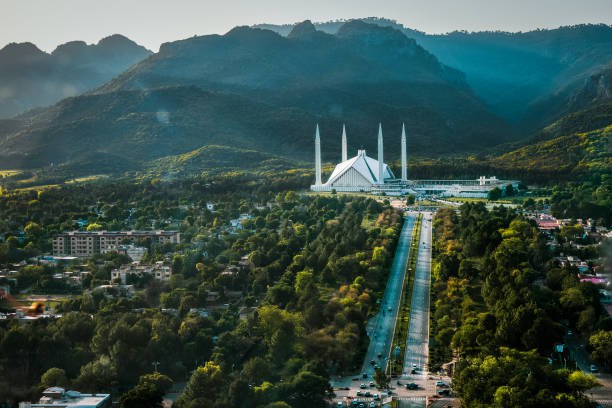
Uzbekistan and Pakistan are exploring new avenues for cooperation in urban development, with discussions underway to construct a “New Uzbekistan” residential complex and park in Pakistan's capital Islamabad. The talks were reported by the Dunyo news agency following a meeting between Uzbekistan’s Ambassador to Pakistan Alisher Tukhtaev and representatives of Pakistani developer Habib Rafiq Pvt. Ltd. According to Dunyo, both sides discussed launching joint initiatives and strengthening long-term partnerships. Tukhtaev briefed the company’s leadership on Uzbekistan’s investment climate, including the role of free economic zones, the nationwide construction of New Uzbekistan residential areas, and the ongoing New Tashkent city project. He also highlighted the tax and customs incentives available to foreign investors, administrative support for large-scale developments, and Uzbekistan’s strategic location along key Eurasian transport corridors. Habib Rafiq’s General Manager, Aslam Malik, praised Uzbekistan’s reform efforts, stating that they offer “very favorable conditions for foreign investors, especially in construction and infrastructure.” He noted that simplified procedures and expanded business guarantees are already yielding results. “We are well aware of the changes taking place in Uzbekistan’s construction sector,” Malik said. “In recent years, the country has gained substantial experience in infrastructure development, modern housing, and new urban planning. We are interested in studying this experience and participating in future projects.” The Pakistani side also showcased its flagship Capital Smart City development, a large-scale project near Islamabad covering 2,800 hectares. The complex already features residential buildings, schools, kindergartens, sports facilities, and modern recreational parks. Construction is also underway on Silicon Village, envisioned as a local version of Silicon Valley. Malik proposed establishing a New Uzbekistan residential area and park within Capital Smart City, contributing to projects in New Tashkent, and organizing leadership visits to Uzbekistan. He also invited leading Uzbek construction companies to participate in projects in Pakistan. Abid Kabir Chima, CEO of Silicon Village, expressed interest in expanding cooperation with Uzbekistan’s technopark.

Survey Reveals 41% of Bishkek Residents Use Private Cars, Exacerbating Air Pollution

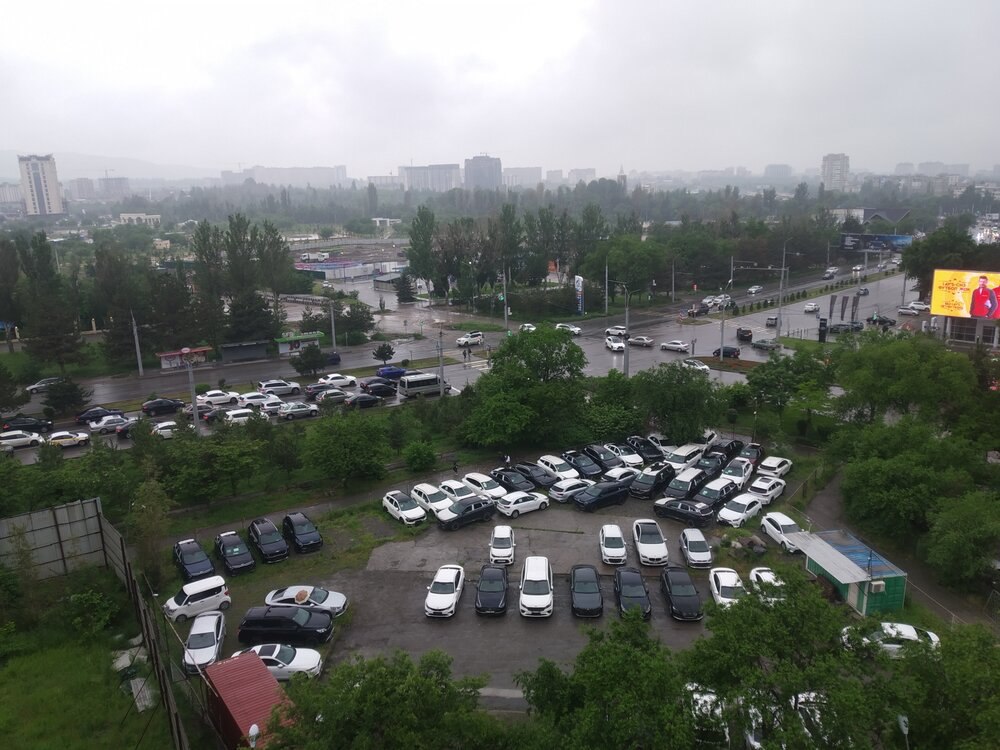
As part of preparations for a new urban development plan, Bishkek’s municipal authorities have conducted a comprehensive survey to understand how residents of the capital and its suburbs navigate the city. According to the results, 41% of respondents rely on private transportation, including personal vehicles and taxis, while 38% use municipal public transport, primarily buses. The remaining 21% get around on foot, by bicycle, or by scooter, including electric scooters. The most frequented destination for city residents is the downtown area, which accounts for the majority of work-related and other daily trips. The Bishkek City Administration stated that the survey data will be used to design a more efficient and balanced urban transportation system aimed at enhancing public transit services. Traffic congestion remains a critical issue in Bishkek, a city experiencing rapid population growth. According to the Ministry of Natural Resources, Ecology, and Technical Supervision, motor vehicles, particularly older models lacking catalytic converters, are responsible for approximately 30% of the city’s air pollution. Vehicle numbers in the capital have surged in recent years. Bishkek now hosts more than 700,000 vehicles, nearly double the road infrastructure’s intended capacity of 350,000. Over 300,000 of these vehicles are more than 15 years old, making them significant contributors to harmful emissions. In response, the city has taken steps to modernize its public transportation fleet. Recent initiatives include replacing diesel-powered buses with larger, more environmentally friendly models powered by liquefied petroleum gas (LPG).

Urban Night Almaty: Creative Communities and the Future of Central Asia

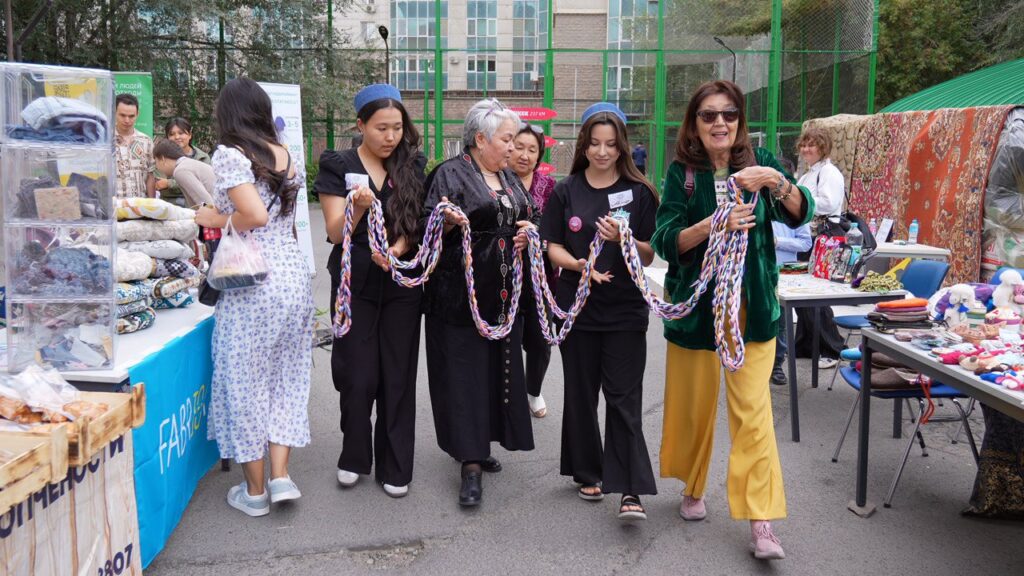
Ecology, entrepreneurship, and innovation in urban life were the central themes of Urban Night Almaty, a one-day festival held last Saturday in Kazakhstan’s largest city. The event sought to answer a key question: Can small-scale initiatives and grassroots communities meaningfully improve life in a metropolis? Organizers and attendees alike believe they can. The festival drew together a wide array of participants, recycling advocates, artists, artisans, confectioners, cosmetics producers, startup founders, writers, journalists, students, sociologists, urbanists, architects, and entrepreneurs, each contributing to a shared vision of sustainable, inclusive urban development. [caption id="attachment_36181" align="aligncenter" width="350"] @Eduard Galeev[/caption] “Each of us lives in our own information bubble, and events like this push us to step outside of it. We’re all different, but we can achieve something together,” said ecologist Pakizat Sailaubekova. “Looking at the people who came to the festival and how moved they are, it’s inspiring.” Discussion and Decision-Making Urban Night Almaty was organized around several thematic zones. One area was dedicated to public discussions on technology, education, and ecology. Bekežan Kaigaliev, founder of Food Recycling and Aquajem, presented on the use of fly larvae to process organic waste in large cities. Alexey Kupriakov, founder of the Green Workout movement, shared ideas on integrating eco-friendly practices into urban planning. Zhuldyz Saulbekova, CEO of the Almaty Air Initiative, spoke about technological solutions for combatting air pollution and chronic smog. [caption id="attachment_36180" align="aligncenter" width="350"] @Eduard Galeev[/caption] Other panels focused on educational innovation. Journalist and PR expert Anuarbek Zhalel, alongside Nursultan Amirkhan, product manager at Daryn.online, discussed promoting startups and integrating new tools in learning environments. A separate session brought together alumni of U.S. internship programs. Among them were athlete and IT specialist Aina Dosmakhambet, lawyer Zhibek Karamanova, and Yerzhan Nauruzbayev, a Forbes 30 Under 30 honoree with professional experience across three continents. Practice and Inspiration Beyond the panels, attendees participated in workshops and creative performances. Highlights included a sports-themed cleanup organized by Kupriakov and an urban exploration of Almaty led by the GoroZhanym project. An eco-themed market showcased small-scale producers offering food, toys, jewelry, souvenirs, and hygiene products. Many entrepreneurs shared stories of how their ventures, though modest in scale, contribute to making Almaty cleaner and more future-oriented. [caption id="attachment_36183" align="aligncenter" width="233"] @Eduard Galeev[/caption] “We often speak in terms of global problems, but it’s essential to respect action at the micro level,” said political analyst Dosym Satpaev. “Thanks to social media, even the smallest project can gain traction. The more of these we have, the stronger our creative economy becomes. These are the foundations for national stability, development, and retaining talent.” Satpaev also hosted a futurology session addressing the challenges and prospects artificial intelligence presents for Central Asia. The festival concluded with a tұsaуkeser ceremony, a Kazakh tradition that involves cutting a symbolic cord representing a newborn's first steps. The cords, handcrafted by members of the Niti Dobra movement (which supports premature infants), symbolized renewal and the strengthening of ties between citizens and their city. [caption id="attachment_36179" align="aligncenter" width="350"] @Eduard Galeev[/caption] Regional Reach “Our...

Bishkek Opens Poplar Nursery to Increase City Tree Cover

Bishkek has launched an experimental nursery dedicated to cultivating hybrid poplars as part of a broader initiative to restore the city’s declining green spaces. The project, spearheaded by Kyrgyzstan’s Ministry of Natural Resources, Ecology and Technical Supervision, aims to support long-term urban reforestation. Located on 24 hectares of land, the nursery is expected to produce up to 200,000 saplings each year. In 2025 alone, 12,000 hybrid poplars have already been planted. The selected variety is suited for urban environments; it does not produce fluff, grows up to two meters annually, and develops straight trunks with high crowns. Tree cuttings are used for continued propagation. Minister Meder Mashiev, who visited the site, stressed the strategic importance of the initiative. “If this business develops, all the problems of city greening can be solved,” he stated. The nursery is expected to reduce dependence on imported saplings and play a key role in reversing urban deforestation while improving air quality in the capital. As previously reported by The Times of Central Asia, Bishkek’s municipality is also collaborating with partners from Qingdao, China, to establish a large-scale tree and shrub nursery. This bilateral project forms part of a broader environmental restoration strategy aimed at strengthening the city’s ecological resilience. Once regarded as one of the greenest cities in the former Soviet Union, Bishkek has experienced a steady decline in tree cover over the past three decades due to rapid urban development. Environmental experts have urged authorities to prioritize planting tall, broadleaf deciduous trees, valued for their shade and noise absorption, rather than the coniferous species currently favored in urban landscaping.

Urban Expansion in Astana: Strengths and Strains

July 6 marked Capital Day in Kazakhstan, a national holiday celebrating the country's capital. To mark the occasion, Energyprom.kz released an in-depth analysis of Astana’s socio-economic standing, painting a mixed picture of rapid growth and persistent strain. Competition with Almaty and Global Standing In the 2025 Global City Ranking by Oxford Economics, Astana ranks 276th out of 1,000 cities worldwide. Almaty ranks slightly higher at 258th. While Astana outperforms Almaty in terms of ecological conditions and economic momentum, it lags behind in human capital and quality of life. Both cities are considered national leaders, yet remain far behind the world's top urban centers. According to the National Statistics Bureau, Almaty contributes 21.8% of Kazakhstan’s GDP (29.2 trillion KZT or approximately 56.2 billion USD), while Astana accounts for 11.5% (15.5 trillion KZT or around 29.8 billion USD). In terms of GDP per capita, Astana ranks fourth in the country, behind Atyrau, Ulytau, and Almaty. Its economy is heavily concentrated in services, which make up nearly 80% of its gross regional product. A Magnet for Opportunity and Strain Astana continues to attract internal migrants, particularly from rural regions, largely due to its relatively high wages. The average monthly salary in the capital is 538,000 KZT (around 1,035 USD). Higher salaries are found in resource-rich regions such as Atyrau (633,300 KZT) and Mangistau (580,900 KZT). In Astana, the highest-earning sectors include finance and insurance (1.2 million KZT or 2,310 USD), mining (981,300 KZT or 1,890 USD), and IT (824,600 KZT or 1,587 USD). However, this economic pull has placed growing pressure on the city’s infrastructure. Astana faces ongoing issues related to water supply, sewage systems, disorganized construction, and environmental management. These problems have been highlighted by both President Kassym-Jomart Tokayev and the public. The High Cost of Living Astana leads the country in housing prices. In 2023, the average cost of a new apartment reached 595,500 KZT per square meter (approximately 1,146 USD). In the secondary market, the average price rose to 649,800 KZT (around 1,250 USD). A typical 50-square-meter two-bedroom apartment costs nearly 29.8 million KZT (about 57,370 USD). For a resident earning the city’s average wage, saving for such a home without loans would take 55 months, or over four and a half years. In comparison, it would take just 2.5 years in Atyrau. Rental prices are also high. The average monthly rent for a 50 square meter apartment in Astana was 248,000 KZT in 2023 (around 477 USD), consuming over 46% of the average monthly wage. Only Almaty and Shymkent have higher rent-to-income ratios at 54.4% and 60.3% respectively. Food costs place additional strain on household budgets. Food accounts for 52% of the average consumer budget in Astana, equivalent to 181,600 KZT (around 349 USD) per person per quarter. Prices for 14 of 19 socially significant food items, including chicken, milk, butter, and vegetables, exceed national averages. Food inflation in the capital remains among the highest in the country. A Capital at a Crossroads Astana remains the political and administrative...