• KGS/USD = 0.01144 0%
  • KZT/USD = 0.00202 0%
  • TJS/USD = 0.10681 0%
  • UZS/USD = 0.00008 0%
  • TMT/USD = 0.28530 0%
  • KGS/USD = 0.01144 0%
  • KZT/USD = 0.00202 0%
  • TJS/USD = 0.10681 0%
  • UZS/USD = 0.00008 0%
  • TMT/USD = 0.28530 0%
  • KGS/USD = 0.01144 0%
  • KZT/USD = 0.00202 0%
  • TJS/USD = 0.10681 0%
  • UZS/USD = 0.00008 0%
  • TMT/USD = 0.28530 0%
  • KGS/USD = 0.01144 0%
  • KZT/USD = 0.00202 0%
  • TJS/USD = 0.10681 0%
  • UZS/USD = 0.00008 0%
  • TMT/USD = 0.28530 0%
  • KGS/USD = 0.01144 0%
  • KZT/USD = 0.00202 0%
  • TJS/USD = 0.10681 0%
  • UZS/USD = 0.00008 0%
  • TMT/USD = 0.28530 0%
  • KGS/USD = 0.01144 0%
  • KZT/USD = 0.00202 0%
  • TJS/USD = 0.10681 0%
  • UZS/USD = 0.00008 0%
  • TMT/USD = 0.28530 0%
  • KGS/USD = 0.01144 0%
  • KZT/USD = 0.00202 0%
  • TJS/USD = 0.10681 0%
  • UZS/USD = 0.00008 0%
  • TMT/USD = 0.28530 0%
  • KGS/USD = 0.01144 0%
  • KZT/USD = 0.00202 0%
  • TJS/USD = 0.10681 0%
  • UZS/USD = 0.00008 0%
  • TMT/USD = 0.28530 0%
06 February 2026

Viewing results 1 - 6 of 23

Survey Reveals 41% of Bishkek Residents Use Private Cars, Exacerbating Air Pollution

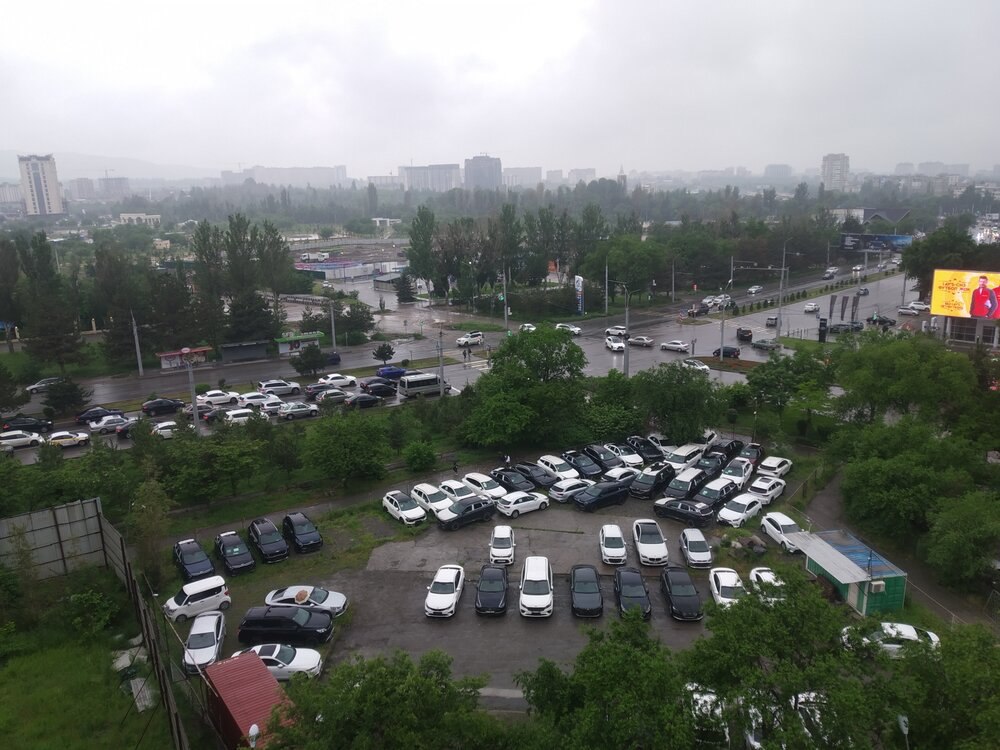
As part of preparations for a new urban development plan, Bishkek’s municipal authorities have conducted a comprehensive survey to understand how residents of the capital and its suburbs navigate the city. According to the results, 41% of respondents rely on private transportation, including personal vehicles and taxis, while 38% use municipal public transport, primarily buses. The remaining 21% get around on foot, by bicycle, or by scooter, including electric scooters. The most frequented destination for city residents is the downtown area, which accounts for the majority of work-related and other daily trips. The Bishkek City Administration stated that the survey data will be used to design a more efficient and balanced urban transportation system aimed at enhancing public transit services. Traffic congestion remains a critical issue in Bishkek, a city experiencing rapid population growth. According to the Ministry of Natural Resources, Ecology, and Technical Supervision, motor vehicles, particularly older models lacking catalytic converters, are responsible for approximately 30% of the city’s air pollution. Vehicle numbers in the capital have surged in recent years. Bishkek now hosts more than 700,000 vehicles, nearly double the road infrastructure’s intended capacity of 350,000. Over 300,000 of these vehicles are more than 15 years old, making them significant contributors to harmful emissions. In response, the city has taken steps to modernize its public transportation fleet. Recent initiatives include replacing diesel-powered buses with larger, more environmentally friendly models powered by liquefied petroleum gas (LPG).

Kazakhstan’s Automotive Industry Boosts Revenues by Over 50% in July

Kazakhstan’s automotive industry posted strong growth in July 2025, producing 11,700 vehicles valued at KZT 164.9 billion ($305.3 million), according to the Kazakhstan Automobile Union. This represents a 50.1% increase in production volume compared to July 2024. Data from the National Statistics Bureau shows that in July 2024, the country produced 7,800 vehicles worth KZT 100.9 billion ($186.8 million). Over the past year, the industry has not only expanded output but also significantly boosted revenue. From January to July 2025, Kazakhstan produced 83,200 vehicles valued at KZT 1.16 trillion ($21.4 billion), marking a 16.7% year-on-year increase. The automotive sector now accounts for 40.7% of the national engineering industry. Passenger cars led the growth, with 75,400 units produced, up 19% from the same period last year. Bus production also saw a 5.5% uptick, totaling more than 1,300 units. In contrast, truck output declined by 10.5% to 4,100 vehicles. Manufacturers also turned out 1,900 trailers and semi-trailers, along with 453 special-purpose vehicles. Regional Breakdown Kostanay remains the top manufacturing hub, producing 45,700 vehicles, a 6.9% increase, at Allur’s facilities. In Almaty, the Hyundai Trans Kazakhstan and Hyundai Trans Almaty plants reported a record 41.8% increase, assembling 31,200 vehicles. Production trends varied in other regions: Semey: Down 17.5% (2,400 units) Karaganda region (QazTehna): Up 28.1% Kokshetau (KAMAZ-Engineering): Up 34.6% Top Brands and Models The most produced brands from January to July were: Hyundai: 30,800 units Chevrolet: 16,500 Kia: 14,800 Jetour: 7,100 Jac: 5,600 Leading models included the Chevrolet Cobalt (13,600 units), Hyundai Tucson (11,900), Kia Sportage (nearly 7,000), Hyundai Elantra (4,900), and Hyundai Mufasa (4,600). Anar Makasheva, President of the Kazakhstani Automobile Union, credited the industry's progress to the expertise of more than 8,000 specialists: “The growth in production strengthens the position of the domestic automotive industry and opens up new opportunities for enterprises.” She also announced the upcoming launch of two new plants: the multi-brand Astana Motors Manufacturing Kazakhstan facility in Almaty and a new KIA production line in Kostanay. Together, these projects are expected to create over 5,000 jobs. As previously reported by The Times of Central Asia, Kazakhstan set a record for car sales in 2024. Domestic automotive production is projected to reach approximately 150,000 vehicles in 2025.

Kazakhstan’s Tax Cut on Old Vehicles Sparks Debate

Kazakhstan will implement an updated Tax Code beginning January 1, 2026, following its signing on July 18. Among the most debated changes is the revision of the transport tax for vehicles over 10 years old. Under the new code, owners of cars aged 11 to 20 years will receive a 30% tax discount, while those with vehicles older than 21 years will benefit from a 50% reduction. The decision stands in contrast to recent trends of increasing the overall tax burden. Yet experts warn that behind the populist optics lie significant environmental and road safety risks. A Political Gesture Ahead of Elections? Tax consultant Aidar Masatbaev views the reform as more political than economic in nature. “People complained that the tax on old cars was too high. Apparently, the advocates of a softer tax policy prevailed,” he said in an interview with inbusiness.kz. Masatbaev added that the measure is unlikely to meaningfully reduce the cost of car ownership. Instead, factors like rising fuel prices and declining real incomes play a more critical role. “The problem is that most people cannot afford to buy a new car,” he noted. Technical and Environmental Risks According to official statistics, more than 80% of Kazakhstan’s vehicle fleet comprises cars over 10 years old. Of these, over 2.2 million vehicles are more than 20 years old. These aging cars not only lag in efficiency but also pose serious safety risks. “Old cars are becoming a source of increased danger. Their consumables are more expensive, and the desire to save on repairs leads to risks on the roads,” Masatbaev warned. He cautioned that offering tax incentives could further entrench the use of obsolete, potentially unsafe vehicles. Additionally, the secondary car market lacks transparency. Many transactions go unregistered, reducing the effectiveness of fiscal measures and minimizing the impact of tax relief on state revenues. Masatbaev also questioned proposals to increase taxes on old vehicles, arguing that such moves would only heighten public dissatisfaction and strain the tax system. He recommended automating debt collection to improve efficiency, but acknowledged this could erode public trust in the tax authority. Kazakhstan’s Aging Car Fleet, by the Numbers According to Ranking.kz, in May 2025, Kazakhstan had 5.34 million registered passenger vehicles, an 11.4% increase from the previous year. Two-thirds, approximately 3.54 million cars, were more than 10 years old. While the share of aging vehicles has slightly declined (from 70.3% in April 2023 to 68.3% in April 2024), the number of cars aged 10-20 years rose 12.4% to 1.27 million. Vehicles over 20 years old now number 2.27 million, a 5.7% increase. The highest concentrations of old cars are found in the Almaty region (449,600), Almaty city (355,200), Karaganda (237,300), Zhambyl (236,200), Turkestan (235,000), and East Kazakhstan (220,100). Zhambyl holds the highest percentage of cars over 10 years old at 83%, followed by Zhetysu (79.3%) and Almaty (78.4%). While tax breaks may offer temporary relief to car owners, analysts argue that without a comprehensive strategy for renewing the vehicle fleet, promoting...

China’s “Used” Car Exports to Central Asia Raise Questions Over Trade Practices

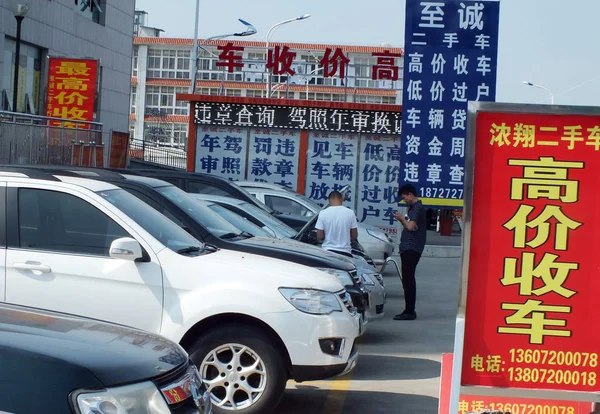
China has recently surpassed Japan to become the world’s largest automobile exporter. Yet behind this headline lies a controversial trade tactic: the mass export of brand-new vehicles categorized as “used.” Since 2019, this strategy has become a key component of China’s vehicle trade with regions including Central Asia, Russia, and the Middle East. A Reuters investigation has revealed that these so-called “zero-mileage used cars” are new vehicles that are briefly registered in China to obtain domestic license plates, then exported abroad without being driven. This approach allows automakers to classify the cars as “sold,” enabling local governments to boost export figures and manufacturers to reduce unsold inventory from an increasingly saturated domestic market. “This is the outcome of an almost four-year price war that has made companies desperate to book any sales possible,” said Tu Le, founder of the Michigan-based consultancy Sino Auto Insights. Local Governments Fuel the Export Boom At least 20 provincial and municipal governments in China, including major industrial hubs like Guangdong and Sichuan, actively support this model. Local incentives include issuing additional export licenses, offering tax breaks, investing in export-related infrastructure, and providing free warehouse space near border zones These measures align with national macroeconomic objectives and offer local officials a tool to demonstrate economic performance through export statistics. Central Asia: A Strategic Destination Central Asia has emerged as one of the primary destinations for these vehicles. Many of the exported models are gasoline-powered, as China pivots to electric vehicles (EVs) domestically. Nonetheless, EVs, often heavily subsidized at the production stage, are also part of the export mix. William Ng, international director at Chongqing-based Huanyu Auto, reported strong profits in 2022-2023. “We were able to earn 10,000 yuan ($1,400) in profit on an electric sedan purchased for 40,000 yuan by selling it in Central Asia,” he told Reuters. However, Ng warned that the market is becoming oversaturated. “Small dealers and even livestreamers are getting involved. They used to sell wine or vases, now they’re selling cars. This is chaos.” Industry Pushback and Regulatory Scrutiny Despite short-term export gains, several Chinese automotive leaders have expressed unease. Zhu Huarong, chairman of Chang'an Auto, warned that the practice could tarnish the global image of Chinese carmakers. Xing Lei, founder of AutoXing, echoed this sentiment. “How many [sales] are real or inflated? No one knows,” he said, pointing to a growing distrust of industry data. Importing nations are starting to react. Russia has banned zero-mileage used cars from brands that already have authorized dealerships in the country. Jordan and several Middle Eastern countries have tightened regulations, redefining what qualifies as a “used” vehicle to close loopholes. These moves reflect mounting concern over what some consider a “dumping” strategy, flooding foreign markets with low-cost or subsidized vehicles that disrupt local competition and undercut domestic dealers. Why the Practice Continues China’s centrally managed economy allows for considerable leeway in how provinces achieve growth targets. Export volume, employment figures, and retail sales data are often tied to the promotion prospects of local officials....

Kyrgyz Authorities Postpone Fines for Lack of Compulsory Car Insurance

The Cabinet of Ministers of Kyrgyzstan has announced another postponement of fines for motorists without a Compulsory Motor Liability Insurance Policy (CMLIP). Initially set to take effect on January 1, 2025, the penalties will now be delayed until July 1. This is not the first time the implementation of this regulation has been deferred. Authorities concluded that citizens need clearer information about the requirements for mandatory auto insurance. “Currently, changes have been initiated to allow the CMLIP policy to automatically transfer to the new owner of the car when it is sold, which will greatly simplify the insurance process for citizens. We strongly recommend car owners issue a policy in advance to avoid penalties and ensure the protection of their liability on the roads,” stated the Cabinet’s official message. Under the amended law, individuals who fail to secure a CMLIP will face fines of KGS 3,000 ($35), while legal entities will be fined KGS 13,000 ($150). Notably, fines for legal entities have been enforceable since spring 2023. As previously reported by The Times of Central Asia, every motorist in Kyrgyzstan is required to purchase an insurance policy when re-registering a vehicle. However, compliance remains a significant challenge. Despite efforts by the State Insurance Organization to promote compulsory insurance - including warnings about fines - results have been underwhelming. Only around 100,000 vehicles in Kyrgyzstan are insured, out of the 1.6 million cars registered in the country. The Cabinet’s decision to delay penalties aims to provide additional time for public awareness campaigns and to address logistical issues, such as enabling automatic policy transfers during vehicle sales. Officials hope these measures will encourage more motorists to comply with the law before fines are enforced in mid-2025.