• KGS/USD = 0.01144 0%
  • KZT/USD = 0.00212 0%
  • TJS/USD = 0.10808 0.19%
  • UZS/USD = 0.00008 0%
  • TMT/USD = 0.28490 0%
  • KGS/USD = 0.01144 0%
  • KZT/USD = 0.00212 0%
  • TJS/USD = 0.10808 0.19%
  • UZS/USD = 0.00008 0%
  • TMT/USD = 0.28490 0%
  • KGS/USD = 0.01144 0%
  • KZT/USD = 0.00212 0%
  • TJS/USD = 0.10808 0.19%
  • UZS/USD = 0.00008 0%
  • TMT/USD = 0.28490 0%
  • KGS/USD = 0.01144 0%
  • KZT/USD = 0.00212 0%
  • TJS/USD = 0.10808 0.19%
  • UZS/USD = 0.00008 0%
  • TMT/USD = 0.28490 0%
  • KGS/USD = 0.01144 0%
  • KZT/USD = 0.00212 0%
  • TJS/USD = 0.10808 0.19%
  • UZS/USD = 0.00008 0%
  • TMT/USD = 0.28490 0%
  • KGS/USD = 0.01144 0%
  • KZT/USD = 0.00212 0%
  • TJS/USD = 0.10808 0.19%
  • UZS/USD = 0.00008 0%
  • TMT/USD = 0.28490 0%
  • KGS/USD = 0.01144 0%
  • KZT/USD = 0.00212 0%
  • TJS/USD = 0.10808 0.19%
  • UZS/USD = 0.00008 0%
  • TMT/USD = 0.28490 0%
  • KGS/USD = 0.01144 0%
  • KZT/USD = 0.00212 0%
  • TJS/USD = 0.10808 0.19%
  • UZS/USD = 0.00008 0%
  • TMT/USD = 0.28490 0%

Viewing results 1 - 6 of 40

Kazakhstan Issues First Residence Permit Under Digital Nomad Residency Program

Kazakhstan has issued its first residence permit under the newly launched Digital Nomad Residency program, a key component of the country’s strategy to attract global talent in digital technologies and artificial intelligence. The Ministry of Digital Development, Innovation, and Aerospace Industry announced that the inaugural 10-year residence permit was granted to Pavel Filatov, a Senior Analytics & BI Engineer. According to the ministry, the program simplifies the process for qualified foreign specialists to obtain permanent residency. Since its launch in January 2025, over 270 applications have been submitted by professionals from more than 20 countries, including the United States, Canada, France, Turkey, and several post-Soviet states. Most applicants work in fields such as programming, cybersecurity, UI/UX design, and DevOps. “The Digital Nomad Residency program provides a truly rare opportunity to combine comfortable living conditions with a dynamically developing technology ecosystem,” Filatov said. “The entire process was convenient and modern. For IT specialists around the world, this program really opens up new horizons. Kazakhstan has huge potential for professional growth and international cooperation, and it is a great honor for me to become the first holder of this residency.” The residency program builds upon Kazakhstan’s Digital Nomad Visa, introduced earlier this year along with two other new visa categories: the Neo Nomad Visa and the Residence Visa. Together, these initiatives form part of a broader government effort to attract skilled professionals, entrepreneurs, and foreign investors. The Digital Nomad Visa offers long-term stay options for freelancers, entrepreneurs, IT specialists, and startup founders. The Neo Nomad Visa targets remote workers who travel while working, requiring proof of at least $3,000 in monthly income, valid health insurance, and a clean criminal record. The Residence Visa is aimed at foreign professionals in medicine, science, innovation, education, and the creative industries, allowing stays of up to 90 days. The ministry confirmed that the first Digital Nomad Visas, issued without income requirements, have already been granted to IT professionals from Algeria and Botswana. Visa holders are permitted to work with both foreign and Kazakh companies and may apply for residency during the visa’s validity period. At the same time, Kazakhstan has taken additional steps to attract long-term foreign investment. As The Times of Central Asia previously reported, new regulations allow foreign nationals who invest at least $300,000 into Kazakh companies or securities listed on local exchanges to apply electronically for an investor visa. This so-called “golden visa” offers a residence permit valid for up to 10 years and is part of Kazakhstan’s plan to build itself into a regional hub for business and innovation.

Long Airport Screenings for Uzbek Fans Ahead of World Cup Qualifier in UAE

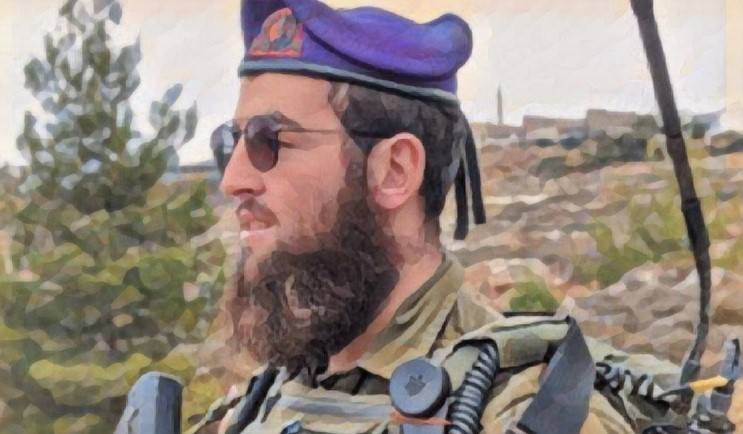
Football fans from Uzbekistan have experienced lengthy airport screenings on arriving in the United Arab Emirates to attend a World Cup qualifying match that could, in the event of a win for their team, send the Central Asian country into its first FIFA World Cup. More than 100 Uzbek fans who traveled to the UAE ahead of the June 5 game between Uzbekistan and the United Arab Emirates were “detained” at Sharjah airport for seven to nine hours on Monday, the Gazeta.uz media outlet reported. A journalist from the outlet who was among the passengers on the flight said women and elderly people were let through first, but many men were held for long periods. The delays, which prompted the two governments to hold negotiations aimed at improving the situation, come just over a month after warnings that the visa-free arrangement between Uzbekistan and the United Arab Emirates could be in jeopardy because of an increase in violations by Uzbek citizens in the emirates. In March, a court in Abu Dhabi sentenced three Uzbek citizens to death after they were convicted of murdering Zvi Kogan, an Israeli-Moldovan rabbi whose body was discovered in the Emirati city of Al Ain in 2024. In April, more than a dozen Uzbek nationals were detained after a street brawl in Dubai in which some people were stabbed and one was reportedly killed. Following the recent airport delays for football fans, a spokesman for Uzbekistan’s Ministry of Foreign Affairs said its diplomats in Abu Dhabi and Dubai held urgent negotiations with UAE officials. “According to the UAE, screening times at airports are increasing due to increased security measures in the country in connection with various international events,” ministry spokesman Akhror Burkhanov said on Telegram. “Currently, all resources have been mobilized to quickly screen our citizens, and as a result, they have begun to enter the country.” Uzbekistan’s national team is second with 17 points in Group A after Iran, which has already qualified. FIFA says “a point in Abu Dhabi would send Uzbekistan into a maiden FIFA World Cup,” but the Central Asian team can still qualify if it then beats Qatar at home. The World Cup will be held in the United States, Canada, and Mexico in 2026.

Visa-Free Deal Under Review After Arrests of Uzbek Citizens in Dubai

The visa-free arrangement between Uzbekistan and the United Arab Emirates could be in jeopardy because of the increase in alleged violations by Uzbek citizens in the emirates, according to Uzbekistan’s Ministry of Foreign Affairs. The leadership of the Dubai Criminal Investigation Department told Uzbek diplomats in a meeting that 15 Uzbek nationals had been detained in an incident and an investigation was underway, Akhror Burkhanov, spokesman for the Uzbek ministry, said on Telegram. Several Uzbek media outlets have reported that two groups of Uzbeks clashed in a street brawl this month and that some of them were stabbed. Some reports said one person was killed. In the meeting between Uzbek and UAE officials, it was noted “that the recent increase in violations committed by Uzbek citizens could affect the visa-free regime between the two countries,” Burkhanov said in the post on Friday. He said the foreign ministry is working with law enforcement agencies on the matter and urged Uzbek citizens “to refrain from actions that tarnish the honor of our compatriots abroad.” In March, a court in Abu Dhabi sentenced three Uzbek citizens to death after they were convicted of abducting and murdering Zvi Kogan, an Israeli-Moldovan rabbi whose body was discovered in the Emirati city of Al Ain in November 2024. A fourth person convicted in the killing was sentenced to life in prison. An emissary for the ultra-Orthodox Chabad Hasidic movement in the UAE, Kogan also served as an aide to his brother-in-law, Levi Duchman, the Chief Rabbi of the UAE, who normalized ties with Israel in late 2020, a move met with skepticism in the UAE and across the wider Muslim world. Israel said the killing of Kogan was an act of terror. Some Uzbek citizens, meanwhile, have encountered problems trying to enter the United Arab Emirates. The visa-free regime between Uzbekistan and the United Arab Emirates started early last year. Citizens can travel to each other´s countries without a visa if they don’t stay any longer than 30 days. “This measure is considered an important step towards enhancing joint cooperation in the fields of politics, economics, culture, education and other areas of common interest,” the UAE’s Ministry of Foreign Affairs said.

Kyrgyzstan’s Keremet Bank Restricts Use of Visa Cards Following U.S. Sanctions

Keremet Bank, a commercial bank in Kyrgyzstan recently subjected to U.S. sanctions, has announced new restrictions on the use of its Visa cards. The announcement was issued through the bank’s press service. As per the official statement, Visa cards issued by Keremet Bank can now only be used at the bank's ATMs, POS terminals, and other payment devices. To provide customers with an alternative, the bank is offering free issuance of cards under the national payment system, Elkart. The process for obtaining an Elkart card will take up to five working days in Bishkek and up to ten days in other regions. The bank reassured its clients that their funds remain secure. Customers can withdraw money at the nearest branch by presenting a valid passport or transferring funds through the mobile application to Elkart cards or settlement accounts. The U.S. Treasury Department imposed sanctions on Keremet Bank, citing alleged ties to Russian authorities and collaboration with Promsvyazbank, a Russian financial institution that has been under U.S. restrictions since 2022.

Azerbaijan Tightens Visa Rules for Russians Amid Aktau Crash Fallout

The Azerbaijani government has announced new restrictions on the temporary stay of Russian citizens, effective January 1, 2025. Under the new rules, Russian citizens and stateless persons residing in Russia will be limited to a maximum of 90 days per calendar year without a visa. The announcement comes in the wake of a tragic plane crash involving an Azerbaijan Airlines (AZAL) aircraft near the Kazakh city of Aktau on December 25. The plane, which had taken off from Baku headed to Grozny, Chechnya, crashed, killing 38 people and injuring 29 others. Kazakhstan is currently leading the investigation into the incident. Accusations and Responses Azerbaijan’s President Ilham Aliyev has stated that the plane was struck by Russian ground fire while flying over Russian territory. He accused Russia of attempting to obscure the truth by spreading “absurd theories” about the crash. Russian President Vladimir Putin had issued an apology for the incident one day before Aliyev's remarks, but did not admit responsibility for the alleged ground fire. International Reactions The crash has prompted flight suspensions to Russia by several airlines, citing safety concerns. Turkmenistan: Flights on the Ashgabat-Moscow-Ashgabat route have been canceled from December 30, 2024, to January 31, 2025. The reason for the decision has not been disclosed, but the airline previously operated twice-weekly flights to Moscow. Kazakhstan: Kazakh Air has suspended its Astana-Yekaterinburg route from December 28, 2024, to January 27, 2025, to ensure passenger safety. Israel: Israeli airline El Al has halted flights on the Tel Aviv-Moscow route until next week, citing “events in Russian airspace.” UAE: Flydubai has suspended flights to Sochi and Mineralnye Vody due to technical reasons. Flights to Sochi are expected to resume on January 2, while services to Mineralnye Vody will restart on January 3. In a symbolic gesture, an Uzbekistan Airways plane circled Aktau Airport twice in memory of the Azerbaijan Airlines crash victims. Broader Implications The tragedy and subsequent allegations have heightened tensions in the region and raised concerns about air travel safety in Russian airspace. While investigations are ongoing, the incident underscores the geopolitical sensitivities and potential risks associated with the aviation sector in this area.

British Citizen Becomes First Holder of Kazakhstan’s New Neo Nomad Visa

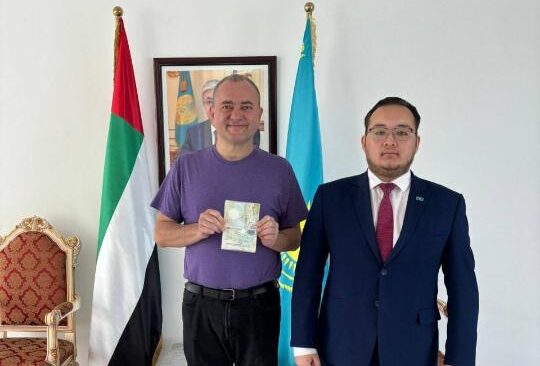
Kazakhstan’s Ministry of Tourism and Sports has announced that Sertac Yener, a British citizen, has become the first foreign national to receive the new Neo Nomad Visa. Kazakhstan introduced updated visa regulations on November 18, 2024, to attract business immigrants, skilled professionals, and tourists. Among the new offerings is the Digital Nomad Visa, which provides long-term residence options for IT specialists, and the Neo Nomad Visa, designed for “neo-nomads” with a verified monthly income of at least $3,000. Applicants for the Neo Nomad Visa are required to provide health insurance and a clean criminal record. The first Neo Nomad Visa was issued at Kazakhstan’s embassy in the UAE. Sertac Yener brings 30 years of experience in the energy sector, focusing on project development, financing, and corporate partnerships. In addition to his professional pursuits, Yener has a deep interest in Kazakhstan’s language, culture, natural landscapes, and gastronomy. His daughter completed studies in Kazakh language and Central Asian studies at the University of Chicago. “Kazakhstan is an amazing country!” Yener said. “With the Neo Nomad Visa program, I have the opportunity to stay in this country for up to one year. The visa will allow me to work remotely in my company and get to know Kazakhstan, immersing myself in nature, a friendly atmosphere, cuisine, music, traditions, and language. Thanks to my daughter, I 've been enjoying the melody and richness of the Kazakh language for some time now.”