• KGS/USD = 0.01144 0%
  • KZT/USD = 0.00207 0%
  • TJS/USD = 0.10407 -0.29%
  • UZS/USD = 0.00008 0%
  • TMT/USD = 0.28571 0%
  • KGS/USD = 0.01144 0%
  • KZT/USD = 0.00207 0%
  • TJS/USD = 0.10407 -0.29%
  • UZS/USD = 0.00008 0%
  • TMT/USD = 0.28571 0%
  • KGS/USD = 0.01144 0%
  • KZT/USD = 0.00207 0%
  • TJS/USD = 0.10407 -0.29%
  • UZS/USD = 0.00008 0%
  • TMT/USD = 0.28571 0%
  • KGS/USD = 0.01144 0%
  • KZT/USD = 0.00207 0%
  • TJS/USD = 0.10407 -0.29%
  • UZS/USD = 0.00008 0%
  • TMT/USD = 0.28571 0%
  • KGS/USD = 0.01144 0%
  • KZT/USD = 0.00207 0%
  • TJS/USD = 0.10407 -0.29%
  • UZS/USD = 0.00008 0%
  • TMT/USD = 0.28571 0%
  • KGS/USD = 0.01144 0%
  • KZT/USD = 0.00207 0%
  • TJS/USD = 0.10407 -0.29%
  • UZS/USD = 0.00008 0%
  • TMT/USD = 0.28571 0%
  • KGS/USD = 0.01144 0%
  • KZT/USD = 0.00207 0%
  • TJS/USD = 0.10407 -0.29%
  • UZS/USD = 0.00008 0%
  • TMT/USD = 0.28571 0%
  • KGS/USD = 0.01144 0%
  • KZT/USD = 0.00207 0%
  • TJS/USD = 0.10407 -0.29%
  • UZS/USD = 0.00008 0%
  • TMT/USD = 0.28571 0%

Viewing results 1 - 6 of 32

EU and Uzbekistan Discuss Steps Toward Easing Visa Access

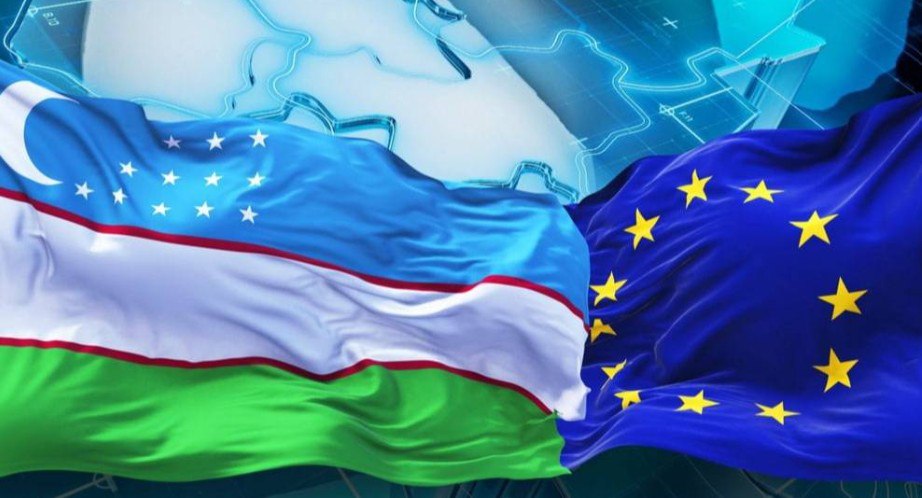
Uzbekistan’s Foreign Ministry has initiated the first round of consultations with experts from the European Commission’s Directorate-General for Migration and Home Affairs, according to the Dunyo news agency. The discussions focused on the potential easing of visa procedures for Uzbek citizens traveling to the European Union for purposes such as work, study, truck driving, or group tourism. Representatives from the European side outlined a number of preconditions Uzbekistan must fulfill before the European Commission can formally consider simplifying visa requirements. Both sides agreed to continue consultations in the coming period to advance the process. The talks follow President Shavkat Mirziyoyev’s official visit to Brussels on October 23-24, during which Uzbekistan and the EU signed an Enhanced Partnership and Cooperation Agreement. The new framework replaces the 1996 agreement and expands bilateral cooperation in trade, investment, digital technologies, environmental protection, and climate resilience. Negotiations on the updated agreement began in 2019 and concluded in 2022. While in Brussels, Mirziyoyev also held meetings with executives from leading European companies and financial institutions, including Linde, SUEZ, Meridiam, Commerzbank, and the European Investment Bank. The sides agreed to pursue new projects worth more than €10 billion across sectors such as energy, chemicals, logistics, critical minerals, textiles, and pharmaceuticals. These investments add to an existing EU-led project portfolio in Uzbekistan valued at more than €40 billion.

The Silk Visa Deadlock: The Long Road to a Borderless Central Asia

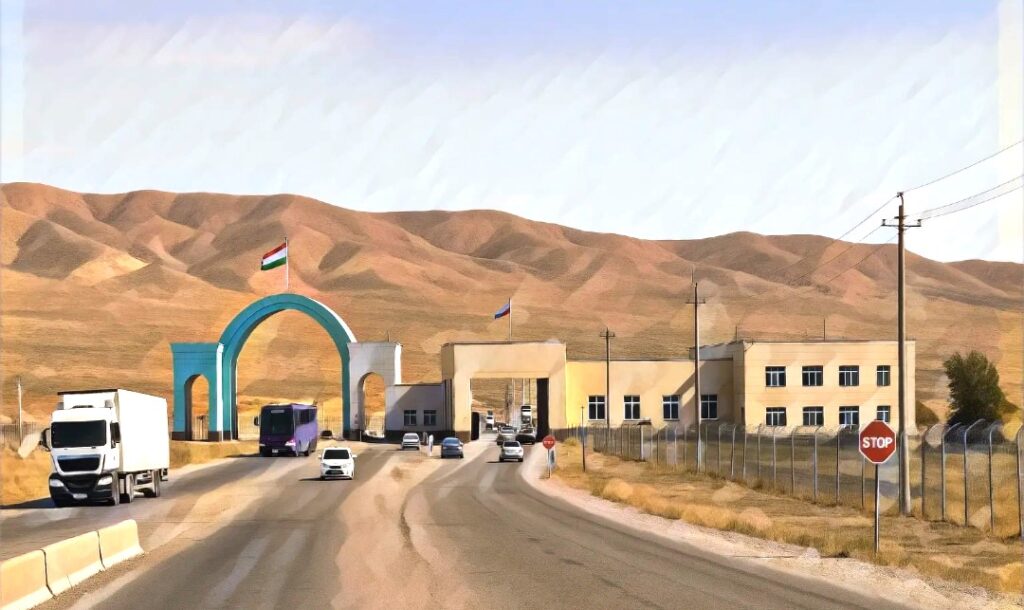
The year 2025 will likely be remembered as a milestone in Central Asian diplomacy. Regional leaders signed landmark agreements on water and energy cooperation and launched major investment projects. At high-level meetings, Central Asian presidents emphasized a new phase of deeper cooperation and greater unity, highlighting strategic partnership and shared development goals. But at ground level, at border crossings such as Korday between Kazakhstan and Kyrgyzstan, or the congested diversion routes replacing the closed Zhibek Zholy checkpoint, the picture is far less seamless. Long queues, heightened scrutiny, and bureaucratic delays remain the norm. While political rhetoric celebrates unity, the reality on the ground tells a different story. The region’s physical borders remain tightly controlled. A key symbol of unrealized integration is the stalled “Silk Visa” project, a proposed Central Asian version of the Schengen visa that would allow tourists to travel freely across the region. The project has made little headway, with experts suggesting that, beyond technical issues, deeper concerns, including economic disparities and security sensitivities, have played a role. Silk Visa: A Stalled Vision Launched in 2018 by Uzbekistan and Kazakhstan, the Silk Visa was envisioned as a game-changer for regional tourism and mobility. Under the scheme, tourists with a visa to one participating country could move freely across Central Asia, from Almaty to Samarkand and Bishkek. Seven years on, the project has yet to materialize. Official explanations point to the difficulty of integrating databases on “undesirable persons.” But as Uzbekistan’s Deputy Prime Minister acknowledged earlier this year, the delay stems from the need to harmonize security services and create a unified system. Experts also cite diverging visa policies and resistance from national security agencies unwilling to share sensitive data. As long as each country insists on determining independently whom to admit or blacklist, the Silk Visa will remain more aspiration than policy. Economic Imbalance: The Silent Barrier The most significant, albeit rarely acknowledged, hurdle to regional openness is economic inequality. Kazakhstan’s GDP per capita, at over $14,000, is significantly higher than that of Uzbekistan or Kyrgyzstan, which hover around $2,500-3,000. This disparity feeds fears in Astana that full border liberalization would trigger a wave of low-skilled labor migration, putting strain on Kazakhstan’s urban infrastructure and labor market. While Kazakhstan is eager to export goods, services, and capital across Central Asia, it remains reluctant to import unemployment or social tension. Migration pressure is already high: according to Uzbekistan’s Migration Agency, the number of Uzbek workers in Kazakhstan reached 322,700 in early 2025. Removing border controls entirely could exacerbate this trend, overwhelming already stretched public services. Security Concerns and Regional Tensions The geopolitical landscape further complicates the dream of borderless travel. A truly open regional system would require a strong, unified external border, something unattainable given Afghanistan’s proximity. The persistent threats of drug trafficking and extremist infiltration compel Uzbekistan and Tajikistan to maintain tight border controls. Kazakhstan, while geographically removed, remains cautious about loosening controls along its southern frontier. Moreover, despite recent agreements on delimiting the Kyrgyz–Tajik border, tensions in...

Turkmenistan Included as Trump Tightens U.S. Immigration Ban After D.C. Shooting

President Donald Trump has announced a sweeping crackdown on immigration following a deadly shooting near the White House this week, placing new scrutiny on immigrants from certain countries – including Turkmenistan. Trump vowed to “permanently pause migration” from what he called “Third World” countries after two National Guard members were shot in Washington, D.C., one of them fatally. In response, U.S. immigration authorities are re-examining green cards and visa approvals for people from 19 countries deemed “countries of concern,” a list that features Turkmenistan alongside nations in Asia, Africa, and the Middle East. New Immigration Review Follows D.C. Attack The policy shift comes in the wake of an ambush-style attack on Wednesday in which an Afghan national allegedly opened fire on U.S. service members outside the White House. Army Specialist Sarah Beckstrom, 20, died from her injuries, and another Guardsman was critically wounded. Authorities arrested Rahmanullah Lakanwal, a 29-year-old Afghan man who arrived in the U.S. in 2021, as the suspect. Trump condemned the shooting as “an act of terror” and highlighted that the suspect entered under a Biden-era Afghan resettlement program. By Thursday, Trump directed U.S. Citizenship and Immigration Services (USCIS) to conduct a “full-scale, rigorous reexamination” of all current green card holders from every “country of concern.” USCIS Director Joseph Edlow said the review was ordered “at the direction of the President” and stressed that “American lives come first.” When pressed on which nations fall under the “countries of concern,” USCIS officials pointed to Trump’s June 4, 2025, presidential proclamation on foreign entry restrictions, which identified 19 countries with deficient security vetting or high visa overstay rates. It imposed a full travel ban on 12 nations and partial visa bans on 7 others. Turkmenistan’s Status in Trump’s Travel Ban Turkmenistan is one of seven countries under partial U.S. travel restrictions, meaning certain visa categories for Turkmen nationals have currently been suspended or tightened. According to the Trump administration, Turkmenistan was flagged due to security screening gaps and a high rate of U.S. visa overstays by its citizens. U.S. officials noted that about 15.35% of Turkmen visitors on tourist visas overstayed their permitted time in recent years. Turkmenistan has also been cited for limited cooperation on repatriating its citizens who are deported from the U.S. Under the June proclamation, Turkmen nationals were barred from obtaining immigrant visas or tourist and student visas for the U.S., though other travel may be allowed on a case-by-case basis. By invoking what he called a “permanent pause” on migration, Trump signaled that even more sweeping immigration restrictions could be ahead. He wrote on social media that anyone who is “not a net asset to the United States, or is incapable of loving our Country” will be removed. For Turkmenistan, inclusion in the U.S. ban list marks a rare spotlight on the country in American immigration policy. Turkmenistan, where emigration is tightly controlled, sees low numbers of its citizens entering the U.S. Department of Homeland Security data for Fiscal Year 2023 indicates that the...

Moldova To End Visa-Free Travel for Kyrgyzstan and Tajikistan

Moldova has formally withdrawn from the Commonwealth of Independent States (CIS) visa-free travel agreement, a move that will introduce visa requirements for citizens of Kyrgyzstan and Tajikistan. The Moldovan parliament approved the government’s proposal to terminate the 1992 Bishkek Agreement, according to inbusiness.kz. The CIS, which originally included 11 post-Soviet states upon its creation in 1991, now counts only seven full members. Although Moldova ended its membership in the CIS earlier, it had continued to uphold visa-free travel arrangements with several former Soviet republics, including countries in Central Asia. The new legislation does not affect Kazakhstan or Uzbekistan. Moldovan officials told local media that Chişinău intends to preserve visa-free travel with these two countries through separate bilateral agreements. “For citizens of Kazakhstan and Uzbekistan, the procedure for travel remains unchanged,” Azattyq.org reported, citing Moldovan government sources. In 2024, Moldova also announced plans to open its first embassy in Kazakhstan’s capital, Astana. The new visa requirements apply solely to citizens of Kyrgyzstan and Tajikistan, who will now need to obtain visas for work, study, or personal travel to Moldova. Authorities in Chişinău explained that the decision is part of Moldova’s broader effort to align its legal framework with European Union standards. EU regulations require visas for all CIS nationals, and Moldova is gradually adjusting its migration and visa policies in preparation for EU accession. The move comes in the wake of Moldova’s October 2024 referendum, in which voters supported the country’s path toward EU membership. Since then, the government has withdrawn from numerous CIS treaties, exited the CIS Interparliamentary Assembly, ceased payments to the Mir television network, and closed its local bureau. Relations between Moldova and Kyrgyzstan have been further strained by unresolved issues, including Kyrgyzstan’s calls for the repayment of a Soviet-era debt and Moldova’s ban on Kyrgyz airlines due to their inclusion on the EU’s aviation safety blacklist. Kyrgyz civil activist Almaz Tazhybay told Vesti.kg that Kyrgyz carriers will only regain access to Moldovan airspace after meeting EU safety requirements. Moldovan authorities have emphasized that the policy is not targeted at any specific country. Officials in Chişinău describe the changes as part of a broader legal realignment as Moldova pursues its goal of joining the European Union by 2030.

Uzbekistan Introduces Visa-Free Travel for U.S. Citizens Starting January 2026

Uzbekistan will implement a visa-free regime for U.S. citizens beginning January 1, 2026, according to a presidential decree signed on November 3, 2025. The announcement was reported by UzA, the country’s official state news agency. Under the new policy, American citizens will be permitted to stay in Uzbekistan for up to 30 days without a visa from the date of entry. The measure aims to strengthen trade, economic, cultural, and humanitarian ties between the two countries, while also enhancing tourism. Since 2021, Uzbekistan has allowed visa-free entry for tourists aged 55 and older from the United States and several other nations, with a maximum stay of 30 days, according to Kun.uz. The expansion of this policy to include all U.S. citizens marks a major step in promoting bilateral travel and business engagement. The proposal to lift visa requirements for U.S. nationals was first introduced in May 2025 through a presidential decree focused on boosting foreign tourist inflows. The same document instructed the Ministry of Foreign Affairs to initiate negotiations with Washington on easing visa conditions for Uzbek citizens traveling to the United States. In a related development, the Uzbek government recently extended visa-free entry to citizens of six more countries, Bahrain, Qatar, Kuwait, Oman, Saudi Arabia, and Jordan, following a Cabinet of Ministers decision issued on October 21.

Turkmenistan Still Requires COVID Tests and Visas for All Visitors

Turkmenistan continues to enforce some of the strictest entry requirements in the world, including COVID-19 testing and complex visa procedures. According to a recent report by The Telegraph, all international arrivals are still subject to a mandatory PCR test at Ashgabat International Airport, despite the global rollback of pandemic-era measures. The nasal swab test, which costs approximately US$31, remains a compulsory step for entry, even though proof of COVID-19 vaccination is not required. All foreign nationals must also obtain a visa and an official invitation letter before travel. For tourists, this invitation must come from a licensed Turkmen travel agency. Business travelers need a letter from the host organization, whether a private company or a government ministry. Applicants must then submit their visa request, along with the invitation, to a Turkmen embassy. Processing can take up to a month unless expedited service is requested, available for approximately US$150 for a 24-hour turnaround. Travelers holding a certified invitation may be eligible for a visa on arrival at Ashgabat airport, but they must present the invitation letter upon entry. Without proper documentation, visitors risk being detained at the airport and denied entry. Even transit passengers are subject to the same strict requirements, including a visa and invitation letter. A special short-term transit visa, valid for stays under five days, is available in limited cases. In addition, anyone staying in Turkmenistan for more than three days must register with the State Migration Service within 72 hours of arrival. All foreign guests must also pay mandatory entry fees: a US$14 “migration fee” and a tourism tax of roughly US$2 per day. A potential shift is on the horizon. In April 2025, President Serdar Berdimuhamedov approved legislation introducing an electronic visa system. Once implemented, travelers will be able to complete a simplified online application process without the need for the traditional invitation letter. Authorities say the e-visa initiative is designed to streamline travel and boost tourism. Until the new system is in place, however, Turkmenistan remains a tightly controlled destination with elaborate entry requirements and limited flexibility for international visitors.