• KGS/USD = 0.01143 0%
  • KZT/USD = 0.00205 0%
  • TJS/USD = 0.10724 0.09%
  • UZS/USD = 0.00008 0%
  • TMT/USD = 0.28571 0%
  • KGS/USD = 0.01143 0%
  • KZT/USD = 0.00205 0%
  • TJS/USD = 0.10724 0.09%
  • UZS/USD = 0.00008 0%
  • TMT/USD = 0.28571 0%
  • KGS/USD = 0.01143 0%
  • KZT/USD = 0.00205 0%
  • TJS/USD = 0.10724 0.09%
  • UZS/USD = 0.00008 0%
  • TMT/USD = 0.28571 0%
  • KGS/USD = 0.01143 0%
  • KZT/USD = 0.00205 0%
  • TJS/USD = 0.10724 0.09%
  • UZS/USD = 0.00008 0%
  • TMT/USD = 0.28571 0%
  • KGS/USD = 0.01143 0%
  • KZT/USD = 0.00205 0%
  • TJS/USD = 0.10724 0.09%
  • UZS/USD = 0.00008 0%
  • TMT/USD = 0.28571 0%
  • KGS/USD = 0.01143 0%
  • KZT/USD = 0.00205 0%
  • TJS/USD = 0.10724 0.09%
  • UZS/USD = 0.00008 0%
  • TMT/USD = 0.28571 0%
  • KGS/USD = 0.01143 0%
  • KZT/USD = 0.00205 0%
  • TJS/USD = 0.10724 0.09%
  • UZS/USD = 0.00008 0%
  • TMT/USD = 0.28571 0%
  • KGS/USD = 0.01143 0%
  • KZT/USD = 0.00205 0%
  • TJS/USD = 0.10724 0.09%
  • UZS/USD = 0.00008 0%
  • TMT/USD = 0.28571 0%

Viewing results 1 - 6 of 17

South Korea to Support Landfill Project in Northern Kyrgyzstan

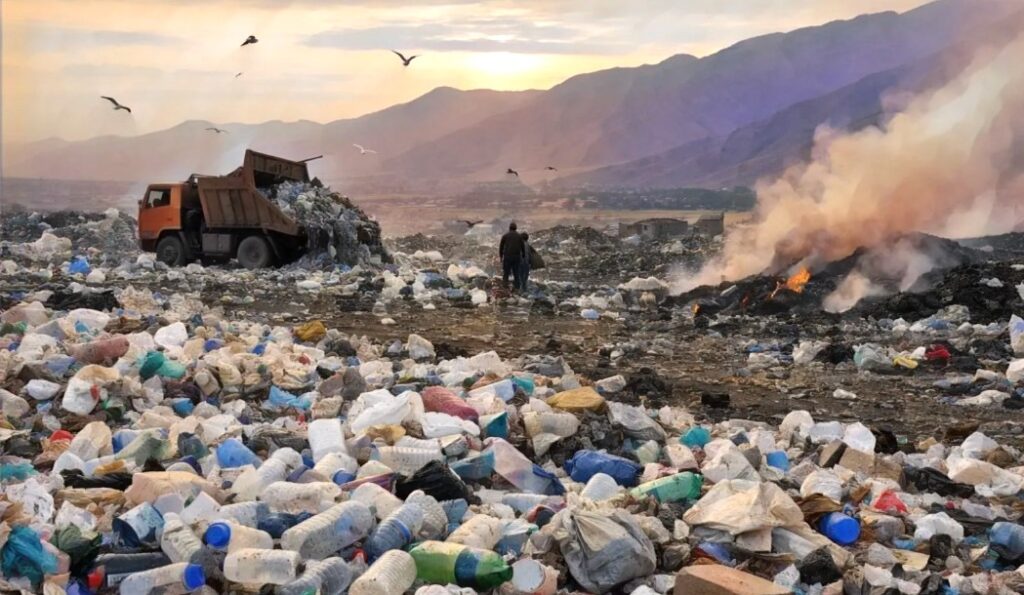
Kyrgyzstan is partnering with South Korean organizations to construct a sanitary landfill in Kemin, a town in the northern Chui region, approximately 95 km east of Bishkek. Earlier this month, the Kyrgyz Ministry of Natural Resources, Ecology, and Technical Supervision held a meeting with representatives from South Korea’s MYC Inc. (Make Your Climate) to secure grant funding for the initiative. The two sides also conducted a joint study to identify a suitable location for the future landfill. The project is designed to implement an integrated waste management system that includes the sorting and incineration of solid waste, thereby reducing landfill volume and minimizing environmental harm. Scheduled to run from 2027 to 2031, the project has an estimated budget of up to $10 million. The Korea Environmental Industry and Technology Institute (KEITI) will oversee project management. The landfill is part of broader development plans for Kemin and the wider Chui region, which include the creation of an eco-friendly urban center, Kemin City. In January 2025, President Sadyr Japarov signed a decree to build the new city on 353 hectares. The project aims to provide modern housing, reduce outward migration, and retain skilled local labor. Kemin and the nearby town of Orlovka were historically industrial hubs during the Soviet era. However, following the collapse of the USSR, many local enterprises shut down, prompting widespread out-migration. The development of Kemin City and its associated infrastructure is intended to reverse this trend and stimulate the local economy.

Kyrgyzstan to Launch Program for Recycled Resources Market

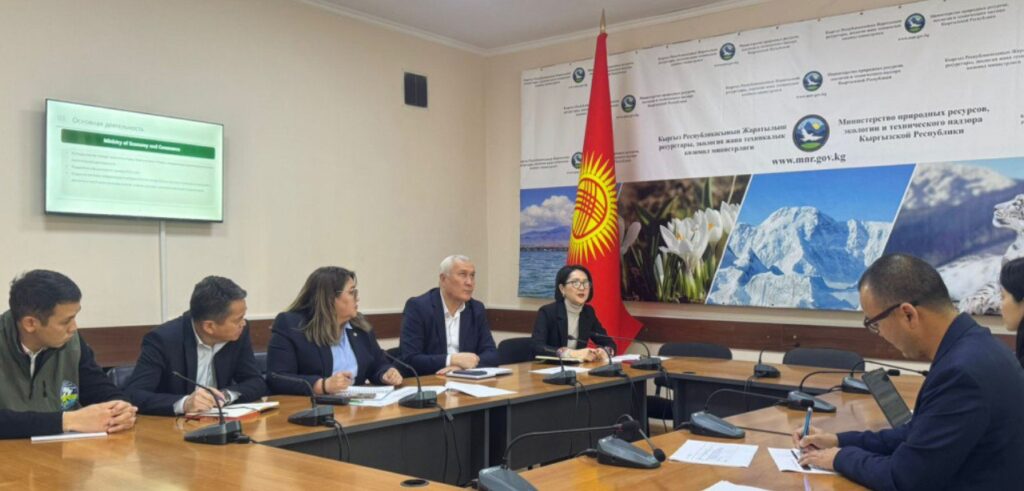
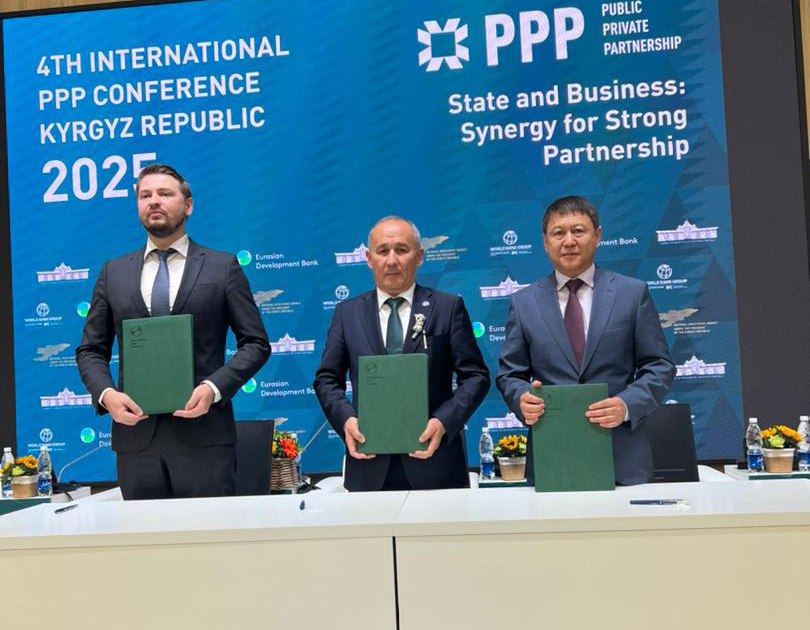
Kyrgyzstan’s Ministry of Natural Resources, Ecology, and Technical Supervision, supported by the Russian-Kyrgyz Development Fund (RKDF) and the Eurasian Development Bank (EDB), has signed a trilateral agreement to develop a national program for establishing a recycled resources market. The agreement was formalized in Bishkek. According to the ministry, the initiative aims to support the creation of a modern waste management system based on green economy principles and more efficient use of raw materials. The RKDF and EDB will provide financing and expert support for drafting the program. The forthcoming plan will include pilot projects integrating recycled materials into economic activity, improvements to recycling infrastructure and supply chains, and incentives to encourage businesses to increase the use of secondary raw materials. Minister of Natural Resources Meder Mashiev emphasized that building a recycled resources market is key to transitioning toward a circular economy. He added that international support would help integrate secondary materials into production and unlock new business opportunities. RKDF Chairman Artem Novikov noted that the final program would serve as a tool to stimulate recycling, attract investment, and bolster the country’s climate resilience efforts. The agreement underscores Kyrgyzstan’s growing cooperation with international financial institutions in the field of environmental development.

Beyond Infrastructure: China’s New Environmental Footprint in Central Asia

Uzbekistan’s economy is expanding at one of the fastest rates in Central Asia, creating new opportunities for businesses and citizens alike. Yet this rapid growth also brings challenges that the country must learn to manage. Among them, one of the most pressing issues is the growing problem of waste management, which has become an unfortunate consequence of economic progress. Over the past decade, the volume of municipal solid waste in Uzbekistan has increased steadily. It rose from about 6.1 million tons in 2010 to 7 million tons in 2017, and current projections suggest that annual waste generation could reach as high as 16 million tons by 2028. Currently, the country generates around 14 million tons of waste annually, but only a small portion of this - approximately 5% - is recycled. Landfills now release more than seven million tons of greenhouse gases every year, and more than forty thousand tons of toxic waste seep into the soil, threatening both the environment and public health. The government of Uzbekistan has recognized the urgency of the issue and placed waste management at the heart of its green development agenda. Alongside the promotion of renewable energy and electric vehicles, the authorities are investing in waste-to-energy projects that can help convert solid waste into electricity. This approach can reduce the amount of waste going to landfills while providing a cleaner source of energy. China’s Role in Uzbekistan’s Waste-to-Energy Development To implement these projects, Uzbekistan is actively cooperating with foreign partners who can bring technology, investment, and experience. Among these partners, China has emerged as a leading player. Chinese companies, facing a saturated domestic market, are increasingly looking abroad for new opportunities. Uzbekistan’s ambitious targets in waste management perfectly align with this interest, creating a partnership that benefits both sides. Several large-scale projects have already been launched. China’s CAMC Engineering is investing about $350 million to build two waste-to-energy plants in the Andijan and Tashkent regions. Another Chinese company, Shanghai SUS Environment, has signed an agreement with Uzbekistan’s Waste Management Agency to develop projects using advanced green technology. In addition, China Everbright Environment Group has announced the creation of joint ventures with Uzbek partners Maxsus and CR No.17 Second Engineering. These partnerships will result in two new plants in Namangan and Ferghana, each with an estimated cost of $283 million. Opportunities and Risks These initiatives promise significant benefits. For China, they open the door to exporting green technologies, generating new revenue, and deepening economic ties in Central Asia. The growing demand for waste-to-energy projects across the region also creates opportunities for China to share its proven technological model, helping partner countries build capacity while integrating more closely into China’s expanding technological ecosystem. Beyond the economic gains, this cooperation is shaping China’s broader image. Through such environmentally focused projects, Beijing is gradually being seen not only as a builder of physical infrastructure but also as a provider of innovative and sustainable solutions. This transformation strengthens China’s soft power and adds new depth to its Belt and...

Study Highlights Plastic Waste Challenges in Kazakhstan

Kazakhstan is grappling with a growing plastic pollution problem, as highlighted in a recent study conducted by the Ministry of Ecology and Natural Resources. The research, covering the period from 2013 to 2022, provides critical insights into the increase in plastic consumption, the resulting waste, and the systemic challenges that hinder effective waste management. The findings were part of the regional project "Plastic Waste in Remote and Mountainous Areas of Kazakhstan and Uzbekistan," implemented by the CSD Center (Cooperation for Sustainable Development of the Republic of Kazakhstan). Rapid Growth in Plastic Consumption The study revealed a significant rise in the volume of plastic products entering the Kazakh market over the past decade, increasing from 387,000 tons in 2013 to 855,000 tons in 2022. Key industries driving this growth include: Packaging: Representing over 23% of total plastic consumption, with 196,000 tons used in 2022 alone. Construction: Accounting for 19% (167,000 tons), where plastic is used in durable materials such as pipes and insulation. Transport: Consuming 17% of all plastic due to the increased production of vehicles and the use of lightweight plastic components. Escalation in Plastic Waste The growing use of plastic has led to a corresponding rise in waste. In 2022, plastic waste generation reached 296,000 tons, more than double the amount recorded in 2013. Packaging remains the largest source of waste, comprising 66% of the total, largely due to the prevalence of disposable plastic bags and other single-use packaging materials. By contrast, the construction and transport sectors generated relatively less waste, as the plastic used in these industries typically has a longer lifespan. The study also identified the primary types of plastic waste in Kazakhstan: Polyethylene: 38% Polypropylene: 23% Polyethylene terephthalate (PET): 14% Challenges in Plastic Waste Management The research outlined several obstacles that hinder effective management of plastic waste in Kazakhstan: Insufficient Infrastructure: Existing waste management facilities are unable to handle the growing volumes of plastic waste. Lack of Separate Collection Systems: The absence of infrastructure for sorting waste at the source limits recycling efforts. Low Environmental Awareness: A significant portion of the population remains unaware of the importance of waste sorting and recycling. Recommendations for a Circular Economy To address these issues, the study suggests improving legislation to limit the use of single-use plastic items and promote the adoption of recycled materials. These measures could create favorable conditions for Kazakhstan’s transition to a circular economy, where resources are reused and recycled rather than discarded. Additionally, the research emphasizes the need to develop infrastructure for waste sorting and recycling while raising public awareness about the environmental impact of plastic pollution. Regional Context Kazakhstan’s findings are part of broader efforts across Central Asia to combat plastic pollution. Countries in the region, including Kazakhstan, are exploring initiatives such as phasing out plastic bags to address the growing environmental challenge. For an overview of these regional efforts, see The Times of Central Asia’s reporton plastic bag bans. Conclusion Kazakhstan’s plastic waste study highlights the urgent need for systemic change in managing...

Central Asia Tackles Plastic Pollution with Bag Ban Initiatives

Globally, an estimated 5 trillion plastic bags are used every year. These bags take approximately 1,000 years to decompose in landfills and do not fully break down. Instead, they photodegrade into microplastics, which absorb toxins and continue to pollute the environment. Recognizing the urgency of this issue, Central Asian countries are committing to phasing out plastic bags, each pursuing distinct approaches. Uzbekistan Uzbekistan plans to introduce a draft national program to reduce plastic pollution for 2025–2027. This initiative is part of the draft State Program for the Implementation of the Strategy "Uzbekistan-2030" in the Year of Environmental Protection and Green Economy, currently under public discussion. The proposal includes: A ban on the production, import, and use of plastic bags starting in 2027. Promoting environmentally friendly, biodegradable packaging. Regulating harmful chemicals in plastic products. Encouraging recycled plastic use in packaging through established coefficients. The draft program is expected to be developed by September 2025 and submitted to the Cabinet of Ministers by November 2025. A related draft presidential decree outlines additional measures, such as: Developing legislation requiring manufacturers and importers of plastic packaging to collect and dispose of plastic waste. Establishing collection and disposal facilities. Imposing a disposal fee for plastic waste by November 1, 2025. Kazakhstan Kazakhstan had initially planned to ban plastic bags by 2025. However, the Ministry of Ecology and Natural Resources determined that the country is not yet prepared for this transition. Research reveals a significant gap: while the consumption of plastic tableware and packaging exceeds 430 million pieces annually, the production of alternative materials is limited to only 10 million pieces. This disparity highlights the urgent need to develop sustainable packaging solutions before implementing a comprehensive ban. Kyrgyzstan Kyrgyzstan is set to ban the use of polyethylene bags and plastic nationwide starting January 1, 2027. The Law on Limiting the Circulation of Polymer Film and Plastic Bags in the Territory of the Kyrgyz Republic, signed by President Sadyr Japarov in 2023, outlines penalties for violations: For citizens: Fines of 10,000 KGS (approximately $114.90). For legal entities: Fines of 28,000 KGS (approximately $321.80). Warnings will be issued for first-time violations involving the free distribution of plastic bags. Subsequent violations will incur fines: For legal entities: 5,000 KGS (approximately $57.40). For individuals: 1,000 KGS (approximately $11.40). Tajikistan Tajikistan will implement a ban on the import and use of plastic bags starting January 1, 2025. To support this transition, authorities have focused on developing environmentally friendly packaging alternatives made from materials such as cardboard, paper, fabric, ceramics, and biodegradable polymers.   These varied approaches reflect the commitment of Central Asian countries to tackling the global challenge of plastic pollution. By balancing environmental priorities with practical considerations, these nations aim to create a cleaner, more sustainable future.

Solid Waste Recycling Plant Under Construction in Bishkek

Bishkek municipality has announced progress on the construction of a solid waste recycling plant at the city’s sanitary landfill, supported by a Chinese investor. Concrete foundations are being poured, and equipment and components for the facility have begun arriving from China. Currently, over 180 Chinese workers and engineers are active at the site. On March 29, Kyrgyzstan’s Cabinet of Ministers and the Chinese investor signed an agreement for the plant’s construction. The facility will generate electricity by incinerating municipal solid waste. In its initial phase, the plant is expected to process 1,000 tons of waste daily, with plans to increase capacity to 3,000 tons per day. The project’s total investment amounts to approximately $95 million, with construction slated for completion in December 2025. Addressing a Growing Problem Solid waste disposal has long been a critical issue in Kyrgyzstan, particularly in Bishkek, the nation’s largest city. According to the 24.kg news agency, the per capita production of waste is rising. Almaz Oskonbaev, an official from the Ministry of Natural Resources, Ecology, and Technical Supervision, reported that 1.792 million tons of solid waste were collected nationwide in 2023, a significant increase from 1.177 million tons in 2019. This equates to approximately 279 kilograms of garbage per person annually. Bishkek’s sanitary landfill currently receives around 200 tons of waste daily from the city and its suburbs, according to landfill director Nurlan Jumaliev. A New Landfill to Complement Recycling Efforts In a bid to improve waste management, Bishkek inaugurated a new sanitary landfill on October 31, 2023. Supported by the European Bank for Reconstruction and Development (EBRD) and the European Union (EU), this facility complies with both national and EU environmental standards. With a storage capacity of 1.9 million cubic meters, it is expected to accommodate the city’s waste disposal needs for at least a decade. The construction of the recycling plant represents a significant step forward in addressing Bishkek’s mounting waste challenges while contributing to sustainable energy production.