• KZT/USD = 0.00217
  • TJS/USD = 0.10800
  • UZS/USD = 0.00008
  • TMT/USD = 0.29850
  • KZT/USD = 0.00217
  • TJS/USD = 0.10800
  • UZS/USD = 0.00008
  • TMT/USD = 0.29850
  • KZT/USD = 0.00217
  • TJS/USD = 0.10800
  • UZS/USD = 0.00008
  • TMT/USD = 0.29850
  • KZT/USD = 0.00217
  • TJS/USD = 0.10800
  • UZS/USD = 0.00008
  • TMT/USD = 0.29850
  • KZT/USD = 0.00217
  • TJS/USD = 0.10800
  • UZS/USD = 0.00008
  • TMT/USD = 0.29850
  • KZT/USD = 0.00217
  • TJS/USD = 0.10800
  • UZS/USD = 0.00008
  • TMT/USD = 0.29850
  • KZT/USD = 0.00217
  • TJS/USD = 0.10800
  • UZS/USD = 0.00008
  • TMT/USD = 0.29850
  • KZT/USD = 0.00217
  • TJS/USD = 0.10800
  • UZS/USD = 0.00008
  • TMT/USD = 0.29850
29 November 2026

Viewing results 1 - 6 of 2

Opinion: How Afghanistan’s Qosh Tepa Canal Could Affect Kazakhstan’s Water Security

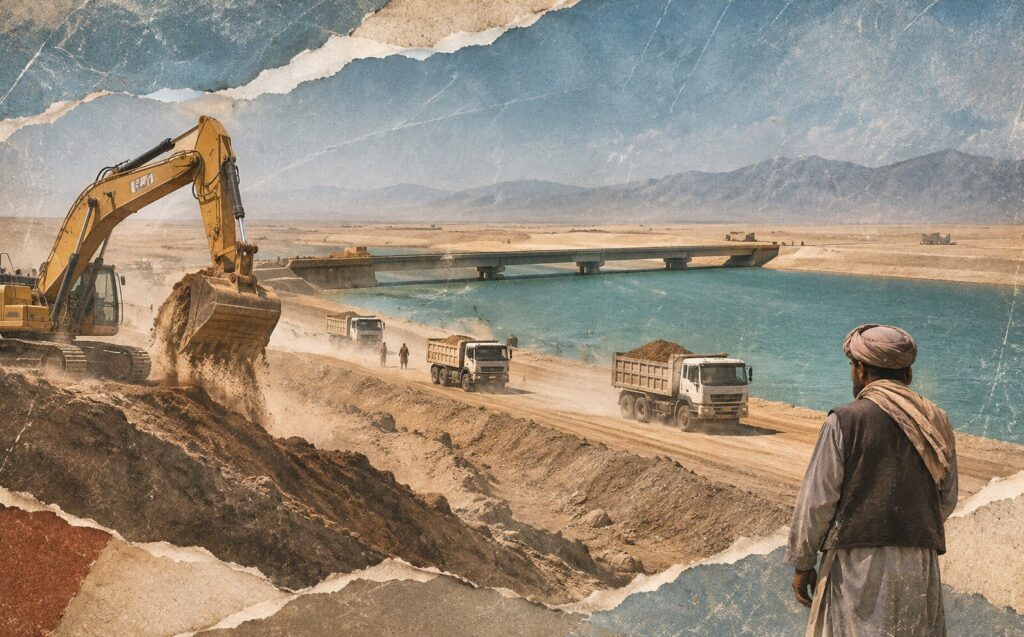
Afghanistan’s Qosh Tepa Canal poses a threat to water supplies in Uzbekistan and Turkmenistan. It could also leave less water for farms in southern Kazakhstan and complicate efforts to restore the North Aral Sea. Kazakhstan does not use water from the Amu Darya, the canal’s source, and the canal does not draw water from the Syr Darya. Uzbekistan, however, draws on both rivers. At an international conference on Afghanistan and regional security in Almaty on November 11, I examined how Uzbekistan’s response to a shortage on the Amu Darya could affect the flow of the Syr Darya into Kazakhstan. Water for Afghanistan The Qosh Tepa Canal is one of the largest infrastructure projects in modern Afghanistan. It is designed to run about 177 miles (285 kilometers). Afghan officials expect it to irrigate about 550,000 hectares. Agriculture remains a major source of employment and income in rural Afghanistan. Expanding irrigation could create jobs and allow farmers to produce more food, reducing the country’s dependence on imports. Afghanistan’s neighbors also have a stake in the sustainable development of its agricultural sector. Once fully operational, the canal could divert 8% to 20% of the Amu Darya’s average annual flow, according to estimates cited by the Stockholm International Water Institute. On November 19, Uzbekistan’s water resources minister, Shavkat Khamraev, said he did not expect full-scale withdrawals before 2030. He cited preliminary Afghan estimates that put annual withdrawals at about 6 billion cubic meters in dry years and up to 10 billion in wet years. The two countries are already in talks and intend to formalize water use arrangements once construction is complete. How much water Afghanistan actually takes will depend in part on how quickly it brings new farmland under irrigation. Irrigation efficiency and the volume of water flowing through the Amu Darya will also affect withdrawals. How Uzbekistan Links the Two River Basins Pressure on the Amu Darya could prompt Uzbekistan to reconsider its agricultural and investment priorities. It could also speed up irrigation improvements, including the adoption of water-saving technologies. Most of these measures would directly affect the Amu Darya basin, but Uzbekistan’s water policies cover both rivers. For Kazakhstan, the question is whether Uzbekistan would rely more heavily on the Syr Darya if it had less water from the Amu Darya. Modernizing irrigation systems and jointly forecasting water demand could ease pressure on both rivers. Prolonged droughts and too little investment in irrigation could make it harder for the two countries to reconcile their interests. For now, the idea that the canal could affect cooperation between Kazakhstan and Uzbekistan on the Syr Darya remains a hypothesis. Testing it will require comparable data on water use and joint modeling. What Is at Stake for the North Aral Sea The Syr Darya supplies farms in southern Kazakhstan before it reaches the North Aral Sea. Kazakhstan’s Ministry of Water Resources and Irrigation reports that the volume of water in the sea rose from 18.9 billion cubic meters in 2022 to 23.4 billion by August...


Rain Festival: How Ancient Tirgon Became an Official Holiday in Tajikistan

Until recently, Tirgon was remembered mainly through medieval poetry and scholarly references. In 2023, an apricot festival and dried-fruit exhibition were held in its honor in Dushanbe. Now, the ancient agricultural holiday is listed in Tajikistan’s official calendar of festive dates. In 2026, it was celebrated for the first time under its new official status. A Holiday Rooted in Antiquity Tirgon belongs to the ancient seasonal traditions of Iranian peoples and is mentioned in sources including Ferdowsi’s epic poem Shahnameh. Tajik sources trace these seasonal holidays back several millennia. Tirgon was traditionally associated with the 13th day of the month of Tir in the ancient Iranian calendar, with celebrations lasting several days. At its core, the holiday is connected with water and the fertility of the land. In ancient practice, people prayed to ancestral spirits for protection from drought before the new harvest was gathered. From Custom to Law Tirgon received official status only recently. An amendment to Tajikistan’s Law “On Holidays” added the festival to the country’s calendar of official holiday dates in 2025. The change was presented as part of Tajikistan’s effort to preserve national cultural heritage and revive ancient folk traditions. The country’s holiday calendar already contained dozens of dates, though not all official holidays are non-working days. Tirgon’s new status shows its place in the country’s cultural life and in the state-backed revival of ancient seasonal traditions. The First Official Tirgon In 2026, Tirgon was marked for the first time after being added to the official holiday calendar. The date is observed on July 1, but the 2026 production calendar did not make it an additional non-working day. To mark the holiday, the president addressed the nation with a message connecting the ancient reverence for water with Tajikistan’s modern water diplomacy. The message referred to the International Decade for Action “Water for Sustainable Development” and Tajikistan’s glacier-protection initiatives. Through that framing, the old ritual was tied to one of Tajikistan’s main foreign-policy themes: water. Part of a Seasonal Cycle Tirgon is part of Tajikistan’s revived cycle of ancient seasonal holidays. In that cycle, Sada is associated with fire and purification. Nowruz marks renewal, and Mehrgon is linked to the harvest. Tirgon occupies the place of water and rain, without which farming is impossible. Each holiday is tied to a time of year and a natural element revered in ancient tradition. Its return to the official calendar gives an old ritual a new public role. For many years, knowledge of Tirgon survived mainly in old manuscripts and scholarly descriptions. Its modern revival moved quickly. Public celebrations resumed in 2023. Official recognition followed in 2025, and the first observance under the new status came in 2026. Tajikistan has made water diplomacy a major part of its international agenda, including glacier protection. In that context, an ancient holiday dedicated to rain and the fertility of the land has taken on contemporary political meaning. Tirgon is a reminder that water in the region is a condition for agriculture and survival.