• KGS/USD = 0.01143 0%
  • KZT/USD = 0.00206 0%
  • TJS/USD = 0.10811 -0.18%
  • UZS/USD = 0.00008 0%
  • TMT/USD = 0.28571 0%
  • KGS/USD = 0.01143 0%
  • KZT/USD = 0.00206 0%
  • TJS/USD = 0.10811 -0.18%
  • UZS/USD = 0.00008 0%
  • TMT/USD = 0.28571 0%
  • KGS/USD = 0.01143 0%
  • KZT/USD = 0.00206 0%
  • TJS/USD = 0.10811 -0.18%
  • UZS/USD = 0.00008 0%
  • TMT/USD = 0.28571 0%
  • KGS/USD = 0.01143 0%
  • KZT/USD = 0.00206 0%
  • TJS/USD = 0.10811 -0.18%
  • UZS/USD = 0.00008 0%
  • TMT/USD = 0.28571 0%
  • KGS/USD = 0.01143 0%
  • KZT/USD = 0.00206 0%
  • TJS/USD = 0.10811 -0.18%
  • UZS/USD = 0.00008 0%
  • TMT/USD = 0.28571 0%
  • KGS/USD = 0.01143 0%
  • KZT/USD = 0.00206 0%
  • TJS/USD = 0.10811 -0.18%
  • UZS/USD = 0.00008 0%
  • TMT/USD = 0.28571 0%
  • KGS/USD = 0.01143 0%
  • KZT/USD = 0.00206 0%
  • TJS/USD = 0.10811 -0.18%
  • UZS/USD = 0.00008 0%
  • TMT/USD = 0.28571 0%
  • KGS/USD = 0.01143 0%
  • KZT/USD = 0.00206 0%
  • TJS/USD = 0.10811 -0.18%
  • UZS/USD = 0.00008 0%
  • TMT/USD = 0.28571 0%

Viewing results 1 - 6 of 62

Kazakhstan and Germany Partner on Sustainable Water Management

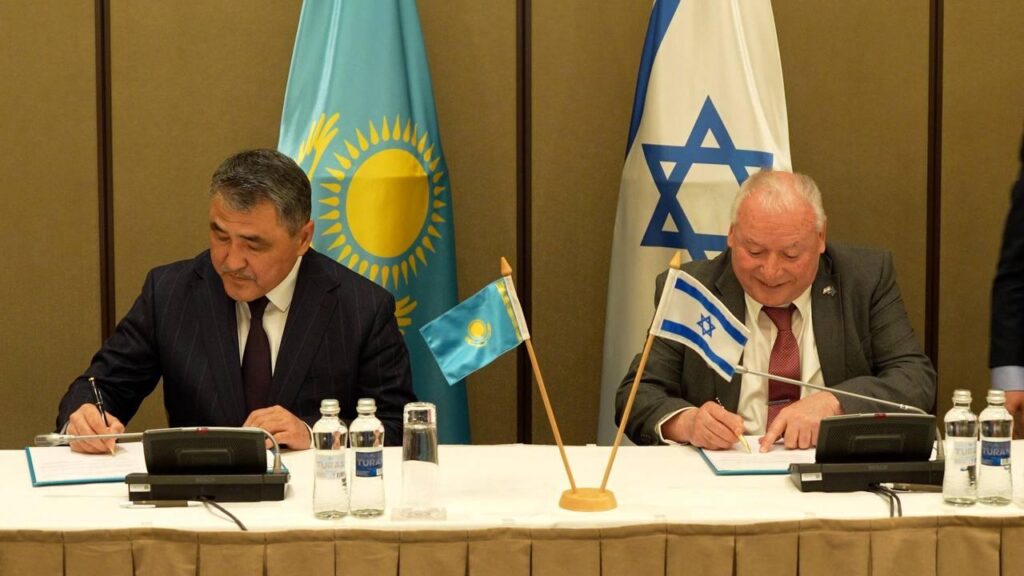
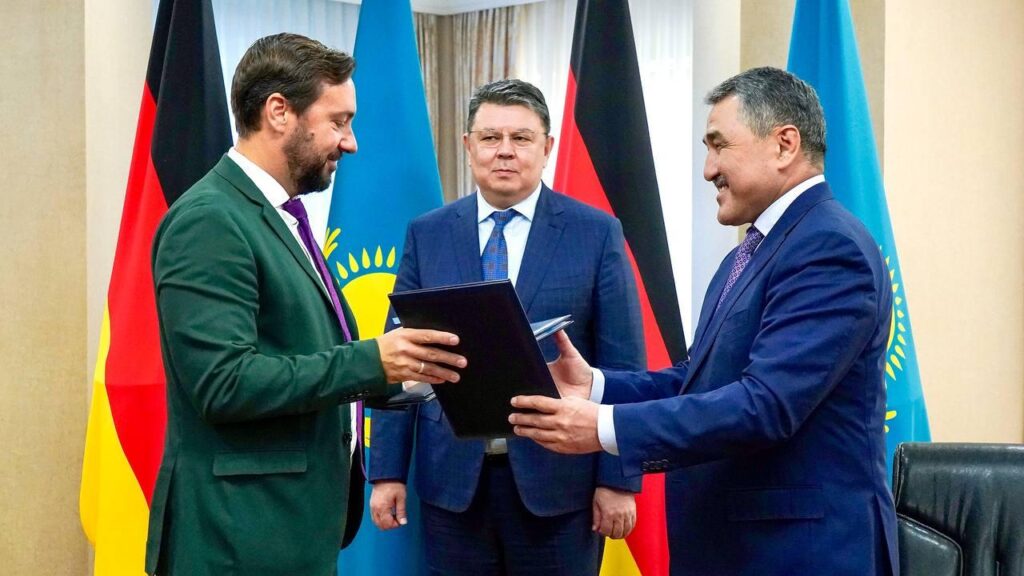
Kazakhstan’s Ministry of Water Resources and Irrigation and the German Water Partnership (GWP) signed a Strategic Partnership Agreement on October 8 aimed at enhancing bilateral cooperation in sustainable water management. The agreement will allow Kazakhstan to adopt international best practices and advanced water-saving technologies, strengthen climate resilience in the water sector, improve flood and drought response, and expand training for water-sector professionals. GWP is Germany’s leading water-sector network with a strong international focus. It brings together around 300 companies, trade associations, and institutions from business, science, and research. German expertise is already contributing to Kazakhstan’s digital projects in water resource forecasting, modeling, and accounting. German technologies are also being used in the construction of hydraulic infrastructure across the country. Following the signing, Deputy Prime Minister Kanat Bozumbayev and GWP Managing Director Boris Greifeneder discussed plans to deepen cooperation. One key proposal was the establishment of a Kazakh-German Water Innovation Hub, to be housed at the Information and Analytical Center of the Ministry of Water Resources and Irrigation, with GWP’s support. In a related initiative, the Kazakh-German University (DKU), the National Academy of Sciences of Kazakhstan, and the Kazakh National Agrarian Research University, supported by Germany’s Hanns Seidel Foundation, recently launched a new scientific and educational hub: the Kazakh-German Nexus Institute. Headquartered in Almaty, the Nexus Institute will focus on developing evidence-based policies for sustainable land and water use in Central Asia. Water resource management remains a critical priority for Kazakhstan, particularly in the country’s arid southern regions where agriculture depends heavily on efficient irrigation systems.

Water Level in Lake Balkhash Continues to Rise

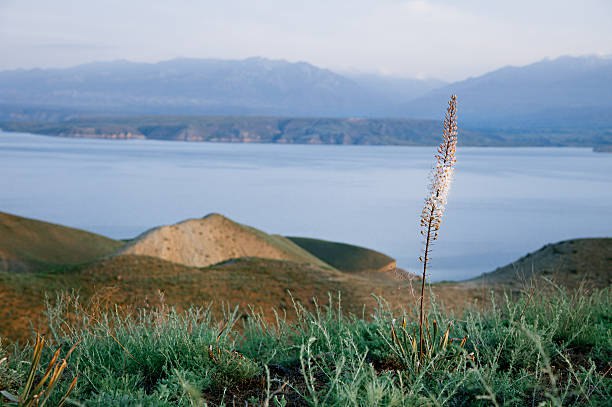
The water level in Kazakhstan’s Lake Balkhash has increased by 32 centimeters during the first half of 2025, rising from 341.55 to 341.87 meters above sea level, based on the Baltic height system, according to data released by Kazakhstan’s Ministry of Water Resources and Irrigation. Located approximately 280 kilometers northwest of Almaty, Lake Balkhash is one of Asia’s largest inland bodies of water and ranks as the fifteenth-largest lake in the world by surface area. Since the beginning of 2025, 8.52 billion cubic meters of water have been discharged from the Kapchagay Reservoir in the Almaty region into Lake Balkhash. This marks an increase from 8 billion cubic meters over the same period in 2024. Officials expect total inflow from the reservoir to reach approximately 12 billion cubic meters by year-end. The lake’s hydrological health is closely tied to the transboundary Ili River, which originates in China and supplies nearly 70% of Lake Balkhash’s total inflow. The Ili’s flow is regulated by the Kapchagay Reservoir, which in 2025 is at full capacity for the second consecutive year, a milestone not seen in over a decade. The reservoir had previously reached full capacity in 2024 for the first time in ten years. In December 2024, Kazakhstan signed a cooperation agreement with the French Development Agency (AFD) and the French Geological Survey (BRGM) to support a long-term conservation effort for Lake Balkhash. The agreement outlines a comprehensive study of the lake basin and the development of a sustainability strategy through 2040, aiming to safeguard one of Central Asia’s most ecologically and economically significant water bodies.

Kyrgyzstan Offers Support to Tajikistan with Innovative Water-Saving Technology

Kyrgyzstan is offering a novel solution to Tajikistan’s mounting water scarcity and pasture degradation: the construction of artificial glaciers, or so-called “ice towers.” These structures store water during the winter and release it during the arid summer months, providing a lifeline for communities affected by climate change. Innovation Amid a Warming Climate The initiative was highlighted during the session “Activating Global Action to Enhance Glacier Resilience: Civil Society Experiences in Central Asia,” held as part of the recent International Conference on Glacier Conservation in Dushanbe. According to Anar Alymkulova, executive director of Kyrgyzstan’s Institute for Sustainable Development, artificial glaciers have proven effective in mitigating the effects of climate change and addressing water shortages. Since the first ice tower was constructed in 2022 in Jalal-Abad, the initiative has expanded significantly. Two more towers were added in 2023, and in 2024, seven were built in Batken region, collectively storing over 1.5 million cubic meters of ice during the winter. By the end of this year, four additional towers are planned in the Batken and Leylek districts. In total, approximately 30 such structures now operate across Kyrgyzstan. How Ice Towers Work The technology is simple yet effective. Water from springs is channeled via an underground pipeline, spanning several kilometers, to a vertical pipe up to 20 meters tall. During winter, water is sprayed from the pipe and freezes, forming an ice tower 30 to 50 meters high. In the spring and summer, the ice melts gradually, supplying water for people and livestock. Oleg Guchgeldiev, Kyrgyzstan's representative in the UN's Food and Agriculture Organization (FAO), noted that each ice tower costs between $3,000 and $4,000 and can store up to 50,000 cubic meters of water. This method offers a practical solution in remote, arid regions where traditional water sources have become unreliable. A Critical Issue for Tajikistan Sustainable water management is a growing concern in Tajikistan, where more than 1,000 glaciers have disappeared in the last 23 years. The country has lost about 20% of its glacier volume and 30% of its glacier area over the past five to six decades. According to UNEP projections, Central Asia could lose over half its glaciers by 2050, jeopardizing water security for more than 64 million people, particularly in rural and mountainous areas. In response, the Tajikistan's President Emomali Rahmon spearheaded a successful campaign at the UN General Assembly to declare 2025 the International Year of Glacier Conservation. The initiative culminated in a major conference from May 29 to 31 in Dushanbe, attracting over 2,500 delegates from 80 countries and numerous international organizations. A Scalable Regional Solution The Kyrgyz model of artificial glaciers presents a scalable solution for Tajikistan and potentially the broader Central Asian region. As glacier retreat accelerates and drought risks rise, such technologies could play a key role in national climate adaptation strategies. “Artificial glaciers are not only a way to store water, but also a tool for adapting to a changing climate,” experts at the Dushanbe conference emphasized. “They demonstrate how local communities...

Kazakhstan, Tajikistan, and Uzbekistan to Share Water from Bahri Tojik Reservoir in Summer 2025

Kazakhstan, Tajikistan, and Uzbekistan have agreed to jointly use irrigation water from Tajikistan’s Bahri Tojik reservoir during the summer of 2025. The Bahri Tojik reservoir, formerly known as the Kairakkum reservoir until its renaming in 2016, is one of Tajikistan’s largest water bodies. Located in the Sughd region in the north of the country, it was constructed on the Syr Darya River and has been operational since 1959. During the summer growing season, Tajikistan typically releases additional water to support downstream countries, including Uzbekistan and Kazakhstan, which face seasonal irrigation shortages. Water ministers from the three countries signed a protocol outlining the use of the reservoir from June to August 2025. The agreement aims to ensure a balanced and equitable distribution of water resources among the signatories. For Kazakhstan, the agreement is particularly significant, as the country anticipates receiving 491 million cubic meters of water from the reservoir at the height of the growing season. Nurzhan Nurzhigitov, Kazakhstan’s Minister of Water Resources and Irrigation, stressed the importance of regional cooperation on water issues. “Kazakhstan is committed to implementing joint projects on water resources management, as well as promoting the principles of international water law. Water is not only a natural resource, but also an instrument of sustainable development and regional stability,” he said.

Kazakhstan and World Bank Launch Second Phase to Revive Northern Aral Sea

In partnership with the World Bank, the Ministry of Water Resources and Irrigation of Kazakhstan has launched the second phase of a long-term initiative to restore the Northern Aral Sea. This stage aims to revive the region’s ecosystem and enhance the quality of life for local communities. Feasibility Study Underway Key objectives of this phase include reconstructing the Kokaral Dam and raising the sea level to 44 meters, measured using the Baltic height system. Plans also call for constructing a water control facility near the village of Amanotkel, designed to regulate water distribution within the Akshatau and Kamystybas lake systems in Kyzylorda Region’s Aral District. A technical feasibility study is expected to be completed by December 2025. Once implemented, these measures are projected to expand the Northern Aral Sea’s surface area to 3,913 square kilometers, increasing its total water volume to 34 cubic kilometers. The full refill process is anticipated to take four to five years, based on hydrological data from the Syr Darya River basin covering the period 1913-2019. Strategic Decisions on Dam Reconstruction The current conservation strategy was finalized following consultations with local authorities and water management experts. Minister of Water Resources and Irrigation Nurzhan Nurzhigitov stated that the plan reflects the region’s actual hydrological conditions and was selected for its balance of timeliness and efficacy. “We evaluated multiple implementation options. Discussions with residents and industry veterans helped guide our decision. The final plan was deemed optimal after all relevant factors were considered,” Nurzhigitov said. Sameh Wahba, the World Bank’s Regional Director for Europe and Central Asia, underscored the project’s ecological and economic significance. He confirmed that the World Bank not only funded the feasibility study but remains committed to supporting the project through its next stages. According to Wahba, the initiative is expected to create jobs and stimulate sectors such as fisheries, agriculture, and tourism. Progress Achieved in the First Phase The first phase of the rescue effort has already delivered tangible benefits. Water volume in the Northern Aral Sea has risen by 42%, reaching 27 billion cubic meters, while salinity has dropped nearly fourfold. Annual fish yields have climbed to 8,000 tons. In 2024 alone, a record 2.6 billion cubic meters of water were channeled into the sea, with 1 billion cubic meters allocated for irrigation. Beyond water volume and quality, the project aims to revitalize the Syr Darya River delta, curb salt deposition, and bolster the fishing industry. Employment opportunities and improved living conditions for local populations are also key targets. Long-Term Threats to Water Security The sustainability of these efforts may be challenged by regional developments. During the international conference “Water Security and Transboundary Water Use: Challenges and Solutions” in Astana, Kazakhstan’s Deputy Minister of Water Resources and Irrigation, Aslan Abdraimov, warned of the potential impact of Afghanistan’s Kosh-Tepa Canal on Central Asian water systems. Despite the absence of a direct border between Kazakhstan and Afghanistan, Abdraimov stated that the canal could eventually reduce the flow of the Syr Darya River. “No sharp fluctuations...

Kazakhstan and France Join Forces to Save Lake Balkhash

Work has begun in Almaty on the development of a master plan to preserve Lake Balkhash, one of Central Asia’s largest bodies of water. Experts from Kazakhstan and France will collaborate on the project, according to the Ministry of Water Resources and Irrigation of the Republic of Kazakhstan.  Master Plan for the Balkhash Ecosystem A two-day seminar has been launched in Almaty, during which a roadmap for the action plan was presented. The document includes an analysis of the water resources in the Ile-Balkhash basin, a study of groundwater reserves, the creation of a digital platform to monitor water levels, and the automation of hydraulic engineering facilities. Additional measures aim to ensure the more efficient use of the basin’s water resources and involve joint projects with China to protect the Ili River. The French Development Agency (AFD) and the French Geological and Mining Research Bureau (BRGM) are key partners in the project. French experts are currently collecting the necessary data and planning site visits to inspect wells, hydrological stations, and irrigated lands. The project is overseen by the Ministry of Water Resources and Irrigation of Kazakhstan, with support from Kazakhmys Corporation LLP. The seminar is attended by representatives from Kazakhstani ministries, international organizations, academia, and the Consulate General of France in Almaty. “For a long time, issues related to Lake Balkhash were addressed on a case-by-case basis, without a unified strategy. To move towards a systematic approach, we are starting to develop a master plan,” said Bolat Bekniyaz, First Deputy Minister of Water Resources and Irrigation. He emphasized that the plan would consider all aspects of the basin’s sustainability, from ecology and water management to energy, agriculture, and socio-economic development. Kazakhstan-France Cooperation The Balkhash preservation initiative builds on earlier agreements between Kazakhstan and France. Last October, it was announced that a memorandum of cooperation and a trilateral agreement, covering groundwater exploration in the Ili-Balkhash basin, were in preparation.  The French Development Agency (AFD), the French Geological and Mining Research Bureau (BRGM), and the International Water Agency (OiEau) are leading partners in this endeavor. During a meeting with Kazakhstan’s Minister of Water Resources, Nurzhan Nurzhigitov, French Ambassador Sylvain Guillemot highlighted the growing interest of French companies in constructing and modernizing water facilities, as well as in projects related to leak detection and resource management optimization. Water Resource Challenges in Balkhash Separately, on the shores of Lake Balkhash, in the village of Ulken, Kazakhstan plans to build its first nuclear power plant.  According to unofficial data, since early 2025, approximately 3.8 billion cubic meters of water have been diverted from the Kapshagay Reservoir to Lake Balkhash, a move that has positively impacted the region’s ecological conditions and the Ili River delta.  Experts have long warned that without a coordinated approach to water resource management, Lake Balkhash risks following the catastrophic path of the Aral Sea. Declining water levels are already impacting biodiversity, climate conditions, and the socio-economic well-being of local communities. The development of a master plan is viewed as a crucial...