• KGS/USD = 0.01143 0%
  • KZT/USD = 0.00206 0%
  • TJS/USD = 0.10811 -0.18%
  • UZS/USD = 0.00008 0%
  • TMT/USD = 0.28571 0%
  • KGS/USD = 0.01143 0%
  • KZT/USD = 0.00206 0%
  • TJS/USD = 0.10811 -0.18%
  • UZS/USD = 0.00008 0%
  • TMT/USD = 0.28571 0%
  • KGS/USD = 0.01143 0%
  • KZT/USD = 0.00206 0%
  • TJS/USD = 0.10811 -0.18%
  • UZS/USD = 0.00008 0%
  • TMT/USD = 0.28571 0%
  • KGS/USD = 0.01143 0%
  • KZT/USD = 0.00206 0%
  • TJS/USD = 0.10811 -0.18%
  • UZS/USD = 0.00008 0%
  • TMT/USD = 0.28571 0%
  • KGS/USD = 0.01143 0%
  • KZT/USD = 0.00206 0%
  • TJS/USD = 0.10811 -0.18%
  • UZS/USD = 0.00008 0%
  • TMT/USD = 0.28571 0%
  • KGS/USD = 0.01143 0%
  • KZT/USD = 0.00206 0%
  • TJS/USD = 0.10811 -0.18%
  • UZS/USD = 0.00008 0%
  • TMT/USD = 0.28571 0%
  • KGS/USD = 0.01143 0%
  • KZT/USD = 0.00206 0%
  • TJS/USD = 0.10811 -0.18%
  • UZS/USD = 0.00008 0%
  • TMT/USD = 0.28571 0%
  • KGS/USD = 0.01143 0%
  • KZT/USD = 0.00206 0%
  • TJS/USD = 0.10811 -0.18%
  • UZS/USD = 0.00008 0%
  • TMT/USD = 0.28571 0%

Viewing results 1 - 6 of 62

Kazakhstan and Uzbekistan to Install Hydro Posts on Syr Darya River

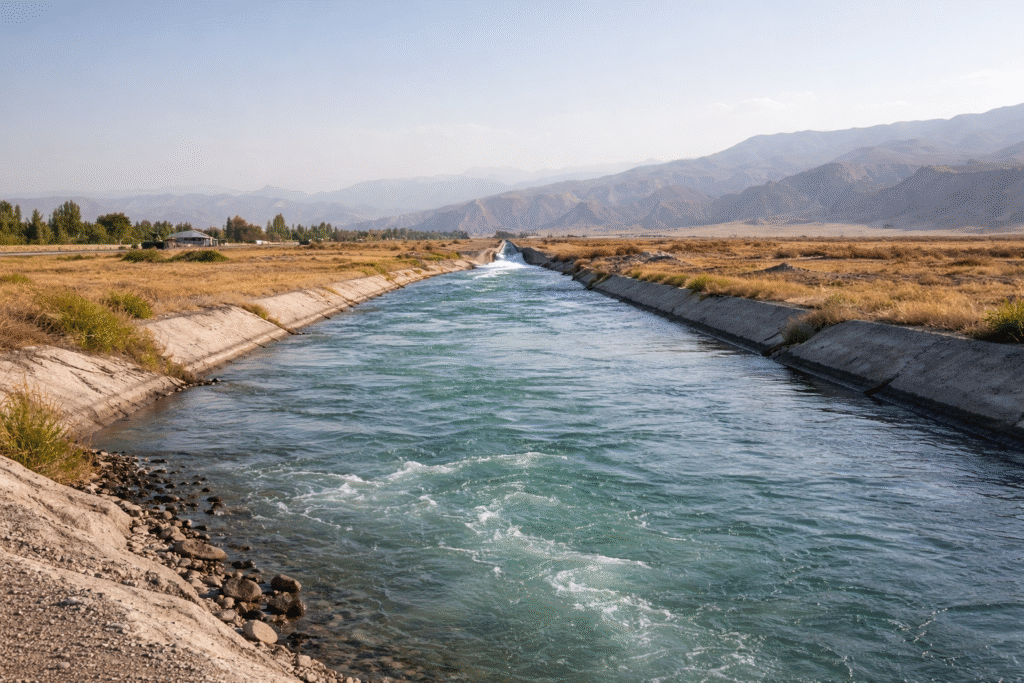
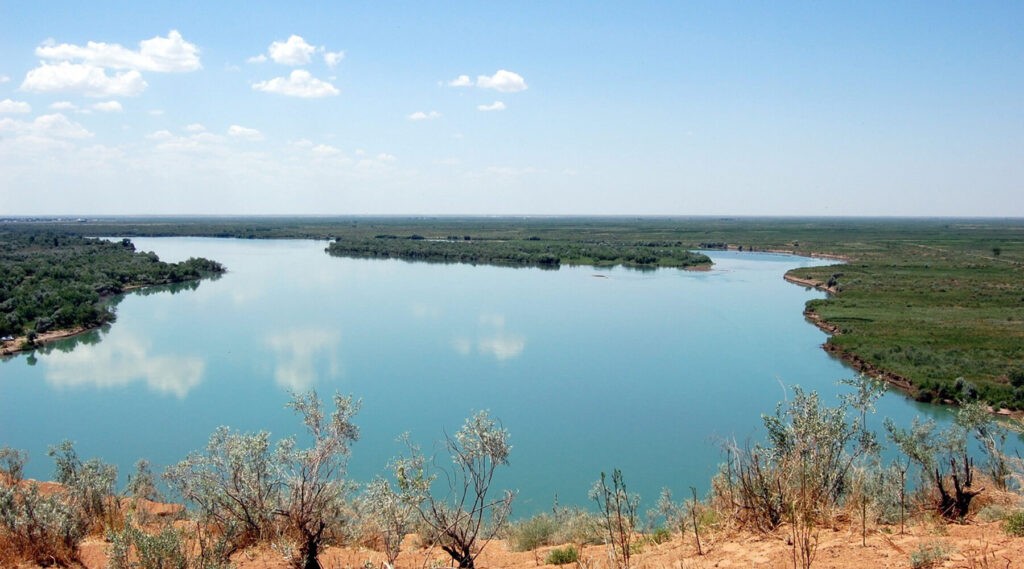
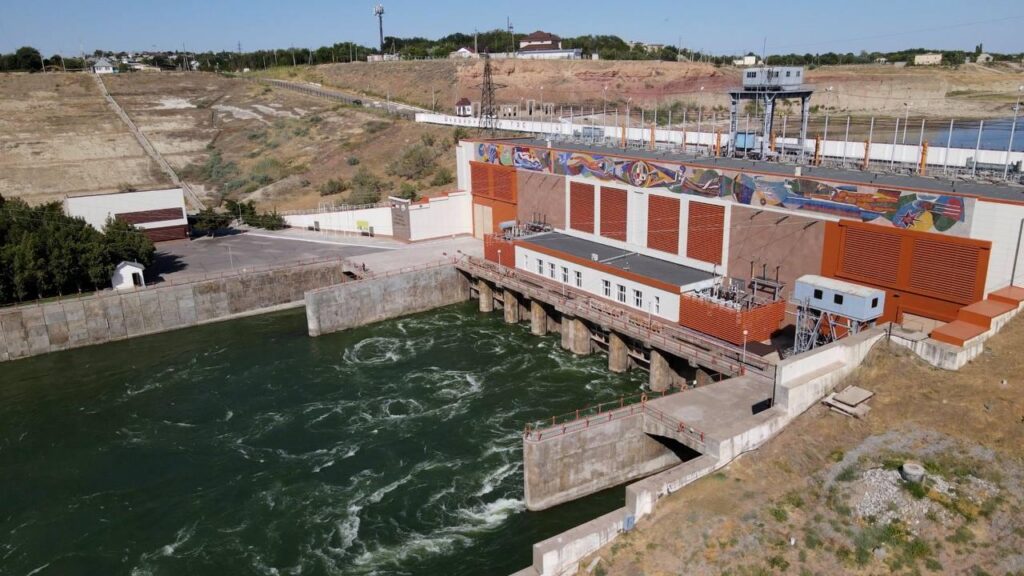
Kazakhstan and Uzbekistan are moving forward with the installation of ten automated hydro posts along the Syr Darya River, five in each country, as part of a joint initiative to enhance transparency and accuracy in transboundary water accounting and distribution for irrigation. The project is supported by the German Agency for International Cooperation (GIZ). The initiative was a key item on the agenda during a January 19 meeting between Kazakhstan’s Minister of Water Resources and Irrigation, Nurzhan Nurzhigitov, and Uzbekistan’s Minister of Water Resources, Shavkat Khamrayev, held in the Kazakh city of Turkestan. The Syr Darya River is critical for agricultural irrigation across Central Asia, particularly in Kazakhstan’s southern regions, Turkistan, Kyzylorda, and Zhambyl, which depend heavily on its waters. The river originates in Kyrgyzstan and flows through Uzbekistan before entering Kazakhstan. Nurzhigitov highlighted that Kazakhstan and Uzbekistan signed an intergovernmental agreement last year on the joint management and rational use of transboundary water resources. “The agreement is a significant contribution to the development of water diplomacy in Central Asia and clearly defines key areas for further mutually beneficial cooperation. We intend to continue developing our bilateral partnership in the spirit of good neighborliness, mutual respect, and constructive dialogue," Nurzhigitov stated. The ministers also reviewed progress on the maintenance and repair of the interstate Dostyk (Friendship) Canal, which channels irrigation water from Uzbekistan into Kazakhstan. Last year, Kazakhstan undertook mechanized cleaning of the canal’s bed, slopes, and collectors, and carried out repairs on gates and barrier structures. These efforts will continue in 2026. Given the Syr Darya’s importance to regional agriculture, Kazakhstan and Uzbekistan have also launched a joint project to revise irrigation regimes within the basin. The goal is to optimize agricultural water use and improve environmental sustainability. According to the Kazakh Ministry of Water Resources and Irrigation, the Aral-Syr Darya basin supplies water to more than 35% of Kazakhstan’s irrigated land, with agriculture accounting for 98% of water withdrawals. Kazakh officials recently presented water inflow forecasts for 2026 and emphasized the urgency of boosting water-use efficiency amid continued low-flow conditions. Declining inflows into the Naryn-Syr Darya system pose a threat to irrigation supplies for the upcoming growing season.

Kazakhstan Proposes Creation of UN Water Agency to Tackle Global Resource Challenges

At a forum marking the International Year of Peace and Trust and the 30th anniversary of Turkmenistan’s permanent neutrality, Kazakhstan's President Kassym-Jomart Tokayev proposed establishing a specialized United Nations body dedicated to the rational use of water resources. In his address, Tokayev emphasized the urgent need for enhanced global coordination in managing water diplomacy, noting that the current UN framework lacks a dedicated agency focused solely on water-related issues. UN-Water currently functions as a coordination mechanism rather than a specialized agency, bringing together more than 30 UN entities and dozens of international organizations involved in water and sanitation. Unlike bodies such as the World Health Organization or the Food and Agriculture Organization, it has no independent mandate, budget, or enforcement capacity, a limitation long cited by water policy experts. “Kazakhstan proposes the establishment of an International Water Organization that could consolidate all existing mandates of various UN organizations,” he said during the forum in Ashgabat. Central Asia is among the regions most exposed to water stress, with climate change, aging infrastructure, and competing national demands placing increasing pressure on shared river basins. Disputes over transboundary water use have periodically strained relations among regional states, making water diplomacy a persistent strategic concern. Tokayev suggested transforming the current UN-Water mechanism, a coordinating platform comprising 36 UN entities and 47 international organizations, into a fully-fledged UN agency with a specialized mandate on water and sanitation. “The implementation of such an initiative is fully in line with the UN’s Sustainable Development Goals and, of course, is in the interests of the entire international community,” he stated. The President also announced that Astana will host a Regional Environmental Summit in April 2026, during which Kazakhstan plans to initiate international consultations on forming the proposed global water organization. “I am confident that, with shared political will, water-related challenges can begin to be addressed systematically rather than in a piecemeal manner, as is currently the case,” he said. Tokayev stressed that in light of intensifying water scarcity, water conservation and rational usage have become critical priorities, not only for Kazakhstan but for all Central Asian nations. The Caspian Sea has experienced sustained water-level decline over recent decades, a trend scientists attribute to climate change, reduced river inflows, and rising evaporation. The issue has emerged as a growing concern for coastal states due to its implications for fisheries, energy infrastructure, and regional economic stability. He also highlighted the pressing need to address transboundary water use and the deteriorating ecological conditions of the Aral and Caspian Seas. Tokayev advocated for enhancing the effectiveness of the International Fund for Saving the Aral Sea through joint, compromise-based regional efforts and proposed that Russia be invited to join the Fund as an observer. “The current rate of the Caspian Sea’s shallowing threatens to become irreversible,” he warned, “which would trigger a chain reaction of environmental, socio-economic, and even political consequences.” Kazakhstan has already taken a leading role in regional initiatives to preserve the Caspian ecosystem. The country previously proposed a special intergovernmental...

South Kazakhstan Braces for Irrigation Water Shortages in 2026

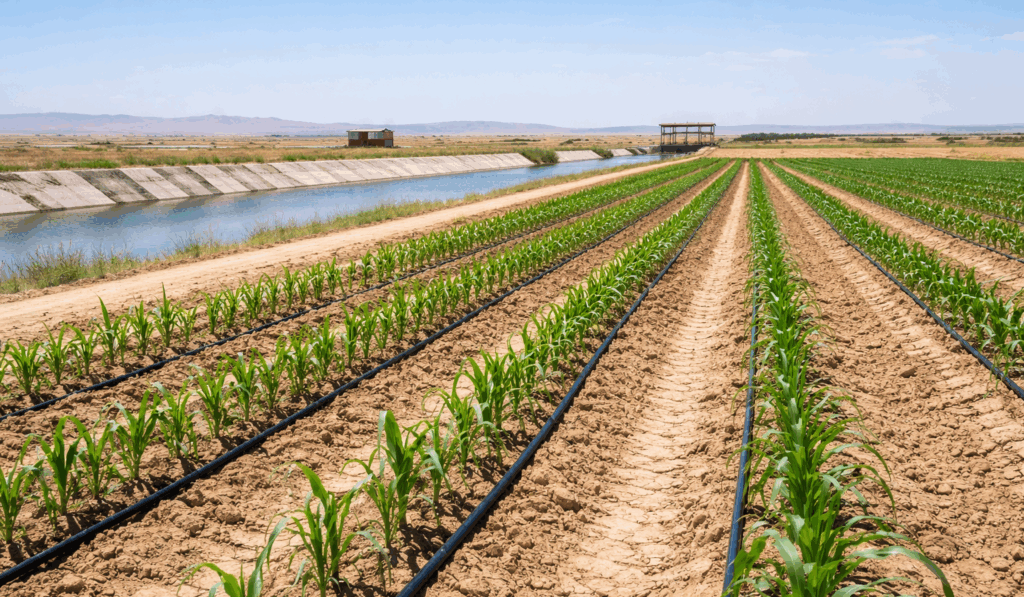
On December 4–5, Kazakhstan’s Deputy Prime Minister Kanat Bozumbayev, accompanied by Minister of Water Resources and Irrigation Nurzhan Nurzhigitov and Minister of Agriculture Aidarbek Saparov, visited the southern regions of Turkistan, Kyzylorda, and Zhambyl. The delegation met with local farmers to address the growing risks posed by declining transboundary water inflows and to discuss measures to ensure efficient water use during the 2026 irrigation season. Agriculture in these arid regions depends heavily on water from the Syr Darya River, which originates in Kyrgyzstan. According to the Ministry of Water Resources and Irrigation, Kazakhstan’s agricultural sector consumed 11.01 billion cubic meters of water during the 2025 irrigation season, with 98% used in the south. The Zhambyl region irrigated 79,000 hectares using 1 billion m³ of water and remains largely reliant on upstream supplies from Kyrgyzstan. This past season, Kyrgyzstan committed to providing more than 600 million m³ of water to Kazakhstan via the transboundary Chu and Talas rivers. The Kyzylorda and Turkistan regions were the largest consumers of irrigation water, drawing 3.5 billion m³ and 3.4 billion m³, respectively, to irrigate 125,000 and 400,000 hectares. Officials presented water inflow forecasts for 2026 and outlined measures to improve efficiency amid declining water availability. The Syr Darya basin continues to experience low-flow conditions, with reduced inflows into the Naryn-Syr Darya system threatening irrigation supplies for the upcoming growing season. Farmers were urged to adopt water-saving technologies, limit the cultivation of water-intensive crops, diversify planting, and transition to drought-resistant varieties. Bozumbayev noted that during the recent session of the Interstate Water Coordination Commission in Ashgabat, participating countries projected a further decline in water inflows for 2026. He warned that the Toktogul Reservoir in Kyrgyzstan, located on the Naryn River, a key tributary of the Syr Darya, may reach record-low levels, putting irrigation supplies at serious risk. “Given the continued decline in available water resources, there is a real risk of shortages during the next growing season. This is a natural challenge faced by all Central Asian countries. To minimize the impact, we must accelerate crop diversification and the introduction of water-saving irrigation technologies. The state has created all the necessary conditions for this. This is not simply about conserving water; the country’s water and food security depend on it,” Bozumbayev said. To support adoption of efficient irrigation systems such as drip and sprinkler technologies, the government has increased reimbursement for farmers' costs from 50% to 80%, on drilling wells and installing irrigation equipment. A differentiated irrigation tariff has also been introduced: for farmers using water-saving technologies, the subsidy on irrigation water has been raised from 60% to 85%. These measures have helped expand the area under modern irrigation systems from 312,200 hectares in 2023 to 580,000 hectares in 2025, representing 30% of all irrigated farmland. The government aims to increase this figure to 1.3 million hectares, or 70% of total irrigated land, by 2030. In Kyzylorda, the country’s main rice-producing region, the Ministry of Agriculture has announced that rice cultivation in 2026 must not...

Central Asian Countries Agree on 2026 Water Allocations from Amu Darya and Syr Darya

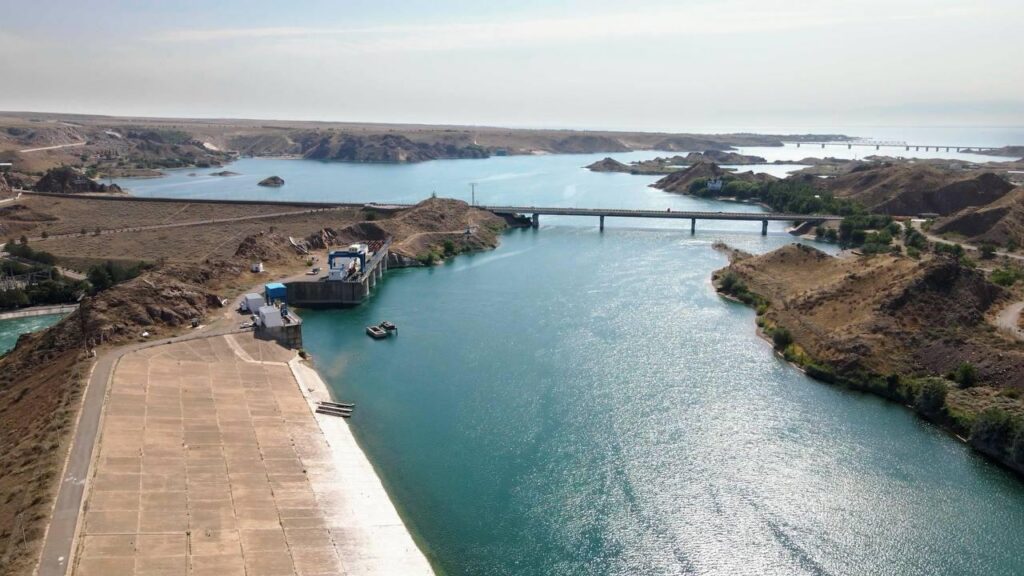
Central Asian states have reached an agreement on water allocations from the Amu Darya and Syr Darya rivers for 2026. The decision was made during the 91st meeting of the Interstate Coordination Water Management Commission (ICWC), held in Ashgabat on November 13, 2025, according to Kun.uz. At the meeting, the countries agreed on how water resources will be managed during the 2025–2026 non-growing season, the period when agricultural demand is low. For the Amu Darya, the total allocation from October 2025 to October 2026 is set at approximately 55.4 billion cubic meters, with 15.9 billion cubic meters designated for the cold months from October through April. Under the agreement, Tajikistan will receive 9.8 billion cubic meters, while Turkmenistan and Uzbekistan will each receive 22 billion. A key provision is that roughly 44 billion cubic meters of the Amu Darya’s flow must reach the Kerki hydrological station in Turkmenistan to sustain downstream areas. Additionally, 4.2 billion cubic meters is allocated to support the Aral Sea and the Amu Darya delta, with half to be delivered in winter and early spring. Another 800 million cubic meters will be used for irrigation in Dashoguz, Khorezm, and Karakalpakstan. These allocations are crucial for both communities living in water-scarce regions and for preserving fragile river ecosystems. For the Syr Darya, the total allocation for the non-growing season is 4.219 billion cubic meters. Of this, Uzbekistan will receive the majority share, 3.347 billion cubic meters. Kazakhstan will receive 460 million cubic meters through the “Dustlik” canal, Tajikistan 365 million, and Kyrgyzstan 47 million. These figures are based on projected river inflows, reservoir capacities, and the need to maintain ecological flows. The ICWC also approved operational plans for key reservoirs. In Tajikistan, the Nurek Reservoir is expected to enter the non-growing season with 10.5 billion cubic meters and decline to around 9.7 billion by spring. The Tuyamuyun reservoir, located on the Uzbekistan–Turkmenistan border, will start with 4.5 billion cubic meters and reduce to 3.4 billion. Both will gradually release water to support irrigation and sustain the Amu Darya’s flow. In the Syr Darya basin, total water volume in the Toktogul, Andijan, and Charvak reservoirs at the beginning of the season is approximately 10.6 billion cubic meters, slightly below average. Tajikistan’s Bahri Tojik reservoir is expected to contain 2.6 billion cubic meters, while Kazakhstan’s Chardara reservoir will hold about 1.65 billion. Collectively, the Syr Darya basin will have around 14.9 billion cubic meters of water at the start of winter, roughly 90% of the long-term seasonal average. The 92nd ICWC meeting is scheduled to take place in Dushanbe, where officials will assess reservoir performance and water usage during the 2025-2026 season. The agenda will also include strategies to strengthen regional water security in the face of escalating climate pressures.

Kazakhstan Trades Electricity for Water in Bid to Mitigate Summer Drought Risks

Central Asia is entering a new phase in the management of its water-energy nexus, moving from declarations to practical coordination. A trilateral protocol signed in Almaty by Kazakhstan, Kyrgyzstan, and Uzbekistan marked a significant step toward stabilizing the region’s water regime amid escalating climate risks. Brokered under Kazakhstan’s chairmanship, the agreement aims to balance the load on the Toktogul Reservoir, the main regulating structure of the Syr Darya basin. Kyrgyzstan typically increases winter water discharges to generate electricity, which reduces irrigation water availability downstream during summer. Under the new deal, Kazakhstan and Uzbekistan will supply Kyrgyzstan with electricity during winter, in return for Kyrgyzstan's commitment to store water and ensure its release during the 2026 growing season. The Almaty Protocol complements the existing plan for filling the Shardara Reservoir, which aims to accumulate 11 cubic kilometers of water by April 1, 2026. Achieving this target hinges on Toktogul’s operations. Without external support, Kyrgyzstan’s energy infrastructure would struggle to meet the requirement. Supplemental electricity from Astana and Tashkent thus forms the economic backbone of this arrangement. Longstanding disparities in regional water and energy needs remain a source of instability. Kyrgyzstan requires water in winter for hydropower, while Kazakhstan, especially its Turkestan and Kyzylorda regions, relies on it in summer for irrigation. Recent water shortages have pushed the countries toward more pragmatic coordination. Uzbekistan has committed to managing the technical conditions for transit and balancing inter-system flows. Despite facing its own energy shortfall and aging infrastructure, Kazakhstan is participating in regional stabilization to avert socio-economic risks in its southern provinces. External factors are adding urgency to regional cooperation. Afghanistan’s construction of the Qosh-Tepa Canal is expected to reduce the Amu Darya’s water balance by 20-25%. Although Uzbekistan is most directly affected, the resulting pressure on water systems could also impact the Syr Darya, on which southern Kazakhstan heavily depends. Internally, Kazakhstan faces persistent challenges. Water loss during transport reaches up to 40-50% due to outdated canal infrastructure. Rice cultivation continues in the water-intensive Kyzylorda region, while water-saving technologies are used on only about 30% of irrigated land. These new agreements suggest that Central Asian countries can rapidly implement collective mechanisms in response to shared threats. In effect, elements of a regional Water and Energy Consortium are already operating in a de facto, ad hoc manner. Water, energy, and food security are increasingly seen as interconnected resources requiring coordinated governance. For Kazakhstan, the priority now is to institutionalize these provisional agreements. If the “electricity-for-water” model can be formalized into a durable framework, it could stand as one of the most significant accomplishments of the country’s regional diplomacy.

Kazakhstan and Israel Strengthen Cooperation on Water Resource Management

On November 11, Kazakhstan’s Minister of Water Resources and Irrigation Nurzhan Nurzhigitov and Israel’s Minister of Regional Cooperation David Amsalem signed a memorandum of cooperation to deepen bilateral ties in the field of water resource management. The agreement outlines joint efforts in modernizing Kazakhstan’s water management infrastructure, improving water use efficiency, implementing water-saving and reuse technologies, and exchanging expertise in innovation and technology, particularly in the collection, management, and processing of remote sensing data. The memorandum also covers cooperation in the digitalization of water resource monitoring, flood and drought risk management, scientific and technical collaboration, and specialist training programs. As part of the visit, the ministers held talks with representatives of leading Israeli companies to explore partnerships on introducing water-saving technologies in Kazakh agriculture and training Kazakh specialists at Israeli enterprises. “Israel has extensive experience in water resource management under challenging climatic conditions and offers advanced technologies,” said Minister Nurzhigitov. “We are interested in long-term, mutually beneficial cooperation to modernize Kazakhstan’s water sector across the board, including the digitalization of water metering and distribution, deployment of cutting-edge water-saving systems, use of modern data collection methods, and professional development of our specialists.” Israeli firms have previously expressed interest in participating in the construction and reconstruction of reservoirs in Kazakhstan, and in supplying the country with modern flood forecasting and protection systems. Kazakhstan’s Ministry of Water Resources and Irrigation plans to build 20 new reservoirs by 2030, with a combined capacity of 2.5 billion cubic meters. The project is expected to reduce the country’s reliance on upstream water sources from Kyrgyzstan and China by 25%, mitigate drought in southern regions, and lower flood risks for 70 rural settlements with a combined population of nearly 140,000. Additionally, irrigation will be expanded to cover another 250,000 hectares of farmland. The ministry also plans to reconstruct 15 existing reservoirs, adding another 1.9 billion cubic meters in water storage capacity.