• KGS/USD = 0.01144 0%
  • KZT/USD = 0.00208 0%
  • TJS/USD = 0.10440 0%
  • UZS/USD = 0.00008 0%
  • TMT/USD = 0.28571 0%
  • KGS/USD = 0.01144 0%
  • KZT/USD = 0.00208 0%
  • TJS/USD = 0.10440 0%
  • UZS/USD = 0.00008 0%
  • TMT/USD = 0.28571 0%
  • KGS/USD = 0.01144 0%
  • KZT/USD = 0.00208 0%
  • TJS/USD = 0.10440 0%
  • UZS/USD = 0.00008 0%
  • TMT/USD = 0.28571 0%
  • KGS/USD = 0.01144 0%
  • KZT/USD = 0.00208 0%
  • TJS/USD = 0.10440 0%
  • UZS/USD = 0.00008 0%
  • TMT/USD = 0.28571 0%
  • KGS/USD = 0.01144 0%
  • KZT/USD = 0.00208 0%
  • TJS/USD = 0.10440 0%
  • UZS/USD = 0.00008 0%
  • TMT/USD = 0.28571 0%
  • KGS/USD = 0.01144 0%
  • KZT/USD = 0.00208 0%
  • TJS/USD = 0.10440 0%
  • UZS/USD = 0.00008 0%
  • TMT/USD = 0.28571 0%
  • KGS/USD = 0.01144 0%
  • KZT/USD = 0.00208 0%
  • TJS/USD = 0.10440 0%
  • UZS/USD = 0.00008 0%
  • TMT/USD = 0.28571 0%
  • KGS/USD = 0.01144 0%
  • KZT/USD = 0.00208 0%
  • TJS/USD = 0.10440 0%
  • UZS/USD = 0.00008 0%
  • TMT/USD = 0.28571 0%

Viewing results 1 - 6 of 19

Uzbekistan’s Largest Glacier Melts by 20 Meters in 12 Months, Expedition Finds

BBC Uzbekistan has reported, quoting the country’s Hydrometeorology Research Institute, that at the beginning of August an expedition of Uzbek and German scientists trekked to the Pakhtakor glacier, situated in the eastern part of Uzbekistan. The study of the Pakhtakor glacier, which is extremely difficult to reach and located in the Bostonliq district of the Tashkent region, near the borders with Kyrgyzstan and Kazakhstan, started in July of last year. The latest expedition found that Uzbekistan's largest glacier tongue (an extension of a glacier or ice stream projecting seaward) had retreated by 20 meters in the last year. The surface of the ablation part (the initial part of the glacier where the ice melts faster) has melted by 3 meters. Pakhtakor is one of the largest glaciers feeding the Pskom River. There are about 140 large and small glaciers in the Pskom River basin, which has a total area of 128 square kilometers. According to the BBC report, after the collapse of the Soviet Union, studies of permafrost were rarely conducted in other Central Asian countries except Kazakhstan. Although there are few glaciers in Uzbekistan, they play an essential role in the ecosystem. In low-water years, glaciers provide up to 25% of the total flow. Maksim Petrov, the head of the Center for Glacial Geology at the Institute of Geology and Geophysics of Uzbekistan, says the country's glaciers are melting at different rates. “The melting rate is almost in line with the average rate in Central Asia. However, the melting rate in our mountains in the eastern part is not high, and the glaciers have melted only up to 20%. The glaciers in Surkhandarya have melted by 40%. The most catastrophic situation is in Kashkadarya — up to 70%,” Petrov said at a roundtable discussion held by Cabar Asia in May. Petrov added: “Large glaciers are breaking up and breaking into pieces. It seems the number of glaciers is increasing, but their area is shrinking.” Various scientists point out that the shrinking area of glaciers has yet to seriously affect the water balance in Central Asia, and the observed water shortage is mainly caused by population and industrial growth. But in 2015, German researchers warned that glaciers in the Tian Shan mountains, which play an essential role in maintaining the water cycle in the region, are rapidly melting. Half of the total ice mass is forecast to melt by 2050. “Today, Tian Shan is losing an amount of ice equivalent to twice the annual water consumption of all of Germany,” the 2015 study stated.
Ecological Limit: Five Year Countdown to Water Scarcity in Central Asia

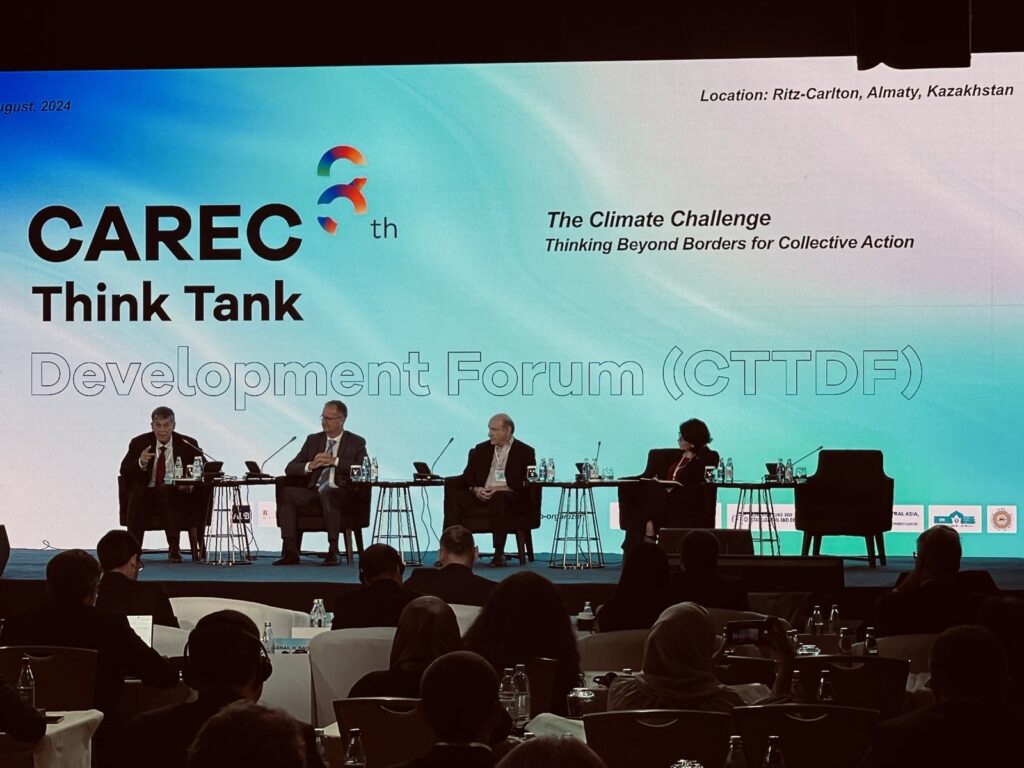
Combating climate change requires collective action by all or a sufficient majority of the world's players supporting global initiatives. Otherwise, it may soon be too late to take any action. To address the issue, the Eurasian Development Bank, the CAREC Think Tank, and the Asian Development Bank organized a two-day forum entitled “The Climate Challenge: Thinking Beyond Borders for Collective Action,” in Almaty, Kazakhstan. Focusing on means of achieving genuine regional cooperation on Asian climate action, the eighth CAREC Think Tank Development Forum was attended by policymakers, experts, and opinion leaders from more than 30 countries. The extensive two-day dialog, consisting of eight sessions, opened with a discussion on the effectiveness of current global initiatives related to climate change: the Paris Agreement, the Global Environment Facility, and the Green Climate Fund. Attention then turned to deepening cooperation among as many stakeholders as possible through multilateral platforms such as the UN Framework Convention on Climate Change. Asia's role in the global fight against climate change, and the difficult balancing act between economic growth and decarbonization efforts were discussed at length. Simply put, the rapid growth of the Asian economy is inevitably accompanied by an increasing consumption of energy, the generation of which leads to increased emissions and pollution. Climate damage due to human impact can be halted and even reversed. However, because this can only be achieved with technological intervention, it poses problems for developing economies unable to afford advanced technologies. Hence, establishing a framework and mechanisms for global technology transfer were key to discussions. Water and finance were also high on the agenda and the subject of a paper presented by Arman Ahunbaev, Head of the Center for Infrastructure and Industrial Research of the Eurasian Development Bank on “Ways to close the investment gap in the drinking water supply and wastewater sector in Central Asia." Ahunbaev reported that 10 million people, or 14% of the population in Central Asia, do not have access to safe drinking water and warned that without intervention, the situation would reach the point of no return in the coming years. To prevent this from happening, he stressed the urgent need for solutions to four problems. The first problem is a twofold increase in the volume of water intake for municipal and domestic needs, based on past figures which showed a growth from 4.2 cubic kilometers in 1994 to 8.6 cubic kilometers in 2020. The second problem is the severe deterioration of water supply infrastructure and treatment equipment, and the third, technological and commercial water losses in distribution networks. The fourth problem is related to the demographic boom and, consequently, the rapid urbanization of Central Asia's population. Cities are expanding and  their infrastructure needs to develop accordingly. According to experts, in 2023, urbanization in Central Asian countries will reach 49%, and by 2050, 61%. By 2030, the urban population will exceed that in rural areas. Ahunbaev noted the need for improvement in financing the water supply and sanitation sector in Central Asia since according to rough...

Kazakhstan’s Kapchagay Reservoir Fills Up For First Time In A Decade

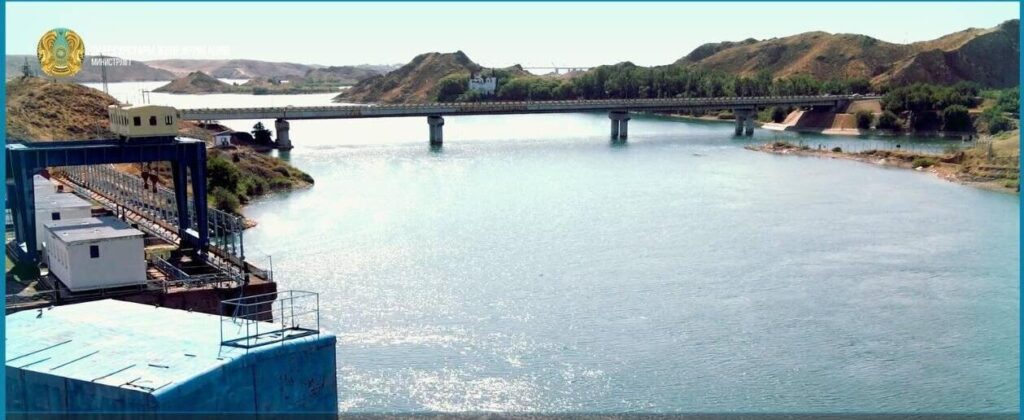
Kazakhstan’s Ministry of Water Resources and Irrigation announced on August 26 that the Kapchagay reservoir outside Almaty was completely full for the first time in ten years. Created in 1970 as an artificial lake, 100km long and up to 25km wide in places, the reservoir can hold more than 18 billion cubic meters of water. The reservoir collects water from the Ili River, which originates in China. This spring, the ministry said up to 900 cubic meters of water per second flowed into the reservoir, attributing the increased inflow to the melting of the Tien Shan mountain glaciers and higher than usual rainfall. The reservoir was initially meant to regulate the flow of the Ili River on its way to Kazakhstan’s largest lake, Balkhash. Today, it is used for irrigation, fish farming, and recreation. Located a one-hour drive from Almaty, its beaches are popular with holidaymakers. According to Medet Kerimzhanov, deputy head of the Balkhash-Alakol basin inspectorate, the last time the Kapchagay reservoir was 100% full was in 2014. Today, 750 cubic meters of water per second are released from the reservoir to irrigate fields. Kerimzhanov added that the irrigation season in the region will continue until the end of September. Earlier this month, the Ministry of Water Resources said it was drafting an intergovernmental agreement between Kazakhstan and China on distributing water from transboundary rivers — the Ertis, the Ili, and the Emel. To date, the parties have reached a consensus on several provisions of the future agreement, the ministry said.

Kazakhstan and China in Talks on Feeding Lake Balkhash

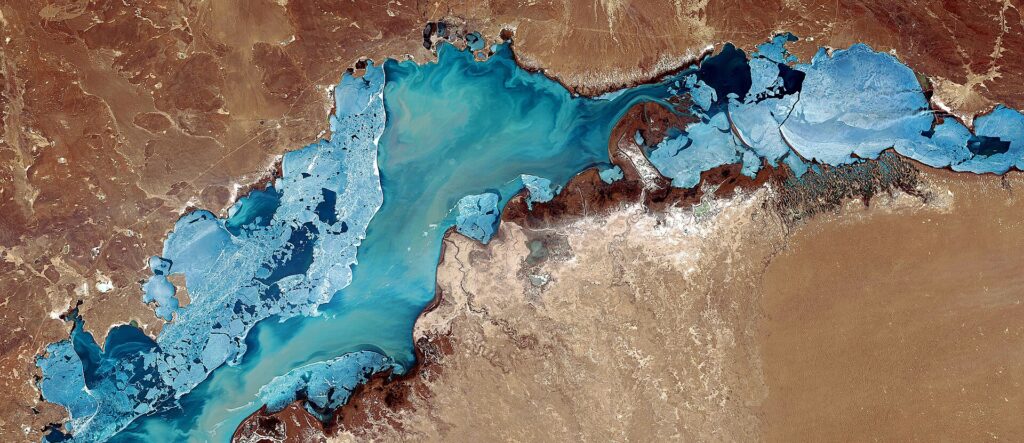
The Kazakh Ministry of Water Resources and Irrigation announced on August 19 that Kazakhstan and China are drafting an agreement on dividing trans-boundary river waters between the two countries. The main objective of the agreement is to ensure that the water in Kazakhstan’s Lake Balkhash remains at an optimal level. Located 280km northwest of the country’s largest city, Almaty, Lake Balkhash is the fifteenth largest lake in the world. It is fed by several trans-boundary rivers flowing from China, the largest of which is the Ili River, which provides about 80% of the lake's water. [caption id="attachment_21931" align="aligncenter" width="1056"] Image: Wikimapia[/caption] Environmentalists in Kazakhstan have been concerned about Lake Balkhash's shallowing. Balkhash has been gradually drying up in recent years, including due to the decline in water volumes in the Ili River. Upstream China has extensively diverted the river over the past half century to produce hydroelectric power and agricultural crops on irrigated land. According to research, as of 2021 China was blocking 40% of the river’s inflow. Moldir Abdualieva, a spokesperson of the Kazakh Ministry of Water Resources and Irrigation, said that the ministry has been paying great attention to providing Lake Balkhash with the necessary volume of water. “Since the beginning of this year, more than 12 billion cubic meters of water have been sent to the lake," she said. In May, it was reported that the water level in Balkhash had risen by 23cm since the beginning of the year due to increased rainfall and floods caused by snow melt this past spring.

Uzbekistan and UAE to Build Modern Wastewater Facility

The United Arab Emirates company “Sustainable Water Solutions” (SWS) is to cooperate with Uzbekistan on the construction of a modern wastewater facility in Tashkent. The project includes building a facility with a daily capacity of 1.0 million cubic meters of water and a 42-kilometer wastewater collector in the territory of the Surum mahalla, an administrative centre in Tashkent's  Lower Chirchik district. Regarding the scheme, Ahmed Al-Shamsi, head of the SWS company announced: “Our next initiative will prevent water wastage in Uzbekistan. The capacity of the joint facility will be 1,000,000 cubic meters per day at the first stage and 1.5 million cubic meters later. The estimated project cost is one billion dollars." According to reports, the quality of wastewater service provided to 1.5 million people will increase, and more than 500,000 residents and over a hundred enterprises and organizations will be provided with centralized wastewater service. The construction of a 42-kilometer collector allows efficient collection and transportation of wastewater for further treatment. SCADA, a data management and collection system, and GIS,a geographic information system, will be introduced, ensuring effective monitoring and management of cleaning and transportation processes. As a result of this large-scale project, 10 million kilowatts of electricity will be saved, and the sanitary-epidemiological and ecological situation in the Sergeli, Bektemir, and Yangi Hayot districts of Tashkent city will be improved.