
• KGS/USD = 0.01143 0%
  • KZT/USD = 0.00216 0%
  • TJS/USD = 0.10633 -0.28%
  • UZS/USD = 0.00008 0%
  • TMT/USD = 0.28571 0%
  • KGS/USD = 0.01143 0%
  • KZT/USD = 0.00216 0%
  • TJS/USD = 0.10633 -0.28%
  • UZS/USD = 0.00008 0%
  • TMT/USD = 0.28571 0%
  • KGS/USD = 0.01143 0%
  • KZT/USD = 0.00216 0%
  • TJS/USD = 0.10633 -0.28%
  • UZS/USD = 0.00008 0%
  • TMT/USD = 0.28571 0%
  • KGS/USD = 0.01143 0%
  • KZT/USD = 0.00216 0%
  • TJS/USD = 0.10633 -0.28%
  • UZS/USD = 0.00008 0%
  • TMT/USD = 0.28571 0%
  • KGS/USD = 0.01143 0%
  • KZT/USD = 0.00216 0%
  • TJS/USD = 0.10633 -0.28%
  • UZS/USD = 0.00008 0%
  • TMT/USD = 0.28571 0%
  • KGS/USD = 0.01143 0%
  • KZT/USD = 0.00216 0%
  • TJS/USD = 0.10633 -0.28%
  • UZS/USD = 0.00008 0%
  • TMT/USD = 0.28571 0%
  • KGS/USD = 0.01143 0%
  • KZT/USD = 0.00216 0%
  • TJS/USD = 0.10633 -0.28%
  • UZS/USD = 0.00008 0%
  • TMT/USD = 0.28571 0%
  • KGS/USD = 0.01143 0%
  • KZT/USD = 0.00216 0%
  • TJS/USD = 0.10633 -0.28%
  • UZS/USD = 0.00008 0%
  • TMT/USD = 0.28571 0%

Viewing results 1 - 6 of 5

How Kazakhstan Is Using Big Data to Reshape Its Social Protection System

Kazakhstan is accelerating its transition to a digital model of social protection, integrating government databases and introducing algorithmic oversight to improve the targeting of welfare payments and reduce corruption risks. In spring 2026, the merger of databases between the Ministry of Labor and tax authorities was completed, marking a key stage of the reform. Authorities view this process not only as a technological upgrade but as a shift in the principles governing interaction between the state and citizens. Historically, the country’s system of distributing social benefits has faced challenges related to the misuse of funds. In 2020, the Supreme Audit Chamber identified violations in the implementation of the “Enbek” employment program, resulting in significant budget losses. In subsequent years, auditors continued to record similar cases. A report for 2023-2024 noted that targeted social assistance was being received by citizens who concealed their actual incomes. According to anti-corruption authorities, approximately $50 billion has been allocated to social support over the past five years, of which around $6.5 billion was used inefficiently. The lack of transparent oversight enabled abuses, including fictitious employment schemes and payments to so-called “ghost recipients.” A turning point came with the introduction of digital oversight. Since 2024, Kazakhstan has been integrating databases and automating processes. According to official reports, the implementation of digital tools helped prevent financial violations amounting to approximately $45 billion in 2025 alone. At the core of the system is the transition to the international ISO 20022 standard, enabling real-time data processing. Since 2026, algorithms have been automatically assessing citizens’ eligibility for social benefits without the involvement of officials, significantly reducing opportunities for fraudulent claims. One example is a grant program for low-income citizens to start businesses, with grants of up to approximately $3,800. Funds are now transferred directly to suppliers, while transactions are monitored by tax authorities. If inconsistencies are detected, payments are automatically canceled. Similar mechanisms are being applied in subsidized employment programs. The system is also integrated with the “Social Wallet” project and the digital tenge platform. Payments are programmed through smart contracts, restricting their use to predefined purposes such as purchasing food, medicines, or paying utility bills. In addition, algorithms track changes in the income of unemployment benefit recipients. If commercial activity is detected, payments are automatically terminated. Despite these advances, experts warn of potential risks. International experience shows that such systems can both improve efficiency and lead to errors. In Denmark, algorithms are used to provide proactive support, automatically offering benefits when life circumstances change. In Australia, however, a similar system wrongly accused citizens of welfare fraud, triggering lawsuits and a political crisis. Analysts note that the effectiveness of digital systems depends on their design: they perform better when focused on identifying those in need, rather than solely detecting violations.

How the Welfare of Kazakhstani Citizens Has Changed Over the Past Five Years

While official data shows that the monetary income of Kazakhstani citizens has nearly doubled over the past five years, many citizens report that their day-to-day experiences do not align with the statistics. Analysts at Ranking.kz conducted a study comparing official income data with real purchasing power, highlighting a complex and often uneven picture of economic well-being across the country. Average vs. Median Income: A Growing Gap According to the National Statistics Bureau, the average annual per capita income in 2024 exceeded 1.3 million KZT (approximately $2,600), up from 692,000 KZT ($1,384) in 2019, an almost twofold increase. This translates to an average monthly income of 110,700 KZT ($221). However, this figure includes more than just wages: pensions contribute 16.6%, entrepreneurial income 9.2%, and social support less than 4%. Median income, which more accurately reflects the economic position of the “typical” Kazakhstani, tells a more modest story. In 2024, the median monthly income stood at just 93,300 KZT ($186), and in half of the country's regions, incomes fell below this level. For example, in the populous Turkestan Region, the median income was just 69,600 KZT ($139). In contrast, major urban centers like Almaty and Astana recorded median incomes more than a third higher than the national average, above 126,000 KZT ($252). Rising Nominal Wages, Stagnant Real Gains Over five years, the average nominal monthly wage grew from 186,800 KZT ($374) to 402,600 KZT ($805). Yet, in real terms, after adjusting for inflation, income growth has been subdued. Between 2022 and 2024, real income rose by only 2.7%, compared to 9.1% in 2019. Inflation has been the primary factor undermining purchasing power. In 2023 alone, inflation surged to 14.5%, effectively eroding most wage gains. Sectoral Disparities and the Modal Wage Finance, mining, and IT remain the highest-paying sectors. In 2024, financial sector professionals earned an average of 857,200 KZT ($1,714), followed by mining specialists at 853,100 KZT ($1,706) and information and communications professionals at 715,900 KZT ($1,432). These sectors also saw real income increases, 19.4% in IT and 14.2% in finance. At the other end of the spectrum, agriculture, water supply, and cultural sectors continue to be among the lowest-paying. Salaries in these fields range from 262,000 to 278,000 KZT ($524-$556). Despite nominal wage increases, the income gap with higher-paying sectors remains substantial. The education sector saw marginal improvement, but real wages declined by 1.2% in 2024. Notably, the most commonly earned (modal) wage in 2024 was just 97,600 KZT ($195), only 12,600 KZT ($25) above the national minimum wage. This figure represented just 24.2% of the average nominal wage, underscoring a wide disparity between statistical averages and the reality for most workers. Do the Numbers Reflect Reality? On paper, Kazakhstan’s income statistics appear encouraging: rising wages, a reduction in social vulnerability, and steady economic indicators. Yet, when inflation, regional inequalities, and the uneven structure of earnings are considered, a more nuanced picture emerges. The core challenge remains unchanged, ensuring a sustained increase in purchasing power, not just nominal income figures. For...

UNDP and Samruk Kazyna Support Socially Vulnerable Young People in Kazakhstan 

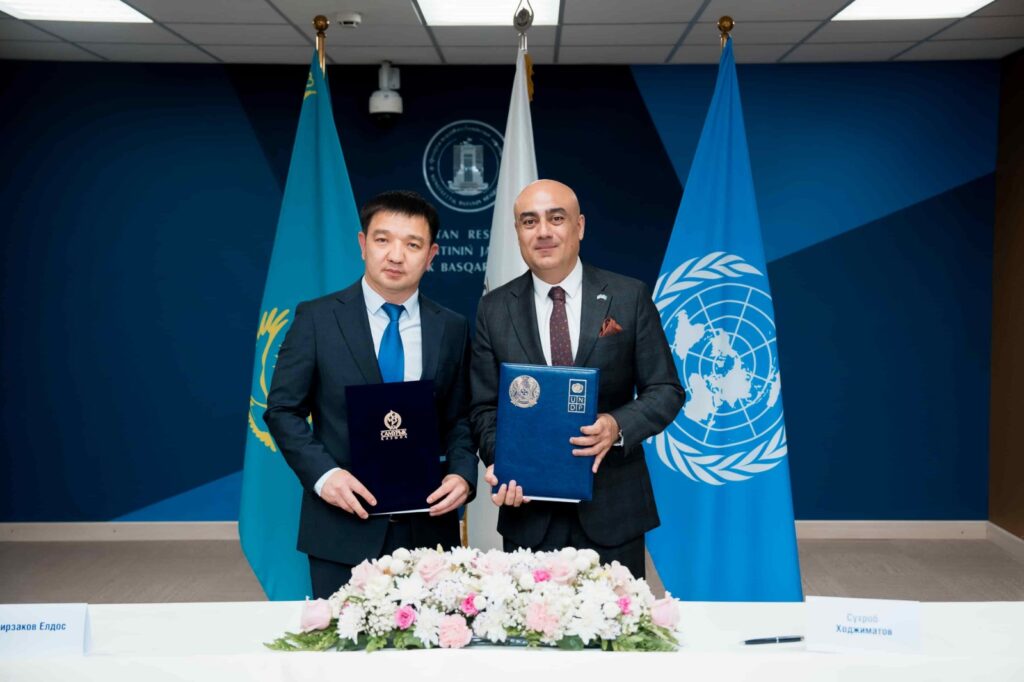
The United Nations Development Programme (UNDP) in Kazakhstan and Kazakhstan’s National Welfare Fund Samruk-Kazyna JSC have signed a non-financial statement of intent on cooperation to support socially vulnerable young people in the regions of Kazakhstan. According to a report issued by UNDP Kazakhstan, the agreement will also promote responsible business practices addressing potential human rights violation risks, and introduce principles of gender equality to overcome gender discrimination in companies associated with the Samruk-Kazyna Fund. Gibrat Auganov, Managing Director for Corporate Governance, Social and Labour Relations and Occupational Health and Safety of Samruk-Kazyna JSC, commented: "As part of our cooperation with the UNDP, we are launching an internship programme at our companies to support socially disadvantaged young people from the various regions of Kazakhstan. We are also planning a number of initiatives in the field of human resources and social policy - based on global standards of gender equality and human rights protection." Over 300 young people from the Mangystau and Kyzylorda regions are expected to complete internships at Samruk-Kazyna companies this year. The joint internship programme is a key component of the UNDP regional initiative "Strengthening Community Resilience to Prevent Violent Extremism in Central Asia," funded by the government of Japan. As part of the partnership, UNDP will also provide technical support to Samruk-Kazyna JSC to conduct a gender assessment of the holding's activities, develop an action plan and provide training on human rights due diligence and gender equality. "This partnership has three main objectives that reflect our shared desire to create a more just, responsible and inclusive future,” said Sukhrob Khojimatov, UNDP Deputy Representative in Kazakhstan. “Implementing human rights standards and gender equality strategies brings tangible economic benefits. This helps businesses attract and retain talented employees, encourages innovation, improves financial performance and enhances their reputation among consumers and investors.”
