• KZT/USD = 0.00222
  • TJS/USD = 0.10810
  • UZS/USD = 0.00009
  • TMT/USD = 0.29760
  • KZT/USD = 0.00222
  • TJS/USD = 0.10810
  • UZS/USD = 0.00009
  • TMT/USD = 0.29760
  • KZT/USD = 0.00222
  • TJS/USD = 0.10810
  • UZS/USD = 0.00009
  • TMT/USD = 0.29760
  • KZT/USD = 0.00222
  • TJS/USD = 0.10810
  • UZS/USD = 0.00009
  • TMT/USD = 0.29760
  • KZT/USD = 0.00222
  • TJS/USD = 0.10810
  • UZS/USD = 0.00009
  • TMT/USD = 0.29760
  • KZT/USD = 0.00222
  • TJS/USD = 0.10810
  • UZS/USD = 0.00009
  • TMT/USD = 0.29760
  • KZT/USD = 0.00222
  • TJS/USD = 0.10810
  • UZS/USD = 0.00009
  • TMT/USD = 0.29760
  • KZT/USD = 0.00222
  • TJS/USD = 0.10810
  • UZS/USD = 0.00009
  • TMT/USD = 0.29760
14 September 2026

Viewing results 1 - 6 of 74

Central Asia’s Economic Growth to Reach 5% in 2025

The World Bank’s Global Economic Prospects report offers projections for economic growth, risks, and challenges across Europe and Central Asia (ECA), highlighting mixed outcomes for the region as a whole. Regional Outlook Economic growth across ECA is projected to slow to 2.5% in 2025, with a modest recovery to 2.7% expected in 2026. This deceleration is largely attributed to weaker economic activity in Russia and Turkey, two key regional economies. Excluding these two countries and Ukraine, growth in the rest of the region is forecasted to average 3.3% in 2025-2026. The recovery in these areas will primarily be driven by private consumption and investment, as inflationary pressures ease and monetary policies gradually become less restrictive. Despite these projections, significant risks remain. Global policy uncertainty and potential changes in trade policies could negatively affect trade flows, capital investments, and economic growth. Geopolitical tensions - particularly stemming from Russia’s invasion of Ukraine - and persistent inflation in the region could also pose serious challenges to stability. Central Asia: A Bright Spot Central Asia is expected to outperform the broader ECA region, with growth projected to accelerate to 5% in 2025 before softening to 4.2% in 2026. This growth will be driven by increased oil production in Kazakhstan, which will serve as a critical engine of recovery for the region. Remittances will also continue to play a key role, particularly for Kyrgyzstan and Tajikistan. These inflows provide vital support to household consumption and help improve current account balances. However, international sanctions on Russia and financial restrictions on cross-border transfers could push some remittance flows into informal channels, potentially limiting their economic impact. Long-Term Challenges While short-term recovery appears promising, the ECA region’s long-term growth potential remains subdued. Between 2022 and 2030, annual growth is projected to average just 3.0%, down from 3.6% in the previous decade. Several factors contribute to this slowdown, including labor shortages caused by low workforce participation rates, aging populations, and significant emigration, particularly from the Western Balkans. Education remains a critical area for improvement. Although ECA boasts relatively strong educational systems, issues such as declining quality in higher education and ongoing brain drain have hindered human capital development. Addressing these issues and improving education systems could help the region move closer to high-income economies in the long term. Conclusion While Central Asia’s projected growth for 2025 presents an optimistic outlook, the region - and ECA as a whole - faces significant headwinds. Structural challenges, geopolitical instability, and demographic pressures will require governments to adopt forward-looking policies to sustain growth and promote resilience. As inflation cools and monetary policies ease, targeted investments in education and workforce development could unlock new opportunities for long-term economic stability.

World Bank Urges Reforms to Unlock Uzbekistan’s Service Sector Potential

The World Bank has published a report analyzing Uzbekistan’s service sector, underscoring its critical role in driving economic growth and creating jobs. In 2023, the service sector accounted for 43.9% of the country’s GDP, solidifying its position as the main pillar of the Uzbek economy, ahead of industry, agriculture, and construction. The sector has also become a key source of employment, compensating for the long-term decline in agricultural jobs since independence. Since 2017, Uzbekistan has implemented market reforms that have spurred sustainable economic growth, averaging 5.5% annually. In 2023, the service sector alone contributed to a 6.3% rise in GDP. However, structural transformation has lagged, with the sector’s share of GDP increasing only modestly - from 41% in 2010 to 44% in 2022. The report highlights challenges such as a concentration of low-skilled jobs in retail, hospitality, and transport, while high-productivity and innovation-driven services, such as ICT and professional services, remain underdeveloped, comprising just 4% of service-sector employment. To unlock the sector’s full potential, the World Bank report identifies three key priorities -connectivity, contestability, and capabilities (3Cs). Improving physical and digital infrastructure is critical, as Uzbekistan ranks 88th globally on logistics performance indicators. While 4G/LTE coverage is expanding, it has yet to achieve universal accessibility. Additionally, market liberalization is essential, as restrictions on cross-border services and state monopolies in sectors like telecommunications hinder competition and innovation. The World Bank recommends a range of reforms, including investing in infrastructure, liberalizing markets, easing data localization requirements, and expanding professional education programs such as One Million Uzbek Coders. These initiatives, combined with Uzbekistan’s anticipated accession to the World Trade Organization (WTO), could significantly boost the economy. The report projects that these reforms could increase GDP by 17%, stimulate growth in the financial, communications, and insurance sectors, and support the development of small and medium-sized industries. Market liberalization, in particular, promises substantial economic benefits, including higher wages and enhanced global competitiveness. By addressing these challenges, Uzbekistan can position its service sector as a key driver of sustainable growth and long-term prosperity.

Uzbekistan to Build New Solar Plant with World Bank Support

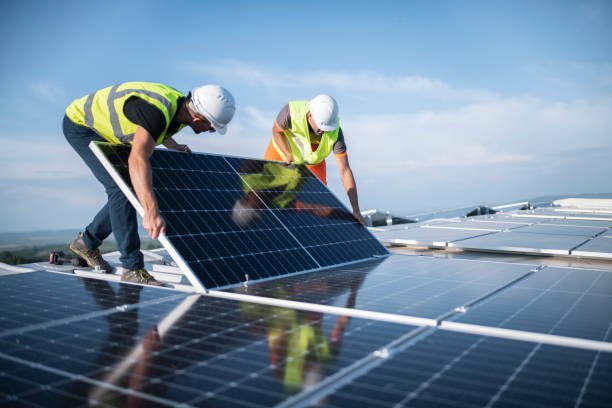
The World Bank has approved a $3.5 million payment guarantee to support Uzbekistan’s renewable energy development. The guarantee covers the National Electric Grid of Uzbekistan JSC’s obligation to purchase electricity from a 100-megawatt solar power plant to be built and operated by the French company Voltalia in the Khorezm region. Details of the Solar Plant Project The solar plant, set to be commissioned in November 2025, will span 177 hectares and generate more than 240 gigawatt-hours of renewable energy annually. It is projected to reduce CO₂ emissions by over 230,000 metric tons each year and produce enough clean energy to power approximately 60,000 households. This initiative aligns with Uzbekistan’s commitment to increasing clean energy production and advancing its transition to a green economy. Broader World Bank Support In addition to this project, the World Bank has allocated $800 million to accelerate Uzbekistan’s transformation into an inclusive and stable market economy. This financing supports reforms to: Improve the business environment. Enhance agriculture, railways, and energy efficiency. Strengthen public finance management. Expand social services. Increase preparedness for environmental risks. Favorable Financing Terms The World Bank’s financial support employs highly concessional loans, offering low-cost, long-term repayment options that are more favorable than standard international financial market rates. Uzbekistan’s collaboration with the World Bank underscores its strategic focus on sustainable development and clean energy to meet environmental and economic goals.

World Bank Report Highlights Poverty and Inequality Challenges in Kazakhstan

The World Bank has released its Kazakhstan Poverty and Equity Assessment 2024, urging policymakers to adopt pro-poor fiscal policies, improve education quality, and enhance climate resilience to address poverty and inequality in the country. According to the report, Kazakhstan’s poverty reduction has slowed in recent years despite significant progress since the early 2000s. “Between 2006 and 2021, economic advancement significantly improved living standards and reduced poverty rates in Kazakhstan. However, economic growth has slowed since 2014, and the pace of poverty reduction has fallen. The COVID-19 pandemic exacerbated these challenges, highlighting the need for resilient and inclusive economic strategies presented in this report,” said Andrei Mikhnev, World Bank Country Manager for Kazakhstan. Kazakhstan’s economy has grown exponentially since 2006, with an average annual growth rate of 4.7 percent. This growth helped lift 5.9 million people out of poverty, reducing the poverty rate from 49.5 percent to 8.5 percent. However, the report identifies three phases of Kazakhstan’s poverty reduction journey: 2006-2013: Rapid poverty decline driven by strong economic growth. 2014-2016: Reversal during the economic downturn, raising poverty rates. 2016-2021: Resumed poverty reduction but at a slower pace The report highlights that Kazakhstan’s middle-class households with a low probability of falling into poverty grew 2.5 times, reaching 67 percent of the population in 2021 compared to 26 percent in 2006. However, this expansion has stagnated since 2013 due to slower structural transformation and productivity growth. Income inequality has also increased. The Gini index, a measure of inequality (0 = perfect equality, 100 = extreme inequality), rose from 24.3 in 2015 to 26.4 in 2021, driven by faster income growth among high-income households. Although fiscal policies, such as taxation and social spending, have mitigated some inequality, the report recommends making fiscal measures more progressive and pro-poor to maximize their redistributive impact. Poverty rates in rural areas (11.4 percent) remain significantly higher than in urban centers (6.6 percent). The southern Turkistan region now accounts for a disproportionate share of the poor population. Alarmingly, poverty has become more concentrated among children and large families, with children comprising 40 percent of the poor in 2021, up from 27 percent in 2006. The report underscores the critical role of human capital investment in achieving long-term poverty reduction and growth. While access to education in Kazakhstan is nearly universal, significant disparities in quality and outcomes persist. The Human Capital Index indicates that children in Kazakhstan achieve only 53–64 percent of their productivity potential, with regional and socio-economic inequalities exacerbating the issue. Climate-related shocks present additional risks, particularly for rural and vulnerable populations. The report calls for targeted investments in infrastructure and social transfers to build resilience against these challenges. To reduce poverty and inequality, the report suggests: Enhancing fiscal policies through progressive taxation and better-targeted social transfers. Improving education quality and outcomes, particularly for disadvantaged groups. Building resilience to climate shocks by investing in infrastructure and providing targeted support to low-income households. The report concludes that sustained policy reforms will be essential for Kazakhstan to maintain economic progress,...

Uzbekistan Aims to Join WTO by 2026

Uzbekistan is intensifying efforts to finalize its accession to the World Trade Organization (WTO), aiming for completion by 2026. At the ninth meeting of the Working Group on Accession, held December 5-6, a delegation led by Deputy Prime Minister Jamshid Khodjayev reaffirmed the country’s commitment to this timeline. WTO members expressed support for Uzbekistan’s high-level political engagement, and encouraged continued alignment of its trade regime with international standards. Khodjayev emphasized that WTO accession is not merely a technical procedure but a critical driver of internal reforms. “This goal demonstrates the inevitability of Uzbekistan's integration into the global trading system. In 2025, efforts will focus on completing negotiations and harmonizing legislation with WTO norms,” Khodjayev stated. The Uzbek delegation included Azizbek Urunov, the president's special representative on WTO issues, Deputy Economy Minister Ahadbek Khaidarov, and representatives from various agencies. Some officials joined the discussions virtually from Tashkent. Chief Negotiator Azizbek Urunov reported that Uzbekistan has concluded bilateral negotiations with nine additional WTO members, bringing the total to 22. This milestone underscores significant progress in the accession process. WTO Deputy Director General Xiangchen Zhang commended Uzbekistan for its ambitious reforms, including Presidential Decree DP-85, which aims to align national legislation with WTO norms. These efforts align with President Shavkat Mirziyoyev’s strategy to accelerate economic modernization. Chairman of the Working Group, Ambassador Yoon Seong-Dok of South Korea, also noted substantial progress at both bilateral and multilateral levels. He highlighted Uzbekistan’s productive cooperation with international organizations such as the IMF, World Bank, and WTO. The Working Group reviewed Uzbekistan’s draft report outlining commitments as a prospective WTO member and examined recent legislative changes. Since May 2024, Uzbekistan has enacted 192 legal acts to comply with WTO standards. Ambassador Yoon stressed the importance of sustained efforts in 2025 to meet the next milestones. “The coming seven to eight months will be crucial to achieve the goal of completing the process by 2026,” he said. The Times of Central Asia previously reported that Uzbekistan has secured China's agreement for its WTO accession. Joining the organization is a cornerstone of Uzbekistan’s broader economic reforms aimed at integrating the nation into the global trading system.

World Bank Chief Economist Owes a Bottle of Wine to Kyrgyzstan’s Cabinet Chief

During a conversation with Hugh Riddell, head of the World Bank’s office in Kyrgyzstan, Akylbek Japarov, Chairman of the Cabinet of Ministers, shared an anecdote about a wager made with the World Bank’s chief economist. “In 2022, at a World Bank session in Washington, your chief economist and I bet that Kyrgyzstan’s economic growth over the next 3-4 years would remain stable and exceed 7%. He doubted this was possible and was ready to wager a bottle of fine wine,” Japarov recounted at a recent event focused on Kyrgyzstan’s development. Japarov highlighted the latest economic figures to underscore his point: GDP growth for the first 11 months of 2024 stands at an impressive 9%. Confident in his position, Japarov announced his intention to claim his winnings. The anecdote reflects broader optimism about Kyrgyzstan’s trajectory. According to data presented by World Bank experts during discussions with the presidential administration, 89% of Kyrgyz citizens believe the country is moving in the right direction regarding political, social, and economic reforms​. The World Bank is actively monitoring socio-economic trends in Kyrgyzstan through its “Listening to the Kyrgyz Republic” project. This initiative conducts monthly panel surveys of 1,500 households across all regions, using telephone interviews to track citizens’ well-being and gather insights into national development trends.