Kyrgyzstan Hosts Inaugural World Festival of Traditional Culture and Music “Rukh Sanat”
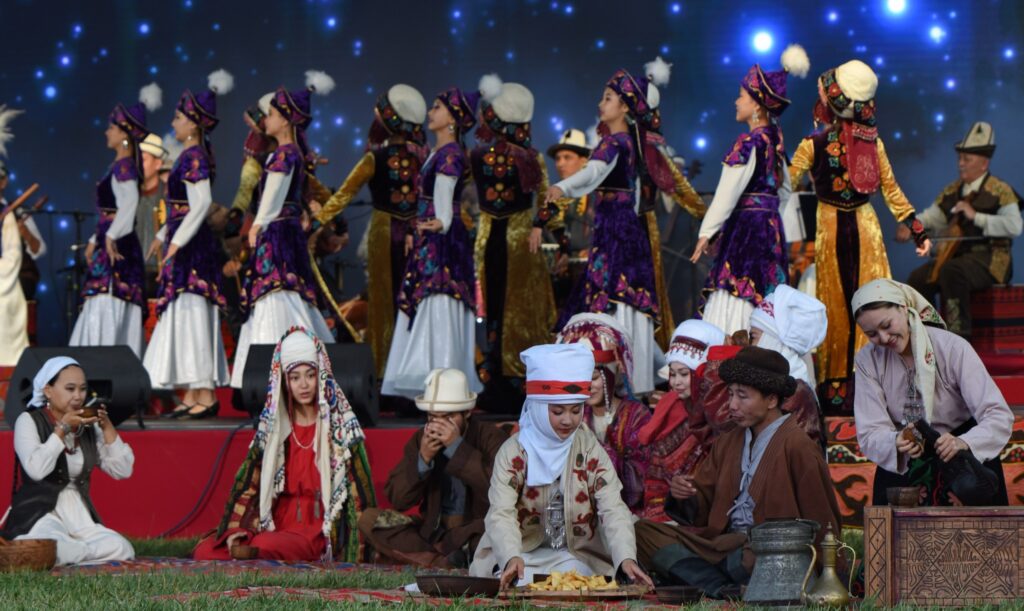
From August 1-3, the cultural and ethnographic complex Rukh Ordo, on the shores of Lake Issyk-Kul, hosted Kyrgyzstan’s first World Festival of Traditional Culture and Music, Rukh Sanat. The event brought together more than 130 performers, researchers, and artisans from 37 countries. The festival opened with a parade of participants and a theatrical ceremony celebrating nomadic traditions and harmony with nature. Kyrgyz Minister of Culture, Information and Youth Policy Mirbek Mambetaliev described Rukh Sanat as “a new cultural doctrine” where tradition “sounds, lives, and interacts.” [caption id="attachment_34893" align="aligncenter" width="2560"] Image: TCA/Maria Malinovskaya[/caption] [caption id="attachment_34892" align="aligncenter" width="2560"] Image: TCA/Maria Malinovskaya[/caption] The program included an International Competition of Oral-Professional Musical Art, featuring 82 soloists and ensembles from 14 countries. The Grand Prix was awarded to the Kyrgyz ensemble Akak, while laureates included performers from Kazakhstan, Uzbekistan, Russia, South Korea, and India. [caption id="attachment_34895" align="aligncenter" width="2560"] Image: TCA/Maria Malinovskaya[/caption] [caption id="attachment_34896" align="aligncenter" width="2560"] Image: TCA/Maria Malinovskaya[/caption] Alongside the performances, the International Council for Traditional Music and Dance (ICTMD) held a symposium attended by more than 100 scholars from 40 countries, addressing the preservation and transformation of intangible cultural heritage. The festival concluded on August 3 with a gala concert of laureates. Deputy Chairman of the Cabinet of Ministers Edil Baisalov announced that the next Rukh Sanat will be held in Kyrgyzstan’s Jalal-Abad region in 2027. [caption id="attachment_34897" align="aligncenter" width="2560"] Image: TCA/Maria Malinovskaya[/caption] [caption id="attachment_34898" align="aligncenter" width="2560"] Image: TCA/Maria Malinovskaya[/caption] Organizers see the festival as an important step toward strengthening Central Asia’s cultural presence on the global stage.