Viewing results 1 - 6 of 68
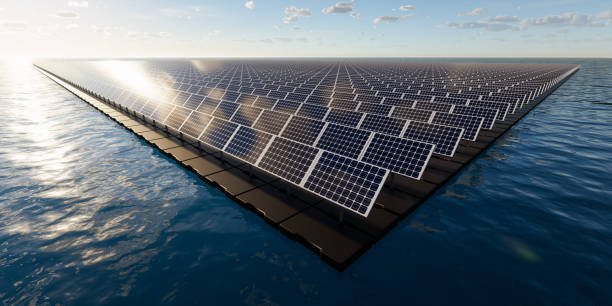
The Asian Development Bank (ADB) has approved a $1 million grant to support the development of floating solar photovoltaic (PV) systems in Tajikistan, an emerging technology for the mountainous Central Asian country. According to Ko Sakamoto, ADB’s Country Director in Tajikistan, the initiative leverages the nation’s abundant solar and water resources. “This innovative initiative aims to make the most of what Tajikistan has to offer: sun and water,” he said. The project is designed to establish the foundation for a year-round, reliable, and environmentally sustainable energy supply. With 93% of its territory covered by mountains, Tajikistan faces limited availability of flat land, most of which is allocated for agriculture or housing. These conditions make the construction of ground-mounted solar power facilities prohibitively expensive. However, the country’s extensive network of reservoirs, with high solar exposure and pre-existing infrastructure, offers a viable alternative. Floating solar systems are being explored as a cost-effective and land-efficient solution to expand renewable energy output without displacing essential land uses. Under the ADB grant, technical experts will assess up to five reservoirs to evaluate their suitability for floating PV installation. The results will inform a detailed feasibility study for the construction of a large-scale floating solar plant at one selected site. The grant will also fund the modernization of the financial management system of Barki Tojik, the state-owned energy company. This component aims to improve the company's operational efficiency and financial transparency. Tajikistan has recently accelerated its shift toward clean energy. As previously reported by The Times of Central Asia, the country has launched its most ambitious solar energy initiative to date: the construction of two photovoltaic plants with a combined capacity of 500 megawatts. The scale of this project marks a strategic pivot toward energy diversification and sustainability.
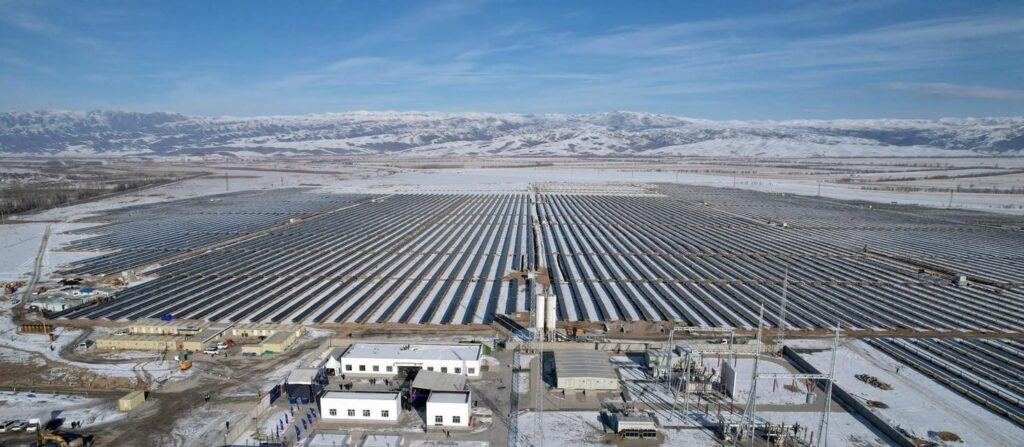
On December 24, Kyrgyzstan inaugurated its first solar power plant in the Kemin district of the Chui region, approximately 100 kilometers east of the capital, Bishkek. The 100-megawatt facility was constructed with $56 million in Chinese investment and is expected to generate approximately 210 million kWh of clean electricity annually. According to government estimates, this output will reduce carbon dioxide emissions by 120,000 tons per year. Speaking at the launch ceremony, President Sadyr Japarov described the project as one of the largest foreign investments in Kyrgyzstan’s renewable energy sector to date. He said the plant signals a new phase in the country’s energy transition and its commitment to sustainable development. “The opening of the solar power plant marks the beginning of an important stage in strengthening our country’s energy independence and developing renewable energy sources,” Japarov said. “We now recognize that without the active development of renewables, it is impossible to fully ensure stable electricity supplies for both the population and economic sectors.” Japarov added that the Cabinet of Ministers has signed 12 agreements with investors to build solar and wind power facilities with a combined capacity of over 5 gigawatts. The solar plant is part of a broader development plan for the Kemin area and the wider Chui region, including the creation of an environmentally sustainable urban center, Kemin City. In January 2025, Japarov signed a decree allocating 353 hectares for the project, which aims to provide modern housing, reduce outward migration, and retain local skilled labor. Located about 95 kilometers from Bishkek, Kemin and the nearby town of Orlovka were once industrial hubs during the Soviet era. The collapse of the USSR led to the closure of many enterprises, triggering significant out-migration. The development of Kemin City and supporting infrastructure is intended to reverse these trends and revitalize the local economy. Also on December 24, President Japarov visited the construction site of a major cement plant in the Kemin district, another project backed by Chinese investment. Scheduled to be commissioned in 2027, the facility is expected to produce 3,200 tons of clinker per day. The project will create more than 300 jobs during the construction phase and over 500 permanent positions once fully operational. Japarov emphasized the strategic importance of the plant for the region’s socioeconomic development and instructed government agencies to provide full support to the project’s investor.
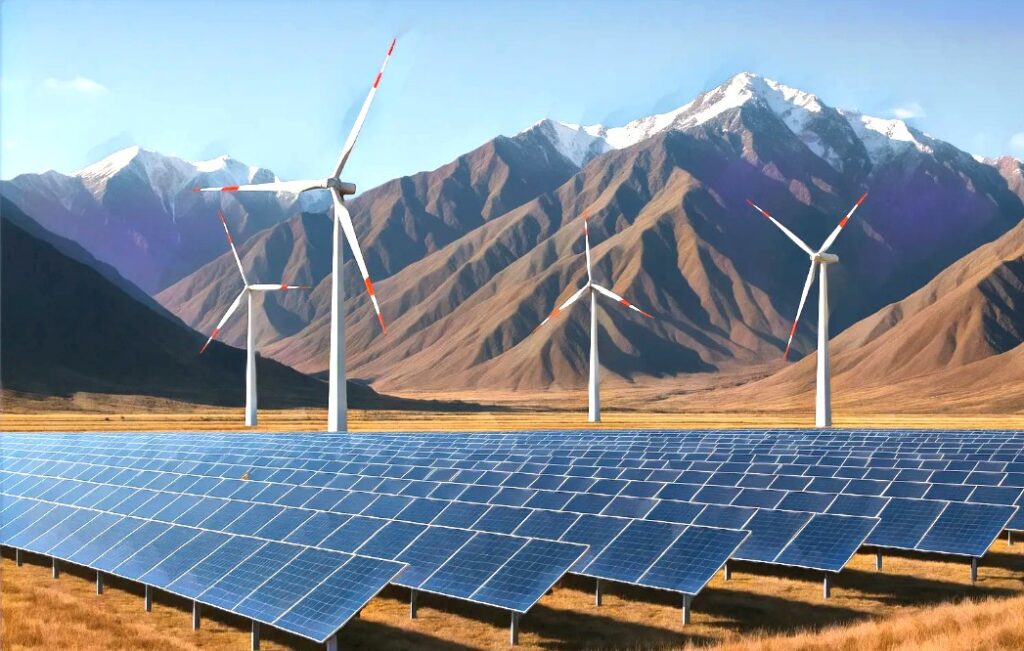
China’s energy engagement in Central Asia has undergone a quiet but decisive transformation since 2018. What was once a relationship built almost entirely on pipelines, hydrocarbons, and state-backed fossil fuel projects is now expanding into a much more diversified portfolio in which renewable energy plays an increasingly central role. Kazakhstan and Uzbekistan were the first to attract large-scale Chinese commitments in solar and wind power, yet Kyrgyzstan is quickly emerging as the newest frontier in this shift. Recent agreements demonstrate how Bishkek is rapidly positioning itself within China’s clean energy expansion. In 2022, Kyrgyzstan signed an agreement with Chinese investors to build a 1-gigawatt solar plant in Issyk-Kul. Furthermore, the government concluded another agreement with Shenzhen Energy Group for the construction of two additional power plants, one solar and one wind. The Energy Ministry has also reached an investment deal with States Technology Co. and San Energy Co. for a 250-megawatt solar facility in Batken. These projects indicate that Chinese capital is not only filling Kyrgyzstan’s immediate energy gaps, but is also beginning to reshape the country’s long-term energy structure. This push toward solar and wind arrives at a critical moment. Kyrgyzstan remains overwhelmingly dependent on hydropower, which generates more than 90% of the country’s electricity. Yet this climate-sensitive resource is now far less stable than in the past. Shifts in water levels driven by changing weather patterns have introduced new uncertainties into the country’s ability to meet domestic demand. At the same time, electricity consumption has surged at an unprecedented rate, rising by nearly one billion kilowatt hours in a single year due to newly launched industrial enterprises and rapid residential construction. The combination of climate volatility and soaring consumption has placed the energy system under severe strain. The government has declared a three-year energy emergency and introduced consumption restrictions designed to save approximately 40 kilowatt hours per month. Under these conditions, diversifying away from near-total reliance on hydropower is no longer optional but an urgent strategic necessity. Solar and wind investments offer a viable path forward. Expanding renewable capacity will give Kyrgyzstan a more predictable and resilient energy base, enabling the country to better manage seasonal shortages and climate-driven disruptions. Kyrgyzstan also imports all of its fossil fuels. As renewable capacity expands and the use of electric vehicles increases, the country could gradually reduce its dependence on oil imports from Russia, easing both financial pressures and geopolitical exposure. For this reason, cooperation with China represents more than a set of commercial transactions. It is evolving into a strategic pillar of Kyrgyzstan’s broader effort to strengthen energy security and modernize its power system. Chinese companies bring financing, technology, and implementation speed, all of which are essential for a country facing immediate and long-term energy risks. The benefits may extend beyond the domestic market. With sufficient renewable capacity, Kyrgyzstan could eventually re-enter regional electricity trade as an exporter. Some estimates suggest that cross-border energy sales could generate up to 220 million dollars annually in foreign currency earnings, providing a significant...
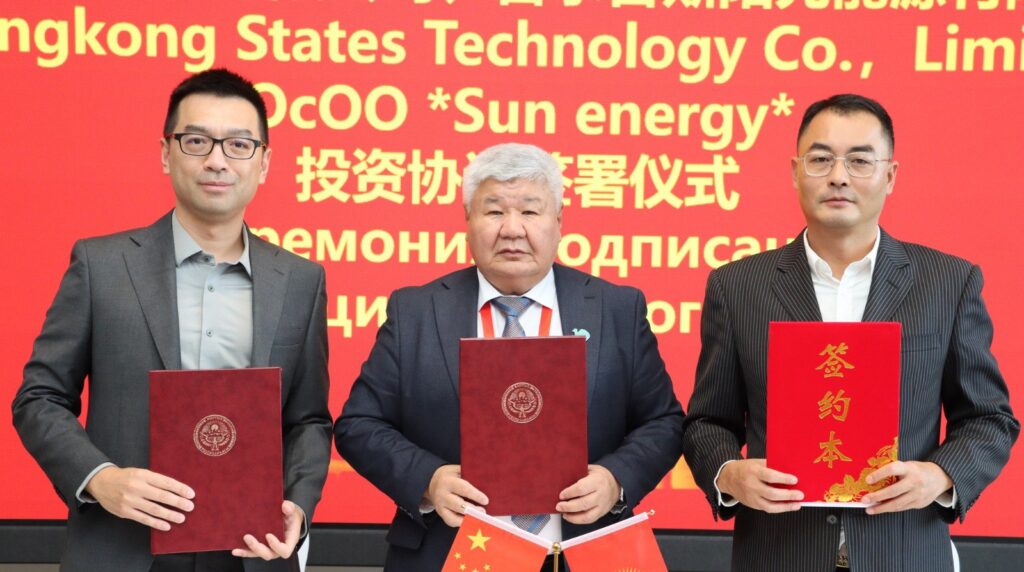
Kyrgyzstan’s Ministry of Energy has signed an investment agreement with China’s State's Technology Co., Limited and San Energy Co. for the construction of a 250-megawatt solar power plant in the country’s south. According to the ministry, the facility will be built on 669 hectares in the village of Ak-Turpak in the Batken region. Construction is set to begin this year, with commissioning planned for 2027. Once operational, the plant will supply electricity to the National Electric Grids of Kyrgyzstan. The Ministry of Energy also signed a memorandum of cooperation with the Power Construction Corporation of China (POWERCHINA). The agreement aims to attract international investors and financial institutions to support joint energy projects in Kyrgyzstan. The memorandum outlines provisions for conducting long-term energy system development planning, providing training for Kyrgyz energy managers and engineers, and exploring the feasibility of constructing floating solar power plants on the Toktogul Reservoir, the country’s largest. These initiatives are part of a broader strategy to expand Kyrgyzstan’s power generation capacity and address persistent electricity shortages nationwide.
Kyrgyzstan’s Cabinet of Ministers has signed an investment agreement with Vietnam’s RECA LLC, Rox Energy Global for the construction and operation of a solar power plant in the village of Kyzyl-Oruk, located in the Issyk-Kul region. The agreement was signed by Kyrgyz Energy Minister Taalaibek Ibrayev and senior representatives of the Vietnamese firms, which are part of ROX Group, one of Vietnam’s leading conglomerates. Discussions covered key implementation stages, including land allocation by the Kyrgyz government, grid integration, and state-supported incentives for the project . The solar plant is designed to have a capacity of 1,900 MW and is scheduled for completion in 2027. The project will be financed through foreign direct investment. Founded in 1996, ROX Group operates across several sectors including real estate, technology, hospitality, and financial services, and is actively expanding into international markets, particularly in Europe. In Kyrgyzstan, the company is also behind the construction of the Royal Central Park residential complex in Bishkek. The solar power initiative is fully aligned with Kyrgyzstan’s national strategy to diversify its energy portfolio, increase electricity generation from renewable sources, and address persistent energy shortages across the country.
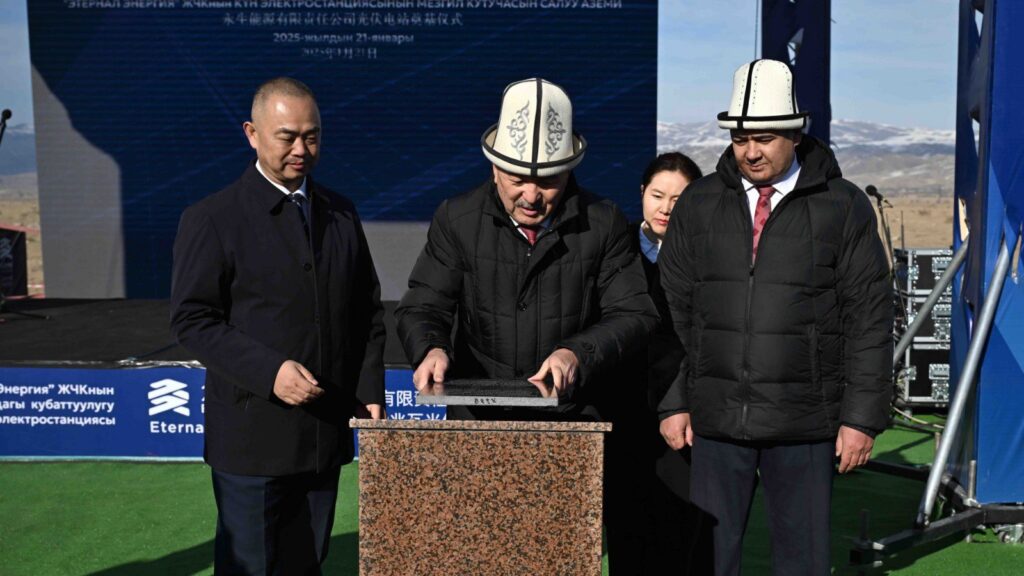
Kyrgyzstan has launched the construction of a new solar power plant in the Kemin district of the Chui region, approximately 100 kilometers east of the capital, Bishkek. The plant will have a capacity of 100 MW and is expected to generate 155 million kWh of electricity annually. According to the government, this will help reduce carbon dioxide emissions by 140,000 tons and coal consumption by 50,000 tons per year. At the January 21 groundbreaking ceremony, Chairman of the Cabinet of Ministers Adylbek Kasymaliev described the project as a significant step toward achieving Kyrgyzstan’s energy independence and advancing sustainable development. Acknowledging that the country still heavily relies on its Soviet-era hydroelectric power plants for electricity generation, Kasymaliev emphasized Kyrgyzstan’s commitment to adopting modern and environmentally friendly energy solutions. Kasymaliev also highlighted the country’s growing energy demands, noting that Kyrgyzstan’s population now exceeds 7 million and new large-scale industrial enterprises are being established. He expressed optimism that the new solar power plant would help alleviate electricity shortages, which remain a pressing issue, especially during the winter months. The chairman extended his gratitude to Chinese partners and investors, particularly those from Shaanxi Province, for their support and contributions to the project. Kyrgyzstan is actively addressing its energy challenges by investing in a diversified mix of renewable energy initiatives, including solar and wind farms, as well as large hydroelectric power projects.