Viewing results 1609 - 1614 of 2392
An agreement has been reached on the transportation of natural gas from Turkmenistan to Turkey via Azerbaijan and Georgia. This deal was announced by Turkey's minister of energy and natural resources Alparslan Bayraktar. Chronicles of Turkmenistan report that Bayraktar met with Azerbaijani economy minister Mikail Jabbarov in Istanbul on May 14, after which the parties signed an agreement on increasing the capacity of several gas pipelines. Turkey's energy ministry said the deal would ensure that additional gas volumes from Azerbaijan and the Caspian region would be delivered to Turkey and Europe by 2030, although the exact volumes have yet to be announced. Bayraktar did not explain how the gas would be delivered from Turkmenistan to Azerbaijan. There is currently no progress in the construction of a trans-Caspian gas pipeline, which would allow direct deliveries of raw materials. It is most probably a swap scheme of supplies through Iran -- this is how Turkmenistan exported gas to Azerbaijan from 2022 to 2024. However, in January 2024, exports were suspended because Ashgabat and Baku failed to agree on the volume and price of gas. Since then, neither side has reported resumption of supplies. Some experts believe that Azerbaijan re-exported Turkmen gas to Europe, mixing it with its own, and the reason for the cessation of purchases was the decline in gas prices on the European market, which made its resale unprofitable for Baku.
Kyrgyz MPs have ratified a bill that will allow customs duties between certain member countries of the Eurasian Economic Union (EEU) to be paid in rubles. The new law allows funds to be transferred in rubles between Russia, Belarus and Kyrgyzstan, at the exchange rate of the national banks of the sending countries. "Armenia, Kazakhstan and Kyrgyzstan between themselves will make transfers of mutual obligations on distributed import customs duties, as before, in U.S. dollars," the Kyrgyz parliament emphasized. During the transition period, interest for late transfer of import duties will not be accrued. EEU member countries distribute revenues from import duties according to the size of their own economies. Kyrgyzstan's share is 2%.
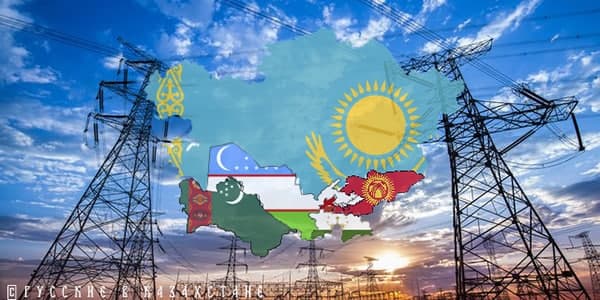
Tajikistan will soon connect itself to Central Asia's unified energy system. The unified system for energy distribution was created in 1960, when the systems of Uzbekistan, southern Kyrgyzstan, northern Tajikistan and southern Kazakhstan's Shymkent junction were connected to work in parallel through 110- and 220-kV power lines. This system operated in isolation from the Soviet Union's general scheme. In 2003 Turkmenistan left the energy system, having decided that it was able to provide itself with electricity on its own. And in early November 2009, the entire southern part of the Tajik energy system was automatically de-energized due to a spontaneous shutdown of units at the Nurek HPP. Tajikistan and the south of Uzbekistan remained without electricity for a day. After that Uzbekistan announced its withdrawal from the energy "ring". After that Uzbekistan completely de-energized the lines connecting its energy system with the Tajik system. As a result, Tajikistan's energy system automatically remained isolated from the rest of the region. Thus, the system ceased to exist as such in 2009, but was recreated again in 2019. Currently, it includes Kazakhstan, Uzbekistan, and Kyrgyzstan.
The International Finance Corporation (IFC) is allocating $5 million to a new fund that will be used to support technology startups in Central Asia, Gazeta.uz reports. IFC is reportedly investing in Sturgeon Emerging Opportunities, a new venture capital fund managed by Sturgeon Capital, a major venture capital investor in emerging markets. Sturgeon Emerging Opportunities will focus on supporting startup projects in areas such as fintech, business-to-business platforms, agri-tech, healthcare and education. The investment in Sturgeon is part of IFC's Startup Catalyst program, which aims to address financial challenges in undervalued venture capital ecosystems by investing in incubators, gas pedals and funds in emerging markets. "The fund will help start-up entrepreneurs to expand their businesses, improve operational efficiency and create long-term employment opportunities," the statement said. Besides investing in projects in Central Asia, the fund also intends to work in other emerging markets such as Egypt and Pakistan. Sturgeon Capital estimates that the IT startup market in these countries could generate nearly $300 million in annual digital revenue by 2030. However, startups in these countries are currently struggling to raise capital to launch and scale their products and services.
Teri Hakala, Special Representative of the European Union for Central Asia, has recently spoken about the EU's goals for its presence in the Central Asian region, and plans for the coming years. Speaking at the conference, "Turkmenistan and the EU: 30 years of cooperation", Ms Hakala said: "The EU has a very strong presence in the Central Asian region. And our goal is to contribute to the development and welfare of these countries and sustainability. In the next 30 years we plan to continue our work in Turkmenistan and in other Central Asian countries, partners, for the benefit of these countries and the EU." She also spoke about the EU-Central Asia Transport Investment Forum, which was held in Brussels earlier this year. "In January, the EU organized an investment forum and in March too there were discussions about our commitment and obligations related to the allocation of $10 billion from the EU for the Trans-Caspian Corridor project, which will help to expand trade relations, to include more and more people in their activities. This will contribute to the expansion of not only the transport corridor, but also the energy corridor," Ms Hakala added. The Trans-Caspian Transport Corridor is a route connecting Europe and Central Asia. It is expected that once complete, cargo will be delivered along it in just 15 days.
Turkmenistan intends to create a powerful bio-industry sector in all areas of biotechnology, Turkmenportal reports. President Serdar Berdimuhamedov signed a decree approving the State Program for comprehensive development of biotechnology in Turkmenistan for 2024-2028. Under the program, it is planned to implement priority innovation and investment projects, and widely deploy production in all sectors of bio-industry - from bio-pharmaceuticals to bio-chips. "The country's Academy of Sciences is already conducting topical developments in dozens of areas. In bio-pharmaceuticals, the medicinal properties of local plants are being studied. In food biotechnology, the production of fortified foods and drinks is underway. Agricultural biotechnology is being developed to increase crop yields. Scientists are working on biosensors and bio-chips for personalized medicine, bio-fuels and biodegradable materials. Microorganisms for soil bio-remediation are being studied. Turkmen know-how in the field of biotechnology is already attracting scientific interest in the world," the outlet said. The Presidential Decree also provides for a plan of measures to implement the State Program, which will be implemented by the Academy of Sciences of Turkmenistan, relevant ministries and departments. The main purpose of the new document is to integrate science into the development of different sectors of the economy, stimulate the production of environmentally-friendly, energy-saving, import-substituting and export-oriented goods, and the formation of a competitive national bio-industry in the future.