• KGS/USD = 0.01143 0%
  • KZT/USD = 0.00205 0%
  • TJS/USD = 0.10433 0%
  • UZS/USD = 0.00008 0%
  • TMT/USD = 0.28577 0%
  • KGS/USD = 0.01143 0%
  • KZT/USD = 0.00205 0%
  • TJS/USD = 0.10433 0%
  • UZS/USD = 0.00008 0%
  • TMT/USD = 0.28577 0%
  • KGS/USD = 0.01143 0%
  • KZT/USD = 0.00205 0%
  • TJS/USD = 0.10433 0%
  • UZS/USD = 0.00008 0%
  • TMT/USD = 0.28577 0%
  • KGS/USD = 0.01143 0%
  • KZT/USD = 0.00205 0%
  • TJS/USD = 0.10433 0%
  • UZS/USD = 0.00008 0%
  • TMT/USD = 0.28577 0%
  • KGS/USD = 0.01143 0%
  • KZT/USD = 0.00205 0%
  • TJS/USD = 0.10433 0%
  • UZS/USD = 0.00008 0%
  • TMT/USD = 0.28577 0%
  • KGS/USD = 0.01143 0%
  • KZT/USD = 0.00205 0%
  • TJS/USD = 0.10433 0%
  • UZS/USD = 0.00008 0%
  • TMT/USD = 0.28577 0%
  • KGS/USD = 0.01143 0%
  • KZT/USD = 0.00205 0%
  • TJS/USD = 0.10433 0%
  • UZS/USD = 0.00008 0%
  • TMT/USD = 0.28577 0%
  • KGS/USD = 0.01143 0%
  • KZT/USD = 0.00205 0%
  • TJS/USD = 0.10433 0%
  • UZS/USD = 0.00008 0%
  • TMT/USD = 0.28577 0%

Viewing results 331 - 336 of 3014

Chinese Firms to Build Waste-to-Energy Plants in Astana and Shymkent

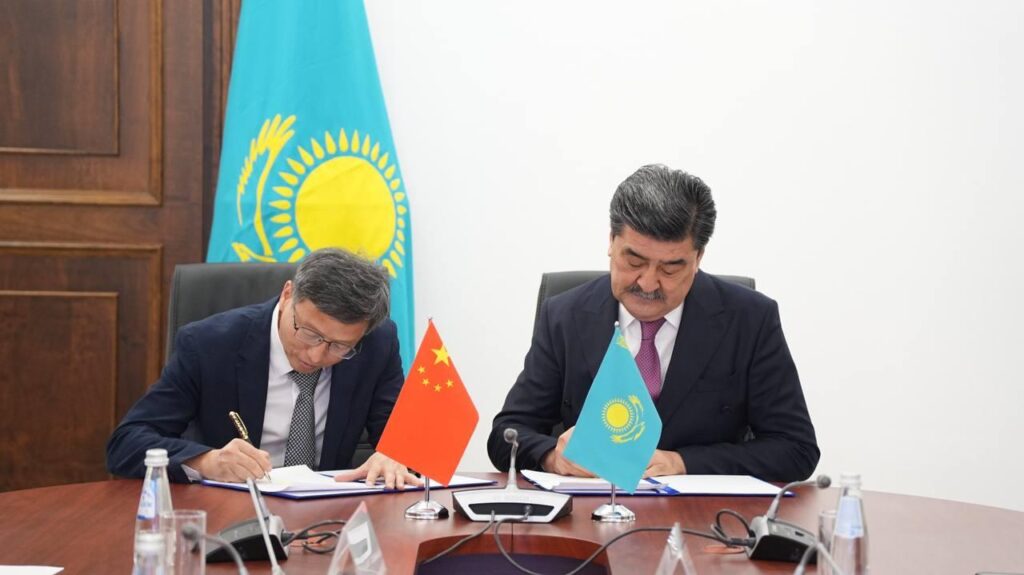
Kazakhstan is advancing the modernization of its waste management system with the launch of new waste-to-energy projects in Astana and Shymkent, its second- and third-largest cities. On October 31, the Ministry of Ecology and Natural Resources announced the signing of investment agreements with China’s Shaanxi Construction Engineering Kazakhstan Co., Ltd. and East Hope LLP to construct the new facilities. In Astana, East Hope LLP will invest approximately $180 million to build a plant with a daily processing capacity of 1,500 tons of municipal solid waste, equating to around 550,000 tons per year. In Shymkent, Shaanxi Construction Engineering Kazakhstan Co., Ltd. will invest $100 million in a plant capable of processing 1,000 tons of waste daily, around 360,000 tons annually. Together, the two projects are expected to create more than 550 jobs during the construction phase and approximately 200 permanent positions once operational. The plants aim to significantly reduce the volume of waste sent to landfills while generating clean electricity, contributing to Kazakhstan’s broader environmental and energy goals. In August, the Ministry signed a separate agreement with China’s Hunan Junxin Environmental Protection Co. Ltd. to construct Kazakhstan’s first waste-to-energy facility in Almaty. That plant will process at least 1,600 tons of solid waste daily and generate up to 60 megawatts of electricity. The total investment in the Almaty project is estimated at $269 million.

Kazakhstan’s Development Bank Launches $1 Billion Program for Rare Earth Metals Processing

The Bank for Development of Kazakhstan (BDK) has announced the launch of a $1 billion program to finance projects for the extraction and processing of rare, rare earth, and critical materials between 2025 and 2030. According to a press release from the bank, the new program is intended to support the mining and metallurgical industries as part of Kazakhstan’s strategic push into high-tech sectors. The minimum project financing threshold has been reduced to $9.4 million, down from the usual $13 million. Funding will be available in various currencies, including dollars, euros, and yuan, for terms of up to 20 years. The bank stated that it will not charge commissions for organizing or altering the terms of financing under this initiative. Borrowers will also benefit from grace periods. BDK described the program as strategically important for diversifying Kazakhstan’s industrial base and integrating the country into global value chains. It will also support the implementation of the 2024-2028 Comprehensive Development Plan for the Rare and Rare Earth Metals Industry. “The launch of the program reflects BDK’s strategic focus on supporting new growth points in the economy. We are creating conditions for Kazakhstan to become a producer of finished products with high added value. This will allow us to form new technological chains, increase the competitiveness of domestic industry, and strengthen the country's position in the global market for critical materials,” said Marat Yelibaev, Chairman of the Board of BDK. The financing will target projects in the metallurgical industry, including mining enterprises with processing capabilities. All applicants must confirm reserves in accordance with the JORC international standard, which governs reporting on geological exploration, mineral resources, and ore reserves. Eligible materials include lanthanides, scandium, yttrium, lithium, cobalt, tungsten, germanium, gallium, graphite, and other critical elements used in advanced technologies, green energy, and electronics. Separately, Kazakhstan’s Minister of Industry and Construction, Yersayin Nagaspayev, announced during the Kazakhstan Global Investment Roundtable (KGIR) that the country plans to launch more than $6 billion worth of mining projects. “Investments in this sector have already reached $3.6 billion. In the near future, we plan to implement five major projects worth over $6 billion, which will create about 8,000 new jobs,” he said. Nagaspayev emphasized Kazakhstan’s global standing in reserves of tungsten, uranium, and chrome ores, and its role as a top producer of manganese, silver, and zinc. In 2024, the mining sector accounted for 8% of GDP, with total production surpassing $29 billion and metallurgical exports totaling $21 billion. “Today, Kazakhstan is one of the key suppliers of non-ferrous, ferrous, and rare earth metals. We are actively working to diversify both our export products and sales markets,” Nagaspayev noted. Recent geological studies suggest that Kazakhstan's rare earth metal reserves exceed previous estimates, bolstering the country’s potential as a global supplier of these strategic resources. To support this shift from raw material exports to domestic processing, Kazakhstan also plans to open an internationally accredited rare earth metals laboratory.

Kazakhstan to Block Foreign Marketplaces for Unpaid Taxes

Foreign online platforms that do not complete conditional VAT registration and begin paying taxes in Kazakhstan by January 1, 2026, will be blocked in the country, according to Edil Azimshayyk, head of the VAT Administration Department at the State Revenue Committee under the Ministry of Finance. Speaking at a briefing in Astana, Azimshayyk said a new mechanism, conditional VAT registration for foreign companies, will take effect at the beginning of 2026. Under this system, the tax authorities will create a registry of foreign companies liable for VAT. The new rules will primarily target foreign suppliers of goods, services, and works that operate in Kazakhstan’s digital marketplace. To register, a foreign company must submit a confirmation letter containing its corporate details to Kazakhstan’s tax authority within one month of receiving its first payment from a buyer in Kazakhstan. The date of this initial payment will determine when the company is recognized as a VAT payer. Once registered, these companies will be required to pay VAT on a monthly basis. “We will send them notifications requiring registration,” Azimshayyk stated. “However, blocking their banking operations is not applicable, as they do not open accounts in Kazakhstan. Instead, if they fail to comply with the registration notification, access to their online platforms will be suspended.” The State Revenue Committee, in cooperation with the National Bank and commercial banks, will identify non-compliant companies by analyzing payments made by Kazakhstani citizens to foreign marketplaces. The VAT rate for such foreign platforms will also increase from 12% to 16% starting in 2026. Kazakh companies that are not yet registered for VAT will likewise receive notifications and be given 30 working days to comply. “If the notification is ignored, expenditure transactions on the taxpayer's bank accounts will be suspended. This restriction will be lifted once the company completes registration,” Azimshayyk added. As previously reported by The Times of Central Asia, foreign online purchases in Kazakhstan totaled $1.3 billion in 2023, representing approximately 20% of the country’s total online sales. Overall e-commerce volume exceeded $4.8 billion, accounting for 13% of total retail trade. The Kazakh government aims to raise the share of e-commerce in total retail trade to 18.5% by 2029 and 20% by 2030.

Kazakh Oil Service Providers Urge Government to Curb Chinese Dumping

The Oil and Gas Council of Kazakhstan (PetroCouncil) has appealed to Prime Minister Olzhas Bektenov to address what it describes as unfair pricing practices by Chinese subcontractors in the oil and gas chemical industry. PetroCouncil, an association representing around 150 Kazakh oil service providers, engineering firms, and manufacturers, published an open letter to the prime minister on its Telegram channel. The letter highlights growing concern over the involvement of foreign companies, particularly from China, in major industrial and oil and gas chemical projects across Kazakhstan. “By offering services at prices up to 70% below market rates, they are effectively driving out domestic companies,” the council stated. “This creates risks of reduced Kazakhstani content, loss of tax revenue, job cuts, a decline in engineering expertise, and potential threats to quality and industrial safety.” PetroCouncil argues that the current situation demands systematic government intervention. The organization has proposed several measures aimed at restoring fair competition and supporting domestic industry players. Among its recommendations is a cap on price dumping in tenders, setting a minimum price threshold no more than 20% below the average market rate. The council also suggests strengthening the weight of the “Kazakh content” criterion when evaluating bids and introducing a “second-best price” principle, favoring local companies when cost differences with foreign bidders are minimal. Further proposals include stricter oversight of foreign worker permits, enhanced enforcement of labor laws, and the establishment of a national registry of domestic producers involved in oil and gas chemical projects. As previously reported by The Times of Central Asia, Russian energy giant Lukoil has announced plans to divest its international assets in response to Western sanctions. Kazakh authorities are assessing potential implications for the projects in which Lukoil is currently involved within the country.

Kyrgyzstan Achieves Self-Sufficiency in Six Staple Food Products

Kyrgyzstan is now fully self-sufficient in six of nine socially important food products: potatoes, milk, meat, vegetables, eggs, and sugar, according to the Ministry of Water Resources, Agriculture, and Processing Industry, which oversees national food security through agricultural production monitoring. The country achieved full self-sufficiency in sugar in 2024, having previously relied on imports. Regarding meat, Kyrgyzstan meets its domestic demand for beef and lamb and is close to achieving self-sufficiency in poultry. However, higher meat prices in neighboring Uzbekistan and Tajikistan led Kyrgyz farmers to export meat for greater profits. In response, the government introduced a ban on meat exports and imposed price controls to stabilize domestic markets. To support local egg producers, the government has banned egg imports amid rising domestic production. Kyrgyzstan now exports chicken eggs; from January to August 2025, the country exported 3.3 million eggs. The remaining three staple food products, bread (including flour and grain), vegetable oil, and fruit, are still partially dependent on imports.

Kyrgyzstan Introduces Voluntary Loan Ban to Curb Financial Fraud

Starting November 1, Kyrgyzstan will implement a self-restriction mechanism allowing citizens to voluntarily block the issuance of loans and credits in their name, a measure aimed at protecting individuals from financial fraud involving unauthorized loans. Announcing the initiative at a press conference on October 30, Bektur Aliyev, Deputy Chairman of the National Bank of Kyrgyzstan, said the new regulation comes in response to a rise in cases where fraudsters used fake or stolen passports to secure loans online. The self-restriction can be activated or revoked remotely at any time via the State Portal of Electronic Services or the Tunduk mobile app. Once submitted, the restriction takes effect immediately, while cancellations require a 12-hour waiting period. Financial institutions, including banks and microfinance organizations, are legally required to check for any active self-restriction before issuing a loan. If such a restriction is in place, the loan cannot be granted. Should a loan be issued during the restricted period, the contract is deemed legally invalid and the lender has no legal grounds to demand repayment. According to the National Statistics Committee, microcredit organizations issued over 40 billion soms in loans to more than 567,000 recipients in the first half of 2025. More than 60% of those loans were for consumer purposes, and the volume of microloans increased by 34% compared to the same period last year. A similar voluntary loan restriction system has been in place in Kazakhstan since 2023.