• KGS/USD = 0.01144 0%
  • KZT/USD = 0.00201 0%
  • TJS/USD = 0.10433 0%
  • UZS/USD = 0.00008 0%
  • TMT/USD = 0.28571 0%
  • KGS/USD = 0.01144 0%
  • KZT/USD = 0.00201 0%
  • TJS/USD = 0.10433 0%
  • UZS/USD = 0.00008 0%
  • TMT/USD = 0.28571 0%
  • KGS/USD = 0.01144 0%
  • KZT/USD = 0.00201 0%
  • TJS/USD = 0.10433 0%
  • UZS/USD = 0.00008 0%
  • TMT/USD = 0.28571 0%
  • KGS/USD = 0.01144 0%
  • KZT/USD = 0.00201 0%
  • TJS/USD = 0.10433 0%
  • UZS/USD = 0.00008 0%
  • TMT/USD = 0.28571 0%
  • KGS/USD = 0.01144 0%
  • KZT/USD = 0.00201 0%
  • TJS/USD = 0.10433 0%
  • UZS/USD = 0.00008 0%
  • TMT/USD = 0.28571 0%
  • KGS/USD = 0.01144 0%
  • KZT/USD = 0.00201 0%
  • TJS/USD = 0.10433 0%
  • UZS/USD = 0.00008 0%
  • TMT/USD = 0.28571 0%
  • KGS/USD = 0.01144 0%
  • KZT/USD = 0.00201 0%
  • TJS/USD = 0.10433 0%
  • UZS/USD = 0.00008 0%
  • TMT/USD = 0.28571 0%
  • KGS/USD = 0.01144 0%
  • KZT/USD = 0.00201 0%
  • TJS/USD = 0.10433 0%
  • UZS/USD = 0.00008 0%
  • TMT/USD = 0.28571 0%

Viewing results 13 - 18 of 5270

Wallet in Telegram Launches Crypto Stocks Pilot for 27 Million Users in Uzbekistan

A new digital investment service allowing users to trade tokenized U.S. stocks directly within Telegram has been launched in Uzbekistan as part of a pilot program overseen by the country’s National Agency for Prospective Projects. On March 5, a new “Crypto Stocks” section was introduced within the Wallet feature in Telegram, giving users access to more than 60 tokenized shares and exchange-traded funds (ETFs). The one-month pilot program began in March 2026 and is being implemented with support from Asterium, described as Uzbekistan’s largest cryptocurrency exchange. The service allows users to buy, sell, store, and transfer tokenized versions of shares in major U.S. companies such as Apple, Tesla, Netflix, and Amazon, as well as ETFs tracking the broader U.S. market, including funds linked to the S&P 500 index. These assets can be sent directly to other Telegram users within the app without requiring them to open accounts on traditional brokerage platforms. According to the developers, the system is designed to make global investment tools easier to access for everyday users. Investments can start from as little as $1, allowing users to purchase fractional shares rather than full stocks. According to Global Findex 2025 data cited in the release, more than 60% of Uzbekistan’s population now has an account with a bank or other financial institution. However, barriers such as limited funds, the distance to bank branches, and the cost of financial services continue to prevent many people from accessing traditional financial products. Andrew Rogozov, founder and CEO of The Open Platform and Wallet in Telegram, said the new service aims to make global financial markets accessible through familiar digital platforms. “By bringing tokenized equities into Telegram, we’re giving millions of people their first opportunity to participate in global financial markets directly where they communicate and use digital services,” he said. Diyorbek Mukhammedov, Wallet’s regional director in Uzbekistan, said the initiative responds to growing interest in investing while addressing the complexity that often discourages new investors. Integrating the service into Telegram, he said, helps make financial tools more understandable and accessible. The system operates through integration with the xStocks platform and a partnership with the Kraken cryptocurrency exchange. Tokenized assets are issued by Backed and are designed to maintain one-to-one backing with underlying U.S. stocks and ETFs. Trading on the platform is available 24 hours a day on weekdays. Wallet in Telegram, backed by The Open Platform, reports more than 150 million registered users globally. The service became available in Uzbekistan in December 2025 after receiving a license from the National Agency for Prospective Projects.
Almaty Hosts Ranking Business Day Discussion on Whether E-Commerce Could Become Kazakhstan’s “New Oil”

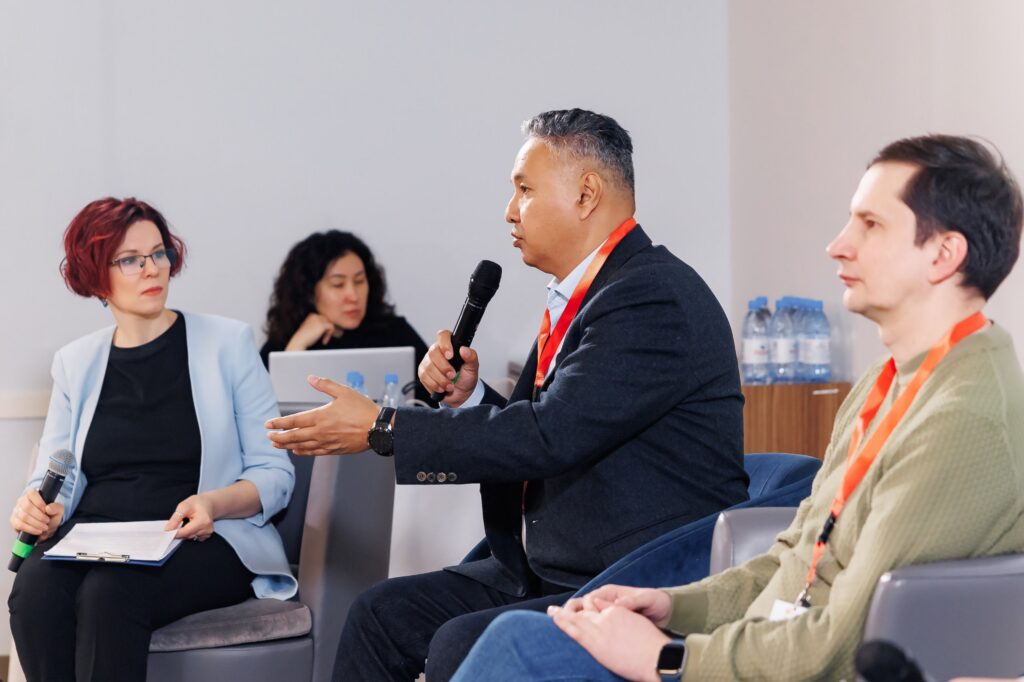
On February 26, Almaty hosted the first Ranking Business Day, an expert discussion in an open-talk format dedicated to the development of e-commerce in Kazakhstan. The event was organized by the analytical platform Ranking.kz and the communications agency 2BAgency. The central question of the meeting was whether e-commerce could become a new driver of economic growth in Kazakhstan. Sedred Asretov, CEO of Ranking.kz, presented the results of a study on the country’s e-commerce market. According to the data, the volume of retail e-commerce in Kazakhstan reached $6.4 billion in 2024, an increase of 29% compared with the previous year. “E-commerce today is not just a new sales channel. It is a full-fledged ecosystem that combines payments, logistics, marketing, and services,” Asretov said. He emphasized that more than 90% of sales on marketplaces come from small and medium-sized businesses (SMBs), making e-commerce an important tool for supporting entrepreneurs across the country. Small and medium-sized businesses currently account for about 40% of Kazakhstan’s GDP and 70% of investment in fixed capital. Marketplaces have become a key sales channel for SMBs, allowing companies to reach broad audiences without major spending on IT infrastructure, marketing, or logistics. This is particularly important for entrepreneurs in regional areas where traditional sales channels are limited. At the same time, electronic trading platforms make a significant contribution to the state budget. According to the study, Kaspi.kz ranked first in tax payments, contributing approximately $276 million in 2025, a 3.5% increase from the previous year. Wildberries ranked second with $116 million in tax payments, followed by Ozon with approximately $30 million. During two discussion sessions, experts and representatives of government agencies, the banking sector, and major e-commerce companies discussed key market challenges. Among the main issues raised were: unequal competition between local and foreign platforms; the growing influence of foreign marketplaces; the need for systematic regulation of the industry. Particular attention was given to discussion of a new consumer protection law. Deputy Azat Peruashev of Kazakhstan’s lower house of parliament, the Mazhilis, said lawmakers had proposed requiring foreign marketplaces not only to pay VAT but also to cooperate with Kazakhstani manufacturers. “We approached the Ministry of Trade and Integration with a proposal to oblige foreign marketplaces to cooperate with Kazakhstani manufacturers. However, we were told that such conditions cannot be imposed. But this is a negotiation process, and the state should take a stronger position,” he said. Experts also discussed potential future changes in the market. Damir Meyrambekov, managing director for e-commerce at Kazpost, said a new trading platform created in partnership with one of the largest Chinese marketplaces may appear in Kazakhstan in the near future. Evgenia Savenkova-Petrichenko, head of the Wildberries commerce department in Kazakhstan, also commented on reports that the company may purchase a Kazakh financial organization. She did not deny the possibility but said it was too early to make any official statements. The organizers said they intend to make Ranking Business Day a regular platform for discussing key issues related to the digital economy....

Kazakhstan Prepares Comprehensive Program for Light Industry Development

The Kazakh government has commissioned the development of a comprehensive program aimed at strengthening the country’s light industry sector, with the goal of creating new jobs and increasing production. The instruction was issued by Deputy Prime Minister and Minister of National Economy Serik Zhumangarin to the Ministry of Industry and Construction during a meeting of the government headquarters responsible for ensuring economic growth. “Light industry is very important for us in terms of providing employment,” Zhumangarin said. “For example, the Turkestan region, the most densely populated region of the country, has the largest number of light industry enterprises. Further development of the sector will make it possible to create jobs and provide decent wages for the local population.” According to the Ministry of Industry and Construction, Kazakhstan’s light industry has demonstrated steady growth over the past five years. By the end of 2025, output in the sector had increased by 13.2%, well above the planned growth rate of 3%, reaching $522 million. Despite these positive trends, the sector’s share of Kazakhstan’s manufacturing industry remains relatively small at around 0.8%. More than 60% of production comes from textiles, approximately 32% from clothing, and about 6.5% from footwear and leather goods. More than 97% of enterprises in the sector are small businesses. Participants in the meeting also highlighted several systemic challenges that require comprehensive solutions. These include developing the domestic raw material base, modernizing production facilities, improving regulated procurement mechanisms, and expanding financial support for the industry. As previously reported by The Times of Central Asia, Kazakhstan is also considering projects to cultivate and process industrial hemp for use in the textile sector.

Kazakh Politician Proposes Softer Punishment for Citizens Who Join Foreign Military Conflicts

Zharkynbek Amantaiuly, a member of the Mazhilis, the lower house of Kazakhstan’s parliament, has submitted a request to Prosecutor General Berik Asylov and Interior Minister Yerzhan Sadenov proposing that penalties be reconsidered for Kazakh citizens who participate in armed conflicts abroad. According to the lawmaker, growing geopolitical tensions and the increasing number of armed conflicts worldwide are contributing to a rise in the number of Kazakh citizens involved in hostilities outside the country. He noted that groups recruiting foreign citizens often rely on deception and targeted recruitment campaigns to attract participants. “Unfortunately, the number of our compatriots who have fallen under such influence is growing,” Amantaiuly said. According to data cited by him, 23 criminal cases were opened in Kazakhstan in 2023 under Article 172 of the Criminal Code, which concerns participation in foreign armed conflicts. The number increased to 36 cases in 2024 and rose sharply to 141 in 2025. Of the cases registered in 2025, 26 citizens have been convicted. The offense carries a prison sentence of between five and nine years. Amantaiuly argued that many citizens end up in conflict zones due to social difficulties, misconceptions, or deception, often after being promised high-paying jobs. “Of course, no one goes to an armed conflict zone without a reason. Many of those who find themselves in such situations say they hoped to obtain well-paid employment. When they realize they have been deceived, they become involved in bloody battles in a foreign country and understand that there is almost no way back. Their parents, families, and loved ones suffer as a result,” he said. He also noted that in some countries, participation in hostilities as part of the official armed forces of a foreign state is not considered a criminal offense. According to Amantaiuly, strict criminal liability is typically applied to individuals who join terrorist organizations, commit war crimes, or act against the national interests of their own country. For this reason, the deputy proposed studying international legal practices and preparing amendments to Kazakhstan’s criminal legislation governing citizens’ participation in armed conflicts abroad. In his view, the law should introduce a mechanism for differentiated legal assessment. Such a framework could allow for suspended sentences, restrictions on freedom, or probationary supervision for individuals who were not members of terrorist organizations, did not commit war crimes, and voluntarily returned to Kazakhstan. The deputy also proposed developing a state program for the legal, psychological, and social rehabilitation of such citizens. As previously reported by The Times of Central Asia, several Kazakh citizens who fought in Ukraine as part of the Wagner private military company have received prison sentences of up to six years. At the same time, Kazakhstan’s National Security Committee is investigating stand-up comedian Nurlan Saburov. According to media reports, he allegedly transferred motorcycle equipment purchased with his own funds to the same Wagner unit.

Evacuation Through Turkmenistan: Dozens of Foreigners Leave Iran as Assistance Conditions Vary

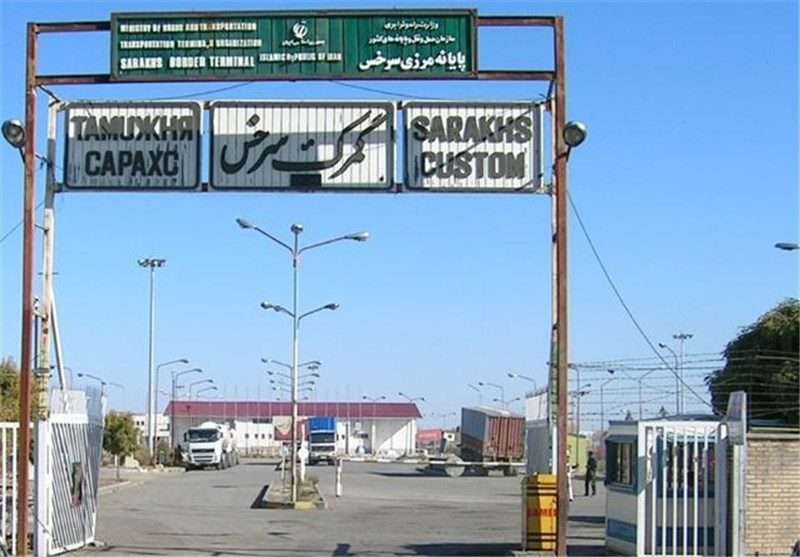
Amid the ongoing military conflict involving Iran, foreign nationals have begun leaving the country by land. One of the main evacuation routes has been through neighboring Turkmenistan, although the conditions for departure and the level of assistance provided to citizens of different countries have varied. Foreign citizens began leaving Iran after strikes were launched on its territory. With Iranian airspace closed, evacuation has only been possible by land. According to diplomatic sources in Kazakhstan, Russia, Uzbekistan, and South Korea, about 60 foreign nationals have already left Iran via Turkmenistan. Kazakhstan’s Minister of Transport, Nurlan Sauranbayev, said that on March 2, 18 Kazakh citizens were successfully evacuated from the northern Iranian city of Gorgan. The closest available route was through the Turkmen border. According to the minister, Turkmen authorities granted permission for the group to cross the border, although the specific checkpoint used was not disclosed. Serakhs remains the main transit crossing in this direction, while other checkpoints remained closed until March 2. On the same day, a group of eight Russian citizens crossed the border through the Serakhs checkpoint. According to Igor Samoshkin, head of the consular department of the Russian Embassy, Turkmen officials met the arrivals at the border and arranged transportation to Ashgabat as well as hotel accommodation. Russian diplomats later assisted the group with further travel arrangements. On March 3, the group flew home on an S7 Airlines flight. On March 3, 13 citizens of Uzbekistan crossed the border in an organized manner through the same Serakhs checkpoint. According to the Dunyo news agency, they were met by Uzbek embassy staff in official vehicles. After the Gaudan-Bajgiran crossing opened, diplomats also began meeting their citizens there. However, the subsequent route taken by the Uzbek nationals was not specified. There are currently no direct flights between Turkmenistan and Uzbekistan, and the distance from Serakhs to the nearest land crossing between the two countries, Farab-Alat, is about 460 kilometers. On the same day, a group of 23 South Korean citizens entered Turkmenistan. According to The Korea Times, they were accompanied by South Korean diplomats throughout their transit in the country before departing from Ashgabat on individual flights. Representatives of the South Korean embassy noted the prompt response of Turkmenistan’s Ministry of Foreign Affairs, as well as assistance with immigration procedures, consular support, accommodation, and flight reservations. Foreign citizens require a visa to transit through Turkmenistan, and this requirement has not been completely waived even during the evacuation. As Russian diplomat Igor Samoshkin explained, those seeking to leave Iran through Turkmenistan must first contact their country’s embassy in Iran and submit documents for a visa. The diplomatic mission then sends a request to the Turkmen authorities, after which further coordination takes place between Ashgabat and the relevant embassies accredited in Turkmenistan. Turkmen authorities directly accompanied only the Russian citizens. For other foreign nationals, their respective diplomatic missions were responsible for organizing further travel arrangements. The reasons for the differences in the level of assistance have not been publicly explained. It...

Soft Power in Times of Geopolitical Turbulence: Kazakhstan’s Strategy as a Middle Power

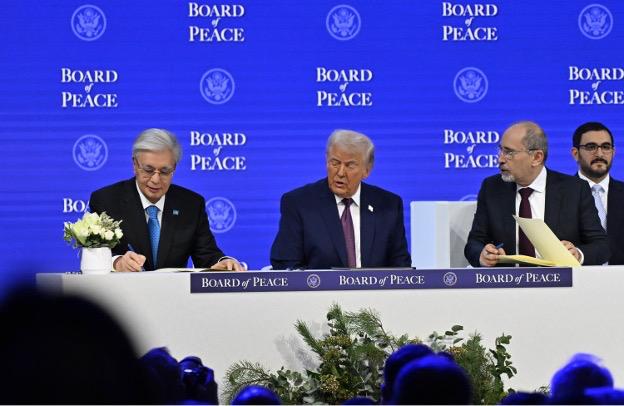
For Kazakhstan, deeply embedded in global supply chains and international investment flows, soft power is evolving from an image-building asset into a strategic instrument of resilience. In an era of globalization, when even geographically distant conflicts can directly threaten national infrastructure and economic security, Astana’s ability to leverage institutional initiatives and investment interdependence as a form of diplomatic protection has become a decisive advantage. Over the long term, stability tends to characterize states whose infrastructure and economic interests are deeply interconnected with those of major global centers of power. A middle power and rational diplomacy Kazakhstan’s status as a middle power is not a matter of ambition, but a deliberate choice in favor of rational diplomacy, where flexibility and institutional engagement serve as key resources. Multilateral dialogue with the U.S., Russia, China, the EU, Turkey, and countries of the Middle East is being developed not as situational maneuvering but as a core strategy for minimizing external risks and preserving sovereignty. It is precisely the combination of proactive soft power, political neutrality, and economic openness that allows Kazakhstan to transform geopolitical turbulence into a strategic advantage, positioning the country as an indispensable hub of international stability. Ultimately, the rational diplomacy of a middle power transforms the country’s geographical position from a potential zone of conflict into a platform for dialogue, where pragmatism and institutional mediation become the principal guarantees of national sovereignty. The Ukrainian case: infrastructure protection as an element of soft power Developments surrounding Russia's war in Ukraine illustrate how Kazakhstan’s soft power can function as a form of economic protection. The attacks on infrastructure in the Novorossiysk area, through which the Caspian Pipeline Consortium exports oil, highlighted a distinctive mechanism for safeguarding national interests through investment interdependence. Strikes near the Black Sea hub posed a direct threat not only to logistics but also to the assets of major American investors in Kazakh energy projects, including Tengiz. According to reports cited in public discussions, the U.S. urged Ukraine to take into account the interests of American investors in Kazakhstan. If confirmed, such a step would represent an important precedent: even amid an intense military conflict, global actors remain attentive to protecting the economic interests tied to Kazakhstan’s energy infrastructure. For Astana, this episode illustrates how decades of building strategic relations with Western partners have created a significant layer of economic security. In this context, soft power manifests itself as a form of “investment protection,” discouraging actions that could damage oil production or transport infrastructure linked to global stakeholders. Institutionalizing neutrality: why Kazakhstan needs a Board of Peace The creation of the Board of Peace by U.S. President Donald Trump and Kazakhstan’s active participation signals Kazakhstan’s transition from ad hoc mediation toward a more structured institutional architecture of soft power. The signing of the Board of Peace Charter by President Kassym-Jomart Tokayev formally embeds peacebuilding activities within the state’s foreign policy framework. Kazakhstan’s developing participation in this initiative is also linked to its experience hosting the Congress of Leaders of World...