• KGS/USD = 0.01144 0%
  • KZT/USD = 0.00211 0%
  • TJS/USD = 0.10515 0.48%
  • UZS/USD = 0.00008 0%
  • TMT/USD = 0.28530 0%
  • KGS/USD = 0.01144 0%
  • KZT/USD = 0.00211 0%
  • TJS/USD = 0.10515 0.48%
  • UZS/USD = 0.00008 0%
  • TMT/USD = 0.28530 0%
  • KGS/USD = 0.01144 0%
  • KZT/USD = 0.00211 0%
  • TJS/USD = 0.10515 0.48%
  • UZS/USD = 0.00008 0%
  • TMT/USD = 0.28530 0%
  • KGS/USD = 0.01144 0%
  • KZT/USD = 0.00211 0%
  • TJS/USD = 0.10515 0.48%
  • UZS/USD = 0.00008 0%
  • TMT/USD = 0.28530 0%
  • KGS/USD = 0.01144 0%
  • KZT/USD = 0.00211 0%
  • TJS/USD = 0.10515 0.48%
  • UZS/USD = 0.00008 0%
  • TMT/USD = 0.28530 0%
  • KGS/USD = 0.01144 0%
  • KZT/USD = 0.00211 0%
  • TJS/USD = 0.10515 0.48%
  • UZS/USD = 0.00008 0%
  • TMT/USD = 0.28530 0%
  • KGS/USD = 0.01144 0%
  • KZT/USD = 0.00211 0%
  • TJS/USD = 0.10515 0.48%
  • UZS/USD = 0.00008 0%
  • TMT/USD = 0.28530 0%
  • KGS/USD = 0.01144 0%
  • KZT/USD = 0.00211 0%
  • TJS/USD = 0.10515 0.48%
  • UZS/USD = 0.00008 0%
  • TMT/USD = 0.28530 0%

Viewing results 2311 - 2316 of 5581

China Gives 200 Million Yuan Grant Aid to Kyrgyzstan

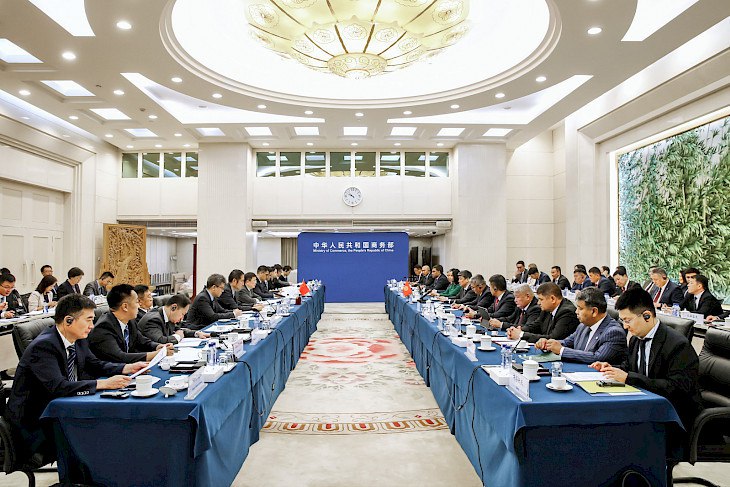
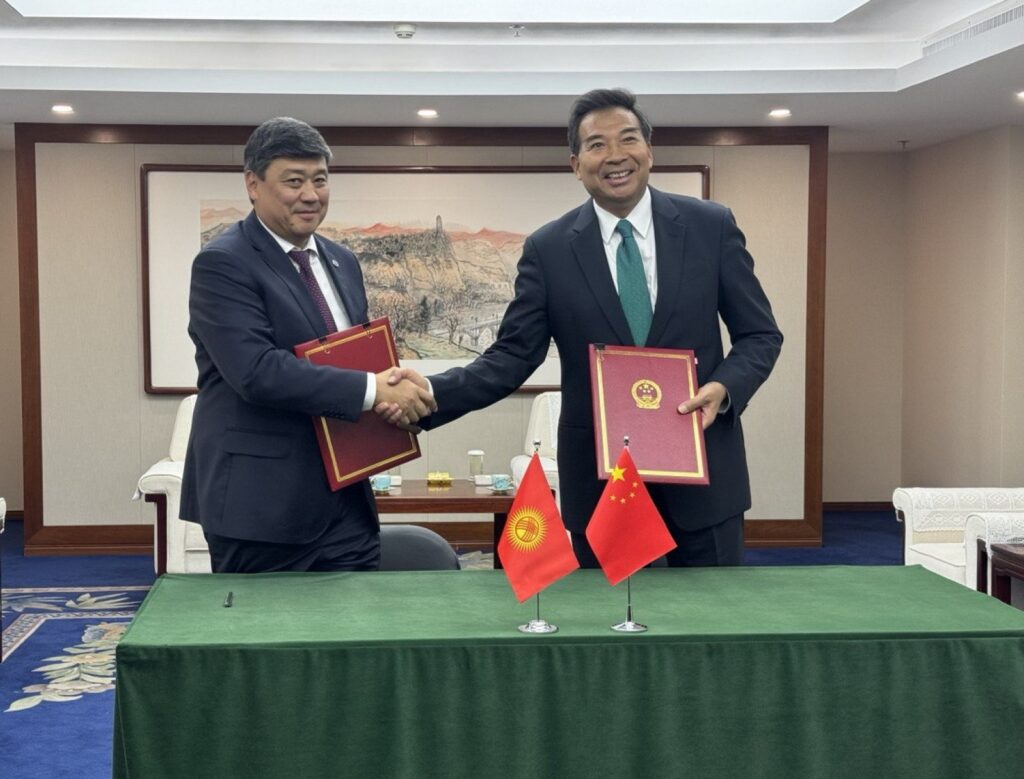
The Kyrgyz Ministry of Economy and Commerce has announced that the Chinese government has allocated grant assistance to Kyrgyzstan totaling 200 million yuan (more than $28 million). The money will be used to finance socially significant projects in priority areas. The grant agreement was signed on September 19 in Beijing, following the Intergovernmental Kyrgyz-Chinese Commission on Trade and Economic Cooperation meeting held the previous day. Deputy Chairman of the Kyrgyz Cabinet of Ministers, Bakyt Torobaev, headed the Kyrgyz delegation at the meeting. On September 18, Torobaev held meetings with the heads of Chinese companies. During a meeting with Zoomlion, a leading Chinese agricultural machinery manufacturer, the sides discussed supplying agricultural machinery and equipment to Kyrgyzstan and the potential opening of a training center for the assembly of agricultural machinery in Kyrgyzstan. Noting Kyrgyzstan’s efforts to expand the export of agricultural products to China, Torobaev said that work is nearing completion on constructing a warehouse near the Irkeshtam checkpoint on the Kyrgyz-Chinese border. This will increase the volume of cargo transportation from Kyrgyzstan and Uzbekistan to China. During a meeting with Jiangnan Delivery (GZ) Food Supply Chain Co., Ltd, a Chinese importer of agricultural products, the parties focused on issues of exchanging experience in the field of e-commerce and a proposal to build a laboratory in Kyrgyzstan that will create opportunities for the unhindered entry of Kyrgyz agricultural products into the Chinese market. According to Chinese statistics, trade turnover between China and Kyrgyzstan amounted to $20 billion in 2023, a 32% increase compared to 2022. Bilateral trade reached almost $11 billion from January to July this year.
Uzbekistan to Head CIS Interstate Space Council

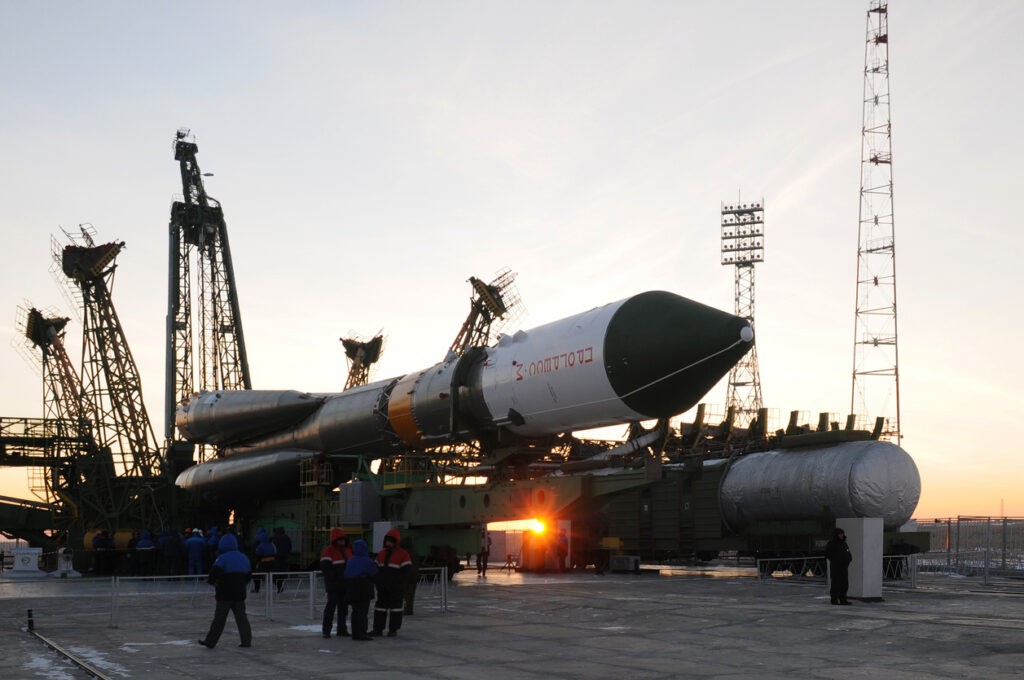
Uzbekistan will head the Interstate Space Council of CIS countries for 2024-2025, and Shukhrat Kadirov, Director of the Uzbekcosmos agency, was unanimously elected as the council chairman. This decision was made at the Fifth Council meeting, which was held in Tashkent. According to CIS rules, the council's chairmanship is passed alphabetically between the participating countries; Tajikistan held the previous chairmanship. Kadirov proposed enhancing cooperation in space education and initiating joint projects to train young specialists. He also noted that the council faces ambitious tasks, including coordinating within the UN and deepening cooperation in space technologies. In August this year, Uzbekistan announced its accession to the 1967 treaty on the exploration and use of space. It was also reported that Uzbekistan will not send weapons of mass destruction into space; the country has advocated reducing the risk of space militarization. The CIS Interstate Space Council is an organization established to coordinate the efforts of CIS countries in space activities. The Council deals with space research, technological developments, and the implementation of joint projects in the space sphere. The organization's importance lies in strengthening cooperation between the countries in using space technologies for scientific research, communications, and navigation. The Council also works on coordination within international organizations such as the UN.

Malaysian Meraque Group to Invest in Uzbekistan’s Agriculture Sector

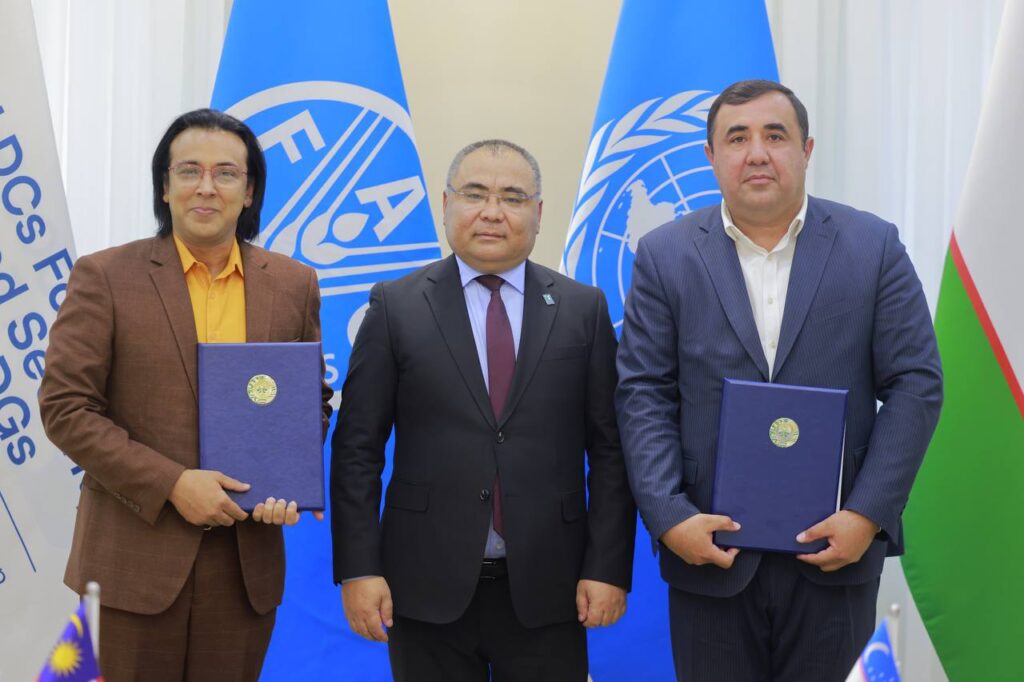
The Ministry of Agriculture of Uzbekistan has reported that a memorandum of understanding on agricultural technologies was signed between the leading Malaysian DroneTech company Meraque Group and the Ministry of Agriculture of Uzbekistan. This cooperation aims to improve the Uzbek agriculture sector, which includes 4.3 million hectares of cultivated land. Meraque intends to invest 20 million Malaysian ringgits ($4.78 million) in the next three years to establish a production enterprise that will create 1,000 jobs and serve 100,000 hectares of agriculture in Uzbekistan. The company is also looking to raise an additional 30 million ringgit ($7.17 million) for technological improvements in the region. The report reads: “A key part of the partnership will be policy development to create an ecosystem of drones for agriculture that will improve productivity and sustainability for the country’s 100,000 farmers. Meraque also focuses on training and knowledge sharing through training programs to support drone operations.” Razali Ismail, CEO of Meraque, said that this cooperation will sustain the development of the two countries' agriculture. The Times of Central Asia previously reported that in April of this year, the European Union presented €6 million ($6.4 million) to the Uzbek government to support the country’s National Food Security and Healthy Nutrition Strategy. In addition to the grant, the EU has also provided funds to help the Ministry of Agriculture carry out reforms. Further funding of €20 million ($21.4 million) will be issued later this year and next to support Uzbekistan’s National Agriculture Development Strategy for 2020-2030. Also, 3 million hectares of pastoral and agricultural lands have been degraded in Uzbekistan, and almost 2 million hectares have become saline. According to experts, by 2030, water resources in the region are in danger of decreasing by nearly 6% due to climate change. In response, Uzbekistan has developed a national program for adapting agriculture to climate change and mitigating its effects, which allocates more than $294 million in grants.

Redefining Diplomacy: Kazakhstan’s Strategic Shift in Relations With Afghanistan

On September 9, 2024, President Kassym-Jomart Tokayev signed a decree dismissing Alimkhan Yesengeldiyev from the position of Kazakhstan's Ambassador to Afghanistan. Yesengeldiyev has been at the post since April 2018. Local media have not yet reported on the appointment of a new ambassador. Previously, Astana has made bold diplomatic steps towards normalizing relations with Afghanistan under Taliban rule. For instance, Kazakhstan accredited Taliban diplomats in April 2023, and removed the Taliban from its list of banned organizations in December 2023. On August 21 of this year, Kazakhstan accredited the head of the Afghan diplomatic mission as charge d'affaires in the country. Astana continues to increase trade, economic, and humanitarian cooperation with the de facto authorities, and has actively engaged in various international platforms for initiatives in Afghanistan. Moreover, President Tokayev outlined Kazakhstan's position on the situation in Afghanistan just a month after the Taliban seized Kabul, when the world was still in shock. “Kazakhstan sees the future Afghanistan as a truly independent and united state living in peace with itself and its neighbors," he stated. "At this crucial historical moment, the multinational people of Afghanistan should not be left alone in the face of unprecedented difficulties.” By changing the head of its diplomatic mission in Kabul, it appears that the authorities in Kazakhstan intend to qualitatively improve the state of their relations with the Taliban. The eventual appointment of a new head of the Kazakh embassy will symbolize a new page in relations. In all likelihood, according to recognized international practice, a diplomat will be presented to the Taliban not in the rank of Ambassador Extraordinary and Plenipotentiary but as the Charge d'Affaires of Kazakhstan. This will preserve the principle of parity and be understandable given international disputes surrounding recognition of the Taliban. Overall, Kazakhstan's foreign policy steps have always been characterized by consistency and an unwavering focus on international law. It seems that the world as a whole is now acclimatizing to the idea of pragmatic dialog with the authorities in Kabul, with whom it is necessary to maintain constant bilateral and multilateral diplomatic contacts. On September 27, at the official request of the British government, the embassy of the former Islamic Republic of Afghanistan in London will officially cease operations. The embassy building will not be handed over to the Taliban or any other political representation. The embassy in Oslo representing the former government in Afghanistan has also ceased functions since September 12 at the request of the authorities there. Neither the British nor the Norwegian authorities are currently commenting on the situation. A few days ago, Deutsche Welle reported that the German Foreign Ministry has accepted the Taliban's application to recognize their consulate general in Munich as the sole center for providing consular services in Germany. In July, the Taliban Foreign Ministry declared that documents issued by 14 Afghan missions abroad are illegitimate. They were located in Britain, Berlin and Bonn in Germany, Belgium, Switzerland, Austria, France, Italy, Greece, Poland, Australia, Sweden, Canada, and Norway. Currently, the...

Kazakhstan Chairs International Fund for Saving the Aral Sea

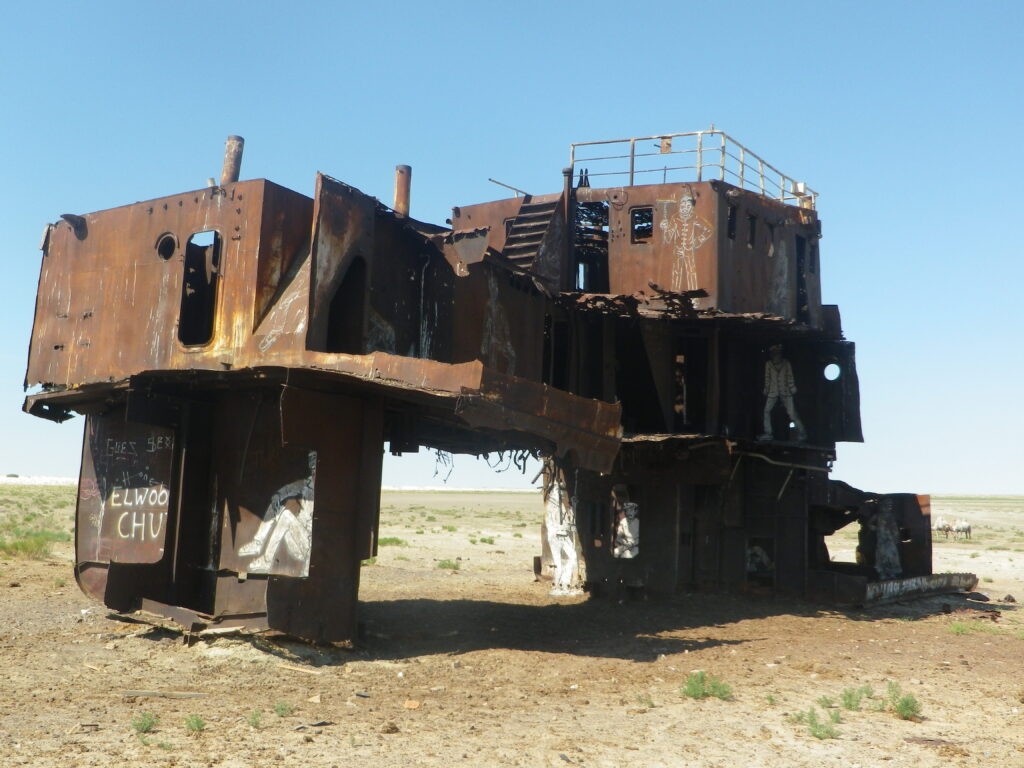
Since the beginning of 2024, 1.9 billion cubic meters of water have been sent to the North Aral Sea, raising its volume to 22 billion cubic meters. This announcement was made by Kazakhstan’s Minister of Water Resources and Irrigation Nurzhan Nurzhigitov  at the first meeting of the Board of the International Fund for Saving the Aral Sea (IFAS) on September 18, attended by delegations from  Kazakhstan, Tajikistan, Turkmenistan, Uzbekistan, and Kyrgyzstan ( as an observer country). The IFAS was established in 1993 to unite efforts by participating countries to mitigate the negative impact of the Aral Sea's desertification on the natural environment and the region's population. Discussions focused on progress on two large-scale projects: a program to assist the Aral Sea basin countries, and the Regional Environmental Protection Program for Sustainable Development in Central Asia, which aims to develop the principles of green economy and adaptation to climate change. The meeting commended Kazakhstan's commitment to working in close cooperation with other Central Asian states on preserving the Aral Sea and approved plans for work to be undertaken by the IFAS under President Kassym-Jomart Tokayev chairmanship from 2024-'26. "At the height of this year's irrigation period, up to 80 cubic meters of water per second flowed into the sea along the Syr Darya River, compared to only six cubic meters per second last year. In recent years, the volume of water in the North Aral Sea has been decreasing, but since the beginning of 2024, it has increased again and reached 22 billion cubic meters," stated Nurzhigitov. " To ensure a further increase -  we are strengthening water diplomacy and developing the second phase of the North Aral Sea conservation project." The North Aral Sea, the portion of the former Aral Sea fed by the Syr Darya River, split from the South Aral Sea in 1987–'88 when water levels dropped due to water diversion for agricultural use. According to the Kazakh Ministry of Water Resources, 75% of the flow of the Syr Darya River comes from Kyrgyzstan, 20% from Uzbekistan, and 5% from Kazakhstan.

Trade Volume Between Kyrgyzstan and China Reaches $11 Billion

Trade turnover between Kyrgyzstan and China for the first seven months of 2024 reached approximately $11 billion, as reported by the Deputy Chairman of the Cabinet of Ministers of Kyrgyzstan, Bakyt Torobayev, in Beijing. Torobayev emphasized that the foundation for successful cooperation was laid during the meetings between Kyrgyz President Sadyr Japarov and Chinese President Xi Jinping. In 2023, the volume of trade turnover between the countries reached $20 billion, 32% more than in 2022. Torobayev also noted that important steps to strengthen cooperation continue. In particular, the project to build a railroad connecting China, Kyrgyzstan, and Uzbekistan is moving forward. Another significant event was the opening of the simplified border crossing point “Bedel” on the Kyrgyz-Chinese border, which indicates the beginning of a new stage in bilateral relations. Cooperation between Kyrgyzstan and China covers trade, energy, and infrastructure spheres. In addition, China is actively investing in hydropower and implementing programs to improve Kyrgyzstan's infrastructure. These projects are expected to contribute to sustainable economic growth.