• KGS/USD = 0.01144 0%
  • KZT/USD = 0.00218 0%
  • TJS/USD = 0.10610 -0.09%
  • UZS/USD = 0.00008 0%
  • TMT/USD = 0.28530 0%
  • KGS/USD = 0.01144 0%
  • KZT/USD = 0.00218 0%
  • TJS/USD = 0.10610 -0.09%
  • UZS/USD = 0.00008 0%
  • TMT/USD = 0.28530 0%
  • KGS/USD = 0.01144 0%
  • KZT/USD = 0.00218 0%
  • TJS/USD = 0.10610 -0.09%
  • UZS/USD = 0.00008 0%
  • TMT/USD = 0.28530 0%
  • KGS/USD = 0.01144 0%
  • KZT/USD = 0.00218 0%
  • TJS/USD = 0.10610 -0.09%
  • UZS/USD = 0.00008 0%
  • TMT/USD = 0.28530 0%
  • KGS/USD = 0.01144 0%
  • KZT/USD = 0.00218 0%
  • TJS/USD = 0.10610 -0.09%
  • UZS/USD = 0.00008 0%
  • TMT/USD = 0.28530 0%
  • KGS/USD = 0.01144 0%
  • KZT/USD = 0.00218 0%
  • TJS/USD = 0.10610 -0.09%
  • UZS/USD = 0.00008 0%
  • TMT/USD = 0.28530 0%
  • KGS/USD = 0.01144 0%
  • KZT/USD = 0.00218 0%
  • TJS/USD = 0.10610 -0.09%
  • UZS/USD = 0.00008 0%
  • TMT/USD = 0.28530 0%
  • KGS/USD = 0.01144 0%
  • KZT/USD = 0.00218 0%
  • TJS/USD = 0.10610 -0.09%
  • UZS/USD = 0.00008 0%
  • TMT/USD = 0.28530 0%

Viewing results 43 - 48 of 5762

Kazakhstan Aims to Increase Agricultural Exports to Turkey

Kazakhstan is seeking to expand exports of agricultural products to the Turkish market, Prime Minister Olzhas Bektenov said during a meeting of the Kazakhstan-Turkey Intergovernmental Commission held in Astana. According to Bektenov, trade turnover in the agro-industrial sector between the two countries increased by more than 25% in 2025, reaching $360 million. “In the coming period, it is important to diversify trade in this sector, expand the export product range, and launch joint high value-added production. We are interested in exporting wheat, lentils, animal feed, and oilseeds to Turkey,” he said. The prime minister also said that relevant government agencies and businesses in Kazakhstan and Turkey have established exchanges of experience in agricultural technologies and insurance. To support further export growth, he added, cooperation in veterinary and phytosanitary control needs to be strengthened. In 2025, approximately $390 million in Turkish investment was attracted to Kazakhstan’s economy, bringing the cumulative total over the past 20 years to more than $6 billion. By the end of 2025, bilateral trade had increased by 9%, while Kazakhstan’s overall exports rose by more than 17% to $3.9 billion. Turkey’s Vice President Cevdet Yılmaz, who led the Turkish delegation, emphasised the importance of cooperation not only at the bilateral level but also within multilateral frameworks. “We attach particular importance not only to bilateral interaction between Turkey and Kazakhstan, but also to our joint work within the Organization of Turkic States and other international structures. These platforms enable us to enhance coordination, expand economic opportunities, and translate political dialogue into practical outcomes,” Yılmaz said. The parties also noted a 35% increase in railway freight transportation between Kazakhstan and Turkey in 2025 and reaffirmed the priority of developing the Trans-Caspian International Transport Route, also known as the Middle Corridor. Key objectives include infrastructure modernisation, eliminating bottlenecks, expanding port and terminal capacity, implementing digital solutions, and coordinating tariff policies. In addition to agriculture, the sides discussed prospects for energy cooperation, including joint projects in the oil and gas sector and geological exploration. Potential cooperation in IT education, fintech, cybersecurity, and e-government services was also highlighted. As previously reported by The Times of Central Asia, Turkey is considered a promising market for Kazakh meat producers, as it is willing to pay higher prices than other markets.

1853 Map of the Aral Sea Published in the Journal of the Royal Geographical Society

An 1853 map of the Aral Sea, published in the Journal of the Royal Geographical Society, depicts the vast inland water body at a time when it was near its historical peak. The engraving, created by German cartographer August Petermann, was based on findings from a scientific expedition conducted in 1848-1849, according to historical materials referenced in the project. The expedition, led by Russian naval officer Alexey Butakov, produced one of the first detailed studies of the Aral Sea. Researchers measured its depth, mapped its coastline, and documented its islands, providing a comprehensive picture of a body of water that would later become a symbol of environmental degradation. Although widely referred to as a sea, the Aral is in fact a lake. In the 20th century, it ranked as the world’s fourth-largest lake. Scientific evidence suggests it formed around 17,600 years ago as a result of glacial melt. Initially freshwater, it became increasingly saline over time, while its water levels fluctuated over centuries. From the 1960s, however, the lake began to shrink rapidly. Large-scale irrigation projects diverted water from the Amu Darya and Syr Darya rivers, primarily for cotton cultivation. Over the following decades, the Aral Sea lost more than 90% of its volume, transforming much of the region into desert and salt plains, and severely disrupting ecosystems and local livelihoods. In 1989, the lake split into two separate bodies. The southern part, largely located in Uzbekistan, has almost completely dried up, forming the Aralkum Desert. The northern section has shown some stabilisation, supported in part by infrastructure such as the Kokaral Dam. This transformation, and its historical context, will be explored in Uzbekistan’s cultural exhibition When Apricots Blossom, which draws on archival materials and contemporary interpretation. The exhibition takes its name from a poem by Hamid Olimjon, written in the 1930s, symbolising hope and renewal. According to organisers, the project will combine history, art, and environmental reflection to present the story of the Aral Sea to an international audience. The exhibition will run from April 20 to 26, at Palazzo Citterio in Milan’s Brera district as part of Milan Design Week.

Russia Seeks Transfer of 200 Tajik Women Prisoners After Dushanbe Approval

Russia’s human rights commissioner Tatyana Moskalkova has received a positive response from Emomali Rahmon regarding the possible transfer of around 200 Tajik women currently serving sentences in Russian prisons, according to TASS. Moskalkova said she had written to the Tajik president requesting that the women be allowed to continue serving their sentences in Tajikistan on humanitarian grounds. “In each case, we must carefully weigh issues of justice, mercy, and humanism,” she said in an interview with TASS. She noted that while most cases confirm that crimes were committed, the severity of punishment should not always be maximal. “Sometimes leniency helps a person reform, repent, and change for the better. That is why we try in each case to find arguments that could support leniency, especially for women,” she said. According to Moskalkova, foreign women prisoners face additional challenges, including limited access to family visits and difficulties receiving parcels from relatives. These factors were among the reasons behind her appeal to Tajik authorities. She also pointed to broader policy developments in Russia’s penal system, citing improvements in detention conditions under the country’s penal reform strategy through 2030. Moskalkova highlighted recent legislation limiting pretrial detention for women with young children who have committed non-violent offenses. In addition, she said she has repeatedly asked courts to grant deferrals of sentences for women with children under the age of 14, thanking the judiciary for what she described as “understanding and positive decisions” in such cases. Earlier this month, Moskalkova said Russia was prepared to facilitate the transfer of more than 3,000 Uzbek nationals convicted in Russia to serve their sentences in Uzbekistan. However, she noted that the process remains stalled due to legal constraints, including Uzbekistan’s failure to ratify the 1998 Convention on the Transfer of Sentenced Persons.

Rosatom to Neutralize Hazardous Chemical Waste at Plant in Kyrgyzstan

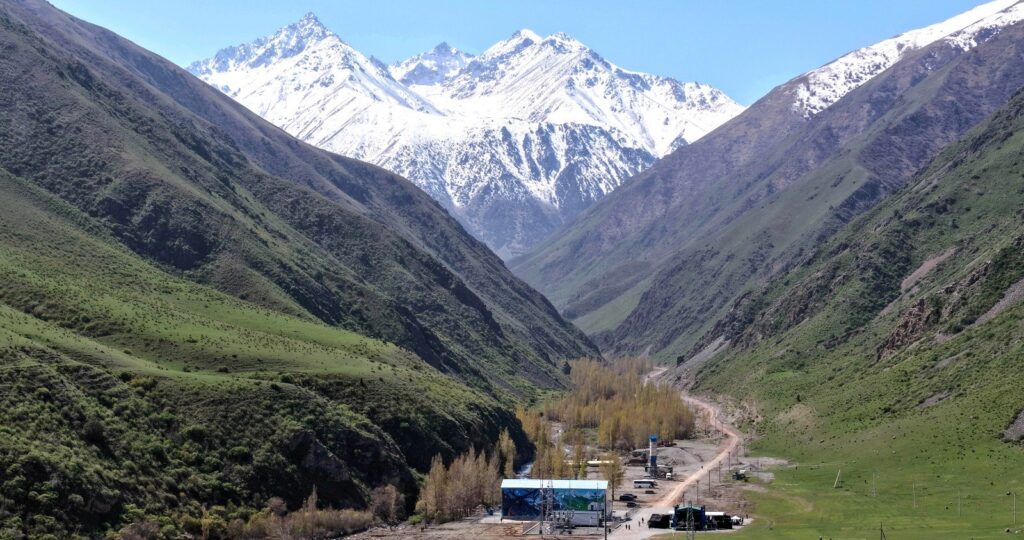
Rosatom is set to begin work to eliminate hazardous chemicals stockpiled at the Kristall plant in Tash-Kumyr, in Kyrgyzstan’s Jalal-Abad region. The Kristall plant, built in 1989 as a key facility of the Soviet electronics industry to produce polycrystalline silicon, has since become a high-risk environmental site. Hazardous chemical waste accumulated on its premises poses a threat to both the environment and public health. The plant has been bankrupt since 2010. The site contains 49 tanks holding a total of 155 tons of hazardous chemical residues, including trichlorosilane and silicon tetrachloride. In October 2024, Rosatom conducted a technical audit of the facility, revealing the deteriorated condition of the storage tanks. Prolonged inactivity has left the aging infrastructure in poor shape, increasing the risk of structural failure and depressurization. On April 14, in Bishkek, Rosatom and the Kyrgyz Ministry of Emergency Situations discussed technological solutions for neutralizing the chemicals. According to Rosatom, the first phase of the cleanup is scheduled for completion by the end of 2026. This stage will focus on bringing the chemical storage tanks to a safe condition. It also involves the installation of a dual emergency protection system and the introduction of independent environmental monitoring. The proposed neutralization methods have been approved by the Kyrgyz Ministry of Natural Resources, Ecology, and Technical Supervision. By the end of 2026, Rosatom aims to eliminate the risk of leaks and uncontrolled emissions by stabilizing the tanks and ensuring safe conditions for further handling of the hazardous substances. In 2027, the project will enter its second phase, focusing on the on-site neutralization of the chemicals as the preferred solution. Kyrgyz Emergency Situations Minister Kanatbek Chynybayev said the situation at the Kristall plant remains environmentally challenging and requires a comprehensive response. “Our primary objective is to eliminate potential health risks to residents of Tash-Kumyr and lift the state of emergency in the area. Rosatom’s expertise has been engaged to address this issue. As part of this collaboration, a technological strategy has been developed that will allow the threats to be neutralized within the specified timeframe and return the site to a safe condition,” he said.

Kazakhstan Climbs 13 Positions in the World Bank Human Capital Ranking

Kazakhstan has significantly improved its position in the World Bank’s Human Capital Index Plus (HCI+), rising by 13 places to rank 42nd out of 161 countries by the end of 2025. The index evaluates human capital development, including health, education, and workforce skills, all of which directly influence economic growth and investment attractiveness. Charles McLean, founder of Borderless Consulting Group, shared his assessment of the factors behind this progress in an interview with Inbusiness.kz. According to McLean, Kazakhstan’s rise reflects not only quantitative improvements but also qualitative changes in the country’s socio-economic landscape. “Kazakhstan’s rise by 13 positions is a highly positive and significant signal for the country’s socio-economic development, primarily driven by reforms implemented by President Kassym-Jomart Tokayev,” he said. He noted that improved indicators point to the emergence of a healthier, better-educated, and more skilled workforce, contributing to higher productivity and supporting sustainable long-term growth. Stronger positions in international rankings also enhance investor confidence and reinforce economic resilience. McLean identified two main drivers of progress: education and healthcare. In education, investment has increased at all levels from preschool to higher education. Improvements in teacher training, the quality of school education, and the alignment of national testing systems with international standards have contributed to higher skill levels across the population. Positive changes are also evident in the healthcare system. Enhanced medical infrastructure, expanded preventive programs, and improved access to healthcare services have contributed to rising life expectancy and lower infant mortality. McLean also highlighted Kazakhstan’s shift toward a more integrated approach to human capital development. This includes the digitalization of educational institutions and the expansion of vocational training programs. Additional emphasis is being placed on developing professional skills, delivering both short-term employment gains and long-term improvements in labor productivity. “If the current course is maintained, Kazakhstan can not only strengthen its position but also become one of the leaders among emerging markets in terms of human capital development,” McLean said. Given current trends, he assessed further improvements in Kazakhstan’s position in the HCI+ ranking to be realistic. Continued investment in human capital is expected to drive productivity growth, improve living standards, and enhance the country’s global competitiveness.

Kazakhstan Climbs 30 Positions in Clean Energy Investment Ranking

Kazakhstan has significantly improved its position in the international Climatescope ranking of clean energy investment attractiveness, rising by 30 places over the past eight years, according to the Ministry of Energy. The country moved from 54th place in 2017 to 24th in 2025 among emerging markets, reflecting the expansion of renewable energy and improvements in the investment climate. The Climatescope ranking assesses countries’ attractiveness for investment in clean energy and decarbonization, analyzing policies, infrastructure, and market potential across more than 100 nations. The study is compiled by BloombergNEF, a research unit of Bloomberg specializing in data and forecasts on the energy transition, new transport technologies, and commodity markets. According to the ministry, Kazakhstan’s improved standing is driven by increased investment in renewable energy projects and consistent state support for green energy. The country has introduced competitive auctions and guaranteed power purchase mechanisms, which have helped attract international investors. “Kazakhstan is making significant progress in the development of clean energy. Growing investor interest and improved market conditions indicate that the country is becoming one of the regional leaders in attracting capital for low-carbon technologies,” the ministry said. Major international companies involved in projects in Kazakhstan include TotalEnergies, China Power, Masdar, and China Energy. Looking ahead, Kazakhstan plans to commission more than 8 GW of new renewable energy capacity by 2035, which is expected to diversify the energy mix and strengthen the resilience of the national power system. Among Central Asian countries, Uzbekistan achieved the strongest result in the 2025 ranking, placing 23rd. As previously reported by The Times of Central Asia, Kazakhstan presented its green energy transition strategy at an international forum in the United Kingdom. In addition, the government aims to eliminate the electricity deficit and begin exports as early as 2027.