• KGS/USD = 0.01144 0%
  • KZT/USD = 0.00204 0%
  • TJS/USD = 0.10439 0%
  • UZS/USD = 0.00008 0%
  • TMT/USD = 0.28490 0%
  • KGS/USD = 0.01144 0%
  • KZT/USD = 0.00204 0%
  • TJS/USD = 0.10439 0%
  • UZS/USD = 0.00008 0%
  • TMT/USD = 0.28490 0%
  • KGS/USD = 0.01144 0%
  • KZT/USD = 0.00204 0%
  • TJS/USD = 0.10439 0%
  • UZS/USD = 0.00008 0%
  • TMT/USD = 0.28490 0%
  • KGS/USD = 0.01144 0%
  • KZT/USD = 0.00204 0%
  • TJS/USD = 0.10439 0%
  • UZS/USD = 0.00008 0%
  • TMT/USD = 0.28490 0%
  • KGS/USD = 0.01144 0%
  • KZT/USD = 0.00204 0%
  • TJS/USD = 0.10439 0%
  • UZS/USD = 0.00008 0%
  • TMT/USD = 0.28490 0%
  • KGS/USD = 0.01144 0%
  • KZT/USD = 0.00204 0%
  • TJS/USD = 0.10439 0%
  • UZS/USD = 0.00008 0%
  • TMT/USD = 0.28490 0%
  • KGS/USD = 0.01144 0%
  • KZT/USD = 0.00204 0%
  • TJS/USD = 0.10439 0%
  • UZS/USD = 0.00008 0%
  • TMT/USD = 0.28490 0%
  • KGS/USD = 0.01144 0%
  • KZT/USD = 0.00204 0%
  • TJS/USD = 0.10439 0%
  • UZS/USD = 0.00008 0%
  • TMT/USD = 0.28490 0%

Viewing results 1 - 6 of 71

How an Incident on the Azerbaijan-Iran Border Became a Test for Diplomacy in the Region

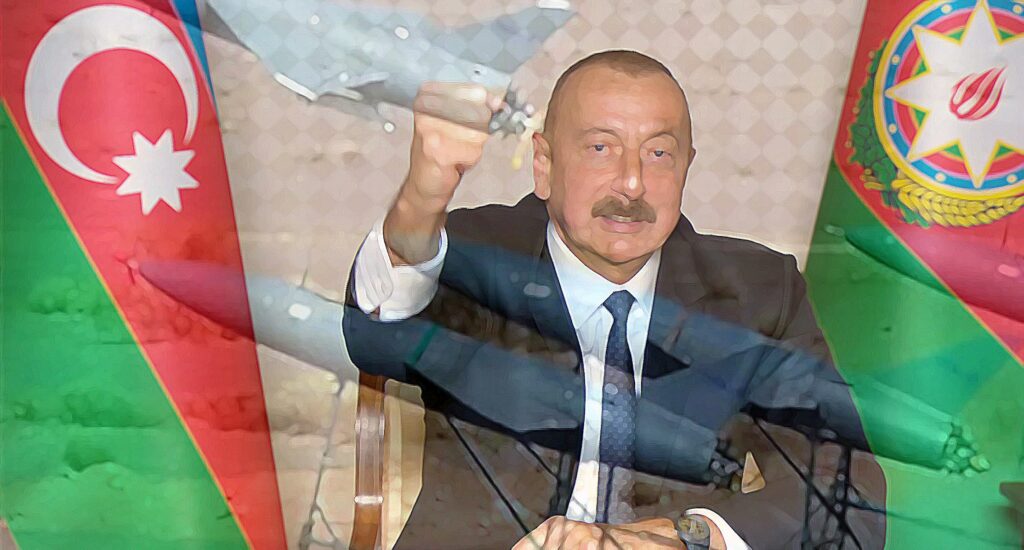
The drone strike on Azerbaijan's Nakhchivan Autonomous Republic on March 5 has become one of the most serious incidents in relations between Baku and Tehran in recent years. Azerbaijani authorities described the incident as a terrorist act and demanded explanations and an apology from Iran. Tehran, in turn, rejected the accusations, suggesting the possibility of a provocation by “third forces.” Following the drone incident, Kazakh President Kassym-Jomart Tokayev held a phone call with Azerbaijani President Ilham Aliyev to discuss regional security. According to the Azerbaijani presidency, Aliyev thanked Tokayev for condemning the attack on Nakhchivan and for voicing support for Azerbaijan. What began as a local security incident has raised concerns about regional stability in the South Caucasus. Terrorist Act Against the State Azerbaijani President Ilham Aliyev issued a statement strongly condemning "this despicable terrorist act. Those who committed it must be brought to justice immediately,” Aliyev said. According to Azerbaijan’s Ministry of Foreign Affairs, one drone hit the terminal building of Nakhchivan International Airport, while another crashed near a school in the village of Shekerabad. Two civilians were reportedly injured. Baku stressed that the attack, allegedly launched from Iranian territory, violated international law and could lead to a dangerous escalation of tensions in the region. Diplomatic Escalation Despite the harsh rhetoric in the first hours after the incident, Baku opted to rely primarily on diplomatic tools. The Iranian ambassador was summoned to the Azerbaijani Foreign Ministry and handed a formal note of protest requesting official explanations. Azerbaijan said on Friday that it was evacuating staff from its embassy in Tehran as well as its consulate in the city of Tabriz. At the same time, Azerbaijani security forces were placed on high alert. According to Aliyev, the country’s armed forces were instructed to prepare possible countermeasures. Turkish President Recep Tayyip Erdogan spoke by phone with Aliyev, condemning the attack and expressing support for Azerbaijan, according to official statements. Reports of alleged Iranian-linked sabotage plots also surfaced, with the Azerbaijani authorities stating that several terrorist attacks had been prevented on the country’s territory. According to the State Security Service, the Iranian Islamic Revolutionary Guard Corps was behind the plots. Among the alleged targets was the Baku-Tbilisi-Ceyhan oil pipeline, a strategic energy corridor linking the Caspian region with Turkey and one of the main routes for exporting Azerbaijani oil. According to Azerbaijani sources, other potential targets included the Israeli embassy, a synagogue in the capital, and a leader of the local Mountain Jewish community. The security service reported that three explosive devices had been brought into the country but were discovered and defused before they could be delivered. The development of the crisis has prompted increased diplomatic contact between world leaders. Russian President Vladimir Putin held a telephone conversation with Iranian President Masoud Pezeshkian amid the growing regional tensions. Shortly thereafter, Russia’s Foreign Ministry called on both sides to exercise restraint and emphasized the need for a thorough investigation into the drone strike. On March 7, the foreign ministers of all the Central...
Middle East Conflict Tests Central Asia’s Trade Routes and Energy Security

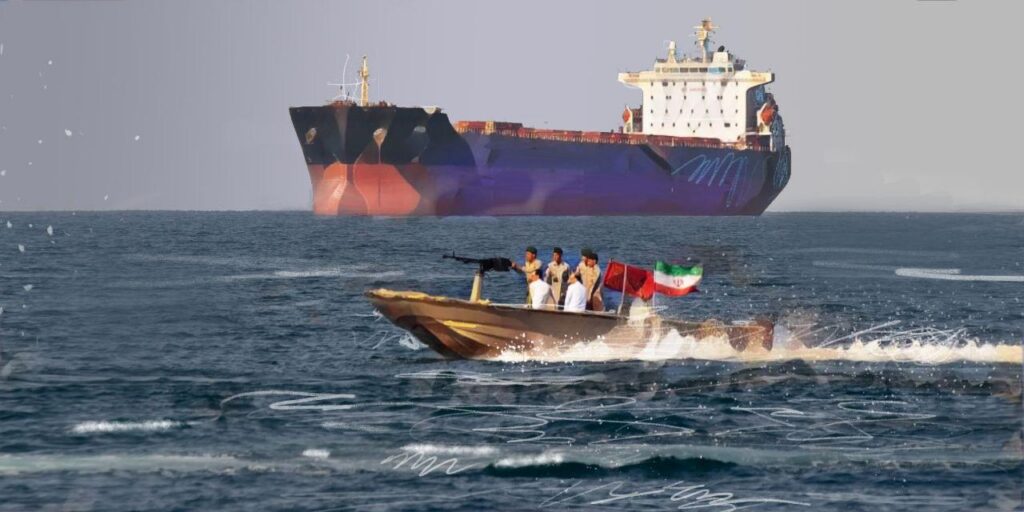
The escalating conflict between Iran, the United States, and their regional partners is raising economic concerns across Central Asia. Turkmenistan shares a long border with Iran, while other Central Asian economies depend on energy markets and trade routes that pass through or around the Persian Gulf. A wider conflict there could ripple across Central Asia through higher fuel prices, disrupted logistics, and pressure on key transport corridors. For countries such as Kyrgyzstan and Tajikistan, the most immediate risk is rising fuel prices. Both depend heavily on imported fuel. Kyrgyz security expert Taalaibek Jumadylov has warned that Kyrgyzstan could face rising prices for food, clothing, and other essential goods. For Tajikistan, the closure of the Strait of Hormuz would significantly increase import costs. Tajik media reports that trade between Tajikistan and Iran has grown rapidly over the past five years. Tajik-Iranian trade turnover increased from $377.7 million in 2024 to approximately $484 million in 2025, a rise of around 28%. Tajikistan’s exports totaled about $113 million, while imports from Iran exceeded $371 million, giving Iran a 4.5% share of Tajikistan’s total foreign trade turnover. If global oil prices rise significantly, Tajikistan could also face additional pressure on its budget. There are indirect risks as well: a slowdown in the economies of Russia, China, or other major partners could affect Tajikistan through trade, investment flows, and remittances. In Uzbekistan, analysts note that in recent years Iran has actively pursued transport diplomacy with Central Asia, seeking to strengthen its position as a regional logistics hub. Uzbek analyst Nargiza Umarova says this trend aligns with China’s Belt and Road Initiative. Iran and China signed a 25-year cooperation agreement in March 2021, a deal widely described as deepening Iran’s role in Belt and Road-linked connectivity. Kazakh economist Almas Chukin highlighted the logistical advantages of transport routes through Iran. “If we take the point where the Turkmenistan railway connects with Iran and the route to the Persian Gulf, it is about 1,200-1,500 kilometers. This is comparable to the distance from Astana to Almaty. Once you cover this distance, you reach the Persian Gulf and its major ports, where you can handle anything from oil transshipment to grain shipments. From there, sea transport to Rotterdam takes about three to four weeks,” he stated. Chukin added that such routes could simplify exports compared with transporting oil through Russia to Novorossiysk and then via the Black Sea, the Bosphorus Strait, and the Mediterranean. According to his estimates, a rail route to Europe through Iran would be about 3,500 kilometers from the Turkmen border. The economist suggested that if Iran’s political system changes and sanctions are lifted, Central Asia could benefit significantly. “This would be a huge shift for Central Asia: a region with a population of 80 million, abundant resources, and a young workforce, but constrained by geography, suddenly gaining direct access to global markets,” Chukin argued. Some analysts also point to emerging competition among regional transport corridors. In the South Caucasus, a proposed Zangezur corridor has been promoted...

The World Bank Backs Kazakhstan’s Rail Shortcut

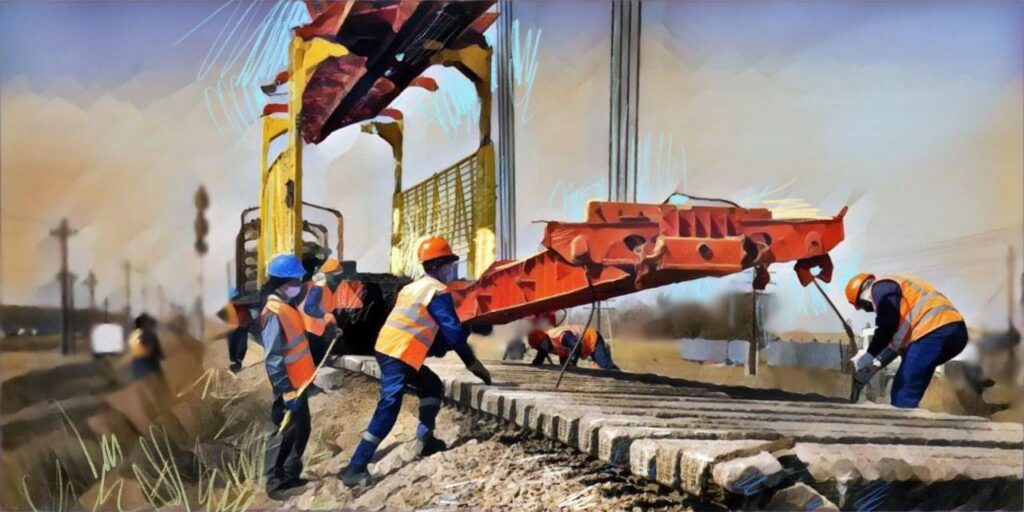
On February 19, 2026, the World Bank Board approved an $846 million IBRD guarantee to help the state-owned railway company Kazakhstan Temir Zholy (KTZ) mobilize $1.41 billion in long-term commercial financing. The financing is linked to a KTZ reform program under the umbrella “Transforming Rail Connectivity in Kazakhstan (Middle Corridor Development)” initiative. The purpose is to expand rail connectivity and upgrade logistics on Kazakhstan’s segment of the Trans-Caspian International Transport Route (TITR, Middle Corridor). The Asian Infrastructure Investment Bank (AIIB) will add a $564 million co-guarantee that shifts the financing away from a classic sovereign-loan model and toward private credit backed by multilateral risk coverage. The Multilateral Investment Guarantee Agency (MIGA) presents this operation as part of a wider World Bank Group approach that pairs corridor capital expenditure with steps to strengthen the operator’s financial sustainability and commercial viability. The operation is structured as a two-part package. First, it finances a new 322.3-kilometer railway on a new segment between Mointy and Kyzylzhar in central Kazakhstan. This segment is meant to remove a major network detour, shorten the TITR route within Kazakhstan by 149 kilometers, ease congestion on heavily used sections, and support double-stack container operations. The line is planned with modern signaling and telecommunications, plus design provisions for later expansion and electrification. Second, it ties the construction to a reform program at KTZ, including tariff reform, exploration of alternative financing mechanisms, stronger financial and environmental management, and preparatory work for a potential initial public offering. The World Bank is structuring delivery through a Multi-Phase Programmatic Approach with the stated aim of tripling freight volumes and halving end-to-end transit times on Kazakhstan’s Middle Corridor segment by 2030. Why This Segment Matters for the Middle Corridor Inside Kazakhstan, the Mointy–Kyzylzhar line is a central connector in the Trans-Kazakhstan east–west trunk carrying traffic from the China-facing gateways at Dostyk and Khorgos toward the Caspian outlets at Aktau and Kuryk. Mointy itself is a pivotal junction where train paths, locomotives, and crews are redistributed across multiple directions; as a result, any congestion there propagates quickly into corridor-wide delays. In early 2025, President Kassym-Jomart Tokayev directed acceleration of the Trans-Kazakhstan corridor. KTZ says the expected benefits include decreased pressure on heavily used central segments, fewer locomotive changeovers at key junction points, and, on some routings, the potential to cut more than a day from transit time between the Chinese border and Aktau. The World Bank’s 2023 Middle Corridor study stressed that the corridor’s most durable growth driver is regional trade among the core corridor economies: China–Europe movements remain important, but they compete with multiple alternatives, above all maritime shipping. An infrastructure upgrade adds economic value only if it reduces variability at the handoff points where delays accumulate, including rail-to-port interfaces, Caspian coordination, and national borders. Relieving the domestic bottleneck in Kazakhstan is economically meaningful only insofar as it stabilizes arrival times to Caspian terminals, creates more room for dispatching, and helps logistics providers offer shippers more predictable end-to-end service along the TITR. The emphasis is...

More Than 20 Promising Oil and Gas Fields Identified in Kazakhstan’s Aral Basin

A large-scale state geological exploration program in Kazakhstan has identified more than 20 promising hydrocarbon sites in the Aral Basin. The announcement was made by Kanat Yerubaev, Acting Chairman of the Geology Committee of the Ministry of Industry and Construction. According to Yerubaev, by the end of last year 29 promising exploration areas had been identified as part of the state geological study program, covering a range of minerals from gold and copper to lead, zinc, and tungsten. Particular attention was given to oil and gas. Work in the Aral Basin enabled specialists to specify the geological structure of the region, identify new structural elements, and assess forecast hydrocarbon resources. More than 20 sites have been classified as promising, and the Ministry of Energy intends to auction subsoil use rights for these areas later this year. The Geology Committee estimates forecast hydrocarbon resources at one Aral Basin site at approximately 800 million tons. An even larger potential, exceeding 1 billion tons of oil and gas, has been identified in the Syr Darya Basin in the southwest of the country. Exploration activities there began in 2024 and are scheduled for completion in 2026. If these forecasts are confirmed, Kazakhstan’s proven oil reserves could increase by more than 25%. The current state balance sheet records more than 4 billion tons of proven oil reserves, sufficient for over 50 years at current production levels. In 2026, new seismic exploration projects are scheduled to begin in other relatively underexplored sedimentary basins, including North Turgai, Shu-Sarysu, and Priirtysh. Yerubaev noted that Kazakhstan is moving away from geological surveys conducted at a 1:200,000 scale, which provide only a general overview, and transitioning to more detailed 1:50,000 scale surveys. He compared the shift to “getting a navigator instead of a world map, where you can see every step,” emphasizing that such precision aligns with international standards and supports informed investment decisions. At the same time, the sector’s digital infrastructure continues to develop. Kazakhstan operates a unified subsoil use platform that provides 22 government services and access to more than 66,000 geological reports. By the end of 2025, 97.5% of primary geological data,  approximately 4.7 million records, is expected to be digitized, with full digitization scheduled for completion this year. Approximately $485.5 million has been allocated for state-funded geological research projects over the next three years. Under current legislation, 50% of subscription bonuses collected from auctions for subsoil use rights are to be reinvested in the sector to support geological development and infrastructure modernization. This framework is designed to create a sustainable model in which revenues from subsoil licensing are directed back into further exploration. The Times of Central Asia previously reported that Kazakhstan had become one of the global leaders in proven rare earth metal reserves.

Choking on Smog: Air Crisis in Öskemen Deepens

Heavy smog and sustained NMU-II adverse meteorological conditions reported by Kazhydromet continue to affect the city of Öskemen (Ust-Kamenogorsk) in eastern Kazakhstan, after authorities moved all students in grades 0–11 to remote learning on February 2. The decision followed several days of windless weather and a temperature inversion that trapped pollutants close to the ground. According to Kazhydromet forecasts, unfavorable meteorological conditions are likely to remain in place, limiting dispersion. Air quality monitoring platforms show persistent spikes in fine particulate matter, raising renewed health concerns among residents. Data from IQAir indicates that PM2.5 concentrations in Öskemen have at times reached levels classified as “hazardous,” significantly exceeding World Health Organization guidelines. Live readings continue to fluctuate depending on wind and temperature shifts, but pollution levels remain elevated compared to recommended norms. Local authorities say the health of students remains the priority. The regional Department of Education confirmed that distance learning was introduced as a precautionary measure during the NMU-II period. Environmental specialists have advised residents to reduce outdoor activity, particularly children, the elderly, and those with respiratory conditions. What’s Behind the Smog? Specialists attribute the pollution to a combination of meteorological and structural factors. A temperature inversion has created what meteorologists describe as a “thermal cap,” with warmer air overlaying colder surface air, preventing pollutants from dispersing. The absence of sustained wind has compounded the buildup. Öskemen is also one of Kazakhstan’s most industrialized cities, home to major metallurgical enterprises, a coal-fired thermal power plant, and titanium-magnesium production facilities. Vehicle emissions and winter heating from coal and firewood in private homes add to the concentration of fine particulate matter. The city’s geography further complicates the situation. Surrounded by mountainous terrain, Öskemen experiences restricted air circulation during stagnant winter conditions, allowing pollution to accumulate. Monitoring and Mitigation The East Kazakhstan Department of Ecology reported that an interagency task force, including Kazhydromet meteorologists and sanitary inspectors, conducted mobile laboratory monitoring during the peak of the episode. Authorities said industrial facilities reduced output under NMU protocols and that transport and municipal services were instructed to limit emissions. Officials stated that monitored pollutants, including carbon monoxide, nitrogen oxides, sulfur compounds, chlorides, and suspended particles, were measured daily. While authorities described overall average indicators as remaining within permissible limits, independent monitoring services recorded significantly higher short-term PM2.5 spikes. Public Reaction Residents have expressed frustration online, posting photos and videos showing the city enveloped in haze. In comments responding to official statements, users described sore throats, headaches, and difficulty breathing. One resident wrote: “It’s impossible to breathe in the city. This isn’t exaggeration, it’s reality. You, your children, your loved ones are breathing this air.” Others questioned the official assessment, asking why schools were closed if pollution posed no threat to public health. What Comes Next? Kazhydromet forecasts suggest that wind and snowfall could help disperse accumulated pollutants in the coming days. However, recurring winter smog episodes have reignited debate over industrial emissions, household coal use, and long-term urban air quality policy. In early February, regional Maslikhat...

Kazakhstan Proposes Restrictions on Social Media Access for Minors

An active and ongoing debate is taking place in Kazakhstan over proposed amendments to legislation that would ban children under the age of 16 from using social media. The initiative has been raised repeatedly by lawmakers, although many experts believe teenagers would still find ways to circumvent such restrictions. The primary objective cited by lawmakers is to protect children from harmful content, including violence and pornography, and to reduce cyberbullying. The Ministry of Culture and Information has already prepared draft amendments that would affect the regulation of social media. Mechanisms for verifying users’ ages will be developed jointly with the Ministries of Education and Digital Development. Specifically, the proposals under discussion would introduce a ban on registering users under the age of 16 on social media platforms, with an exception for instant messaging services. Education Minister Zhuldyz Suleimenova said the working group is considering measures, including SIM card registration for children under 14 as an initial step toward access control, monitoring the content minors consume, and stronger digital and media literacy education in schools. Lawmakers argue that the issue is becoming increasingly urgent. In February, officials reported that around 200 registered cases of bullying and cyberbullying involving children were recorded in 2025. The figures were cited by Yulia Ovechkina, deputy chair of the Committee for the Protection of Children’s Rights. According to Ovechkina, these statistics primarily reflect improved detection and reporting rather than the full scale of the problem. She also noted that administrative liability for bullying was expanded in 2024. Officials say the number of teenagers experiencing harassment on social media continues to rise. In November 2025, police in Astana reported a sharp increase in cyberbullying complaints nationwide, particularly among female students and individuals active in public life. Law enforcement agencies note that forms of digital violence are evolving rapidly and becoming less visible. The most common manifestations include cyberbullying, stalking, the publication of personal data, extortion involving intimate materials, and the growing use of deepfake technologies. Increased online activity among teenagers heightens their vulnerability to such threats, police say. At the same time, experts question whether a blanket ban would be effective or meaningfully improve child safety. According to educational psychologist and Gestalt consultant Olga Tretyakova, building trusting relationships with children, openly discussing the dangers of harmful content, and conducting sustained preventive and educational work are far more effective than simply passing restrictive legislation. While such efforts require significantly more resources, she argues they are the only measures likely to produce lasting results. Skepticism also stems from the deep integration of social media into everyday communication, education, and adolescent development. Attempts to isolate minors from these platforms through legal measures risk cutting them off from a social environment they perceive as normal. Children are likely to register using other people’s phones, false names, or fake dates of birth, said Gabit Umirbekov, deputy chairman of the Chamber of Legal Advisors of the Republic of Kazakhstan. For many minors, especially those who are socially isolated or vulnerable, social networks serve as...