• KGS/USD = 0.01144 0%
  • KZT/USD = 0.00213 0%
  • TJS/USD = 0.10456 0.19%
  • UZS/USD = 0.00008 0%
  • TMT/USD = 0.28490 0%
  • KGS/USD = 0.01144 0%
  • KZT/USD = 0.00213 0%
  • TJS/USD = 0.10456 0.19%
  • UZS/USD = 0.00008 0%
  • TMT/USD = 0.28490 0%
  • KGS/USD = 0.01144 0%
  • KZT/USD = 0.00213 0%
  • TJS/USD = 0.10456 0.19%
  • UZS/USD = 0.00008 0%
  • TMT/USD = 0.28490 0%
  • KGS/USD = 0.01144 0%
  • KZT/USD = 0.00213 0%
  • TJS/USD = 0.10456 0.19%
  • UZS/USD = 0.00008 0%
  • TMT/USD = 0.28490 0%
  • KGS/USD = 0.01144 0%
  • KZT/USD = 0.00213 0%
  • TJS/USD = 0.10456 0.19%
  • UZS/USD = 0.00008 0%
  • TMT/USD = 0.28490 0%
  • KGS/USD = 0.01144 0%
  • KZT/USD = 0.00213 0%
  • TJS/USD = 0.10456 0.19%
  • UZS/USD = 0.00008 0%
  • TMT/USD = 0.28490 0%
  • KGS/USD = 0.01144 0%
  • KZT/USD = 0.00213 0%
  • TJS/USD = 0.10456 0.19%
  • UZS/USD = 0.00008 0%
  • TMT/USD = 0.28490 0%
  • KGS/USD = 0.01144 0%
  • KZT/USD = 0.00213 0%
  • TJS/USD = 0.10456 0.19%
  • UZS/USD = 0.00008 0%
  • TMT/USD = 0.28490 0%

Viewing results 259 - 264 of 870

Kyrgyzstan to Improve Farmland Monitoring with EBRD and FAO Support

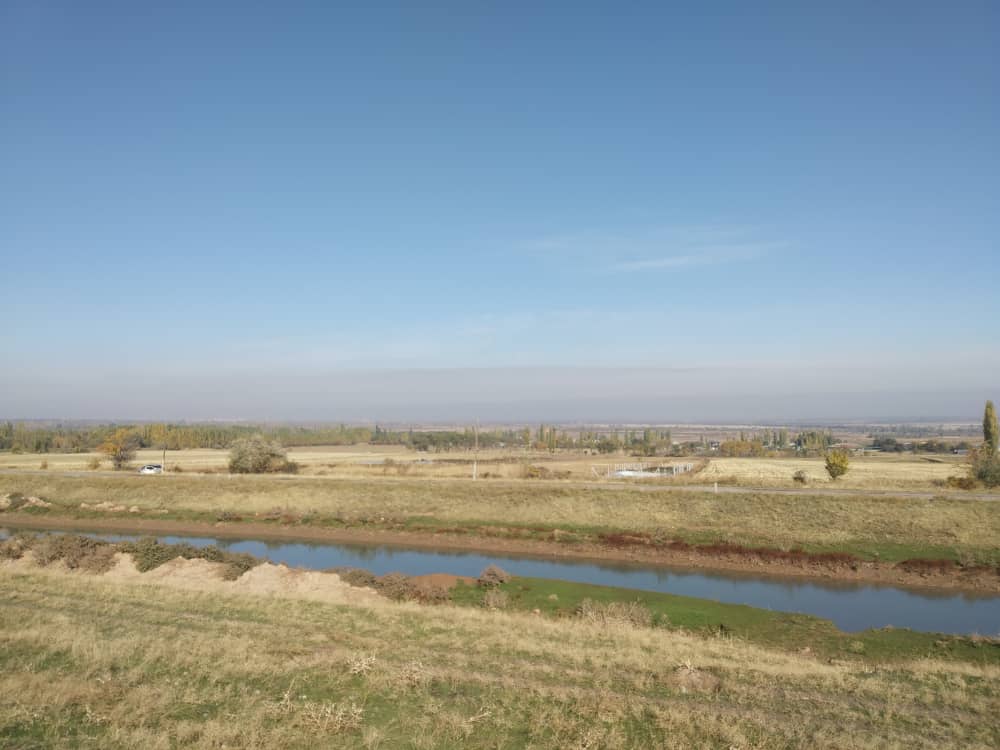
The European Bank for Reconstruction and Development (EBRD) and the Food and Agriculture Organization of the United Nations (FAO) have launched a joint initiative titled Greening Kyrgyzstan’s Economy: Know More, Act Better, Enhance Results. The project aims to foster climate-smart agriculture through the use of geographic information system (GIS) technology, improving farmland management and bolstering food security in Kyrgyzstan. According to the EBRD, the initiative is supported by its Food and Agribusiness team and involves close cooperation with three key local aggregators: Kaindy-Kant (sugar beet processing), Kirbi (potato processing), and Dan Agro (pulses and legume processing). Together, these partners will help extend the project’s reach to more than 5,000 farmers. Harnessing GIS Technology The GIS platform will be managed by Kyrgyzstan’s State Agency for Land Resources, Cadastre, Geodesy and Cartography. It will be accessible to stakeholders across the agricultural sector, including the Ministry of Water Resources, Agriculture and Processing Industry, as well as farmers and aggregators. The system will enable users to identify sown crops, assess land-use efficiency, estimate productivity, and monitor crop rotation and sustainable water use. With additional funding from the Ministry of Digital Development, the State Agency will also develop a mobile application to improve access and facilitate the adoption of GIS tools at the grassroots level. Meanwhile, the EBRD and FAO will roll out a free e-extension application to provide advisory services to farmers. This collaboration promises substantial benefits for Kyrgyzstan, where agriculture employs nearly half the workforce and contributes approximately 12% of the national GDP. Broader Impact and Expectations The initiative is also expected to deliver environmental gains by enhancing efficiency in a sector responsible for roughly 37% of Kyrgyzstan’s greenhouse gas emissions. These efforts align with the country’s Paris Agreement target of cutting emissions by 16% by 2030. In addition to supporting environmental goals, the project is set to improve food security for Kyrgyzstan’s growing population, projected to reach 9.6 million by 2050. The data-driven approach to land management is designed to help rural communities adapt to climate change, strengthen agribusiness supply chains, and contribute to sustainable economic development. Participating aggregators stand to benefit from access to more accurate planting data, which will improve harvest forecasting and help optimize financing strategies.

Bishkek Activists Demand Comeback for City’s Scrapped Trolleybuses

As Bishkek prepares to introduce its first fleet of electric buses, local activists are mounting a legal campaign to save the city’s trolleybus system from complete dismantlement. Municipality’s Modernization Push The first two electric buses from China’s Anhui Ankai Automobile Co. have already arrived in Bishkek and will soon begin operating on city routes. In total, the city has procured 120 electric buses, with the remaining 118 expected to be delivered by May, according to Daiyrbek Orunbekov, head of information policy at the President’s Office. Orunbekov said the new vehicles will replace outdated public transport and help improve the capital’s environmental conditions. “City streets used to be clogged with shuttle buses, and the roads were in disarray. Now modern buses are replacing minibuses. Last year, the roads were reconstructed and old trolleybus lines dismantled. Some residents were initially unhappy, but electric buses, more spacious and comfortable, are now on the routes,” he explained. A Contested Phase-Out Despite these upgrades, the decision to remove trolleybus lines has sparked a backlash. Bishkek residents and activists have sued the mayor’s office, arguing that officials acted without proper authorization in dismantling the network. All trolleybus lines in Bishkek were removed in a short period. Of the remaining fleet, 100 trolleybuses, many still under loan repayment, were transferred to Osh, six to Naryn, and 42 remain parked on the outskirts of the capital. Meanwhile, Kyrgyz MP Ulan Bishimbayev has announced that the authorities plan to retrofit some of the old trolleybuses with batteries to convert them into electric buses. One pilot project is already underway. “We invited specialists who confirmed it was possible. One trolleybus is being remodeled in pilot mode and should be launched within 10 days,” Bishimbayev said. Legal Battle and Environmental Concerns The next court hearing on the trolleybus issue is scheduled for April 9 at the Bishkek City Court. Activists argue that trolleybuses, powered by a network of 19 existing substations, remain one of the most sustainable forms of transport. “Trolleybus wires are a consumable material that needs replacement every 20 years. The challenge of restoring them is manageable. What matters are the substations, and they are still intact,” activist Bermet Borubayeva told The Times of Central Asia. She also questioned the narrative that the old system was outdated. “A representative from the president’s staff claimed the trolleybuses were outdated and would be replaced with electric buses. But that’s misleading. The trolleybuses bought with a €23.5 million European Bank for Reconstruction and Development (EBRD) loan just six years ago are still modern, with a service life of 20 years,” she said. Borubayeva also pointed out that the batteries used in electric buses typically last only 5-10 years and pose environmental risks when recycled. According to earlier electrification plans approved by European lenders, Bishkek was expected to combine trolleybus and electric bus networks. However, city authorities have opted for a different course.

New Report Urges Local Irrigation Equipment Production to Tackle Water Scarcity in Central Asia

The Eurasian Development Bank (EDB) and the United Nations Industrial Development Organization (UNIDO) have jointly released a report titled Irrigation Equipment Production in Central Asia: Industrialising the Water Sector, highlighting the urgent need to localize irrigation equipment manufacturing in the region. The publication argues that establishing a domestic irrigation equipment manufacturing sector could serve as a strategic response to mounting water challenges in Central Asia. It calls for coordinated action by regional governments, international organizations, and private sector actors to implement investment and policy frameworks aimed at reducing reliance on imports and fostering a self-sufficient production ecosystem. Heavy Dependence on Imports The report identifies irrigation equipment as a key strategic area for bolstering food security and managing water resources more efficiently. Currently, the regional market for such equipment is valued between $130 million and $200 million, with over 90% of this demand met through imports. Despite this dependency, governments across Central Asia are taking proactive steps to modernize agriculture. Substantial financial and non-financial support is being extended to farmers, and plans are underway to expand irrigated farmland and adopt advanced irrigation technologies. According to the study, the irrigated area in Central Asia is projected to grow to 10.6 million hectares by 2040. This expansion is expected to drive demand for up to two million units of irrigation equipment, with the potential to generate $426 million annually in local production. The report further estimates the annual market for new sprinklers at $114 million and for drip irrigation systems at $220 million. Cluster-Based Development To address these needs, the publication proposes a cluster-based approach to developing local irrigation equipment production hubs. Nikolai Podguzov, Chairman of the EDB Management Board, emphasized the economic potential of localization: “The region’s demand for irrigation equipment could more than double by 2030. Localizing production will not only help retain investments within the local economy but also stimulate the development of precision irrigation technologies, digital water management tools, engineering labs, and knowledge-sharing centers focused on best practices in irrigation and water use.”

Kazakhstan’s Altyn-Emel Named Among World’s Most Incredible National Parks

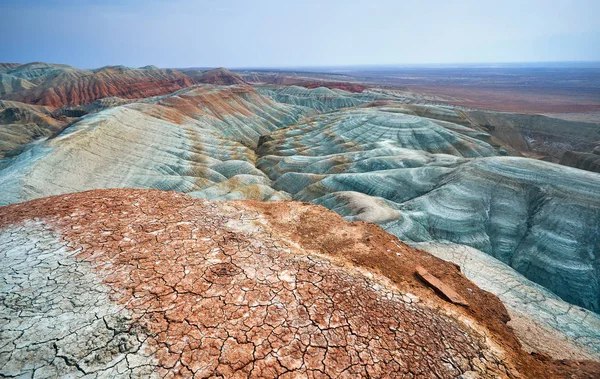
Kazakhstan’s Altyn-Emel National Park has been ranked in the world's top 10 most impressive national parks outside the United States, according to a recent article in the American travel magazine Travel + Leisure. The article praised the park’s natural diversity, rich wildlife, and distinctive landscapes. Among the standout attractions highlighted were the Singing Barchan sand dune, the Saka-era burial mounds at Besshatyr, the Kapshagai Reservoir, and the Sholak Mountains, a favored destination for birdwatchers. “In Kazakhstan’s Altyn-Emel National Park, you can encounter rare and endangered species such as the Przewalski’s horse and the snow leopard,” the article explains. [caption id="attachment_30226" align="aligncenter" width="600"] @altynemel.kz/Sakka burial mounds[/caption] A Park of History and Biodiversity Established in 1996 in Kazakhstan’s Zhetysu region, in the east of the country, Altyn-Emel National Park spans 307,600 hectares, having expanded from its original area of 209,000 hectares. The park is situated in the Ili River valley and encompasses desert plains, the foothills of the Dzungarian Alatau, and isolated rocky outcrops. The name Altyn-Emel means “Golden Saddle.” The park experiences a sharply continental climate, with dry, hot summers and limited annual precipitation of just 300-330 millimeters. Its varied landscapes include sand dunes, clay formations, and mountain zones composed of ancient Paleozoic rock, some of which date back 400 million years. [caption id="attachment_30227" align="aligncenter" width="600"] @altynemel.kz/The singing barchan[/caption] A Sanctuary for Rare Flora and Fauna Altyn-Emel is home to more than 1,800 species of plants, including 21 listed in Kazakhstan’s Red Book of endangered species. Unique vegetation includes black and white saxaul, ironwood groves, and the wild Sivers apple tree, an ancestor of modern cultivated apples. The park hosts 393 species of vertebrates: 78 mammals, 260 birds, 25 reptiles, four amphibians, and 26 species of fish. Among the rarest animals are argali sheep, goitered gazelles, kulans, and snow leopards. The park is especially proud of its Turkmen kulan population, reintroduced in 1982, which now numbers more than 2,000 individuals. [caption id="attachment_30228" align="aligncenter" width="600"] @altynemel.kz/Petroglyphs[/caption] Nature’s Wonders The park’s most iconic feature is the Singing Barchan, a sand dune stretching 1.5 kilometers and rising to 130 meters in height. In dry weather, the dune emits a humming sound reminiscent of organ music. Other geological and historical landmarks include the multi-colored Aktau clay mountains, the volcanic Katutau rocks, Chokan Valikhanov’s spring, and the Besshatyr necropolis of Saka nobility. Ancient petroglyphs in the Taigak area are also of interest to visitors. Promoting Kazakhstan’s Natural Heritage Efforts to promote Kazakhstan’s national parks internationally continue through initiatives such as the Qazaq National Parks project. In 2024, an exhibition in New York showcased a digital display of the country’s natural wonders. Among the highlights was the book Ile-Alatau Stories, a collection chronicling the lives of individuals committed to conservation efforts. Global Recognition Altyn-Emel shares its top-10 ranking in Travel + Leisure with other spectacular national parks: Galápagos National Park (Ecuador) Mana Pools (Zimbabwe) Plitvice Lakes (Croatia) Killarney National Park (Ireland) Kaz Dağları National Park (Turkey) Rishiri-Rebun-Sarobetsu National Park (Japan) Bandhavgarh National Park (India) The Azores (Portugal)...

Two Earthquakes Strike Kazakhstan and Kyrgyzstan, Causing Damage in Talas Region

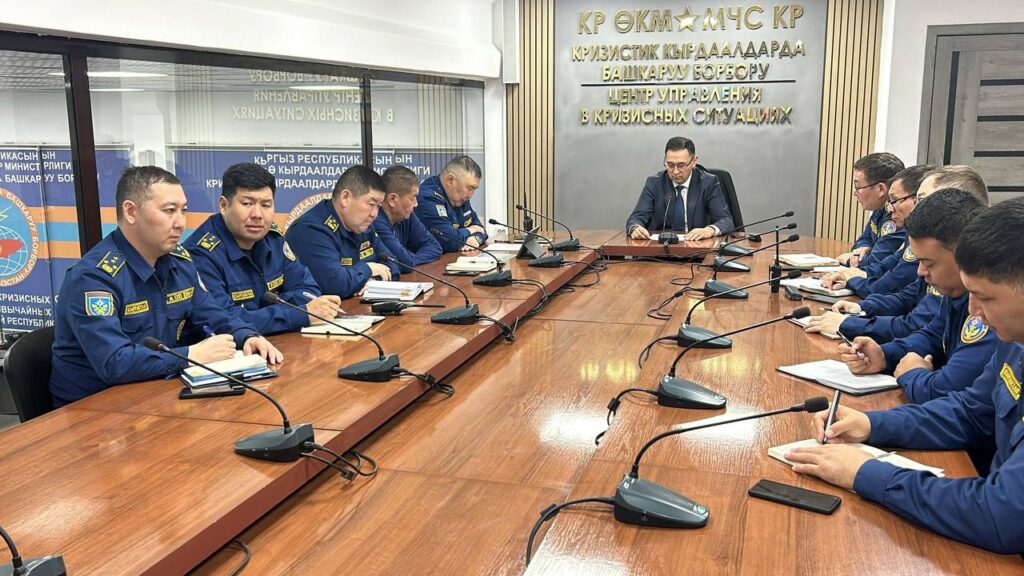
Two earthquakes struck Central Asia early on March 28, affecting parts of Kazakhstan and Kyrgyzstan. The first tremor, with a magnitude of 5.5, occurred in southern Kazakhstan, approximately 133 kilometers from Bishkek. The Kyrgyz capital felt the tremors at 4:42 a.m., according to the Institute of Seismology at the National Academy of Sciences of Kyrgyzstan. The quake registered a strength of four points in Bishkek and reached up to five points in parts of Kyrgyzstan’s Talas Region, which borders Kazakhstan. A second, less powerful earthquake was recorded at 7:00 a.m. on the Chatkal Ridge in southwestern Kyrgyzstan. It registered a magnitude of 3.5. According to the Kyrgyz Ministry of Emergency Situations, five residential buildings and one educational institution sustained damage in the Talas Region following the first quake. An operational team has been dispatched to assess the extent of the damage. “A state of emergency has been declared in connection with the earthquake recorded in Kazakhstan on March 28. An emergency meeting was held at 5 a.m. at the central office of the Ministry of Emergency Situations and the Crisis Management Center of Kyrgyzstan. First Deputy Minister of Internal Affairs Azamat Mambetov instructed officials to maintain a high alert regime,” the ministry's press service reported. No casualties have been reported. Authorities have stated that the situation remains under control. Kyrgyzstan’s Crisis Management Center is in direct communication with its counterpart in Kazakhstan, with both agencies exchanging real-time updates. Two major earthquakes were also recorded on March 28 in Southeast Asia. Seismologists from China and the United States reported tremors affecting Myanmar and Thailand. In Myanmar, the first quake registered a magnitude of 7.9 (with other sources citing 7.7), followed by a second at 6.4. The tremors were also felt in Bangladesh, India, Thailand, Laos, and China.

Kazakhstan Considers Resuming Saiga Culling Amid Ecological and Agricultural Tensions

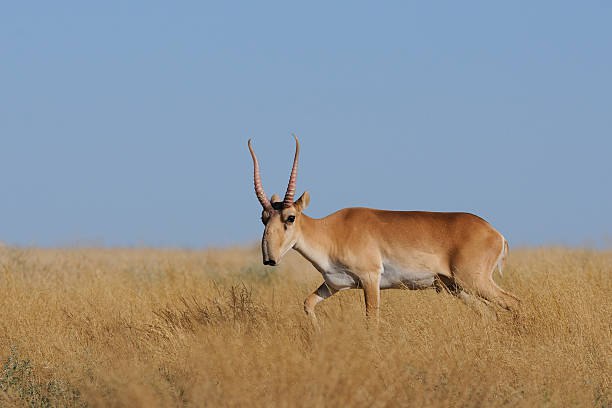
Kazakhstan’s Minister of Ecology and Natural Resources, Yerlan Nysanbayev, has addressed the growing debate over the potential resumption of saiga culling, acknowledging that while no decision has yet been made, consultations with scientists and environmental experts are ongoing​. Conservation or Population Control? Speaking at a government briefing, Nysanbayev emphasized the complexity of the issue. “We expect a second meeting. Science needs time to comprehensively study the situation, assess obligations, and determine whether population regulation is necessary or if alternative measures are viable,” he said. The minister acknowledged that the conflict between wildlife and agricultural interests is becoming increasingly apparent. “There are epizootic risks involved. A very balanced decision is required here,” he added. Regulation Methods: Culling or Capture? When asked about potential population control methods, Nysanbayev responded candidly. “It could be corral-based capture or shooting, what other options are there? But the final decision is still under scientific review.” The idea of regulating saiga populations first stirred controversy in 2022 when farmers in West Kazakhstan and Akmola regions reported widespread crop damage caused by the animals. Fields were trampled, fences destroyed, and harvests consumed. Some farmers even called for a state of emergency​. By autumn 2023, saigas were added to the official list of animals subject to population control. Authorities initially aimed to capture 200,000 saigas, but technical challenges led to a shift toward culling. Meat processing plants began producing canned saiga meat for local consumption​. Shifting Policies and Political Pressure However, on February 10, 2024, the Ministry of Ecology suspended the population control initiative following consultations with Kazakh and international experts​. In April, President Kassym-Jomart Tokayev declared his intent to ban saiga culling altogether, calling the antelope a “symbol of the Kazakh steppe”​. Yet the issue resurfaced in March 2025 during a meeting of the National Kurultai. Tokayev again urged the government to reassess the situation, citing appeals from the AOYL political party and local residents. “Agriculture is suffering. Epizootic risks are growing. Overall, pressure on the ecosystem has increased,” he said​. Global Context and Local Dilemma According to Energyprom.kz, global wildlife populations have declined by an average of 73% over the past 50 years. While Kazakhstan’s saiga population has rebounded significantly thanks to anti-poaching efforts and conservation policies, the country now faces a new dilemma: how to reconcile ecological preservation with agricultural stability​. Minister Nysanbayev confirmed that a final decision will be made later this year but what form it will take remains uncertain.