
• KGS/USD = 0.01144 0%
  • KZT/USD = 0.00213 0%
  • TJS/USD = 0.10456 0.19%
  • UZS/USD = 0.00008 0%
  • TMT/USD = 0.28490 0%
  • KGS/USD = 0.01144 0%
  • KZT/USD = 0.00213 0%
  • TJS/USD = 0.10456 0.19%
  • UZS/USD = 0.00008 0%
  • TMT/USD = 0.28490 0%
  • KGS/USD = 0.01144 0%
  • KZT/USD = 0.00213 0%
  • TJS/USD = 0.10456 0.19%
  • UZS/USD = 0.00008 0%
  • TMT/USD = 0.28490 0%
  • KGS/USD = 0.01144 0%
  • KZT/USD = 0.00213 0%
  • TJS/USD = 0.10456 0.19%
  • UZS/USD = 0.00008 0%
  • TMT/USD = 0.28490 0%
  • KGS/USD = 0.01144 0%
  • KZT/USD = 0.00213 0%
  • TJS/USD = 0.10456 0.19%
  • UZS/USD = 0.00008 0%
  • TMT/USD = 0.28490 0%
  • KGS/USD = 0.01144 0%
  • KZT/USD = 0.00213 0%
  • TJS/USD = 0.10456 0.19%
  • UZS/USD = 0.00008 0%
  • TMT/USD = 0.28490 0%
  • KGS/USD = 0.01144 0%
  • KZT/USD = 0.00213 0%
  • TJS/USD = 0.10456 0.19%
  • UZS/USD = 0.00008 0%
  • TMT/USD = 0.28490 0%
  • KGS/USD = 0.01144 0%
  • KZT/USD = 0.00213 0%
  • TJS/USD = 0.10456 0.19%
  • UZS/USD = 0.00008 0%
  • TMT/USD = 0.28490 0%

Viewing results 727 - 732 of 3328

Opinion: Ghosts of the Gulag: Kazakhstan’s Uneasy Dance With Memory and Moscow

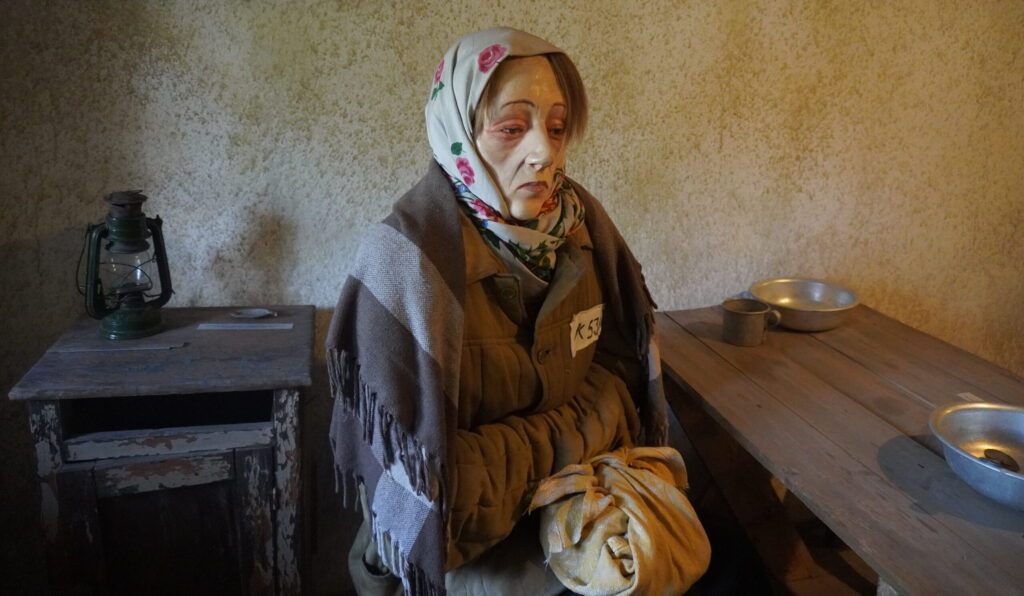
In May 2025, the authorities in Moscow unveiled a life-size bas‑relief sculpture of Josef Stalin in the Taganskaya metro station. The next month, a statue of Lenin was pulled down in Osh, Kyrgyzstan. Between these two symbolic acts lies Kazakhstan, caught in a tug-of-war over the memory of Soviet-era repression. Between 1920 and 1960, millions of prisoners were deported to more than fifty labor camps across what was later to become the Republic of Kazakhstan. Those who weren’t executed on the spot — political opponents, intellectuals, artists — were forced to work in mines, construction sites, or collective farms feeding Soviet industrial expansion. The death toll remains unknown but is believed to be in the millions. Today, this dark past draws in history buffs and thrill-seekers. But darktourism.com, the go-to website on the topic, warns them: forgotten cemeteries, ghost villages, crumbling camps — this gulag archipelago is well hidden in the steppes. No sign points the way to the Museum of Political Repression in Dolinka, housed in the former headquarters of Karlag, one of the largest camps of the Soviet Gulag system. The only other gulag transformed into a museum is ALZHIR, built on the ruins of the Akmola camp near Astana. It commemorates the 18,000 women imprisoned between 1939 and 1953 for being the wives of “traitors to the motherland.” These two museums now stand as official symbols of Soviet repression in Kazakhstan, and, more subtly, as frontline sites in a broader memory war across the former Soviet Union. Selective Memory When the museums were nationalized in the 2000s, their message became tightly controlled. Portraits and quotes from former president Nursultan Nazarbayev began to cover the walls. Guillaume Tiberghien, a specialist in dark tourism at the University of Glasgow, calls it a “selective interpretation of history.” The goal? To unify the country’s 160 ethnic groups under a shared narrative of collective suffering. At both Karlag and ALZHIR, guides emphasize acts of solidarity between Kazakh villagers and deportees — hospitality, compassion, bits of cheese tossed over barbed wire fences to feed the starving. [caption id="attachment_34338" align="aligncenter" width="2560"] Execution scene recreated at the Karlag museum; image: Manon Madec.[/caption] The past is staged. Between wax statues with sunken faces, sound effects mimicking heartbeats, and torture room reconstructions, the visitor is drawn into a visceral experience, sometimes at the cost of accuracy. “You wonder if the museum overdoes it to trigger emotion,” Tiberghien remarks. Margaret Comer, a memory studies expert at the University of Warsaw, explains: “It’s sometimes easier to mourn victims than to identify perpetrators.” [caption id="attachment_34337" align="aligncenter" width="2560"] Execution scene and fake blood, reconstructed in the Dolinka museum; image: Manon Madec.[/caption] The complicity of local Kazakhs is never addressed. Russian responsibility is blurred behind vague terms like “NKVD” or “Stalinist repression.” At ALZHIR, visitors learn only about Sergey Barinov — a Russian commandant described as cultured, discreet, and caring toward the women detained. The other two camp directors are never mentioned. In other former Soviet republics — Ukraine, the Baltics, Georgia — such...

Potential Mass Expulsion of Migrants Looms in Russia

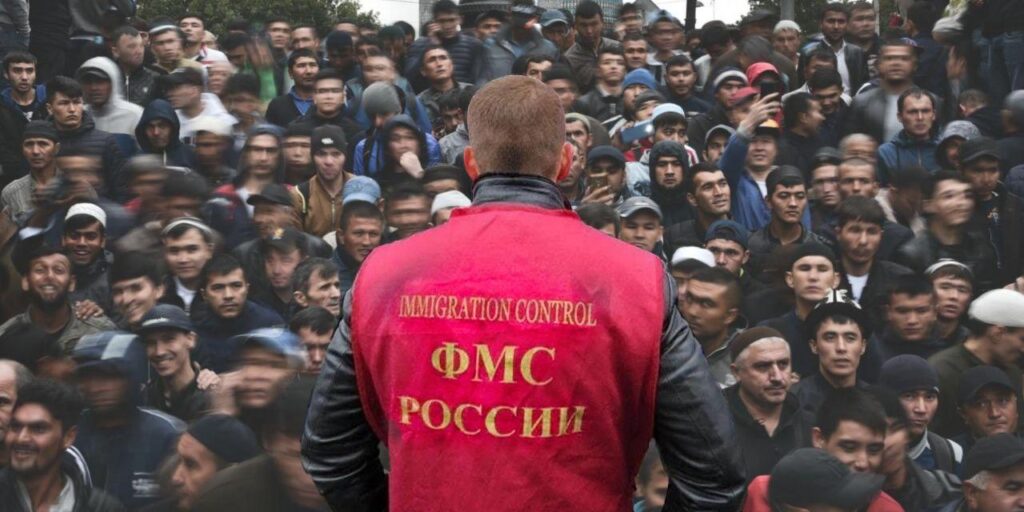
Russia introduced new regulations for foreign citizens in the country on February 5, and started keeping a list at the Interior Ministry of foreigners who are living or staying in Russia without proper documentation, the “controlled persons registry.” The rules are aimed at migrant laborers working in Russia, many of whom come from Central Asian countries. Russia has set a September 10 deadline for foreigners in the country to clear up all their paperwork with the authorities or face expulsion with a ban on re-entry. Judging by recent comments from Kyrgyzstan’s ambassador to Russia, Kubanychbek Bokontayev, many might not make that September 10 deadline. Needed but Not Desired Over the course of the last two decades, millions of citizens from Central Asian countries have worked in Russia. Most are from Kyrgyzstan, Tajikistan, and Uzbekistan. The remittances they send home have grown to the point where this money now accounts for nearly 40% of the GDP in Tajikistan, 24% in Kyrgyzstan, and 14% in Uzbekistan. Most of these remittances come from Russia. Russia badly needs the extra workers, and, until recently, the arrangement seemed to suit all parties. But the March 2024 terrorist attack on Moscow’s Crocus City Hall changed the situation. The Russian authorities detained and charged a group of Tajik nationals for the attack, and the always simmering xenophobia in Russia, particularly toward Central Asians, boiled over. New rules and restrictions have been imposed on migrant workers. Those that came into force in February this year were only the latest in a series of changes that already included mandatory fingerprinting and photographs upon entry to Russia, a reduction in the term of stay from 180 to 90 days, and an increasing list of infractions that provide grounds for deportation. In 2024, Russia expelled some 157,000 migrants who were in the country illegally, which, according to Russian Interior Minister Vladimir Kolokoltsev, was an increase of some 50% over 2023. The Clock Is Ticking At the start of February, just before the latest regulations came into effect, Russia’s Deputy Interior Minister Aleksandr Gorovoi said there were some 670,000 foreigners living illegally in Russia. Gorovoi added that more than half were women and children, “those who entered, but we do not see that they received a patent registered with the migration service… [or] that an employment agreement was concluded with them.” On July 24, Kyrgyz media outlet AKIpress published an interview with the Kyrgyz Ambassador to Russia, Bokontayev, in which he said that at the start of July, there were some 113,000 Kyrgyz citizens on the controlled persons registry, which he referred to as the “gray list.” He also said there were some 80,000 Kyrgyz citizens on the “black list” of people barred from entering Russia. In a separate interview with Radio Free Europe/Radio Liberty’s Kyrgyz Service published on July 25, Kyrgyzstan’s General Consul in Russia, Bakyt Asanaliyev, said that about 30% of the Kyrgyz citizens on the gray list are children. Ambassador Bokontayev said Kyrgyzstan’s embassy is working to make sure...

KTZ Secures $540 Million Loan to Upgrade Trans-Kazakhstan Railway Corridor

Kazakhstan Temir Zholy (KTZ), the national railway operator, has secured a syndicated loan of up to 480 million Swiss francs (approximately $540 million) for a three-year term. Arranged through Abu Dhabi Commercial Bank and Deutsche Bank, the financing will support key infrastructure projects along the Trans-Kazakhstan Railway Corridor. According to KTZ, the loan will fund construction of the Moiynty-Kyzylzhar section, upgrades to congested segments of the national rail network, and the refinancing of existing debt. The Trans-Kazakhstan Railway Corridor is central to Kazakhstan’s strategy to solidify its role as a major overland transit hub connecting China and Europe. Infrastructure improvements are expected to reduce delivery times, lower logistics costs, create jobs, and diversify international trade routes, enhancing both the resilience of Kazakhstan’s economy and the competitiveness of its transport sector. Currently, more than 80% of overland freight from China to Europe passes through Kazakhstan via the Trans-Caspian International Transport Route (TITR), also known as the Middle Corridor. This route circumvents Russia and connects China to Europe through Central Asia and the Caspian Sea. In 2024, freight volumes along the TITR surged by 60%, reaching 4.5 million tons. Kazakhstan aims to more than double that volume to 10 million tons by 2030, as part of its broader ambition to expand its footprint in global supply chains.

Four Sentenced to Life Over Killings That Terrorized Tajikistan’s Konibodom

Four men have been sentenced to life imprisonment in connection with a series of murders that terrorized the northern Tajik city of Konibodom and surrounding areas throughout 2024. The announcement was made by Konibodom Chairman Davron Zokhidzoda at a press conference, as reported by Asia-Plus. However, he did not disclose the date of sentencing or provide further details, citing a lack of familiarity with the full investigation. On December 21, 2024, Tajikistan’s General Prosecutor’s Office announced the arrest of four suspects: 26-year-old Solehjon Khudoyberdiev, 27-year-old Akhadjon Tukhtaev, 36-year-old Bakhtiyor Ravshanov, and 28-year-old Manuchehr Odilov, all residents of Konibodom and nearby villages. As previously reported by The Times of Central Asia, between March and December 2024, a total of 23 people from seven families were killed in a wave of violent incidents that shook the region. The killings began on the night of March 28–29, when five members of the Sharifov family were found dead in their home. Authorities initially suspected the family patriarch, 65-year-old Mukhiddin Sharifov, but this theory was later dismissed. His son, Kabir Sharifov, told Asia-Plus that his father was ultimately recognized as one of the victims. The violence escalated in April with the murder of elderly couple Muzaffar and Inoyat Urmonov. Their relative, Sharifjon Ashurov, was arrested and sentenced to 20 years in prison in December, despite his family insisting he was at home on the night of the murders. In May, six people from two families, one Tajik and one Kyrgyz, were found murdered in the village of Sanchidzor. Authorities held Marat Sattarov, a 42-year-old school security guard, responsible. He was sentenced to life in prison by the Supreme Court in November. Tragedy struck again in December when six members of the Nematov family, including four children, were discovered dead in their home in Shurobqala. The father, Naimdjon Nematov, was found hanged in a nearby tree, while his wife and children showed signs of strangulation. Just days later, four more people from two families were killed in the village of Khisorak. The string of murders plunged Konibodom into panic. Reports of masked individuals seen at night stoked public fear, prompting residents to form watch groups and light fires for protection.

Four Convicted for Hotel Gas Leak That Killed Journalist Inessa Papernaya

A court in Tashkent has sentenced four men in connection with the deaths of Russian journalist Inessa Papernaya and her companion, Maxim Radchenko, who died of carbon monoxide poisoning at a city hotel in October 2024. The verdict was reported by a RIA Novosti correspondent present at the hearing. The incident occurred at the Karaman Palace Hotel on October 22, 2024. Papernaya, 47, and Radchenko died alongside an unidentified Uzbek man found in a separate room. Investigators concluded that gas entered the hotel’s ventilation system following a pool cleaning, leading to fatal carbon monoxide exposure. However, none of the hotel’s promotional materials mention a swimming pool, and some sources explicitly state that the facility does not have one. A worker involved in construction at the site confirmed the absence of a pool. Forensic analysis revealed the presence of carbon monoxide bound to hemoglobin in Papernaya’s blood. The Yakkasaray District Criminal Court opened proceedings on May 26, after the investigation concluded in late April. The four defendants were charged with providing services that failed to meet safety standards and operating without proper authorization, crimes punishable by up to 12 years in prison. Judge Bahodir Kayumov found hotel owner Azamat Khuzhakulov guilty under Part 4, Article 186 of Uzbekistan’s Criminal Code. He was sentenced to eight years and one month in prison. The three co-defendants, plumber Nodirbek Kurbanov and heating equipment vendors Zayniddin Jamoliddinov and Abdurashul Yusupov, were each sentenced to three years in prison. Prosecutors had sought sentences of seven to eight years. The court also ordered compensation payments: 67.58 million UZS (approximately $5,358) to Papernaya’s family and 60.68 million UZS (approximately $4,811) to Radchenko’s relatives. The payments will cover expert examination fees and the repatriation of the victims’ remains. All four men have ten days to appeal the verdict. During the trial, Khuzhakulov admitted partial guilt. The other three defendants denied any wrongdoing. According to the indictment, the deaths resulted from a faulty, outdated boiler that had not undergone technical inspection, lacked certification, and should have been decommissioned in 2021. Inessa Papernaya was a veteran journalist who worked for several major Russian media outlets. She was an editor at Lenta.ru and deputy editor-in-chief at Profil magazine. She also collaborated with the Center for Strategic Research, a Moscow-based think tank specializing in economic policy and long-term strategy development. Her death has fueled speculation and conspiracy theories in segments of the Russian media.

Kazakh Scientists Unveil Facility Capable of Preserving Agricultural Products for 50 Years

Researchers at Al-Farabi Kazakh National University have developed a mobile unit capable of processing and storing agricultural products for up to 50 years. The unit, named “Dayar 20,” utilizes freeze-drying technology and is designed to be transported directly to fields and orchards, an essential advantage for remote agricultural operations. Takeaway Food with a Half-Century Shelf Life The underlying technology is lyophilization, which involves removing water from frozen products by evaporation under low pressure. The process allows food to retain its taste, color, aroma, shape, and nutritional content. “Products dried using the Dayar 20 unit remain usable for a long time, retaining their taste, color, smell, shape, and vitamins,” said project manager Yerbol Ikhsanov, PhD in chemistry. The unit can process a variety of goods, including fruits, vegetables, meat, dairy products, and ready-to-eat meals. Shelf life ranges from three years at room temperature to 10 to 50 years when vacuum-sealed. The innovation is expected to improve the sustainability of Kazakhstan’s agricultural sector and enhance its export potential. Breakthrough in Hydrogen Production This is not the only recent scientific achievement in Kazakhstan. Researchers at the Institute of Combustion Problems have developed a reactor that decomposes hydrocarbon gases into hydrogen and carbon using low-temperature plasma, without the need for catalysts and with minimal energy input. Inside the plasma reactor, gases are heated to temperatures between 1,800 and 2,700°C, triggering pyrolysis. The result is hydrogen with a purity of up to 98.9% and technical carbon. Notably, scientists also identified giant carbon nanotubes, up to 100 nanometers in diameter, within the by-product. These nanotubes are considered a promising material for super-strong fibers and composites, far exceeding typical size expectations under normal conditions. The method offers nearly 100% efficiency in hydrocarbon recycling and significantly accelerates hydrogen production. Kazakh Anti-Cancer Drug Shows Early Promise In another separate development, Kazakh scientists have made progress on an anti-cancer drug that has yielded promising results in early clinical trials. Dos Sarbasov, Vice President of the National Academy of Sciences, reported that tumor growth had ceased in six patients and shrunk by 30% in one case. “After the first dose of the drug, the condition of fifteen cancer patients stabilized, and in six of them, the tumor stopped growing,” Sarbasov said. The drug targets cells that actively absorb glucose and has shown no signs of toxicity. Clinical testing began two years ago and has already passed two phases. The trials, conducted at the Kazakh Institute of Oncology and Radiology, are expected to conclude within the next two to three years. The drug has received international patent protection.
