• KGS/USD = 0.01144 0%
  • KZT/USD = 0.00216 0%
  • TJS/USD = 0.10456 0%
  • UZS/USD = 0.00008 0%
  • TMT/USD = 0.28490 0%
  • KGS/USD = 0.01144 0%
  • KZT/USD = 0.00216 0%
  • TJS/USD = 0.10456 0%
  • UZS/USD = 0.00008 0%
  • TMT/USD = 0.28490 0%
  • KGS/USD = 0.01144 0%
  • KZT/USD = 0.00216 0%
  • TJS/USD = 0.10456 0%
  • UZS/USD = 0.00008 0%
  • TMT/USD = 0.28490 0%
  • KGS/USD = 0.01144 0%
  • KZT/USD = 0.00216 0%
  • TJS/USD = 0.10456 0%
  • UZS/USD = 0.00008 0%
  • TMT/USD = 0.28490 0%
  • KGS/USD = 0.01144 0%
  • KZT/USD = 0.00216 0%
  • TJS/USD = 0.10456 0%
  • UZS/USD = 0.00008 0%
  • TMT/USD = 0.28490 0%
  • KGS/USD = 0.01144 0%
  • KZT/USD = 0.00216 0%
  • TJS/USD = 0.10456 0%
  • UZS/USD = 0.00008 0%
  • TMT/USD = 0.28490 0%
  • KGS/USD = 0.01144 0%
  • KZT/USD = 0.00216 0%
  • TJS/USD = 0.10456 0%
  • UZS/USD = 0.00008 0%
  • TMT/USD = 0.28490 0%
  • KGS/USD = 0.01144 0%
  • KZT/USD = 0.00216 0%
  • TJS/USD = 0.10456 0%
  • UZS/USD = 0.00008 0%
  • TMT/USD = 0.28490 0%

Viewing results 1735 - 1740 of 3223

Representatives of World Bank and IFC Speak About Projects in Tajikistan

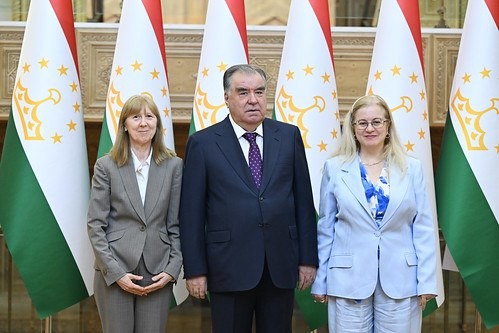
The President of Tajikistan, Emomali Rahmon received Vice President of the World Bank, Antonella Bassani and Vice President of the International Finance Corporation, Hela Cheikhrouhou. The meeting was followed by a press conference wherein joint projects were spoken about, Avesta.tj has reported. According to Bassani, the parties discussed the state of their bilateral partnership and cooperation between Tajikistan and the World Bank. Twenty-five projects worth $1.7 billion are being implemented in Tajikistan under the International Development Association. These projects cover investment development, political reform implementation, energy, water supply, agriculture, education, health, natural resource management, and other sectors. "The meeting also discussed promising areas contributing to deepening and expanding cooperation. We concluded that in the area of drinking water supply, it is necessary to intensify further actions in this direction and improve cooperation," the World Bank Vice President said, noting that the government's efforts to promote reforms are appreciated. Vice-President of the IFC, Hela Cheikhrouhou said that simplifying entrepreneurship for young people and women was also on the agenda. "The International Finance Corporation team decided to introduce global knowledge and experience into the private sector, which can become a source of quality jobs and economic development in Tajikistan," she stated. Cheikhrouhou also noted that she looks forward to cooperating within the framework of the Roadmap to reduce barriers to entrepreneurship and provide opportunities for young people, women, and girls to create successful enterprises in various sectors of Tajikistan's economy. "The International Finance Corporation for Tajikistan has sent $60 million of investments in the last 12 months, and we intend to increase it soon," Cheikhrouhou emphasized.
Turkmenistan to Start Cargo Transit via Iranian Railroads

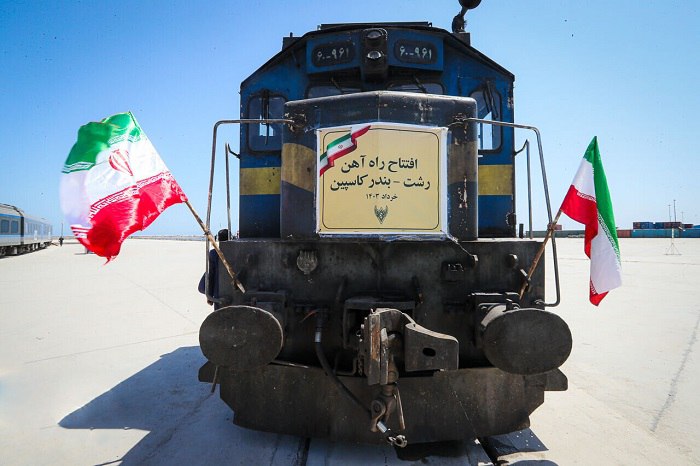
Turkmenistan will start the transit of cargo along the Resht-Kaspian railroad line in Iran, as reported by the publication, Turkmenistan: Golden Age, citing Milad Salehi, the Director General of Railways of the Islamic Republic of Iran. Sulfur transit from Turkmenistan will start  along this route next week. The Resht-Kaspian railroad is an important part of the North-South international transportation corridor connecting the Caspian Sea with the Persian Gulf and the Sea of Oman. It also links the north and south of the country. This route opens up new opportunities for cargo transit from Central Asia to the Middle East and South Asia.

ADB to Allocate $50 Million to Support Economic Reforms in Kyrgyzstan

It has been reported by 24.kg that the Asian Development Bank (ADB) will allocate $50 million to support economic reforms in Kyrgyzstan. According to a statement from the ADB, the funds aim to improve the fiscal system and public administration. The project's primary goal is to help the country transition to environmentally-friendly technologies, adapt to climate change, and integrate gender aspects into budgetary processes. Of the total funding, $43 million will be a program loan, and $7 million will be provided as a grant. "Kyrgyzstan's economy is vulnerable to economic crises due to limited resources and weak governance. The government is committed to strengthening financial institutions to support key sectors of the economy," ADB stated. The ADB program aims to improve corporate governance of state-owned enterprises, tax policy, and transparency in public administration. ADB Director General for Central and West Asia, Eugene Zhukov emphasized that the initiative promotes stable and inclusive economic growth. This year marks 30 years of cooperation between ADB and Kyrgyzstan, under which 217 projects worth $2.6 billion have been implemented. The ADB continues to support the country in achieving sustainable economic growth and fighting poverty.

SCO Summit in Astana: Correspondents from China Global Television Network, Times of Central Asia Discuss Upcoming Meeting

National leaders and other dignitaries from over 20 countries will be in the Kazakh capital of Astana this week for the annual summit of the Shanghai Cooperation Organization (SCO). The Times of Central Asia will be covering the SCO Summit live on 3 and 4 July from the city’s Palace of Peace and Reconciliation. The SCO is a political, security and economic alliance in the wider Eurasia region. This year’s Summit host Kazakhstan was a founding member of the Organization in 2001, alongside China and Russia, and its Central Asian neighbors Kyrgyzstan, Tajikistan and Uzbekistan. The last time the Summit was held in Astana, in 2017, India and Pakistan became full members. There are currently nine full member states, four observer states, and 14 dialogue partners, covering half of the world’s population, and almost a third of global GDP. This year's Summit will have significant implications for regional and global affairs. It is likely to produce initiatives aimed at reducing trade barriers, and promoting investments between SCO member states. High on the agenda will be the Belt and Road Initiative (BRI) – a crucial framework for enhancing connectivity and economic ties between China and its Central Asian partners. Other anticipated outcomes include new initiatives on climate change and sustainable development, as well as strengthened cultural and educational exchanges. Upon the initiative of Kazakhstan’s President Kassym-Jomart Tokayev, 2024 has been named the SCO “Year of Ecology”. Ahead of the Astana Summit, The Times of Central Asia’s senior editor Jonathan Campion spoke with an anchor from China Global Television Network, Mr Zhong Shi, about the role of the Shanghai Cooperation Organization plays in the Central Asia region. Their talk can be viewed in full in the videos below. In response to The Times of Central Asia’s question about what makes the SCO different from other alliances that the countries of Central Asia are aligned with, Mr Zhong explained that: “The SCO has been truly effective in combatting what we call the three enemies of all members, namely terrorism, extremism and separatism. There have been joint military drills conducted to enhance the coordination among armed forces”. Listen to Mr Zhong’s full response below: [video width="1920" height="1080" mp4="https://timesca.com/wp-content/uploads/2024/06/fullscreen-Zhong-Shi-answer-2-questions.mp4"][/video]   [video width="1920" height="1080" mp4="https://timesca.com/wp-content/uploads/2024/06/tw0-windows-Zhong-Shi-answer-2-questions.mp4"][/video] In turn, Mr Campion gave The Times of Central Asia’s perspective on the upcoming Summit. Asked about the impact that the Belt and Road Initiative has had on Central Asia, he replied: "Central Asia is evolving as a land bridge component to the Belt and Road Initiative linking China to the Caspian Sea. We’re seeing that investments in transport infrastructure are unlocking the region’s vast natural resources. With the world making a green transition, Kazakhstan stands out, as it has an abundance of critical materials – or green metals as they are known – that are used in the components of green technologies.” Listen to Mr Campion’s full response below: [video width="1920" height="1080" mp4="https://timesca.com/wp-content/uploads/2024/06/Jonathon-answer-Q2.mp4"][/video]   [video width="1920" height="1080" mp4="https://timesca.com/wp-content/uploads/2024/06/Jonathon-answer-Q3.mp4"][/video]  

Qosh Tepa Canal Threatens Water Balance in Central Asia

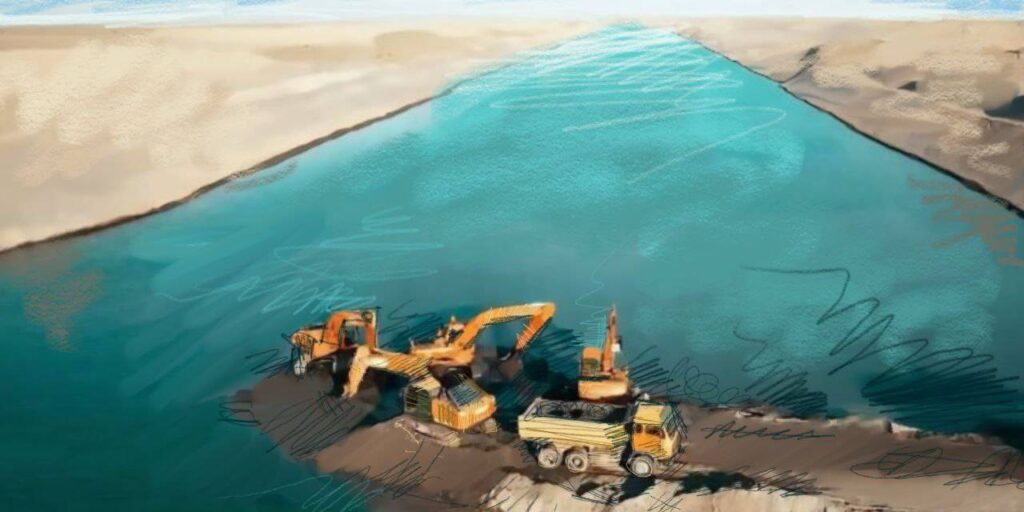
The construction of the Qosh Tepa Canal may threaten Central Asia's water balance and the region must address the issue. The warning, given by Nikolay Podguzov, Chairman of the Board of the Eurasian Development Bank which is involved in projects affecting the region's water balance, was reported  by AKI press. According to experts, the Qosh Tepa Canal, currently under construction in Afghanistan, receives ten cubic kilometers of water per year from general drainage, and also, the Amu Darya river. Marat Imonkulov, Secretary of the Kyrgyz Security Council, said that a reduction of water in the Amu Darya will inevitably lead to an increase in water taken from the Syr Darya river for agriculture and other needs. Some analysts claim that under such a scenario, Central Asia will face a chronic water shortage. Although not one of its members, the EDB, reminded Afghanistan that the construction of the canal is being implemented by the state on its territory and Podguzov stressed, “The states mutually resolve issues related to relations through diplomatic channels. But we have to solve the problem together. I believe that the countries will agree." Analysts seek to resolve the situation by developing digital water accounting, water conservation, and proper treatment of the region's resources. The Qosh Tepa Canal project, conducted by the Taliban and currently underway in northern Afghanistan, is a significant initiative in managing the Amu Darya's water resource but during its first phase, has raised concerns among Central Asian countries. Heeding specialists' forecasts, the President of Uzbekistan, Shavkat Mirziyoyev, said that the construction of the Qosh Tepa Canal will change the water regime and balance in Central Asia.

Pakistan Can Become a Transport Hub for Central Asian Countries

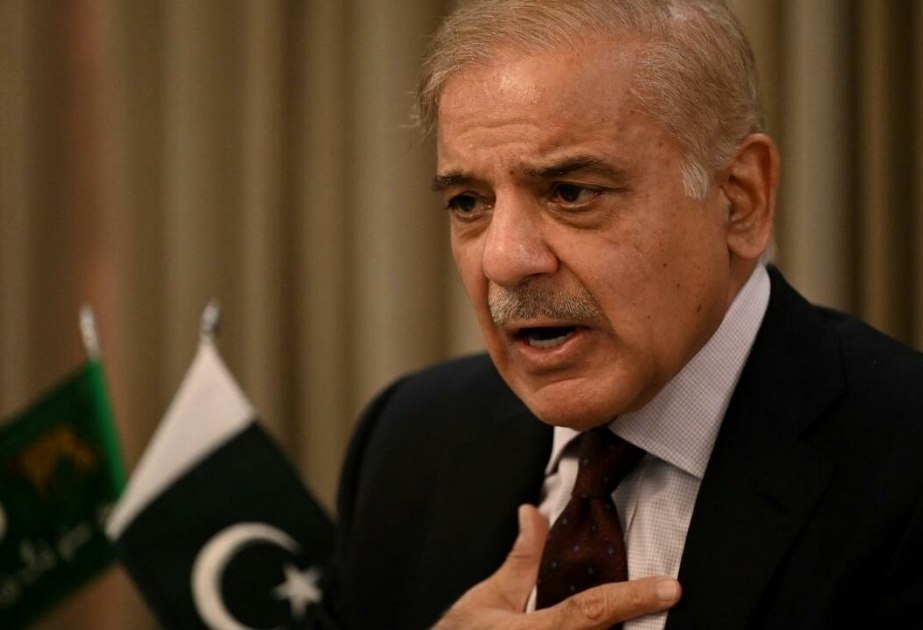
The Prime Minister of Pakistan, Shahbaz Sharif has chosen Tajikistan for his first foreign visit after being re-elected as the head of government. On July 2, he will hold talks with Tajik President Emomali Rahmon in Dushanbe, before traveling with him to the SCO summit in Astana. The head of Tajikistan and Sharif are expected to discuss the implementation of agreements reached during Rahmon's visit to Pakistan two years ago. Pakistan's capital, Islamabad, is interested in speeding up the start of the CASA-1000 energy project and expanding cooperation in transport and security. In exchange, Tajikistan is seeking access to Pakistan’s ports of Karachi and Gwadar. In December 2022, Rahmon visited Islamabad, where eight documents were signed at the end of negotiations with Sharif. “The fact is that Tajikistan’s intelligence services have historically not had warm relations with Pakistan, whose intelligence services have supported various militant groups in Afghanistan. But times are changing. In addition, it should be noted that today, Pakistan is closely cooperating with China economically and politically in the same way that active cooperation between China and Dushanbe is taking place,” said Alexander Vorobyov, a researcher at the Institute of Oriental Studies of the Russian Academy of Sciences and head of the Center for Public Diplomacy and World Policy Analysis. According to Vorobyov, improving relations between Tajikistan and Uzbekistan, whose authorities are actively promoting a project to create the Trans-Afghan railway “Termez–Mazar-i–Sharif–Kabul—Peshawar,” will help improve Tajikistan’s transport connectivity with the outside world and offer the possibility of access to South Asia. The shortest route from Tajikistan to the sea passes through Afghanistan to Pakistan. It is approximately 2,720 kilometers from Dushanbe to Karachi or Gwadar, whilst it is 3,400 kilometers to the Iranian port of Bandar Abbas in the Strait of Hormuz. Tajikistan is separated from Pakistan by the Wakhan Corridor, a narrow strip of territory in the Badakhshan province of Afghanistan. This corridor is about 350 kilometers long. Experts believe that if Afghanistan's stability and security can be ensured, then Pakistan can become a transport hub for the countries of Central Asia. Pakistan's interest in Central Asian meanwhile, lies in energy resources, of which it is desperately short. To access them, the Pakistani government is promoting several major transit projects in the region that will open access to global markets and trade opportunities for the region's countries. However, as Hina Rabbani Khar, who served as Pakistan's deputy foreign minister in February 2023, said, the situation in Afghanistan is preventing Pakistan from realizing its potential in relations with Central Asia. In particular, the Central Asia-South Asia-1000 (CASA-1000) project to transmit electricity from Tajikistan and Kyrgyzstan to Afghanistan and Pakistan still needs to be completed. The World Bank stopped financing the project after the Taliban came to power. Following an appeal by the project's participants, implementation of CASA-1000 was resumed in May 2024 with the financial support of the World Bank. In recent years, Tajikistan and Kyrgyzstan have required additional kilowatts, so the completion date of the construction still...