• KGS/USD = 0.01144 0%
  • KZT/USD = 0.00193 -0%
  • TJS/USD = 0.10832 0.09%
  • UZS/USD = 0.00008 0%
  • TMT/USD = 0.28490 0%
  • KGS/USD = 0.01144 0%
  • KZT/USD = 0.00193 -0%
  • TJS/USD = 0.10832 0.09%
  • UZS/USD = 0.00008 0%
  • TMT/USD = 0.28490 0%
  • KGS/USD = 0.01144 0%
  • KZT/USD = 0.00193 -0%
  • TJS/USD = 0.10832 0.09%
  • UZS/USD = 0.00008 0%
  • TMT/USD = 0.28490 0%
  • KGS/USD = 0.01144 0%
  • KZT/USD = 0.00193 -0%
  • TJS/USD = 0.10832 0.09%
  • UZS/USD = 0.00008 0%
  • TMT/USD = 0.28490 0%
  • KGS/USD = 0.01144 0%
  • KZT/USD = 0.00193 -0%
  • TJS/USD = 0.10832 0.09%
  • UZS/USD = 0.00008 0%
  • TMT/USD = 0.28490 0%
  • KGS/USD = 0.01144 0%
  • KZT/USD = 0.00193 -0%
  • TJS/USD = 0.10832 0.09%
  • UZS/USD = 0.00008 0%
  • TMT/USD = 0.28490 0%
  • KGS/USD = 0.01144 0%
  • KZT/USD = 0.00193 -0%
  • TJS/USD = 0.10832 0.09%
  • UZS/USD = 0.00008 0%
  • TMT/USD = 0.28490 0%
  • KGS/USD = 0.01144 0%
  • KZT/USD = 0.00193 -0%
  • TJS/USD = 0.10832 0.09%
  • UZS/USD = 0.00008 0%
  • TMT/USD = 0.28490 0%
19 December 2025

Viewing results 259 - 264 of 2398

Afghanistan Launches Toti-Maidan Gas Project with Uzbek Support

Uzbekistan has reaffirmed its support for Afghanistan’s economic recovery by backing a long-term gas development initiative in Jawzjan province. According to ToloNews, work has officially begun on the exploration and extraction of the Toti-Maidan gas fields under a 25-year contract signed by Afghanistan’s Ministry of Mines and Petroleum with KAM Group and Uzbek firm Railcom. Speaking at the launch ceremony, Deputy Prime Minister for Economic Affairs Mullah Abdul Ghani Baradar said the project would help reduce Afghanistan’s dependence on imported gas and electricity, stem the outflow of foreign currency, and lay the groundwork for future gas exports. “This project sends a message to regional countries that Afghanistan is ready for investment,” he stated. Afghan Minister of Mines and Petroleum Hedayatullah Badri described the initiative as a new model of cooperation with Uzbekistan, elevating bilateral ties from historical proximity to a “new phase of modern economic cooperation.” The ministry noted that the Toti-Maidan fields cover 7,500 square kilometers and already contain around 30 wells. Uzbekistan’s Deputy Minister of Energy, Bakhtiyar Mohammad Karimov, emphasized the strategic significance of the agreement, highlighting the application of advanced technologies and adherence to environmental standards. He called the initiative the start of major bilateral energy cooperation. The Toti-Maidan project follows a series of energy agreements signed in August between Afghanistan’s state-owned utility company, Da Afghanistan Breshna Sherkat (DABS), and Uzbekistan’s Ministry of Energy. Those $243 million contracts, signed with Nego Energy and Uz Energy, include the extension of the 500-kilovolt Surkhan-Dasht Alwan transmission line, substation expansions in Arghandeh and Nangarhar, and upgrades to the Kabul-Nangarhar power corridor. Officials from both countries say these initiatives underscore a shared commitment to deepening energy and economic ties, even as Afghanistan continues to face serious political and humanitarian challenges.
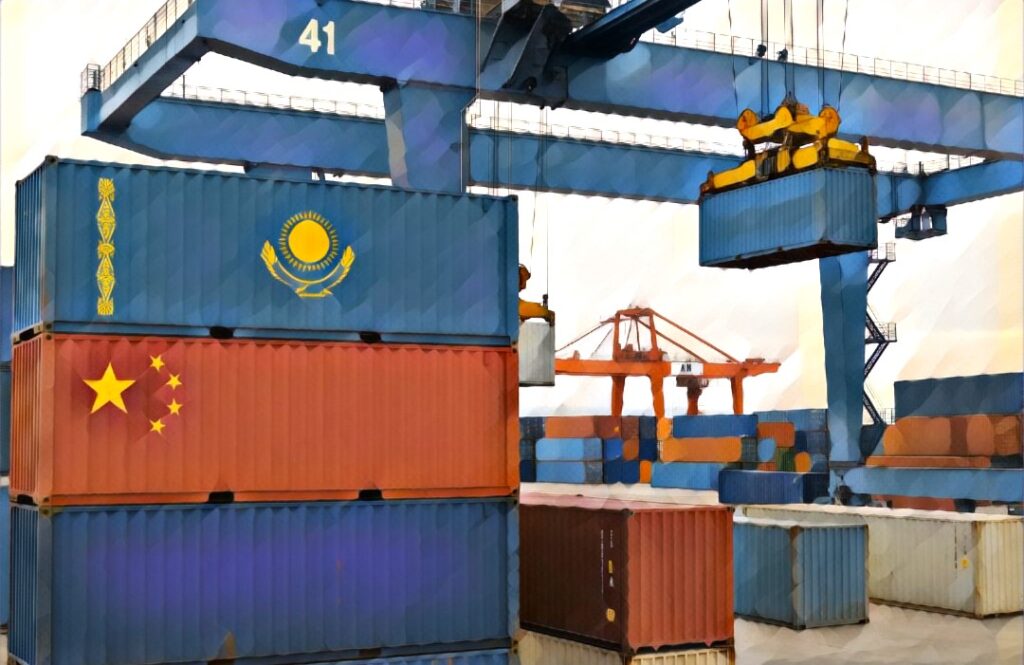
Kazakhstan Trade Deficit with China Quadruples in 2025

Kazakhstan’s trade deficit with China reached $1.8 billion in the first half of 2025, a sharp increase compared to $400 million for the whole of 2024. According to the Association of Financiers of Kazakhstan (AFK), the growth in trade turnover was driven almost entirely by rising imports of Chinese goods. A review published by AFK noted that Kazakhstan’s trade balance with China has remained in deficit since 2023, with the gap continuing to widen. Despite this, China remains Kazakhstan’s largest trading partner, accounting for more than 20% of the country’s total foreign trade. From January to June 2025, mutual trade between the two countries increased by 5.9% to $14.9 billion. However, Kazakhstan’s exports fell nearly 10%, while imports surged by 22.8%. “The decline in export revenues is mainly due to falling oil and metal prices and weaker demand from China, which increases the vulnerability of Kazakhstan’s export-oriented raw materials model,” AFK experts stated. Imports are expanding in line with rising domestic consumption and the rollout of large-scale infrastructure projects. China’s share of Kazakhstan’s trade turnover rose to 22.6% in the first half of 2025, up from 20.7% a year earlier. The growth was fueled by imports, which increased their share to 28.6% from 23.9%, while exports fell to 17.8% from 18.4%. Kazakhstan did record modest export gains in certain categories, including animal and plant products (+$164 million) and vehicles (+$160 million). These, however, were outweighed by sharp declines in mineral product exports (-$599 million) and metals (-$408 million). Imports from China grew most significantly in vehicles (+$1.2 billion), metals (+$279 million), and chemical products (+$231 million). The increase in vehicle imports was aided by a 14% drop in average car prices from China. Imports of food, furniture, construction materials, and consumer goods also rose. Trade settlements are also shifting. While the dollar remains the dominant contract currency, the yuan is gaining ground in import transactions, with the euro ranking third due to Kazakhstan’s ongoing trade ties with Europe. As a result, Kazakhstan’s trade deficit with China widened to $1.8 billion in January-June 2025, compared to $0.4 billion in the whole of 2024. “Imports are likely to continue to grow amid high consumer and investment demand, while exports will remain dependent on commodity prices and industrial dynamics in China. China is becoming an increasingly pronounced ‘economic magnet’ for Kazakhstan,” the AFK report concluded. As The Times of Central Asia previously reported, Kazakhstan is experiencing a slowdown in manufacturing activity in 2025 following record growth at the end of last year.

Blast at Scrap Metal Site in Kazakhstan Kills Three Uzbek Citizens

The bodies of three Uzbek citizens who died in an explosion at a scrap metal plant in Kazakhstan's Almaty region are being repatriated, according to Uzbek officials.    The deaths occurred on September 11 at the LGN Metal business in Baiserke village and local police have opened a criminal case for “violation of labor protection laws leading to death,” Uzbekistan’s Migration Agency said on Telegram on Saturday. It expressed condolences and said migration officers were helping the relatives of the dead. “Constant cooperation has been established with the Kazakh side during the investigation process,” the agency said.  Officials have not yet announced the cause of the blast. Plant owner Amirbek Sherbaev said a Chinese company rents the site and that it was possible that military ordnance was mixed in with scrap metal that had been received there, according to KTK, a television channel in Kazakhstan. KTK said defense ministry officials had joined the inquiry.

Kazakhstan Issues First Residence Permit Under Digital Nomad Residency Program

Kazakhstan has issued its first residence permit under the newly launched Digital Nomad Residency program, a key component of the country’s strategy to attract global talent in digital technologies and artificial intelligence. The Ministry of Digital Development, Innovation, and Aerospace Industry announced that the inaugural 10-year residence permit was granted to Pavel Filatov, a Senior Analytics & BI Engineer. According to the ministry, the program simplifies the process for qualified foreign specialists to obtain permanent residency. Since its launch in January 2025, over 270 applications have been submitted by professionals from more than 20 countries, including the United States, Canada, France, Turkey, and several post-Soviet states. Most applicants work in fields such as programming, cybersecurity, UI/UX design, and DevOps. “The Digital Nomad Residency program provides a truly rare opportunity to combine comfortable living conditions with a dynamically developing technology ecosystem,” Filatov said. “The entire process was convenient and modern. For IT specialists around the world, this program really opens up new horizons. Kazakhstan has huge potential for professional growth and international cooperation, and it is a great honor for me to become the first holder of this residency.” The residency program builds upon Kazakhstan’s Digital Nomad Visa, introduced earlier this year along with two other new visa categories: the Neo Nomad Visa and the Residence Visa. Together, these initiatives form part of a broader government effort to attract skilled professionals, entrepreneurs, and foreign investors. The Digital Nomad Visa offers long-term stay options for freelancers, entrepreneurs, IT specialists, and startup founders. The Neo Nomad Visa targets remote workers who travel while working, requiring proof of at least $3,000 in monthly income, valid health insurance, and a clean criminal record. The Residence Visa is aimed at foreign professionals in medicine, science, innovation, education, and the creative industries, allowing stays of up to 90 days. The ministry confirmed that the first Digital Nomad Visas, issued without income requirements, have already been granted to IT professionals from Algeria and Botswana. Visa holders are permitted to work with both foreign and Kazakh companies and may apply for residency during the visa’s validity period. At the same time, Kazakhstan has taken additional steps to attract long-term foreign investment. As The Times of Central Asia previously reported, new regulations allow foreign nationals who invest at least $300,000 into Kazakh companies or securities listed on local exchanges to apply electronically for an investor visa. This so-called “golden visa” offers a residence permit valid for up to 10 years and is part of Kazakhstan’s plan to build itself into a regional hub for business and innovation.

Kazakhstan Factories Under Strain as Costs Bite, Economy Shows Mixed Signals

Kazakhstan’s manufacturing sector slipped further in August, with the latest Purchasing Managers’ Index (PMI) falling to 47.9. That was down from 49.9 in July and 49.7 in June, keeping the index below the neutral 50 mark for a third straight month. It also marked the sharpest deterioration in manufacturing activity since March 2022, according to S&P Global and Freedom Holding Corp. From Highs to Lows The striking downturn comes on the heels of a banner year. In December 2024, the PMI reached a record 53.9, capping 11 straight months of expansion. Buoyed by post-pandemic recovery and government support, manufacturing output grew by 6.8% in 2024, the fastest pace since 2011, helping push GDP growth to 5%. But momentum cooled as 2025 began. The PMI slipped to 51.5 in January, reflecting slower expansion after the year-end surge. By June and July, it hovered just under 50, signaling stagnation. Seasonal shutdowns for repairs in August contributed to weaker output, but analysts say the slide points to deeper structural pressures. [caption id="attachment_36026" align="aligncenter" width="1600"] Kazakhstan’s PMI peaked at 53.9 in December 2024 but slid steadily through 2025, falling into contraction territory below 50 by mid-year and hitting 47.9 in August — the sharpest deterioration since March 2022.[/caption] Orders Dry Up, Costs Rise The August report revealed broad-based weaknesses. New orders fell for the first time in 19 months, ending a growth streak that began in early 2024. The decline reflected lower demand from both domestic and export markets. With fewer orders, factories scaled back staffing and cut input purchases. At the same time, costs surged. A weak tenge and fuel inflation made imports more expensive, while logistics delays lengthened supplier delivery times. These pressures forced firms to raise output prices at a faster pace, risking competitiveness. “August saw another sharp decline in business activity in Kazakhstan’s manufacturing sector,” said Yerlan Abdikarimov of Freedom Finance Global, which partners with S&P on the survey. He cited weak demand, volatile commodity markets, rising costs, and currency and tax pressures. Taxes have indeed become a burden. A new code passed in mid-2025 raised the extraction royalties on metals, hitting downstream metallurgy. Inflation stood at 12.2% in August 2025, with the National Bank keeping its policy rate high at 16.5% in a bid to tame prices. That leaves financing costly for businesses, resulting in squeezed margins and thinning confidence. The August survey showed business confidence at its lowest since 2021. While firms still expect growth over the next year, their optimism is increasingly cautious. Industry Responses and Government Initiatives Some executives see hope in the government’s industrial policy. A $400 million cotton-to-textile cluster is under construction with Chinese partners in Turkestan, aiming to process domestic cotton into textiles at scale. Officials say the project, due to start production by late 2025, will create thousands of jobs and expand exports. Light industries, such as textiles and apparel, posted strong growth in the first half of 2025, with clothing up about 5.6% and textiles 5.7% according to official data. Chemicals...

Sharp Rise in Global Gold Prices Expected to Benefit Kyrgyz Economy

A significant surge in global gold prices is presenting new economic opportunities for Kyrgyzstan. Over recent weeks, gold has risen by more than $400 per troy ounce on the London Commodities Exchange, signaling potential gains for the country’s gold-dependent economy. Back in 2022, amid escalating global geopolitical tensions, Kyrgyz authorities began encouraging citizens to hold their savings in gold. Three years on, that strategy appears vindicated: gold prices have nearly doubled. According to the National Bank of Kyrgyzstan, the country’s international reserves reached over $7 billion in 2025, growing by $2 billion in just one year. A substantial portion of these reserves is held in gold bullion, highlighting the precious metal’s role as the cornerstone of Kyrgyzstan’s financial resilience. The current price surge is expected to further insulate the national economy from external shocks. In 2024, Kyrgyz mining enterprises produced 24 tons of gold. If production levels remain steady, export revenues could exceed $2.5 billion in 2025. This would provide a significant boost to tax revenues, the national budget, and the country’s foreign currency reserves. Economist Kubanychbek Idinov told The Times of Central Asia that the Kumtor mine, the country’s flagship gold asset, remains the primary driver of state revenue. “Thanks to the nationalization of Kumtor in 2022, government revenues from the enterprise have increased several times. These funds are already being used to build social housing and develop new industries. With the launch of underground mining, authorities now have the capacity to further expand social spending and finance industrial growth,” said Idinov. He estimates that Kumtor still holds between 500 and 700 tons of gold, which could support Kyrgyzstan’s economic stability for up to two more decades. However, experts warn against overreliance on gold. “Prices may rise, but they can also fall,” Idinov noted. “While current conditions offer windfall revenues, these should be strategically invested into infrastructure, trade, and industrial development. That is the path to a more resilient and diversified economy.” The latest rally in gold prices offers Kyrgyzstan a rare window of opportunity. But capitalizing on this moment will depend on how effectively authorities can translate resource wealth into long-term national development.