• KGS/USD = 0.01144 0%
  • KZT/USD = 0.00216 0%
  • TJS/USD = 0.10663 0%
  • UZS/USD = 0.00008 0%
  • TMT/USD = 0.28530 0%
  • KGS/USD = 0.01144 0%
  • KZT/USD = 0.00216 0%
  • TJS/USD = 0.10663 0%
  • UZS/USD = 0.00008 0%
  • TMT/USD = 0.28530 0%
  • KGS/USD = 0.01144 0%
  • KZT/USD = 0.00216 0%
  • TJS/USD = 0.10663 0%
  • UZS/USD = 0.00008 0%
  • TMT/USD = 0.28530 0%
  • KGS/USD = 0.01144 0%
  • KZT/USD = 0.00216 0%
  • TJS/USD = 0.10663 0%
  • UZS/USD = 0.00008 0%
  • TMT/USD = 0.28530 0%
  • KGS/USD = 0.01144 0%
  • KZT/USD = 0.00216 0%
  • TJS/USD = 0.10663 0%
  • UZS/USD = 0.00008 0%
  • TMT/USD = 0.28530 0%
  • KGS/USD = 0.01144 0%
  • KZT/USD = 0.00216 0%
  • TJS/USD = 0.10663 0%
  • UZS/USD = 0.00008 0%
  • TMT/USD = 0.28530 0%
  • KGS/USD = 0.01144 0%
  • KZT/USD = 0.00216 0%
  • TJS/USD = 0.10663 0%
  • UZS/USD = 0.00008 0%
  • TMT/USD = 0.28530 0%
  • KGS/USD = 0.01144 0%
  • KZT/USD = 0.00216 0%
  • TJS/USD = 0.10663 0%
  • UZS/USD = 0.00008 0%
  • TMT/USD = 0.28530 0%

Viewing results 373 - 378 of 3425

EBRD and EU Allocate €43 Million to Modernize Tajikistan’s Power Grid

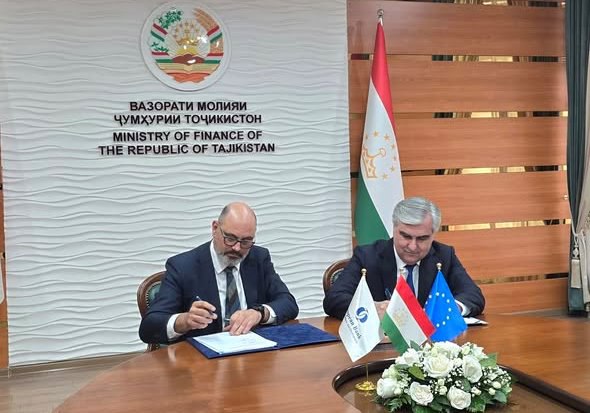
The European Bank for Reconstruction and Development (EBRD) and the European Union have announced a joint initiative to enhance the reliability and transparency of Tajikistan’s electricity distribution system. Under the agreement, a €43 million financing package will support the state-owned electricity distributor Shabakahoi Taqsimoti Barq (STB). The funding aims to reduce technical losses and improve efficiency by upgrading essential infrastructure. The “Energy Loss Reduction” project was officially signed on December 4 at Tajikistan’s Ministry of Finance. The agreement was endorsed by Minister of Finance Faiziddin Kahhorzoda and the EBRD’s permanent representative in Tajikistan, Holger Wiefel. The project is backed by €28 million in sovereign loans from the EBRD and €15 million in EU grants via the Asia-Pacific Investment Fund. Funds will be directed toward upgrading billing systems and installing new electricity metering equipment in nine cities across the Sughd and Khatlon regions. These areas are among the most affected by outdated infrastructure, which contributes to technical power losses, inaccurate metering, and the reduced financial viability of STB. The modernization program includes digitizing STB’s core operations and implementing cybersecurity measures to safeguard the national power grid. Technical assistance from both the EU and EBRD will support the rollout of these reforms. A key component of the initiative is human capital development. Specialized training programs on sustainable technologies and modern energy sector skills will be offered, with a focus on youth and women. This is intended to enhance the qualifications of local professionals and strengthen the regional labor market. The EBRD remains one of Tajikistan’s most significant international investors. To date, the bank has invested more than €1 billion across 188 projects in various sectors. The new energy initiative reflects the continued strategic role of international partners in supporting the modernization of Tajikistan’s critical infrastructure.

Kazakhstan-China Agricultural Research Center to Open in Key Grain-Producing Region

A Kazakhstan-China Agricultural Research Center will be established in the North Kazakhstan region, one of the country's top three grain-producing areas. The initiative was announced by region's governor Gauez Nurmukhambetov following a business delegation’s visit to China. “Last week, a business delegation from our region visited the People’s Republic of China and held meetings with leading Chinese investors. As a result, seven strategic memoranda were signed, opening new economic opportunities for our region. These agreements include the construction of new factories and the creation of a Kazakh-Chinese agricultural research center,” Nurmukhambetov said at a press conference. The region continues to post record harvests. In 2025 it harvested 6.5 million tons of grain, nearly a quarter of Kazakhstan’s total gross harvest of 27.1 million tons. Nevertheless, the region is actively diversifying its agricultural profile. Sugar beet cultivation is expanding, with experimental plots from Asyl Farms showing strong crop adaptation. Based on this success, plans are underway to build a processing facility capable of handling 1 million tons of raw material annually, producing up to 200,000 tons of sugar. In the Kyzylzhar district, Salar Farm is building a plant for processing granulated alfalfa with an annual capacity of 60,000 tons. The main export markets include China and other Central Asian countries. The facility is scheduled to open in 2026. The region is also home to Maslo-Del, an oil extraction plant with an annual processing capacity of 370,000 tons of oilseeds and a production output of 120,000 tons, much of which is exported. Alongside its growth in crop production, the region is making notable progress in livestock farming. “SK Agro will construct the largest cattle farm in Central Asia, with a herd of 10,000 and a state-of-the-art Carousel milking system,” said Nurmukhambetov. “The farm is expected to increase milk production by 68 million tons annually. This will raise the share of milk produced by agricultural enterprises in Kazakhstan to 70%.” He noted that in Belarus, modern farms account for 77% of milk production, in China around 70%, and in European countries more than 93%. North Kazakhstan region aims to boost its share of the country’s total milk output to 20%. Meanwhile, 17 projects valued at $555.6 million are underway in the Qyzyljar special economic zone. Agricultural cooperation with China continues to grow. Kazakhstan views China as a key export destination for its processed agricultural products. In November, QazTrade signed a partnership agreement with Optimize Integration Group, one of China’s largest food importers, responsible for 18% of the country's frozen meat imports. In a related development, a joint Kazakh-Chinese veterinary laboratory was opened in East Kazakhstan region in October 2025. The facility is designed to streamline and accelerate export procedures for agricultural goods.

Kyrgyzstan and Britain Sign Landmark Agreement on Critical Minerals Cooperation

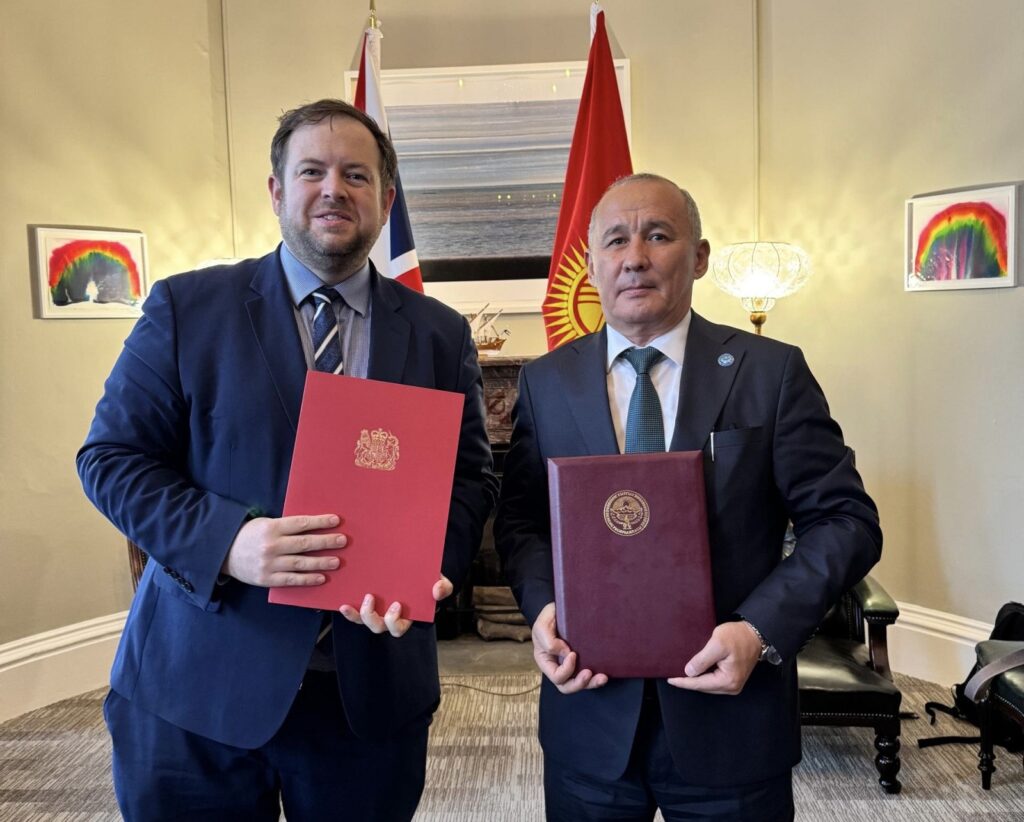
Kyrgyzstan and the United Kingdom have taken a significant step toward strengthening their partnership in the global critical minerals market, signing a landmark memorandum of understanding (MoU) in London. The agreement was formalized by Stephen Doughty, UK Minister of State for Europe, North America and UK Overseas Territories, and Meder Mashiev, Kyrgyz Minister of Natural Resources, Ecology and Technical Supervision. The document outlines cooperation in geological exploration, the implementation of high environmental, social and governance (ESG) standards, development of business ties, and the exchange of expertise. For Bishkek, the MoU establishes a new platform for deeper economic engagement with the UK, one of the world’s leading financial and technological hubs, while facilitating foreign investment and joint projects in the critical minerals sector. Mashiev arrived in London as part of the Kyrgyz government delegation attending London Mining Week, which runs from December 1 to 6. Speaking at the MINEX Eurasia conference on December 1, he presented the country’s long-term strategy for developing its critical minerals sector. According to him, Kyrgyzstan’s deposits of antimony, beryllium, molybdenum, bismuth, zinc, silver, and other critical minerals represent significant commercial and strategic value for global industries, particularly in energy, electronics, and advanced manufacturing. State-owned companies, including Kyrgyzgeology, are leading exploration and development efforts, supported by government incentives and an open-door policy toward international collaboration. Strategic sites are being actively promoted for joint ventures and direct foreign investment. Mashiev emphasized that Kyrgyzstan’s strategy places a strong focus on high ESG standards, aiming to ensure environmentally responsible development, social transparency, and meaningful benefits for local communities. The government’s objective is to position the country as a competitive and responsible supplier of critical minerals essential to global green transition technologies. Kyrgyzstan’s ambitions are backed by substantial geological potential. Speaking at the International Forum on Critical Minerals 2025 in Seoul in May, Deputy Minister Marat Jusupbekov noted that the country is home to 11 deposits of rare earth elements, positioning it as an increasingly attractive destination for global investors. One of Kyrgyzstan's most valuable assets is the Kutessay II deposit, which contains more than 63,300 tons of rare earth metals, along with molybdenum, silver, bismuth, lead, and zinc. The government is promoting joint development of this deposit in tandem with the nearby Kalesai beryllium site, which holds an estimated 11,700 tons of beryllium. Both sites are licensed to Kyrgyzgeology, which is actively seeking foreign investment partners. Jusupbekov also highlighted the potential of the Kyzyl-Ompol uranium-thorium group, including the Tash-Bulak area, where titanium-magnetite reserves are estimated at 5.5 million tons. This project is licensed to Kyrgyzaltyn, the country’s largest gold mining enterprise. With global demand for critical minerals rising due to the renewable energy transition and growth in advanced manufacturing, Kyrgyzstan’s latest agreements and strategic initiatives aim to position the country as an emerging player in this fast-evolving, high-value market.

The Future of Kyrgyz Tech – Scaling Global Companies, Attracting Foreign Capital

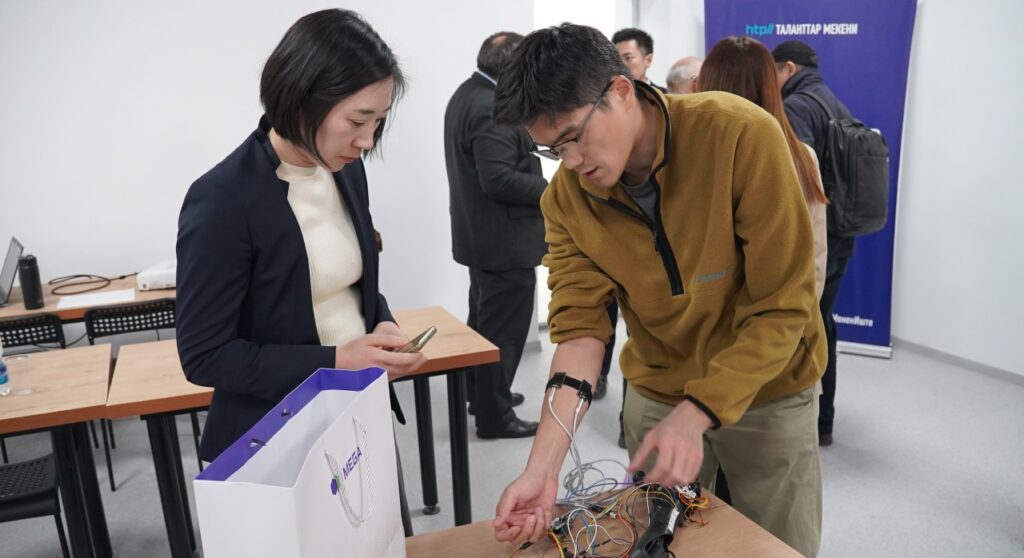
In the second installment of our exclusive two-part interview, The Times of Central Asia continues its deep dive into Kyrgyzstan’s evolving tech landscape with Elena Nechaeva, Head of Communications at the High Technology Park of the Kyrgyz Republic (HTP). Last week, we explored the startups and entrepreneurs who are currently building and scaling global businesses. If you missed it, you can read the first part of the interview here. This week, we focus on policy reform, cross-border cooperation, investor outreach, and the path ahead for Kyrgyz entrepreneurs in an increasingly globally competitive market. [caption id="attachment_40428" align="aligncenter" width="1280"] Image: The High Technology Park, Kyrgyz Republic[/caption] TCA: In terms of regulation and policy, what improvements or reforms would you like to see to better support innovation? Elena Nechaeva: There are several policy improvements that could really accelerate innovation in Kyrgyzstan, and many tech leaders have been very open about them. One of the biggest needs is a clearer national strategy for startups. Now, it’s not fully defined who exactly drives startup development and what the government’s long-term role should be. A coordinated approach with clear ownership would help the ecosystem grow much faster. Another important area is venture legislation and a stronger legal framework. Founders and investors often mention the need for a proper venture law, elements of English common law, and better protection of intellectual property. These changes would make it far easier to attract long-term capital and for investors to feel confident working with local companies. There’s also a lot of focus on the importance of modernizing higher education and expanding international partnerships. Strong engineering programs and links between academia and industry are essential for deep-tech development. And finally, Kyrgyzstan needs policies that help retain and attract talent. The digital nomad visa is already showing positive results, but it can be expanded. TCA: How does the Kyrgyz Republic's tech ecosystem compare to others in Central Asia or the wider region? Nechaeva: If you look at the region by population size, Kyrgyzstan is much smaller - about 7 million people, compared to nearly 20 million in Kazakhstan and over 36 million in Uzbekistan. And yet, with a far smaller talent pool and fewer resources, the country already exports more than $130 million in IT services, almost entirely to global markets. Whilst Kyrgyzstan’s tech ecosystem is smaller than some of our neighbors, it is one of the fastest-growing. What makes it different is that it is being developed from the bottom up - driven by founders, engineers, and communities rather than large state programs. That’s why the ecosystem is very agile, open, with a real-world focus on exports. Another difference is the mindset: Kyrgyz startups grow with a “global from day one” approach. They don’t build for a domestic market - they build for the U.S., Europe, and the wider world from day one. That creates a very different culture and pushes teams to compete internationally right from the start. So, while our ecosystem is smaller in size, it’s fast, flexible, and...

Revolut Blocks Top-Ups from Central Asian Bank Cards for EU-Based Users

Russian citizens residing in the European Union have reported being unable to top up their Revolut accounts using bank cards issued in Kazakhstan, Uzbekistan, and Tajikistan. According to Oninvest, at least five individuals encountered the same issue, with Revolut rejecting the transfers and stating that the cards used are “no longer supported.” Revolut’s customer support confirmed that as of December 1, the bank no longer processes top-ups from cards issued in Kazakhstan, Uzbekistan, and Tajikistan for users living in EU member states. The restriction is not temporary; the bank said similar transactions will not be accepted going forward. Notably, none of the banks in question are subject to international sanctions. Revolut attributed the change to internal policies and updated compliance requirements from international payment systems. These systems have reportedly classified Kazakhstan, Uzbekistan, and Tajikistan as high-risk jurisdictions for card-based top-up operations. The bank emphasized that the decision was mandated by its payment partners, not initiated by Revolut itself. Users also reported that top-up attempts through mobile apps of Central Asian banks resulted in error messages. However, Revolut advised that alternative methods, such as Apple Pay, Google Pay, and international bank transfers, remain available. Some customers based in France received a notification from Revolut stating that the platform will no longer accept card transfers from 52 countries. The list includes several countries where Russians relocated after 2022, such as Armenia, Georgia, Kazakhstan, Kyrgyzstan, Uzbekistan, Turkey, Serbia, and the UAE, as well as popular travel destinations like Thailand and Vietnam.

Kyrgyzstan Government Temporarily Bans Road Coal Exports as Shipments to China Surge

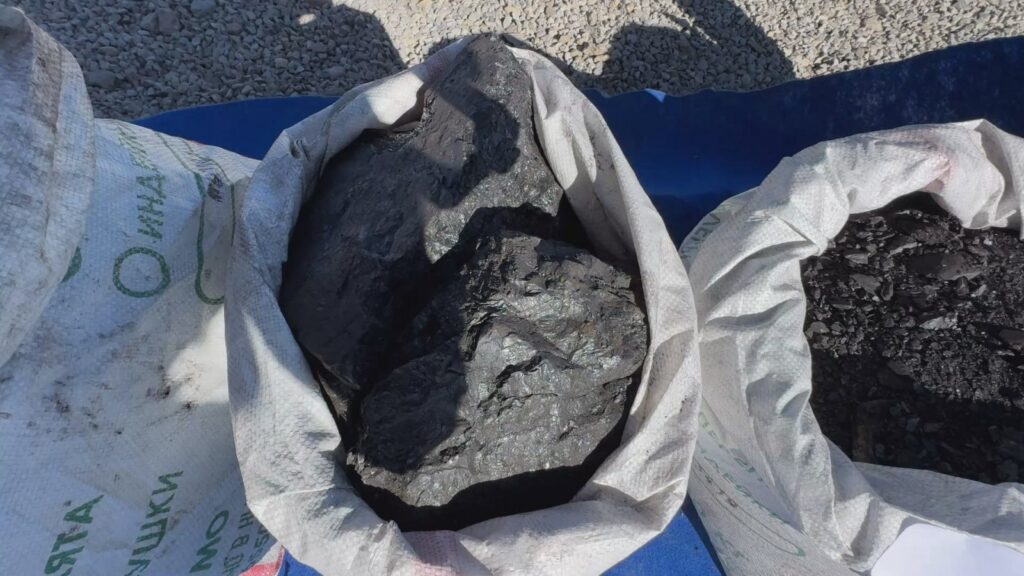
On December 3, the government of Kyrgyzstan imposed a six-month ban on the export of coal by road transport. The restriction aims to stabilize the domestic market amid rising demand and does not apply to shipments passing through the Irkeshtam and Torugart checkpoints on the border with China. Despite its environmental impact, coal remains a critical fuel source for winter heating in Kyrgyzstan, which continues to face chronic electricity shortages. In an effort to curb domestic price increases, the government introduced temporary state regulation of coal prices in September, effective for 90 days. While domestic needs remain high, coal is also a key export commodity. China has emerged as a growing destination for Kyrgyz coal, with exports reaching 11,600 tons in September 2025, the highest monthly volume recorded this year, according to China’s General Administration of Customs. Data from the National Statistics Committee of Kyrgyzstan shows that in 2024, the country exported 1.1 million tons of coal worth $52.7 million. Uzbekistan remained the largest buyer, importing 996,600 tons. However, exports to China surged to 118,200 tons, up from just 13,000 tons in 2023. In late November, Chairman of the Cabinet of Ministers Adylbek Kasymaliev visited the Torugart border checkpoint and the newly opened Torugart-1 coal mine, which began operations on November 12. Kyrgyzkomur OJSC, the national coal company, holds the exploration license for a 557.6-hectare section of the deposit in the At-Bashy District of Naryn Province. Total reserves are estimated at 423,400 tons. Kasymaliev instructed officials to ensure stable operations at the site and to initiate coal exports from the Torugart-1 mine as soon as possible.